Snow Falling on Anchor Road

Every single memory of snow in my childhood is pleasant. Sparkling flakes in luminous free-fall as I look out the kitchen window. Snow festooning evergreen boughs. Then bundling up in snowsuits, knitted caps, mittens. Getting out the sleds.

After more than one snowstorm, Aunt Ruthie grabbed her movie camera and trained her sharp eye on some big, tall sledders who went coasting down the hill from our house to Grandma Longenecker’s.

Then she captured our anticipation of trumping through nearly hip-high snow and finally (my favorite) Mother pulling my sister Janice and I on the Flexible Flyer sled along Anchor Road.


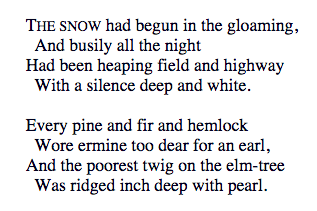
Another parent and daughter are observing the snow in The First Snowfall by American poet James Russell Lowell, a poem I remember Mother reciting.
FirstSnowfall1

Mabel marvels at the beauty of the snow and inquires of its origin . . .
First Snowfall2

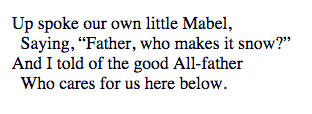
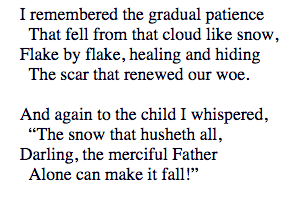
. . . but as the father’s replies to Mabel, he remembers the snow which hides the scar of another child’s burial plot.
FirstSnowfall3

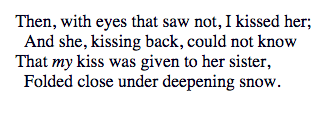
Then Mabel feels her father’s gentle kiss, a kiss she will never know was intended for the daughter beyond his touch. The last stanza leaves Mabel in child-like wonder, her father in pensive grief.
Screen Shot 2014-12-29 at 12.03.34 PM


This post began with snapshots of fun in the snow and ended with a reflection on loss. But snow can be the setting for other memorable events: a frolic with friends, a car accident, a marriage proposal (I’ll save that for another post!)

You probably have memories of snow, recent or long ago. Here’s your chance to share them.
Happy New Year: a card and some flowers

Happy New Year!


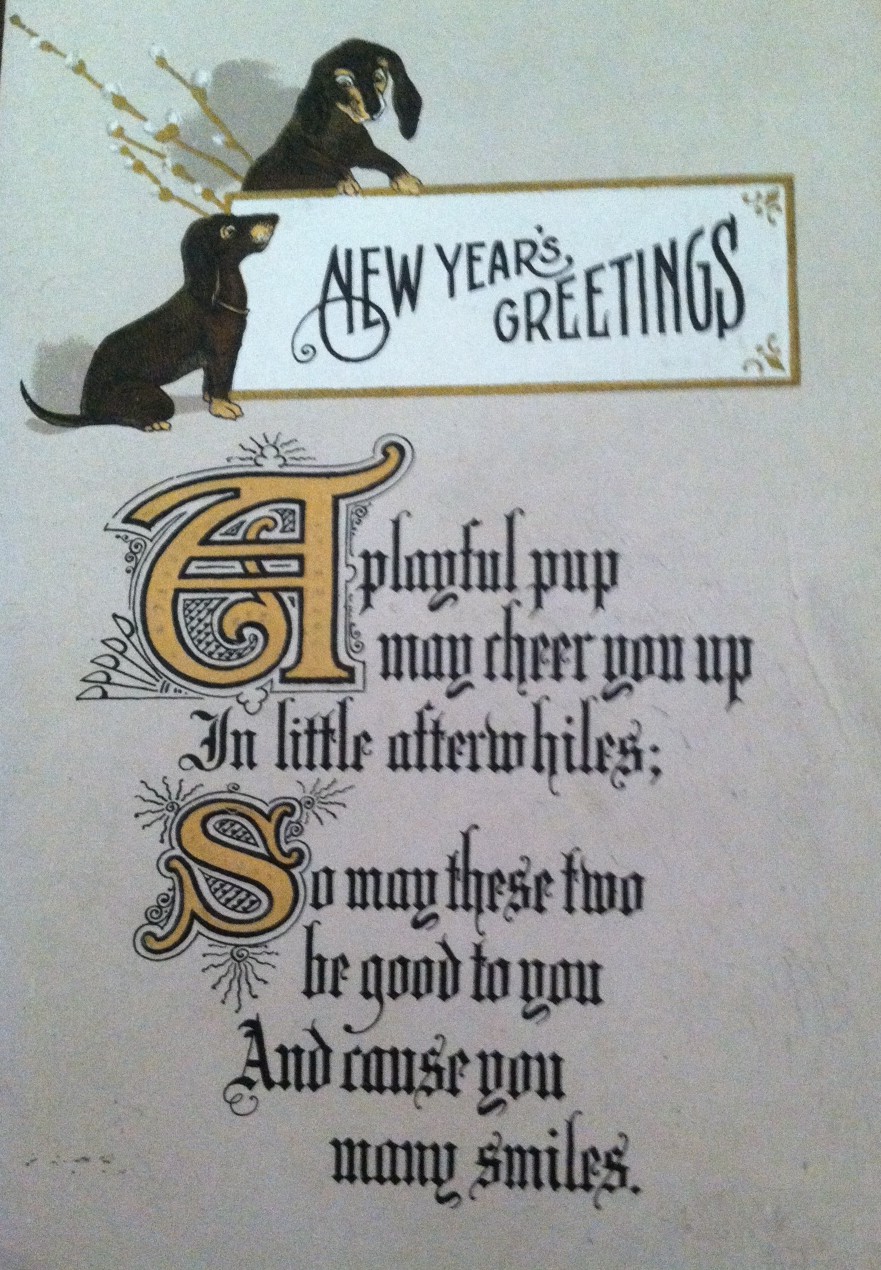
My wish for you in 2015 is expressed in a card sent to Grandma Fannie Longenecker in 1913.


NewYearPostcard


And some fresh camellias too!

camelliasSpeckled

Happy New Year ~~ Happy New Year ~~ Happy New Year

Next post in January 2015: Who’s Coming for Dinner? Food with Art

What’s Red at Christmastime?

Color psychologists say red represents energy, passion, and motivation to act. Red is everywhere this season: Santa’s costume, cranberry dishes, poinsettias.

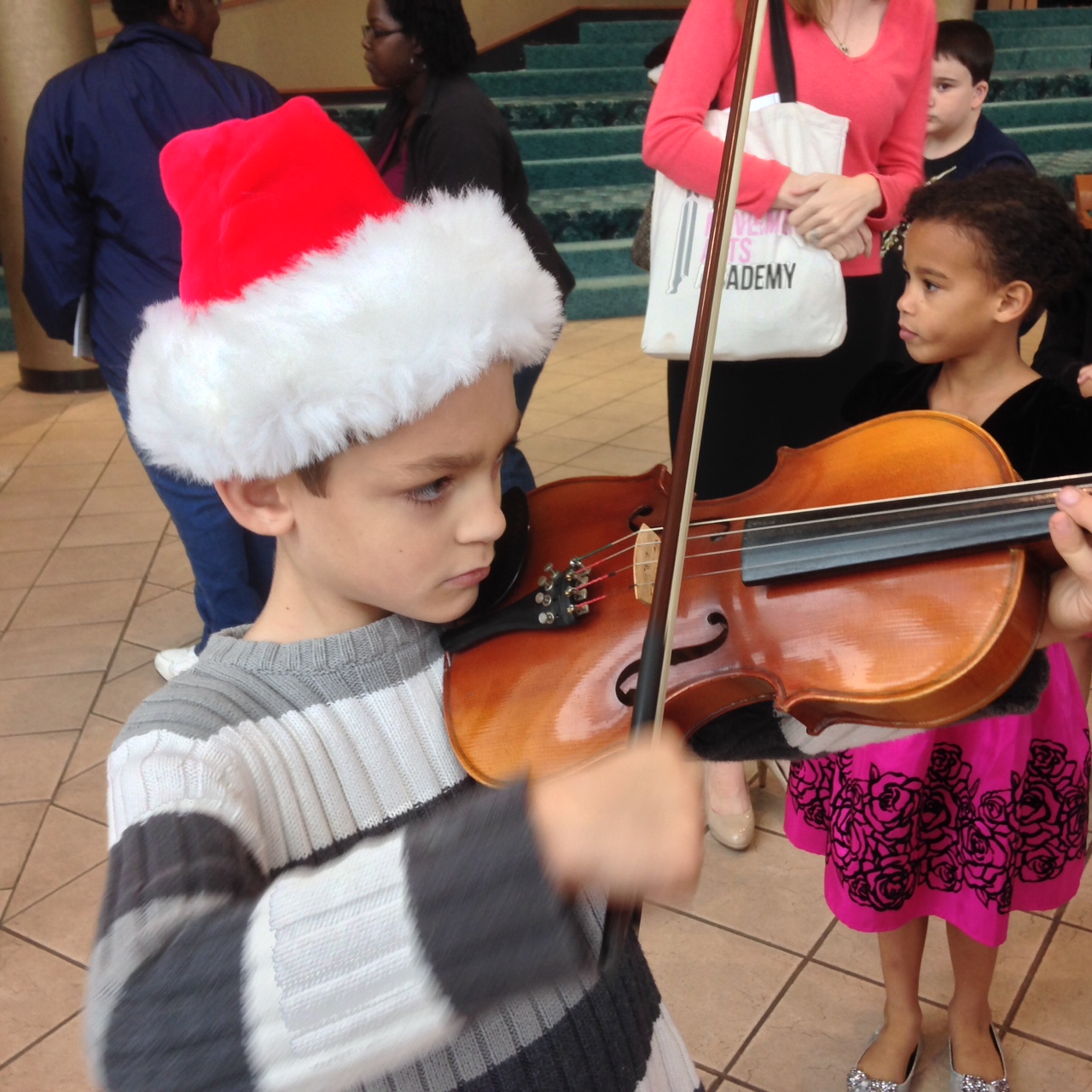
I’m seeing red too. In Ian’s Santa cap at the Orchestra Zoo . . .

IanViolinSanta

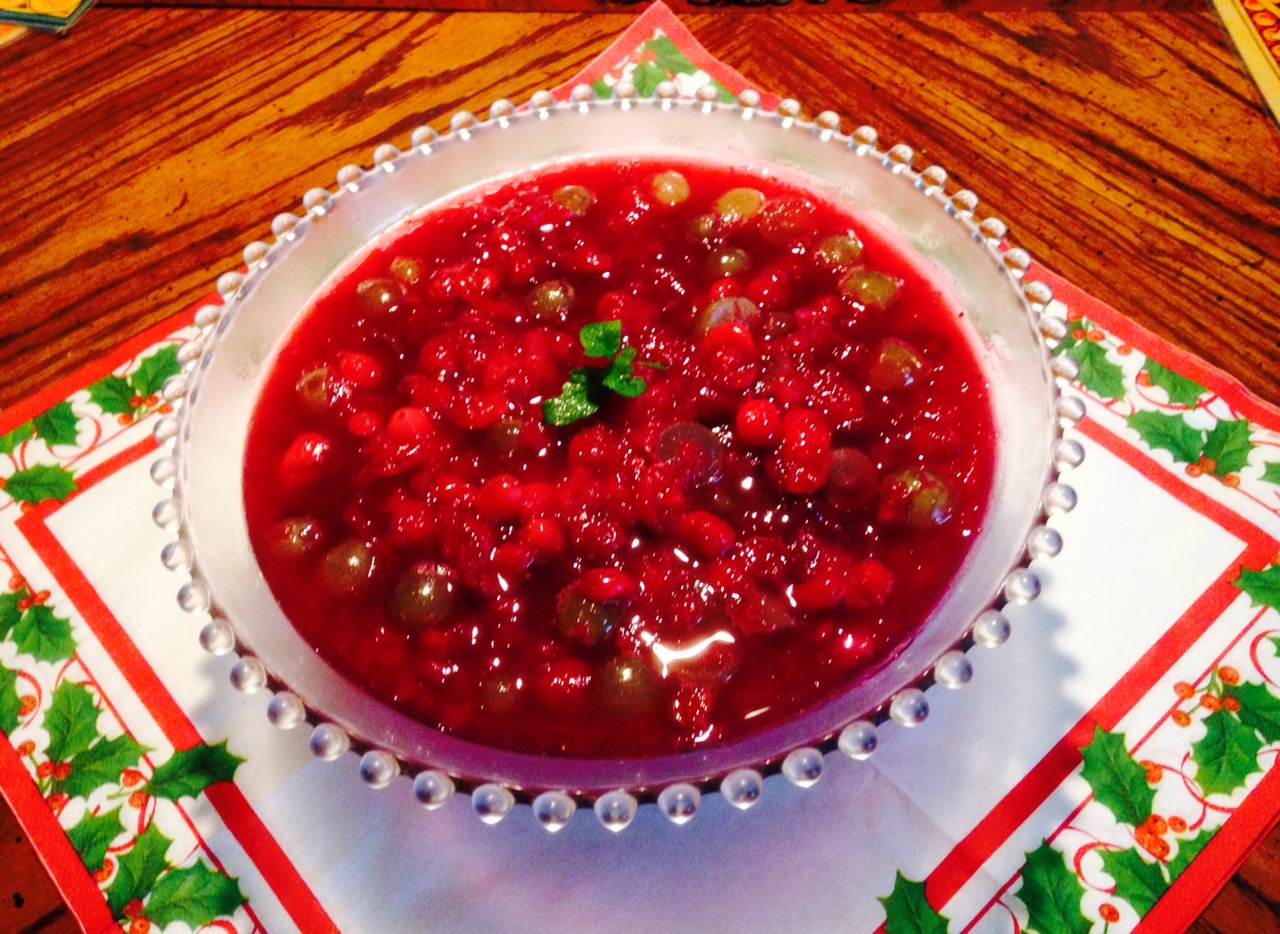
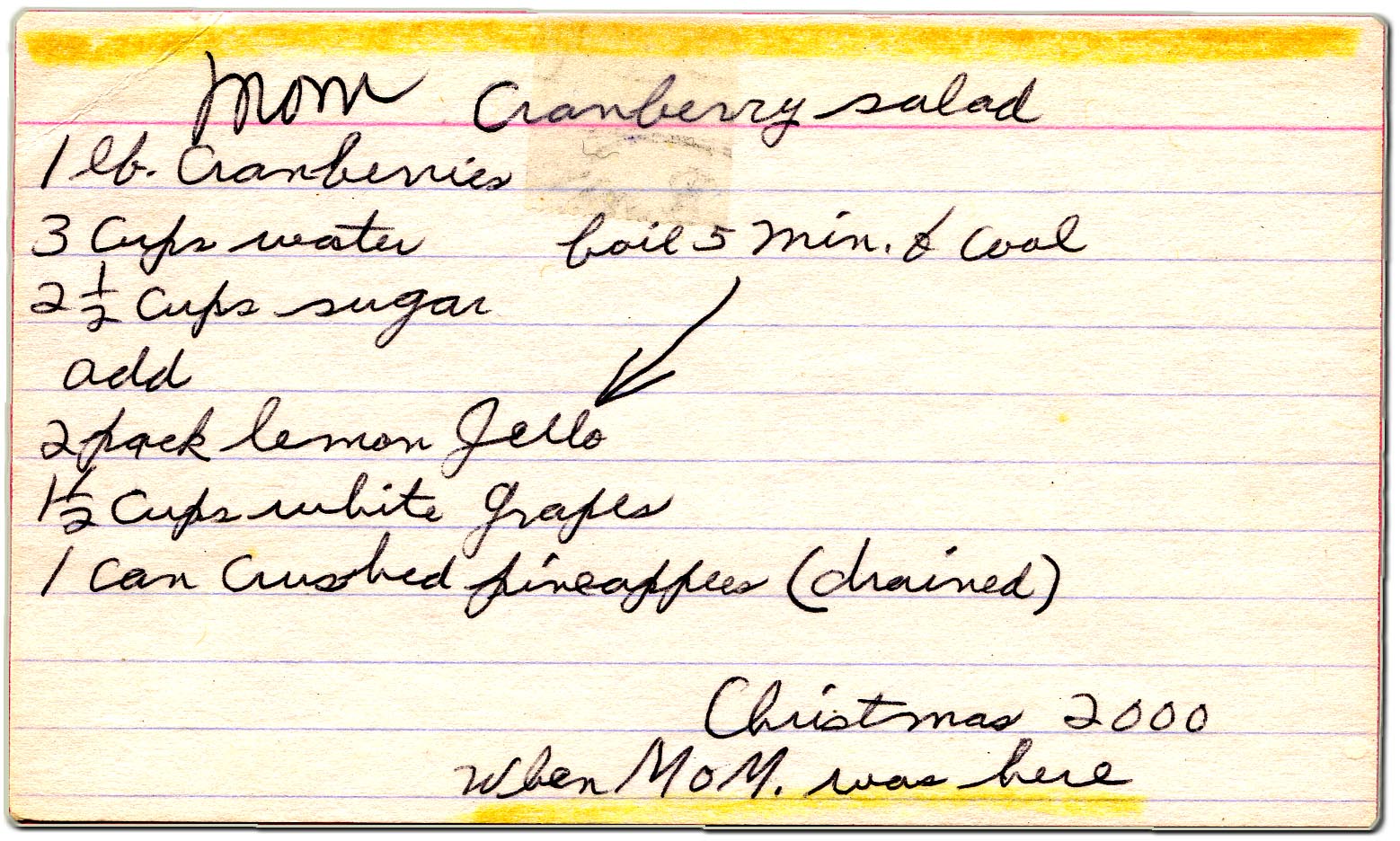
In Mother’s cranberry fruit salad recipe which I took to a Christmas party at a friend’s house last week . . .

CranberryDish

Ruth L_Moms Cranberry reci copy

(Everything with the word Mom in it is my scribbling. The rest is in her own handwriting, a keepsake in my recipe box.)

Beautiful pots of poinsettias!

poinsettias

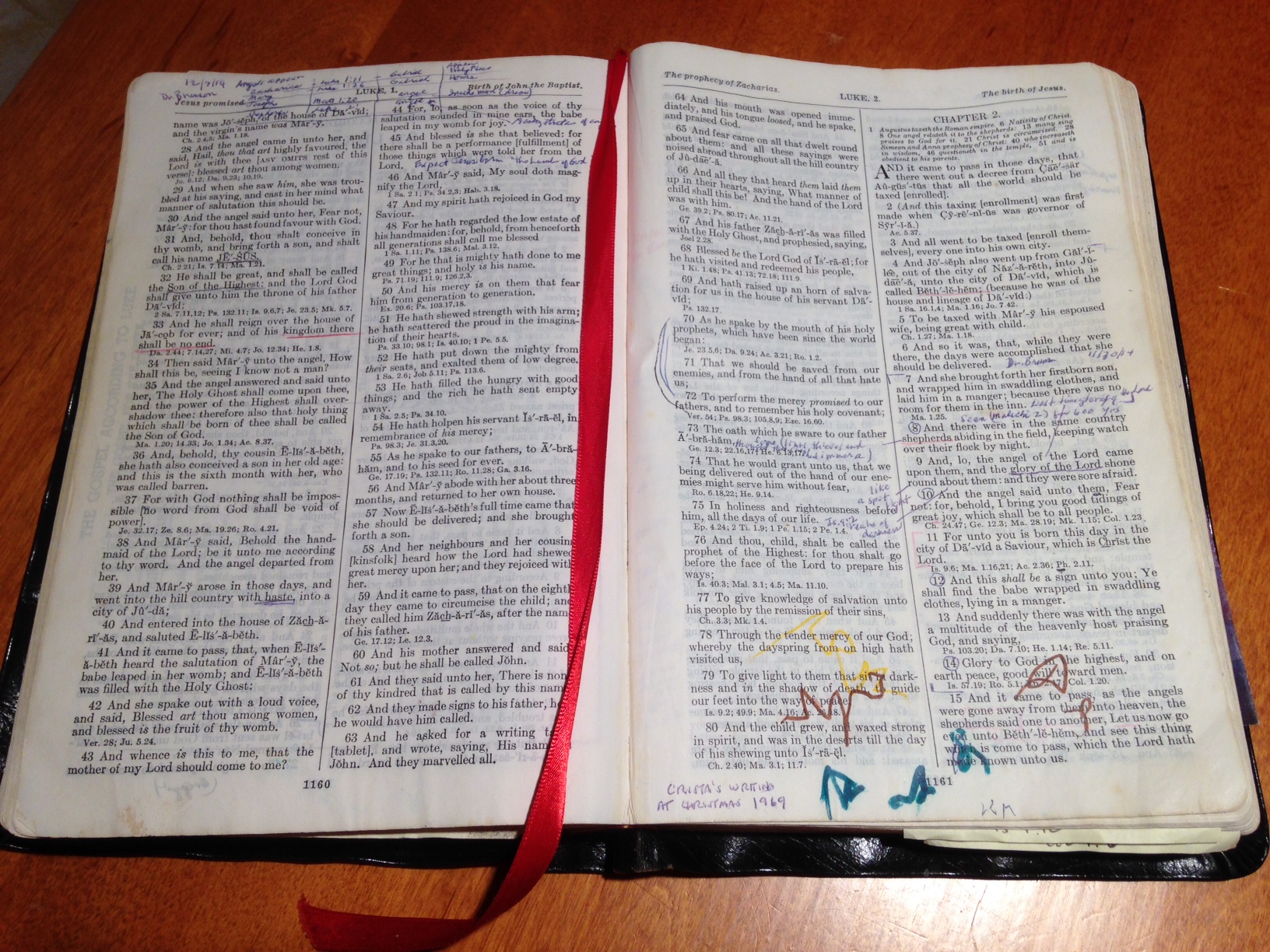
One more thing read at Christmas, the beautiful Christmas story from Luke 2:1-20Luke2

What can you add to the red – or to the read in your tradition? The conversation starts here. 

Coming next: Short and Sweet: A Belgian Christmas Card

Downton Abbey Gala Redux: Season 5

When I registered online for the 5th season premiere of Downton Abbey, there were fifty-nine (yes, 59!) salutations to choose from on the drop-down menu. These included Father, Monsignor, Cantor, Rabbi, Lieutenant Commander, Dean, Major, Mayor, and the humbler Mr. or Ms. I didn’t see “Lady”! Other designations included Sister and Professor. At different stages of life I have been both: Sister Longenecker and then Professor Beaman.

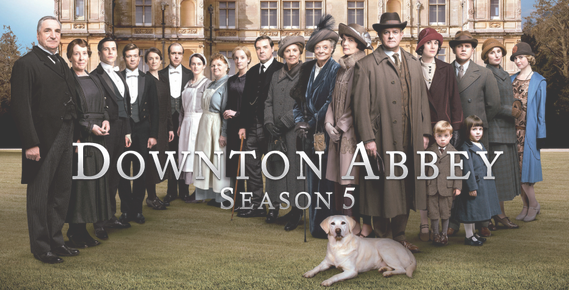
Downton Abbey is a cross-section of the social strata of post-Victorian England, an assemblage of characters from both upstairs and downstairs. Here it is reflected in the postures and apparel of cast members in the series: maids in aprons, ladies in plumed hats, men hatless or in fedoras.

DowntonAbbeyCast

Last year when our PBS station invited us to a gala celebration for Season 4, we stepped right into the show along with other party goers wearing period costumes and cast members appearing as life-size cutouts for picture taking. You can see it here.

This year we were greeted at the door with a trivia card. Among the questions was this: Lady Violet thinks her new gardener, Pegg, has stolen what item for her home? The choices are knife, cane, bell, or nutcracker. I don’t remember, do you?

With souvenir tea bag and an invitation to join in the #BIGsip with #DowntonPBS

First, we met a maid from downstairs with duster in hand . . .

MaidDownton

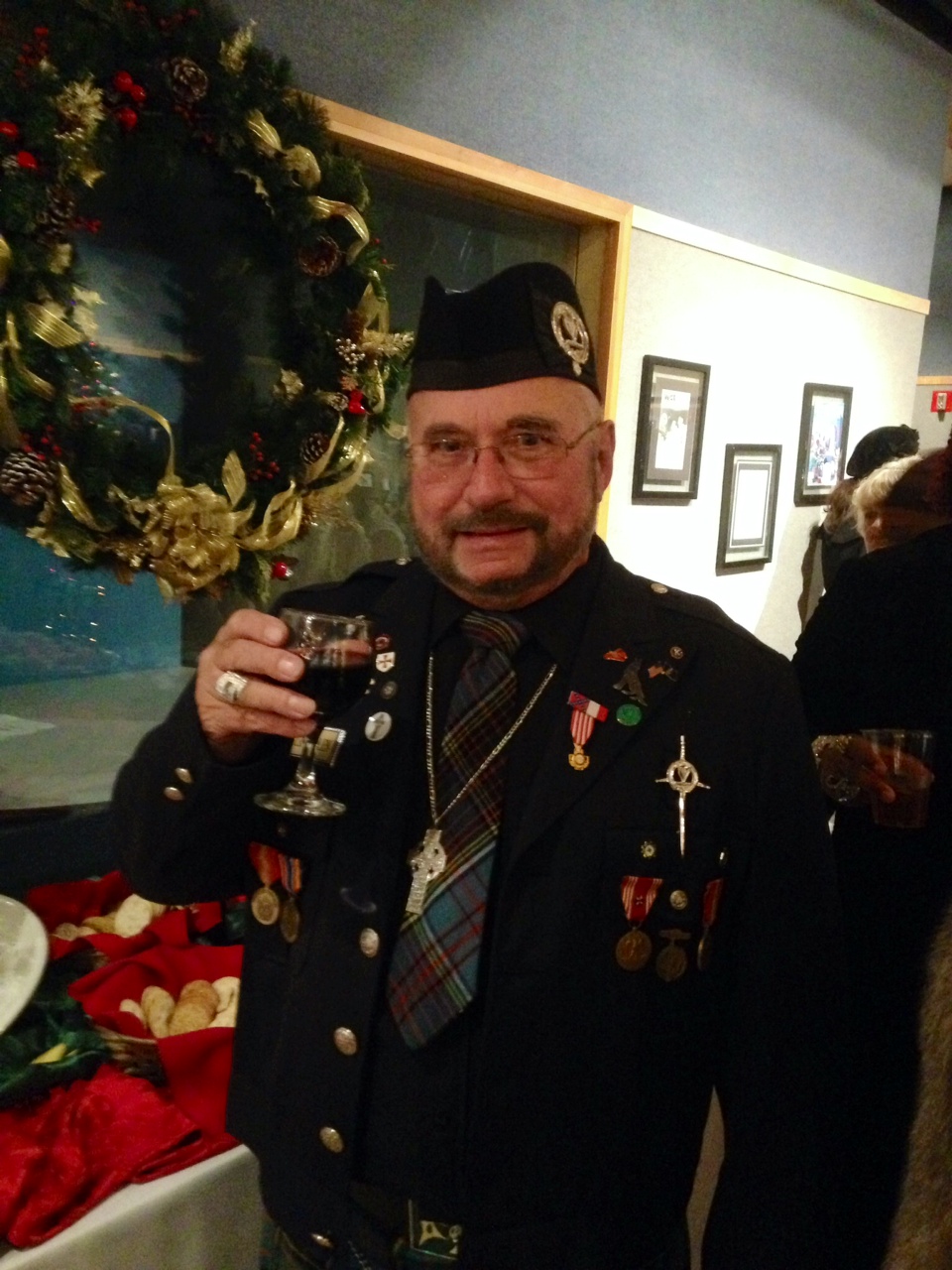
A clansman from across the border, clad in plaid . . .

ScottishGuyhDownton

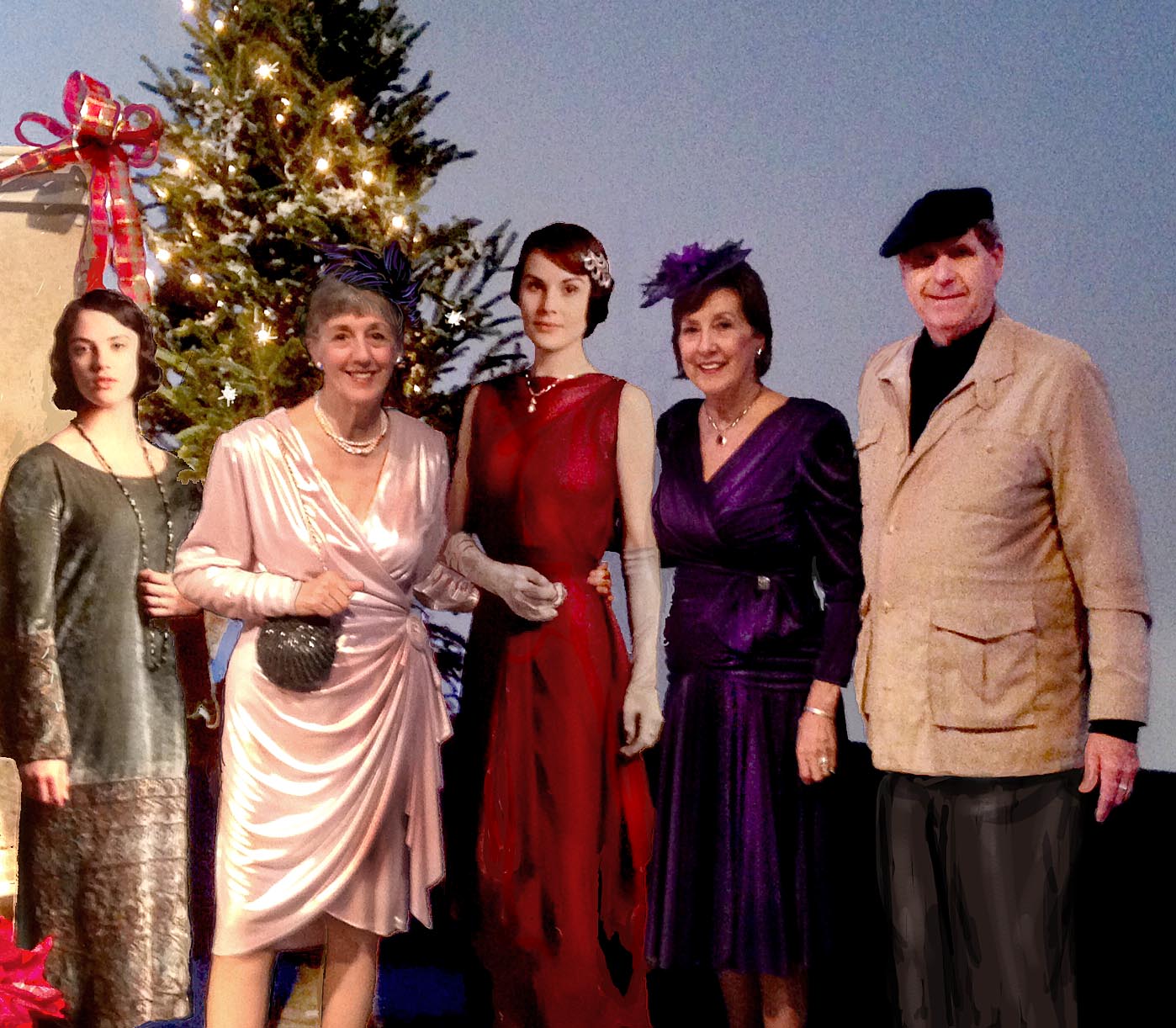
Middle-class Americans making a vain attempt to mingle with the British aristocracy . . .

Downton Abbey_adjust_300 (2)

Sister Janice and I pose before the entire cast with headgear rivaling the goofiness of Princesses Beatrix and Eugenie at the wedding of Will and Kate:

JanMarianDownton

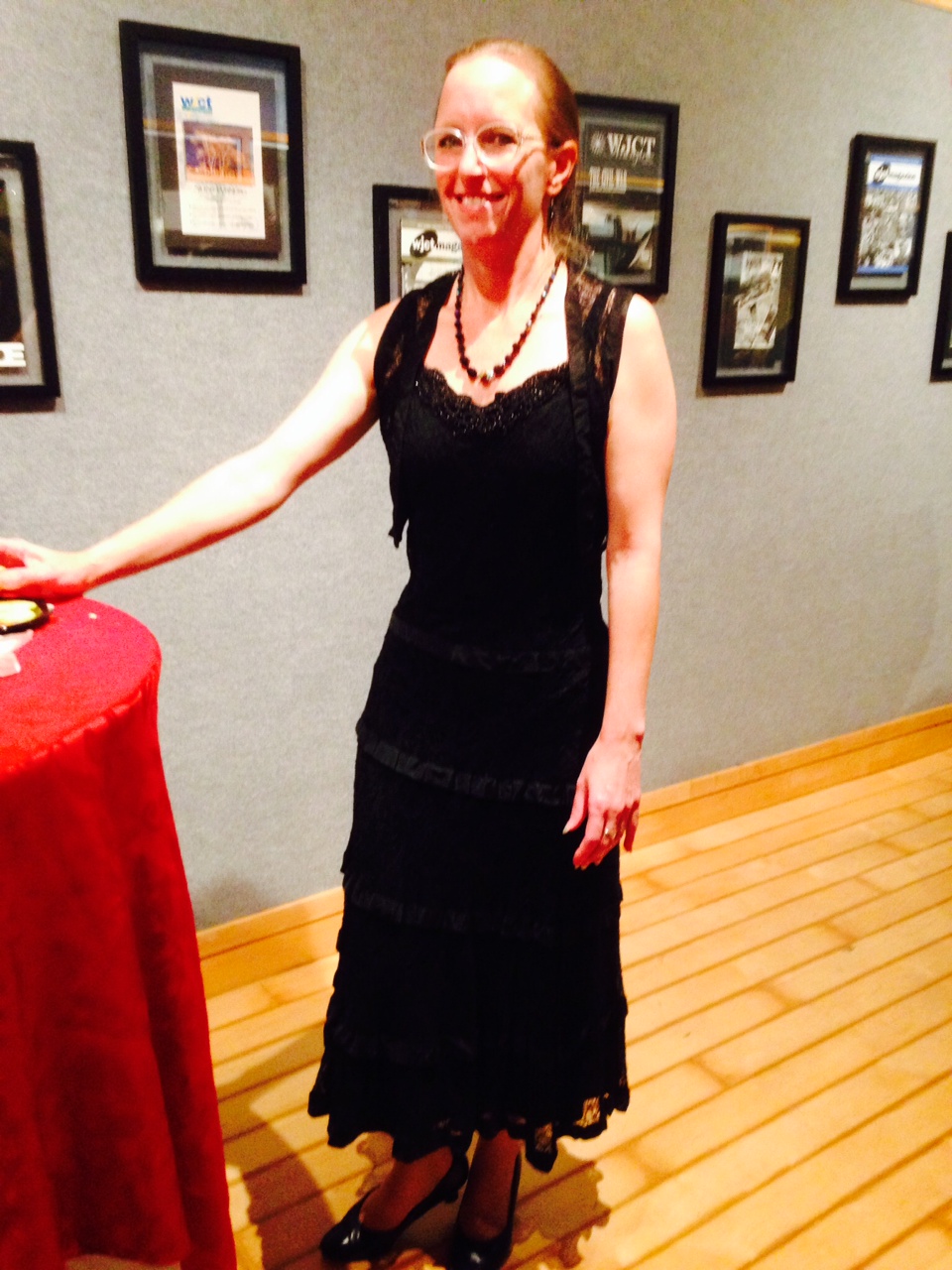
And finally, the genteel Jennifer Pastore, proudly garbed in a more-than-100-year-old dress worn by her great grandmother, Elizabeth Vann, the first woman editor of a newspaper in Florida (Madison, FL). A flawless little black dress – a perfect fit!

JenniferPastoreTry2

And then, the climax of the evening: the screening of episode 1, season 5, which begins in 1924 – the radio a hot, new technology.

We were on the edge of our seats as each scene unfolded, asking, What happened to Edith’s child? Where is the fire? What about Anna?

And then of course, scenes with seeds for future episodes:

  • Who outwits the wily Thomas?
  • Who wears a wedding gown?
  • Does Mary have a new love interest?
  • What is Carson up to?

Throughout the movie, there were more zingers than usual from the Dowager Countess, Lady Violet: “There’s nothing more simple than avoiding people you don’t like!”

VioletCrawleySaying

Do you think Dowager Countess Violet is right in either quote? Why or why not?

Care to comment about social class in the show? Or in present-day society?

P.S. Despite rumors to the countrary, the station manager announced unequivocally that there will be a Season 6!

Coming next: Purple Passages and Tiny Tim

Signs and Wonders: Manheim and Elizabethtown, PA Style

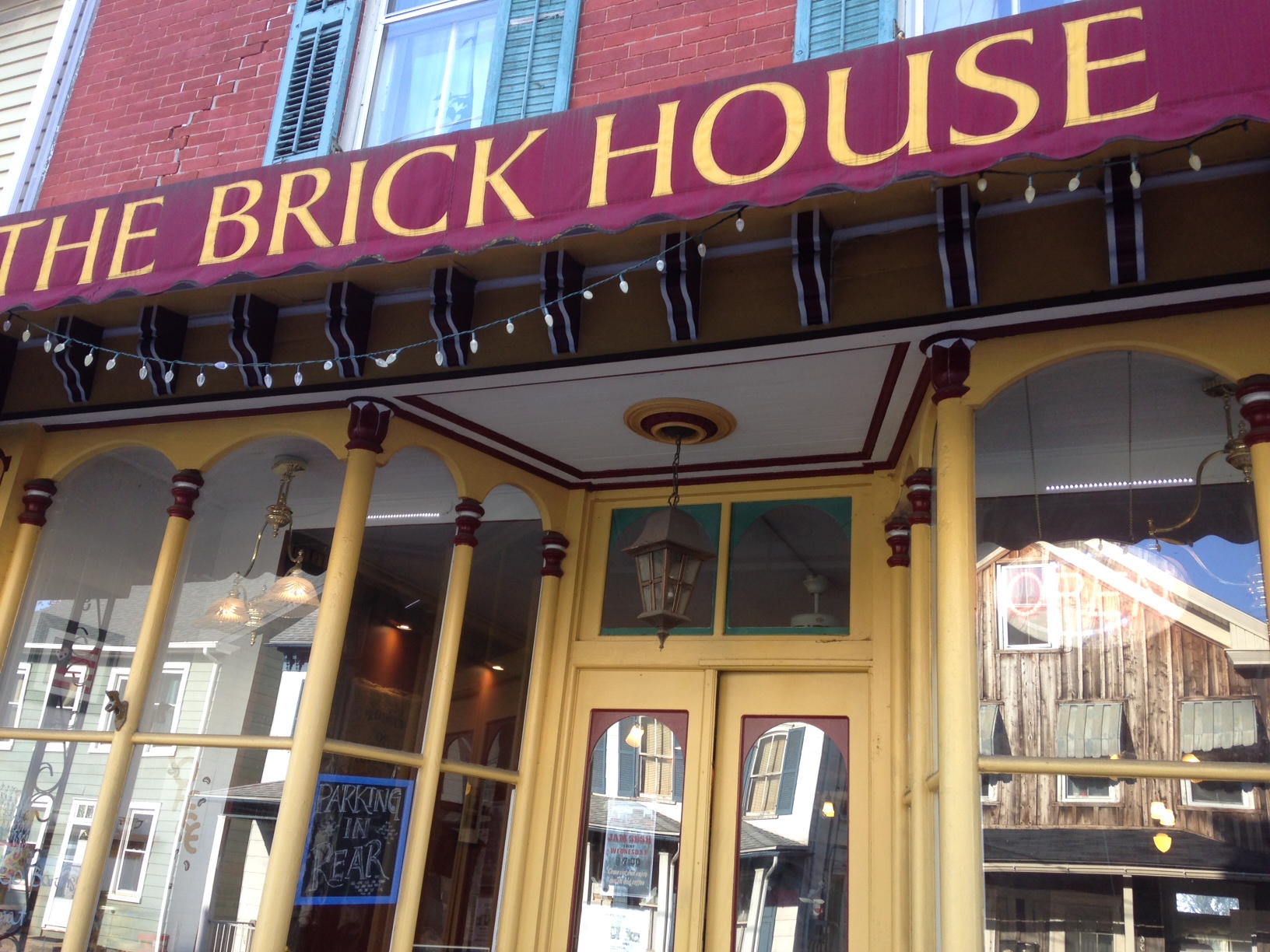
The Brick House Cafe along Main Street in Manheim, Pennsylvania, is getting free advertising from me today.

BrickHouse1

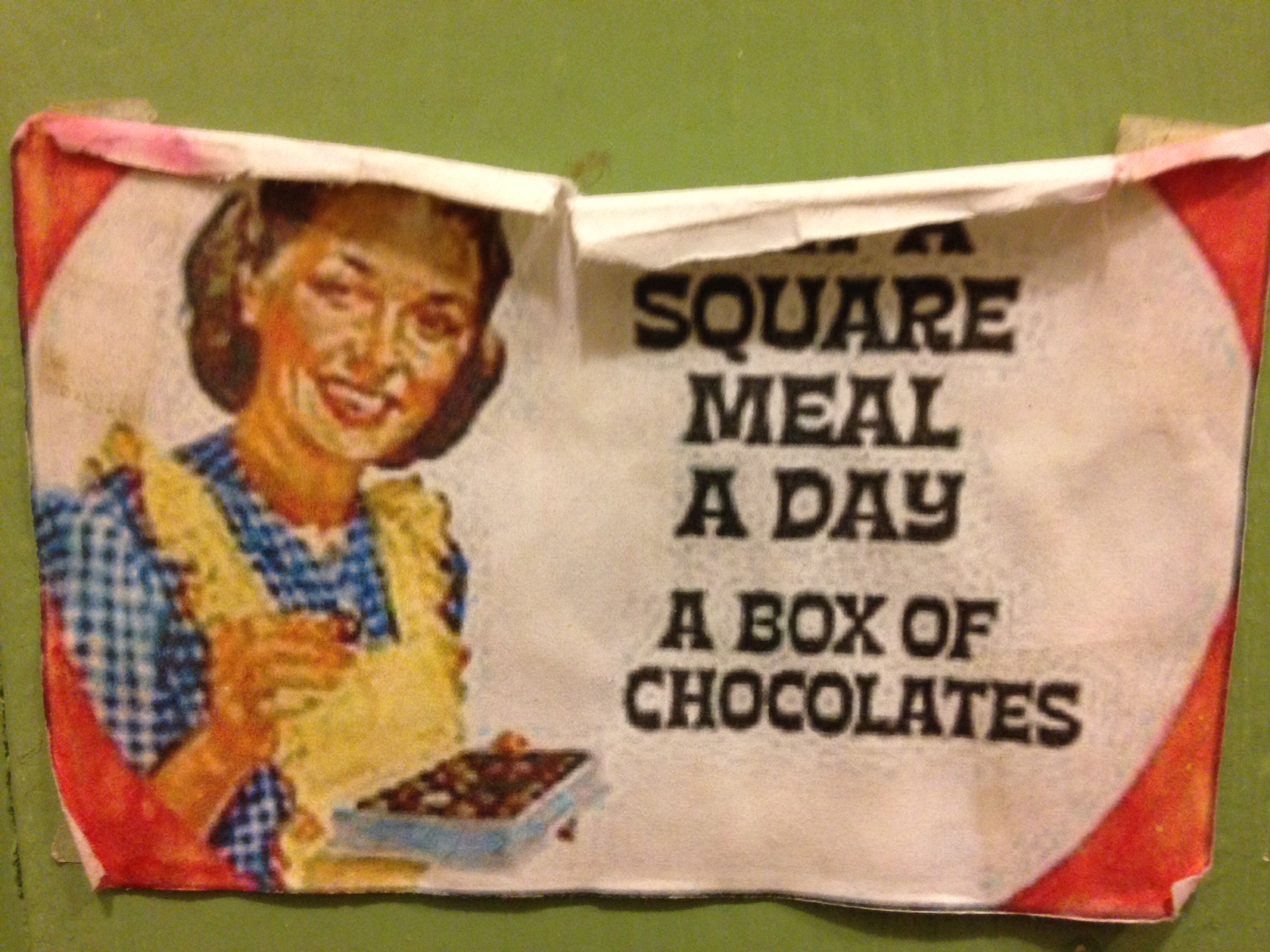
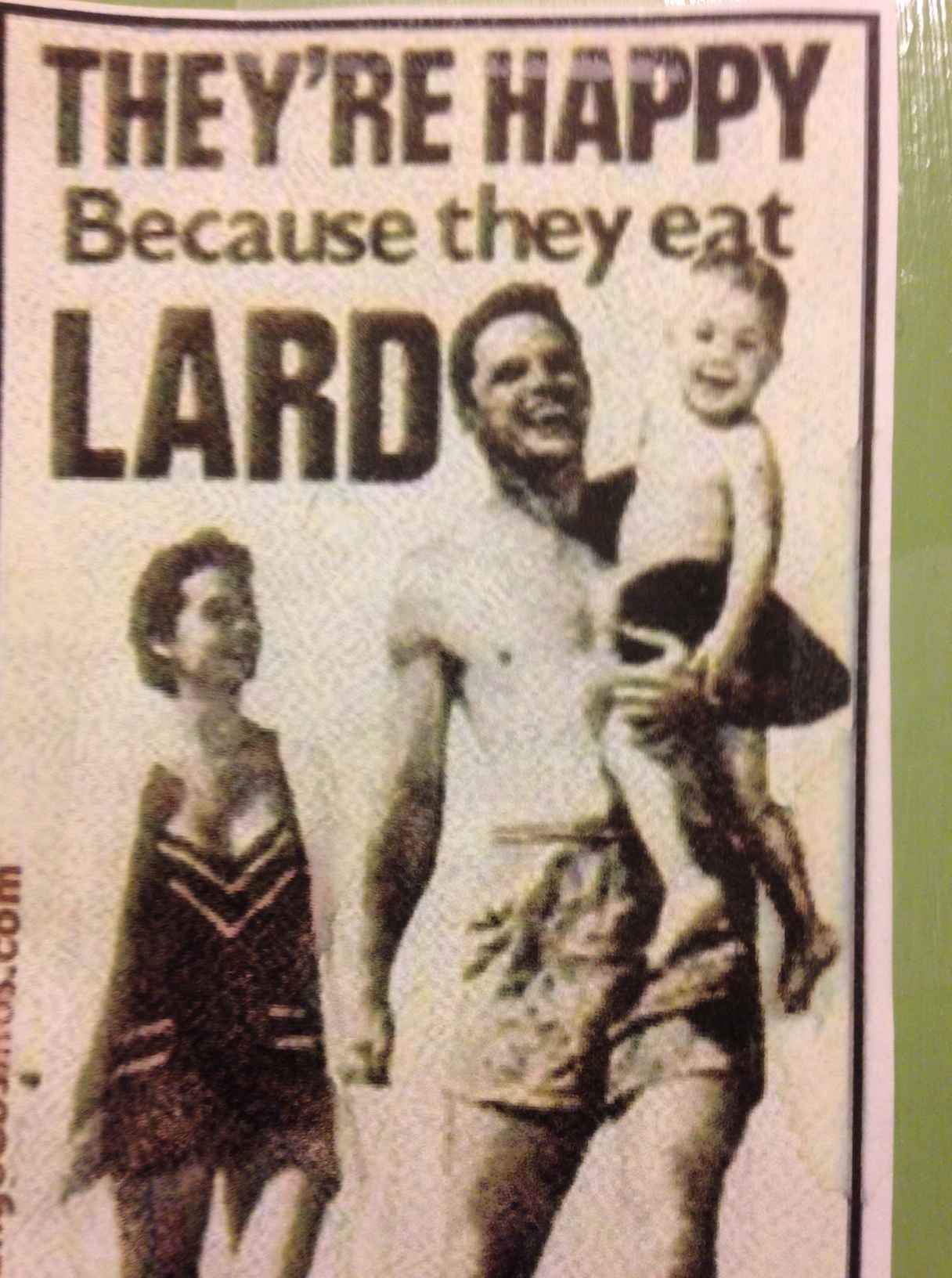
In a sister city named for its counterpart in Mannheim, Germany, The Brick House serves freshly prepared soups, salads, and sandwiches. It also serves up another “S” – Signs from the 1950s. Take a look!

BoxChocolatesHarassingCookSignLardFamilyBattleOfWitsSign

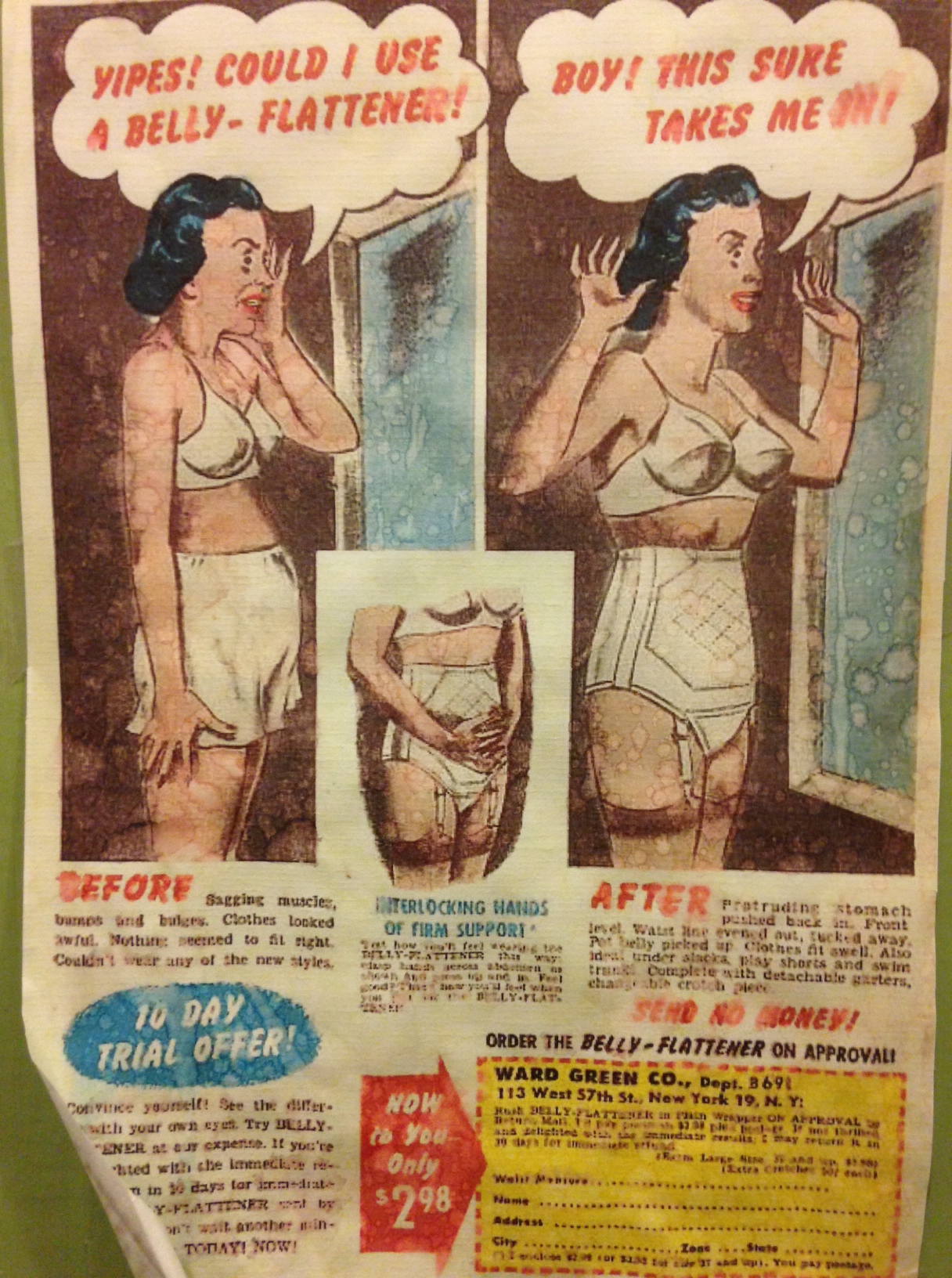
And finally, this:

CorsetWoman

All posted on the back of the Ladies’ Restroom door! Now I have to wonder what was posted in the Men’s Restroom. . . .


Country Meadows restaurant, nestled in a grassy knoll northwest of Elizabethtown, boasts a menu of stick-to-your-ribs PA Dutch food along with some high-calorie choices.

Screen Shot 2014-11-24 at 1.02.51 PM

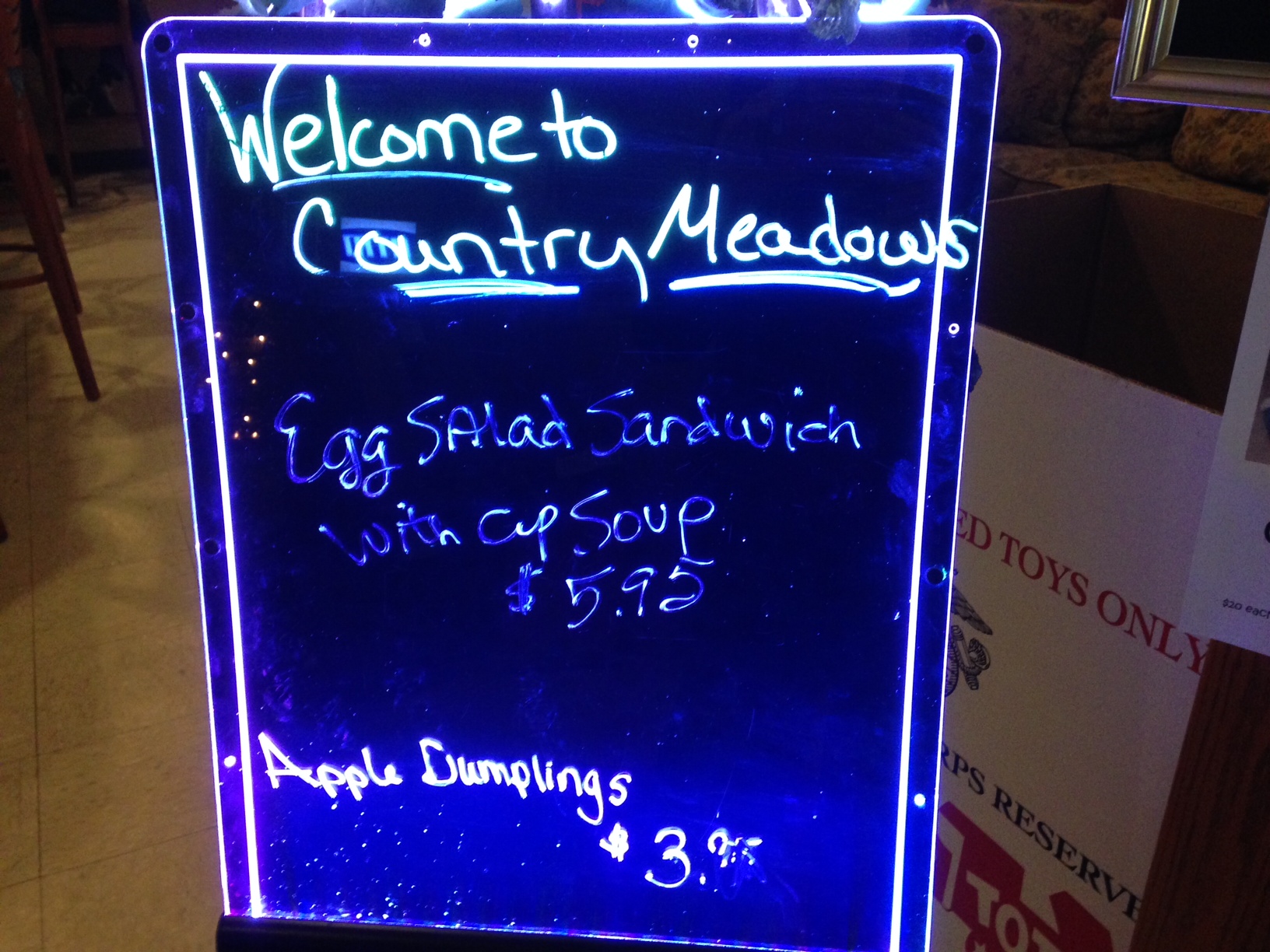
Signs are few here, but there is lots of neon in the decor . . .

CountryMeadowsGold

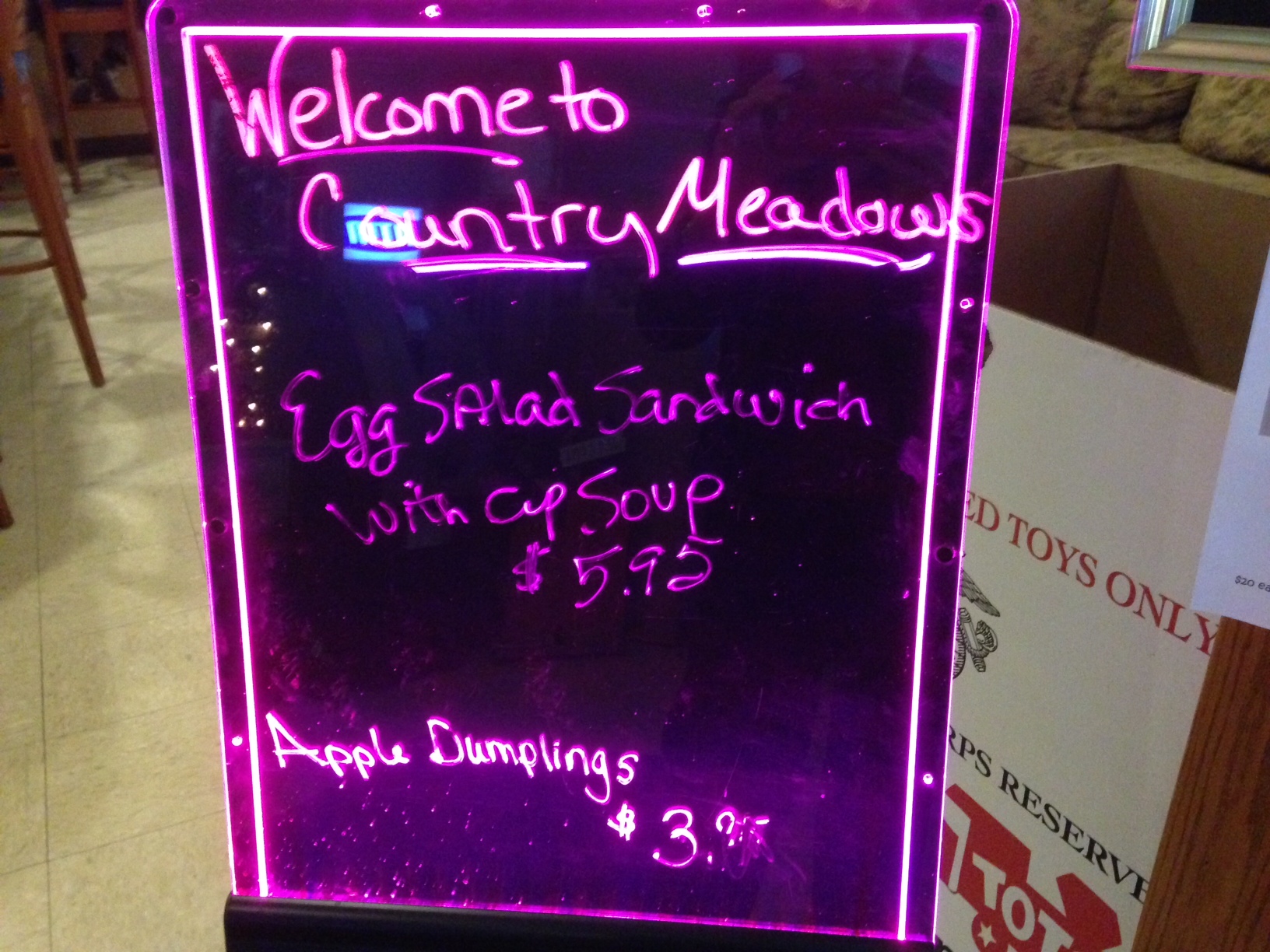
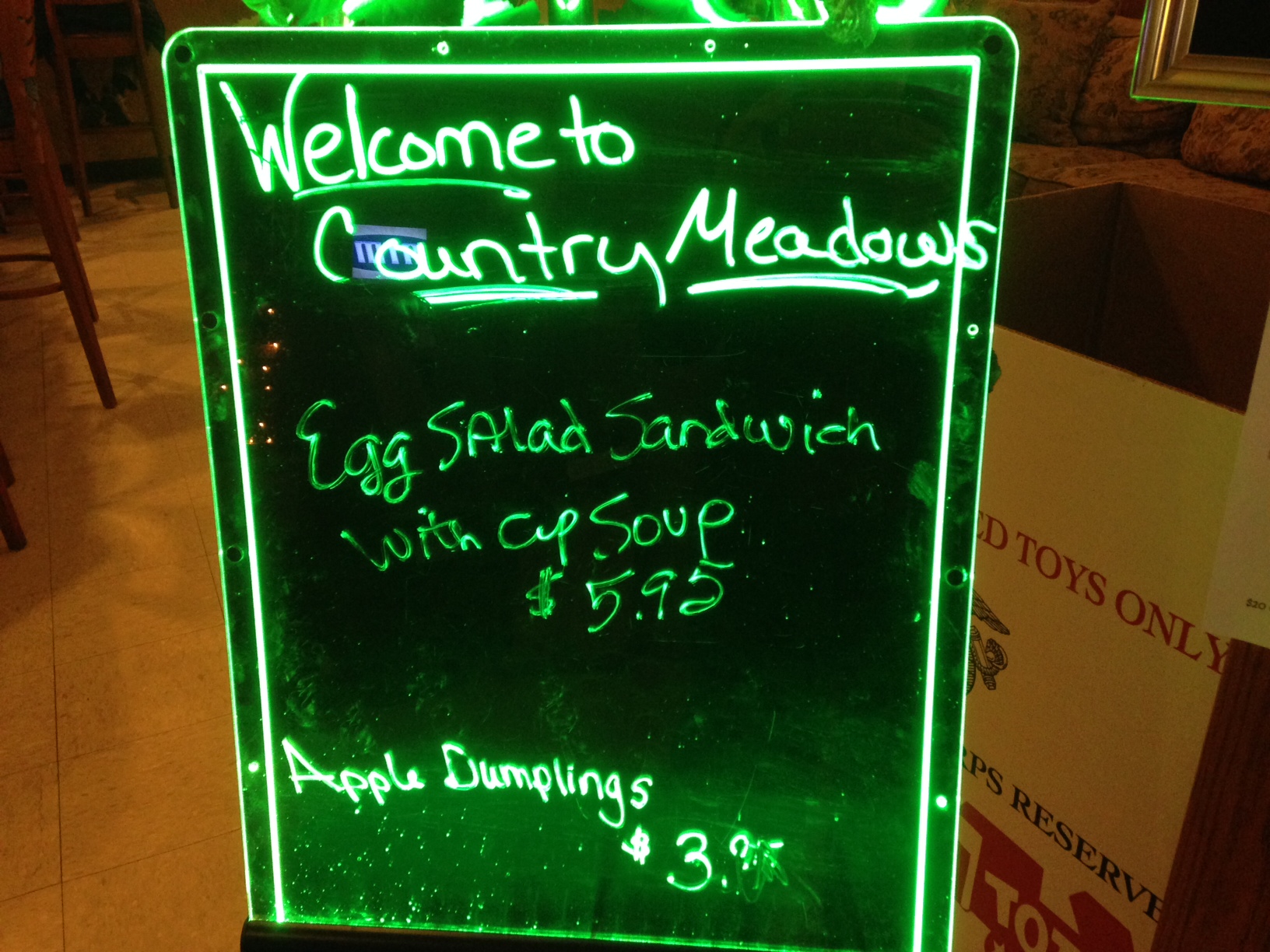
. . . and advertising their specials:

CountryMeadowsBlue

CountryMeadowsPurpleCountryMeadowsGreen

If you are waiting for a table, you can see all the specials in every rainbow hue.


John Lanchester, a confessed foodie, talks about our eating habits in the November 3, 2014 issue of The New Yorker. In an essay entitled “Shut Up and Eat” Lanchester explains that

Once upon a time, food was about where you came from. Now, for many of us, it is about where we want to go–about who we want to be, how we choose to live. Food has always been expressive of identity, but today those identities are more flexible and fluid: they change over time, and respond to different pressures.

Then he elaborates on the craze of pickles, kale, and his mother’s favorite dish, spag- bol, a British recipe “that blends a meat ragù of a northern-Italian type with the dry pasta beloved in the south. . . .”

*  *  *

Signs and Wonders has been a theme in several previous blog posts: once in Monterey, CA, Jacksonville, FL and earlier in Elizabethtown, PA. Check them out if you missed them.

Today’s post is a hodge-podge: Restaurants in Lancaster County and their menus, goofy signs in restrooms, and a New Yorker article on how we identify with food.

Care to comment? Any or all of the above topics are fair game. You may even add a strange sign you’ve seen!

7 Things I’m Thankful For

My secret joys (and struggles) show up in my gratitude books. You can see some of them here. But my list this week has sprung from my 9-day trip to Pennsylvania to visit family and take care of Mother’s house in mid-November 2014.

In her devotional book One Thousand Gifts, Ann Voskamp begins with a chapter entitled Surprising Grace in which she discusses how she and her Farmer Husband “give thanks even when things look like a failure.” Or when one experiences loss.

This year Mother died, we’ve had to sell her beloved house and its contents, I’ve struggled with a motley crew of personal challenges, and still I give thanks:

  • Health – I have an odd muscular neck pain (yes, pain in my neck!) yet I went up and down 3 flights of stairs from attic to cellar dozens of times, no problem.
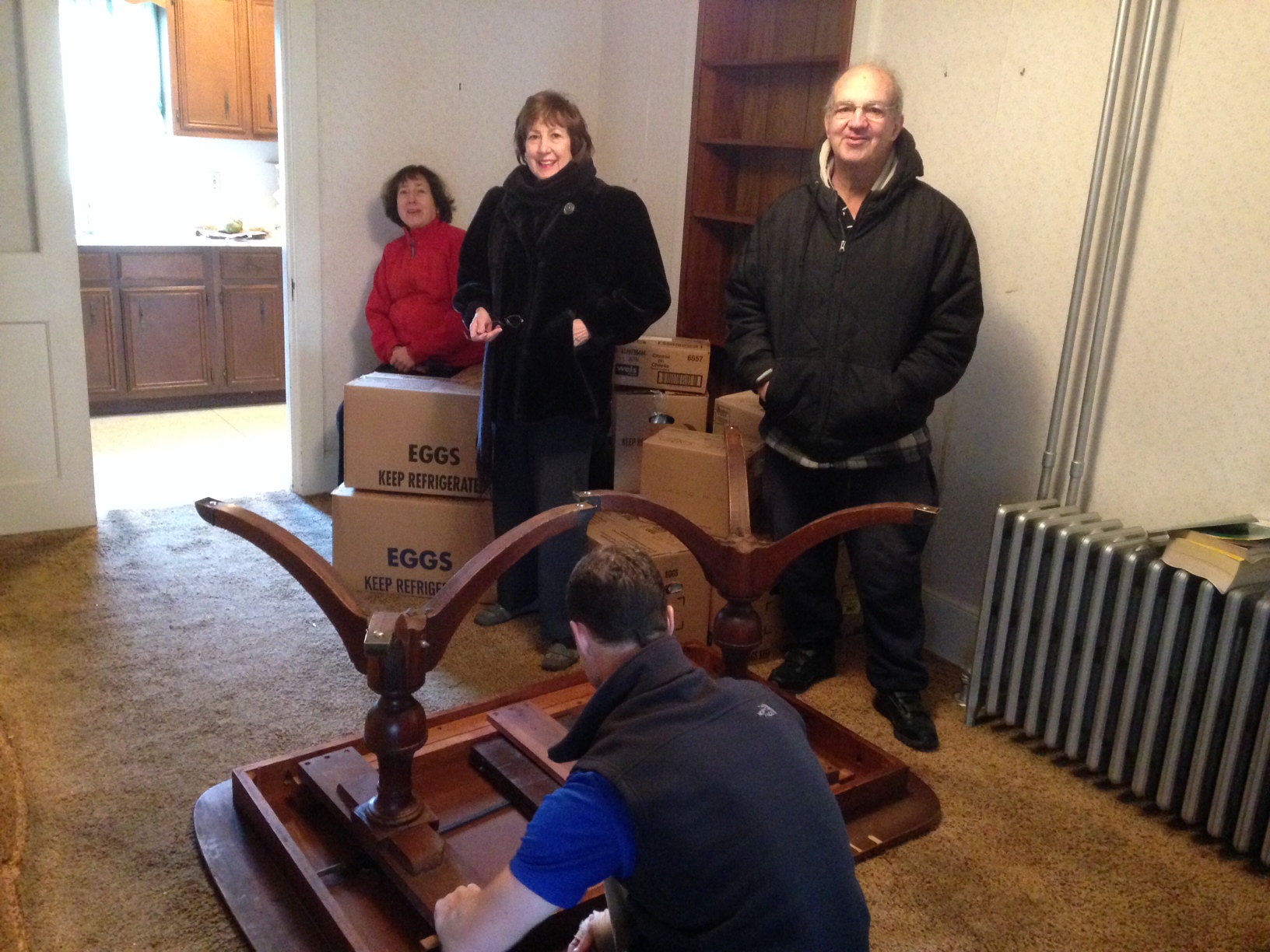
  • My sisters and brother – We sorted, boxed, laughed, cried, disagreed, but ultimately met the challenge on time.   MarianJeanMark
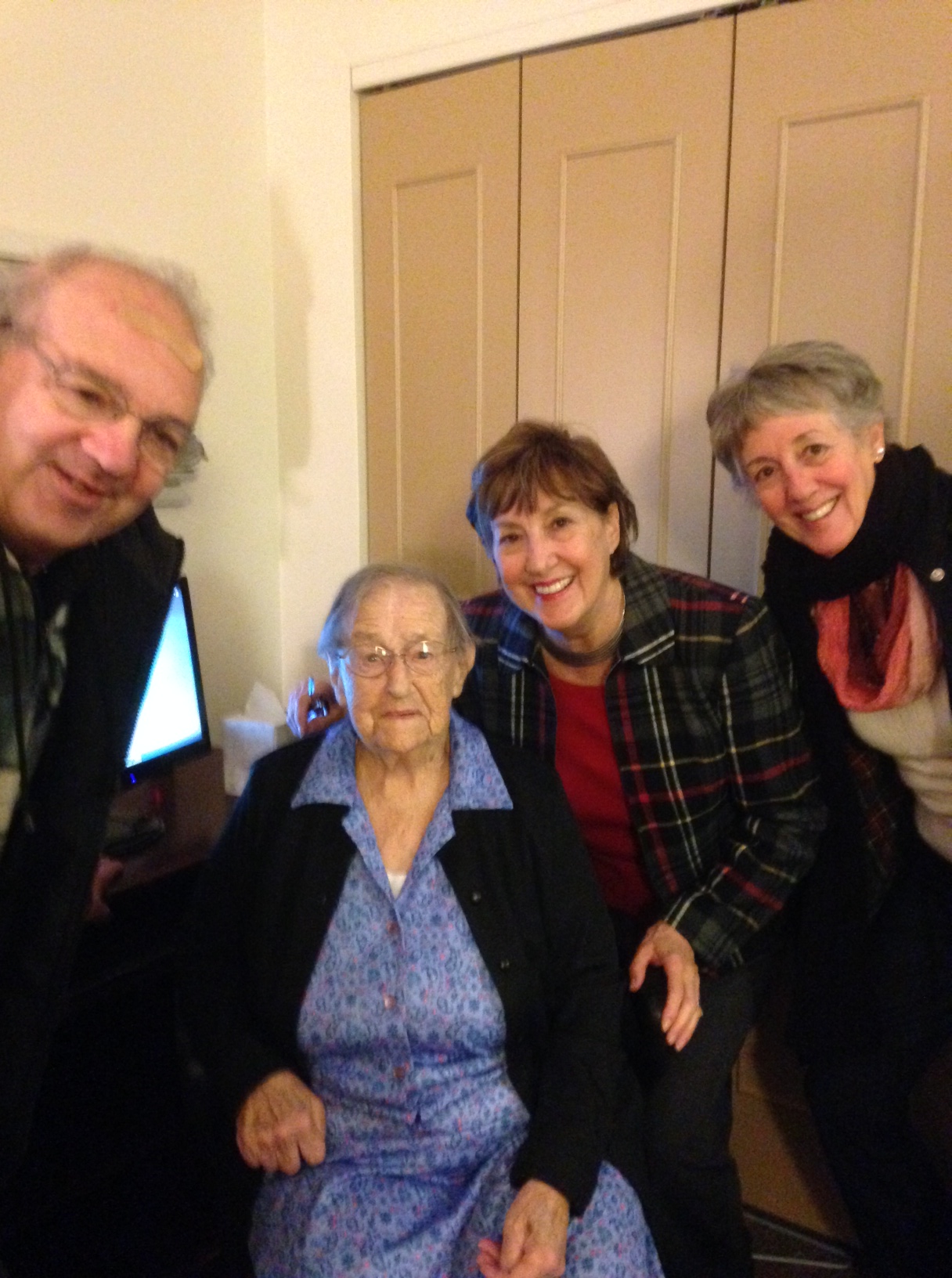
  • My Aunt Cecilia – She’ll be 100 years old in March, still going strong. We found Aunt Ceci cheerfully playing the Tumbling Blocks game on the computer beside her. “It keeps my mind sharp!” she laughs. A Mennonite preacher’s wife, Aunt Cecilia Metzler raised a family of five children on a Lancaster County farm.AuntCecilia
  • My Aunt Ruthie – The photo is fuzzy here, just like her memory. But after she viewed some of the movies she filmed in her 20s and 30s that appear on other blog posts (here and here) she smiles, “ These pictures really make my mind come alive.” RuthieLookingVideo
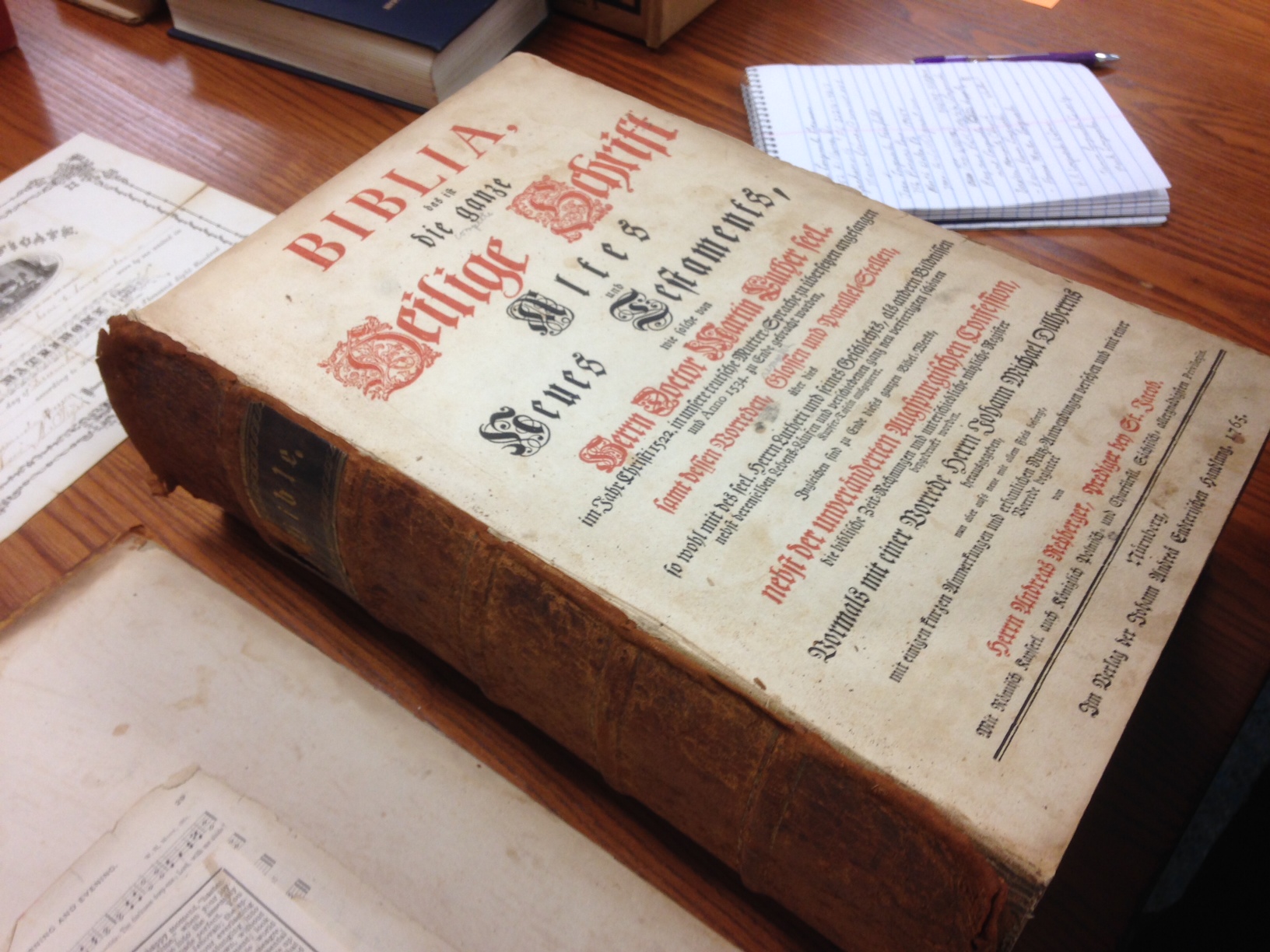
  • An heritage with spiritual depth – When my ancestors arrived in The New World, they brought with them the Holy Scriptures. This one, the Nuremberg Bible, is dated 1765.

BibleNuremberg

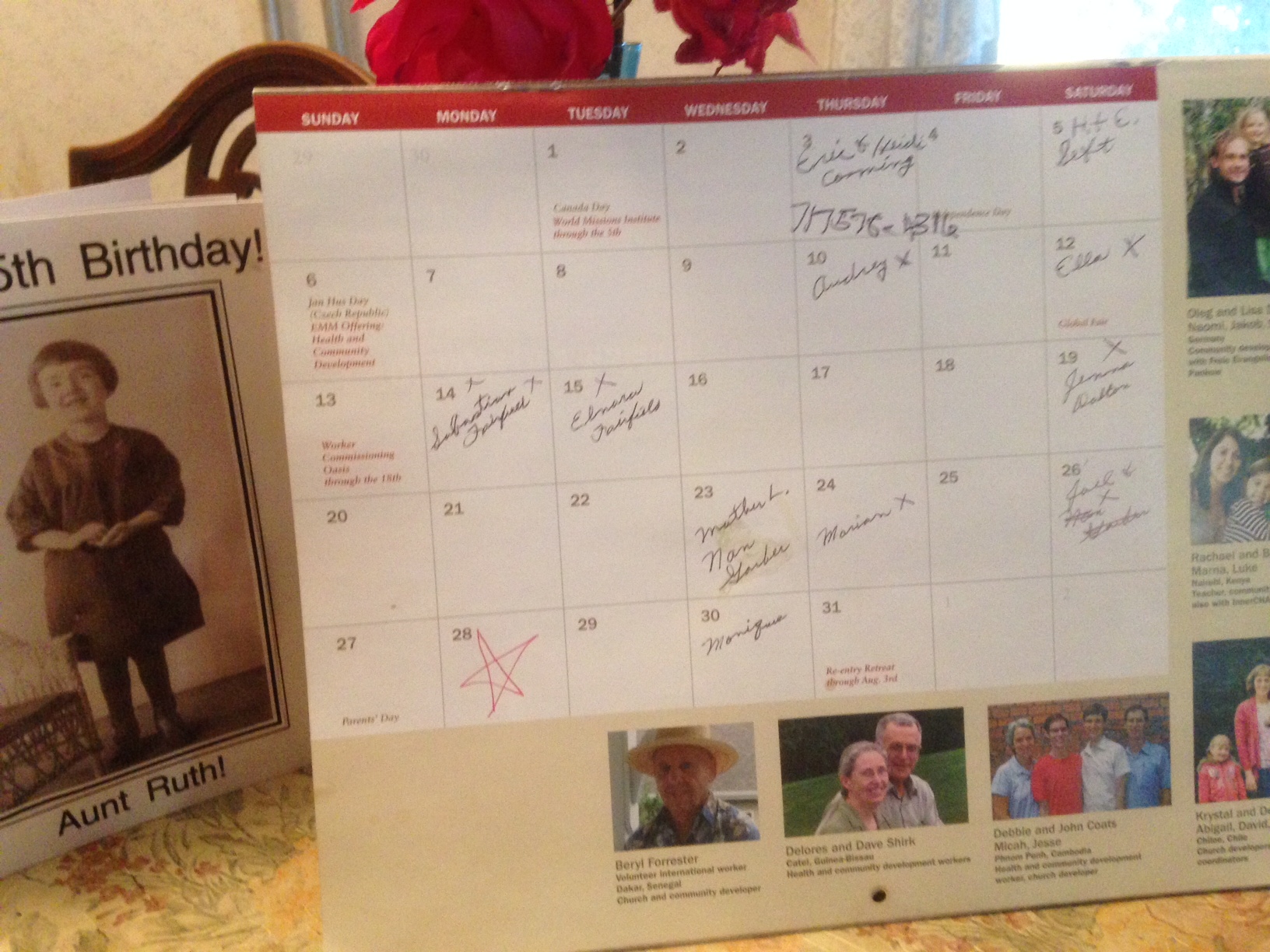
  • The memory of my Mother – When Mother died, she still had a current driver’s license, paid all of her bills by check, and kept appointments on her calendar. She sent birthday cards to all her children, grand-children, and great grand-children, represented by names penned into the blocks. She died on the 28th of July, a date we marked with a red asterisk.

MomCalendar

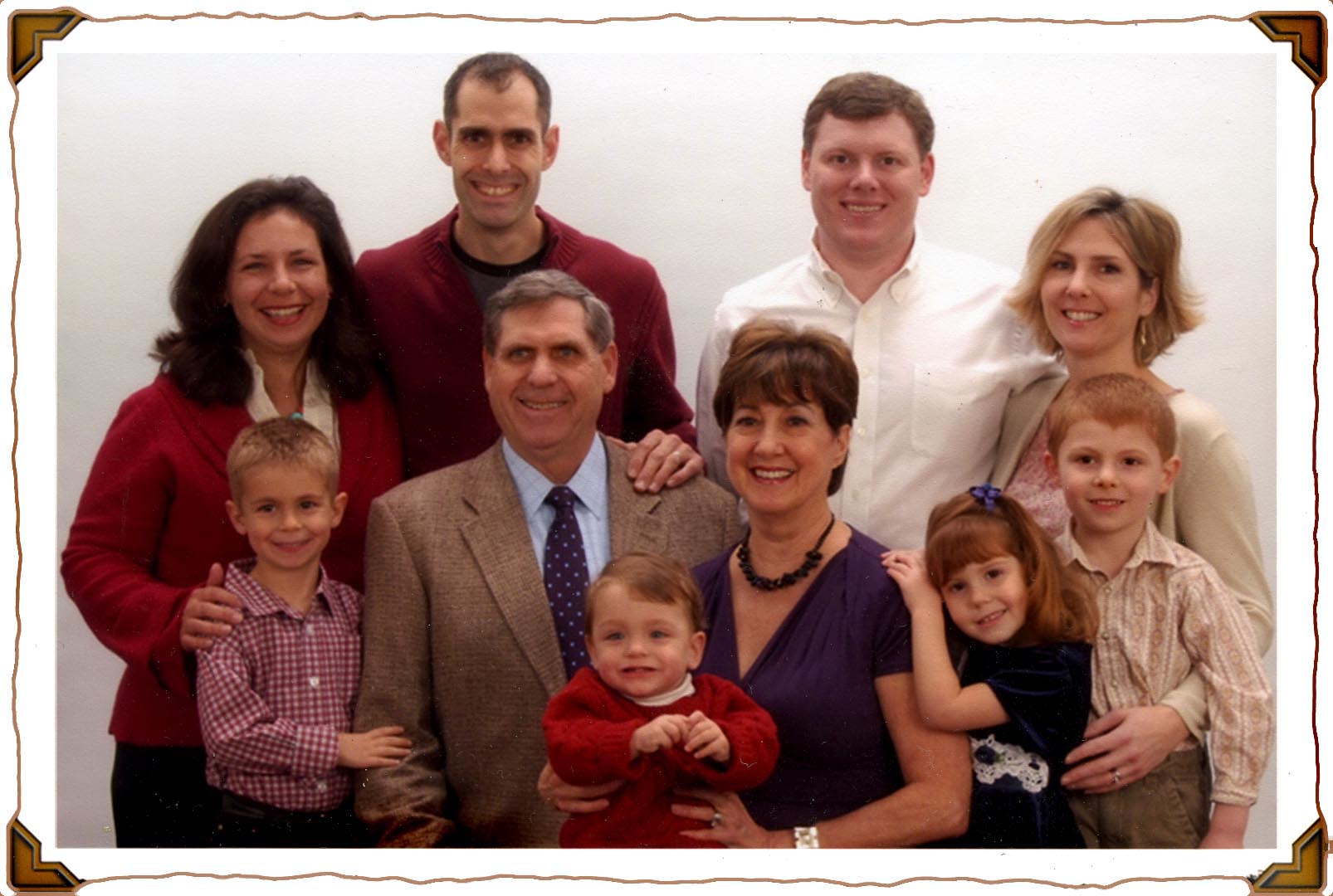
  • My family – This photo is six years old, taken when baby Ian no longer needed a breathing apparatus. Just so you know: our daughter Crista is blonde, Joel, dark-haired. With the older boys now 11 years old, we are due for an update!

Beaman_Dalton_Christmas Card_2008

Ann Voskamp continues by quoting the first reference in Scripture containing the word thanksgiving, mingling peace and gratitude:

And this is the law of the sacrifice of peace offerings that one may offer to the LORD. If he offers it for a thanksgiving, then he shall offer with the thanksgiving sacrifice unleavened loaves mixed with oil, unleavened wafers smeared with oil, and loaves of fine flour well mixed with oil. With the sacrifice of his peace offerings for thanksgiving he shall bring his offering with loaves of leavened bread. 

Leviticus 7:11 – 13   ESV

My conclusion: Gratitude brings peace and ultimately joy.

Writer Voskamp concludes: ” . . . standing straight into wind is how to fly on His wings of grace.”


Finally, a song I remember from childhood from that seems appropriate for the season:

What are you grateful for? Join me in naming your blessings.

Moments of Discovery # 3: Two Butter Stories and an Autograph Book

In June Mother Longenecker and her daughters Marian and Janice created butter-shaking memories in a two-quart jar, making butter using three easy steps:

  1. Pour cream into 2-quart jar.
  2. Shake until you rattle and roll.
  3. Remove the congealed mass from the jar. Add a pinch of salt.

In July, my Southern friend Carolyn honored my birthday in a “Shake-Rattle-and-Roll Butter-Shake” party. Today you can open up an old-time textbook with me and behold first-graders learning about butter making in a reader published by Lyons and Carnahan with the copyright dates spanning the years 1927-1936.

Reader1920s

Interestingly, the Child’s Story Reader also lists three simple steps for butter making expressed in first-grader language:

We got the cream from a cow.

We put the cream in a jar.

We shook the jar.

Jack and Jane even added a pinch of salt to the mixture, and afterwards they had a party of butter on bread!

ButterMakingSchool

Another page shows a recipe for butter milk made with a churn with Aunt Ellen assisting.

ButterChurnBook

More Moments of Discovery

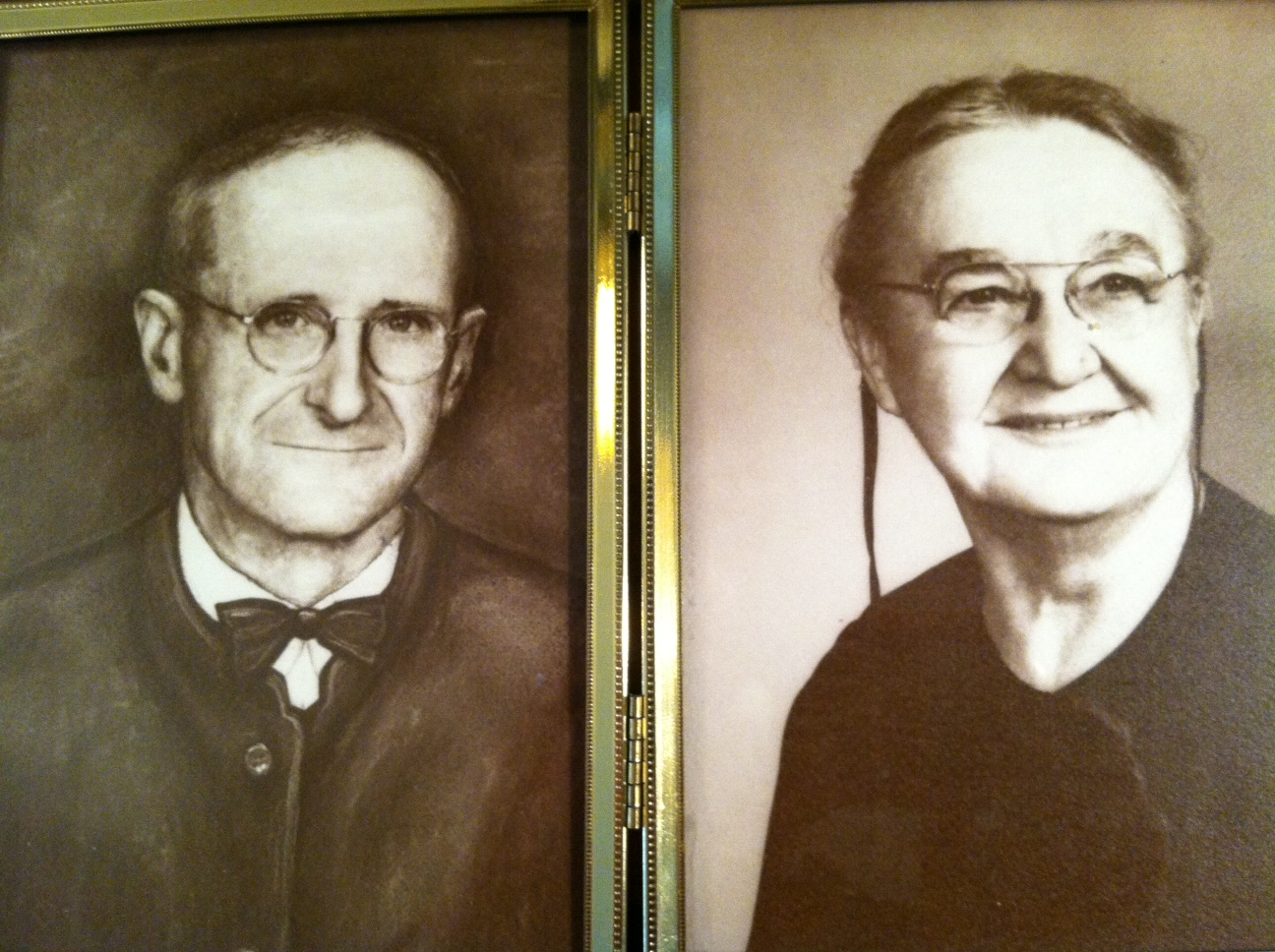
Henry and Fannie Longenecker, Grandparents
Henry and Fannie Longenecker, Mennonite Grandparents

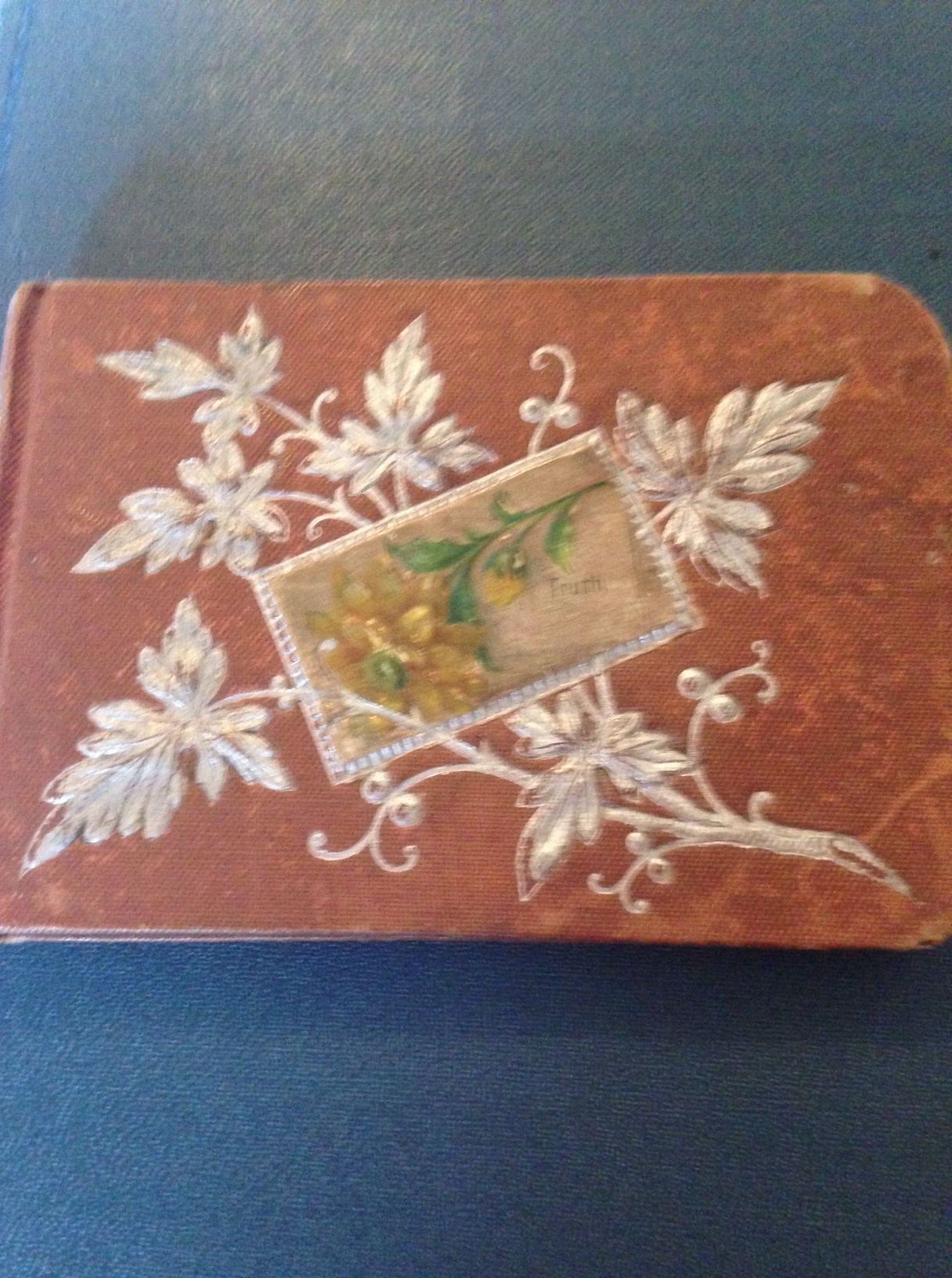
Henry Risser Longenecker, referred to by friends and family as H. R. or “Hen,” was my grandfather on Dad’s side of the family. He died when I was five, but I have a distinct memory of him killing a snake in the grass with a long stick. Like my father, he was a doctor of motors interested in steam engines, Model A Fords, and farm equipment. Until I unearthed his autograph book, I had no idea he had artistic leanings as revealed in his autograph book. Autograph books, common in classrooms in the 1800s, contained signatures, artwork, and bits of poetry. According to Folklore: An Encylopedia of Beliefs, Customs, Tales, Music, and Art, Vol. 1 (edited by Thomas A. Green) autograph books, existed as early as the fifteenth century and were seen as “a mark of gentility until the beginning of the twentieth century.”

The cover of Henry Longenecker’s autograph book reveals artistic flair with a faint inscription of a great virtue taught to every school child, the word Truth visible if you squint carefully at five faint letters appearing close to the embossed yellow flower.

HRLAutographBook

The dedication appears in flowing cursive penmanship with a dove’s beak clasping Cupid’s arrows

HRLsignatureAutograph_final

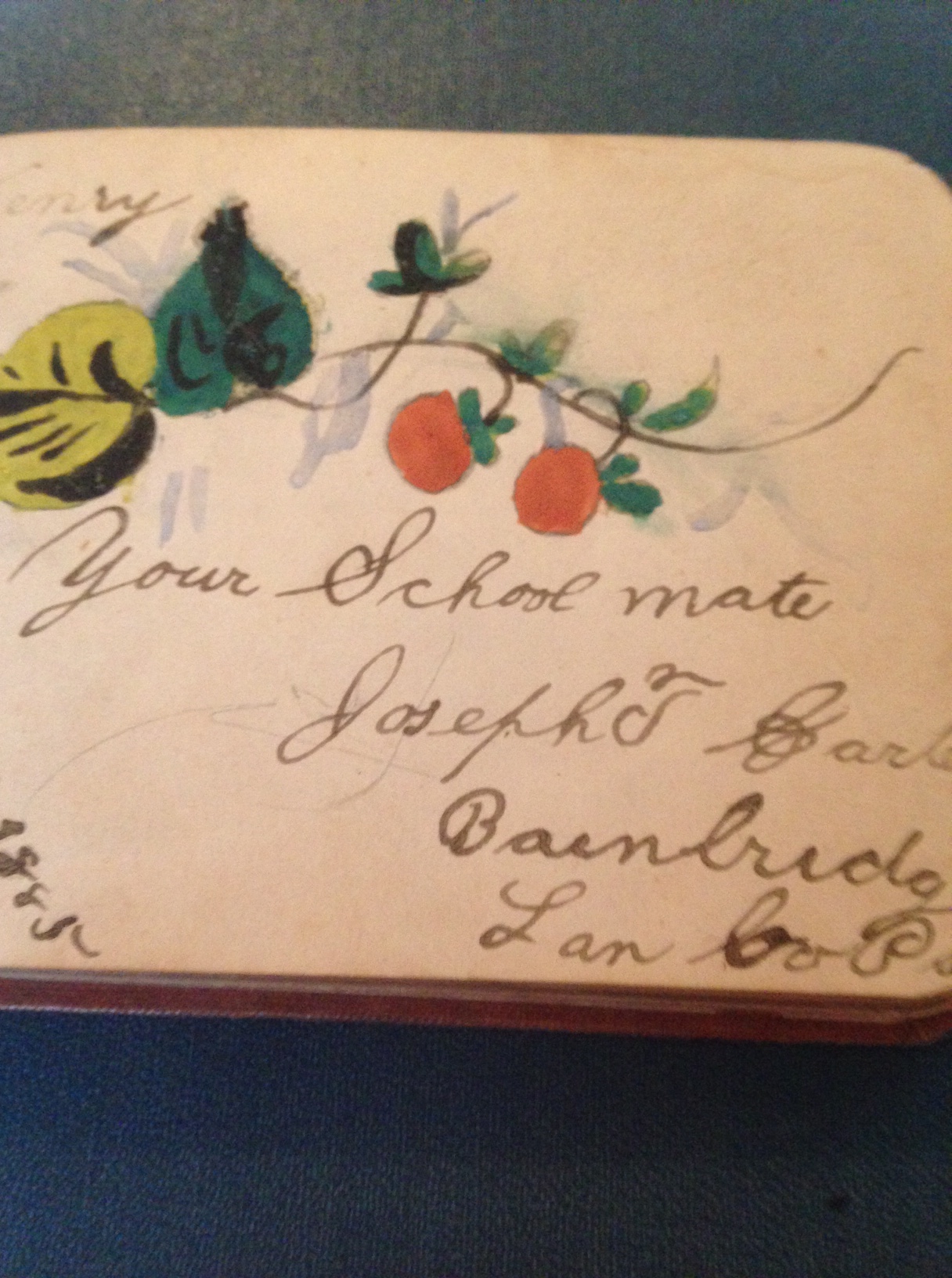
Painted artwork, still-brilliant, graced most pages like this one, complete with signature and date.

Signature: Joseph T.  Garber     Complete date: February 3,1885
Signature: Joseph T. Garber           Complete date: February 3,1885

 Autograph books tell us several things about students in the late 1800s:

1. Penmanship was taught and valued as an artistic skill.

2. Friendship and learning were intertwined. Both were expressed as an art form.

3. Students took great pride in their work.
*  *  *

What else can these books teach us?

Coming next: What color makes you sing?

At Home with Grandkids: Fun Stuff to Do

BAKE
It’s cold outside, maybe even Polar-vortex cold, and Saturdays with Grandma or Aunt or Mom will be spent indoors. One cold day three of our grandkids warmed up the house, at least the kitchen, with cupcake baking.

Gkids_2 kids_ top_chocolate +lowers_071008

Gkids_2 kids_bottom_chocolate+flowers_071008

Yes, it’s fun to help mix up the batter and lick the beaters, but the grandest thing is putting the plastic Gerbera daisy in the flower pot or scooping up the “chocolate” dirt. It’s okay that we get frosting all over our arms and face – Grandma doesn’t care, now does she?


TINKER and LINK

Downstairs the grand-kids find the ottoman/toy chest with classics like Lincoln Logs, just like sets from the 1960s but with added plastic gadgets. Tinkertoys – there is just no way to improve on Tinkertoys!

LincolnTinkerToys


STACK

Do you have a deck of jumbo cards? If so, you are in business. Patrick and Curtis both learned the meaning of the expression “house of cards” as they tried to stack playing cards on a shaky foundation. Incredibly they persisted even after a collapse or two. Bryan Berg, who holds the world record for a 75-story card tower, can rest easy. Still, both boys couldn’t enjoy the challenge more, as Patrick illustrates:

HappyPyramid6162_mod


FLICK

Their dad Cliff retooled this marble flick board from an old oaken desk in 1978 when Crista was 9 and Joel, 7. They both competed in “Flick the Marble,” trying to earn the higher number of points, best out of three! All four grandkids have since enjoyed the board. Even grand-nephew Noah and grand-niece Emily give it a whirl here.

EmilyNoah

GameBoard


WRITE with GRATITUDE

Back in February 2013, when “plain and fancy” launched, the theme of Grah-ti-Tood, announced my first blog post. The grandkids’ gratitude books were featured along with pictures Curtis and Ian had drawn. They are a year older now, and their thanksgiving continues. Sometimes reluctantly. But this time spontaneously, as conversation around the breakfast table last month moved around to things to be thankful for.

GratitudeCurtisIan

Curtis_Ian_Gratitude Book_102514

On October 25, 2014, Curtis is grateful for friends and thankful that the wars are not hurting me badly (Oh, my)! Ian says, “I am thankful that blueberry pancakes are the best!” Curtis’ illustrations are cartoon-like. Ian’s pancake is realistic with shading.

Each unique.


I am sure you thought of a game or activity to add to the assortment here. Suggestions, comments – it’s your turn!

Coming next: Moments of Discovery # 3: Two Butter Stories and an Autograph Book

How to Tell Your Children What’s What

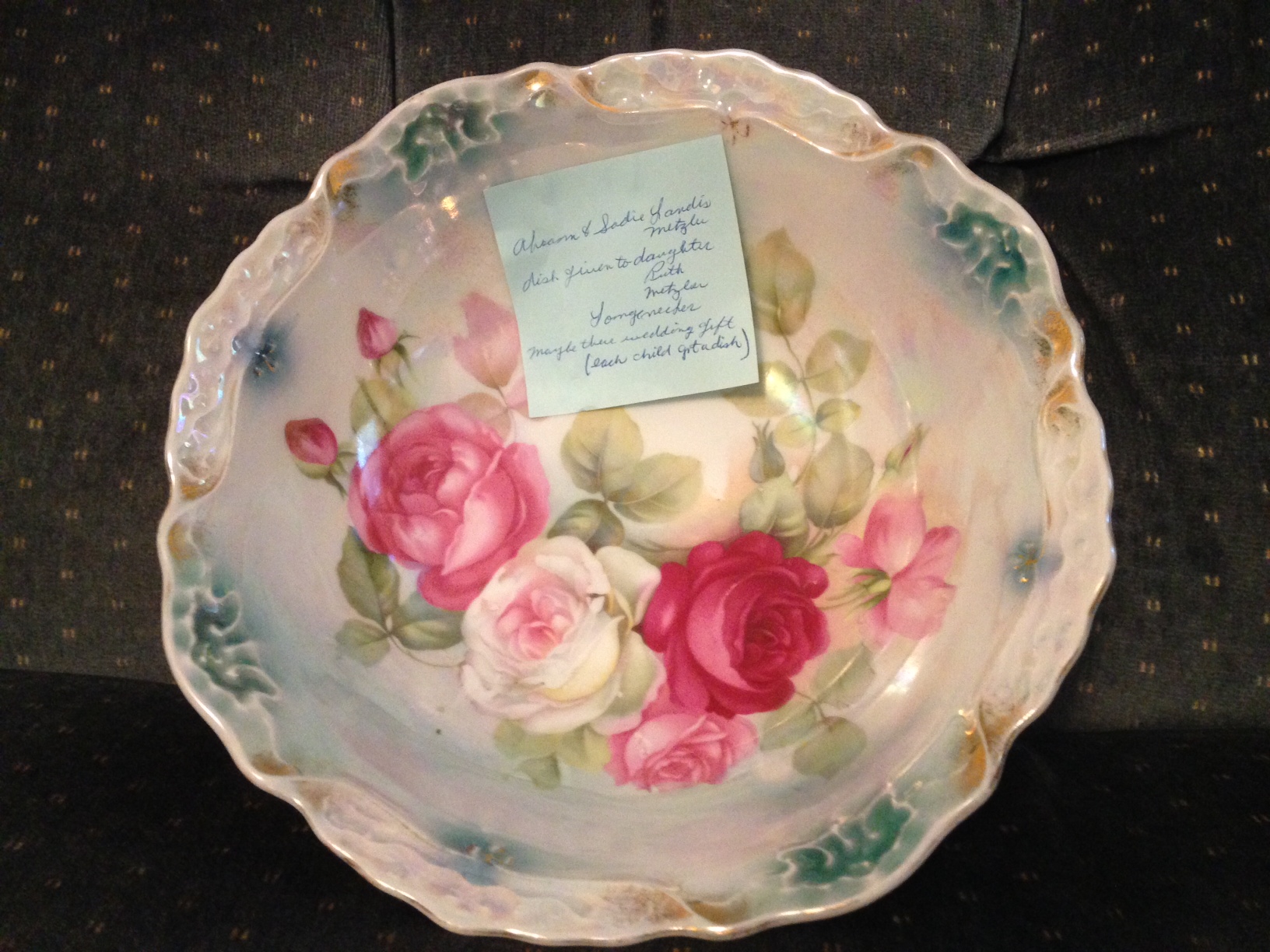
Unlike Hansel and Gretel, whose mother tried to starve them and then lock them out of the house, Mother Longenecker provided well for her children and left behind, not white pebbles or bread crumbs, but hand-written notes tucked away to tag her heirlooms. Each note provides a designated recipient sometimes with a bit of family history.

1. Floral Serving Dish

Dish given to my mother from her parents, Abram and Sadie Metzler on her wedding day

FloralDishMomNoteOne of Mother’s grand-daughters will get this dish no doubt and will know its provenance, which would probably be lost forever, without the note .


2. Keepsake from Mother’s Sunday School teacher at Erb Mennonite Church with teacher Mrs. Kathryn Bomberger. The note emphasizes the biblical account of creation found in the book of Genesis and on the reverse side a quick guide to prayers, parables, and verses commemorating sacred events. You can find more of the history of the Erb Mennonite Church here, including its roots in the Swiss-German Anabaptist culture.

Ruth Longenecker_SS card_front_back_note

Mother's Sunday School Class at Erb's Mennonite Church     Kathryn Bomberger, teacher
Mother’s Sunday School Class at Erb’s Mennonite Church       Mrs. Kathryn Bomberger, teacher

For many months now, this photograph has served as the banner on my Facebook page. When I posted it, I was totally unaware of Mother’s imminent death. Now I am loath to replace it with a different photo. All the ladies are plain here, except the smiling woman seated on my mother’s left. I imagine this shot was taken after Sunday dinner at the home of the teacher.


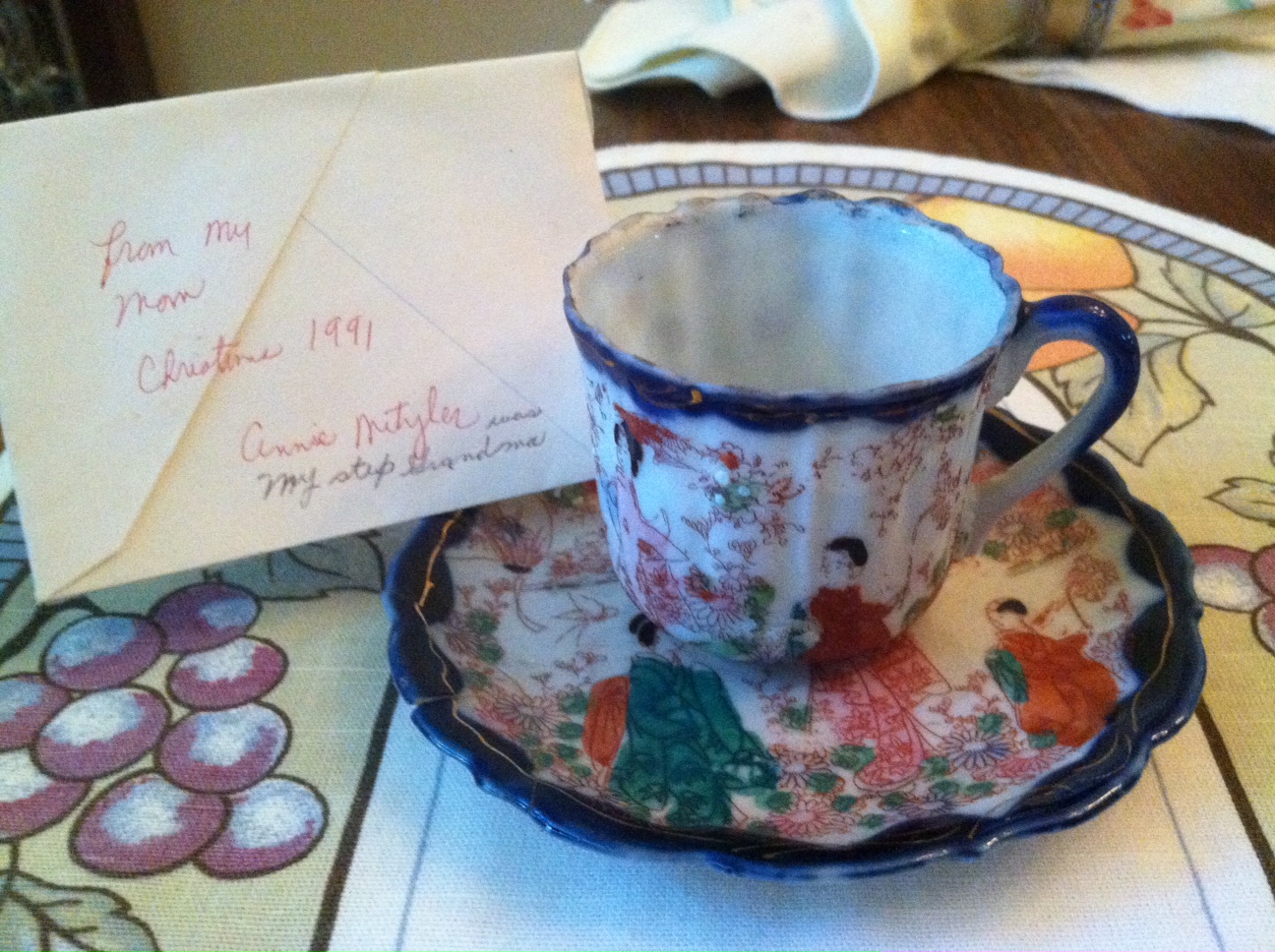
3. Japanese Cup & Saucer

Japanese Cup 2

According to my notation in red in 1991, Annie Metzler gave this set to my mother, who notes in her own hand-writing that she was Mom’s step-mother. This vintage piece is hand-stamped Made in Japan, possibly created during the Golden Age of Japan’s trade with the United States in the 1921-1941 era.

Mother had “secret smarts” that we became more aware of recently, revealing her keen interest in the continuity of memory as she passes both artifacts and notes on to the next generation.


Do you have any family notes like these? Do you tag things you want to pass on? Here’s where to share your wise observations . . .


What’s for Dinner? Dried Beef Gravy and . . .

“Just two generations ago, preparing meals was as much a part of life as eating,” so says Mark Bittman in an article entitled How to Eat Now published in the October 20, 2014 issue of TIME magazine. Although a recent Harris poll reveals that 79% of Americans say they enjoy cooking, probably most get at least a third of their daily calories outside the home. Bittman goes on to show how easy it is to get a nutritious home-cooked meal on the table and includes 3 simple recipes: Vegetable soup which borrows from the freezer aisle, a whole roast chicken with garlic and lemons, and skillet pear crisp recipe which makes for easy cleanup.

TIMEfood

Mother of course cooked two main meals every day. I could count on the fingers of one hand the times we ate in a restaurant. Her recipes were hearty, reflective of the PA Dutch cooking she grew up with, never skimping on the butter.

When I came back from Pennsylvania a few weeks ago, I brought on the plane frozen ham loaf and chipped beef. After the ham loaf is thawed, it’s a cinch to pop it into the oven and serve in a few hours with virtually no prep time.

Preparing chipped beef gravy though, while not enormously time consuming, does require assembling ingredients: dried/chipped beef, butter, flour, milk or cream, and a touch of pepper and then stirring in a skillet on the stove.

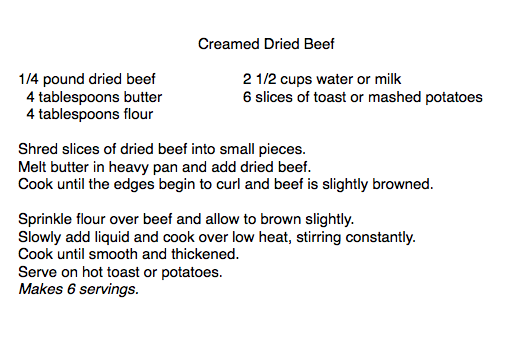
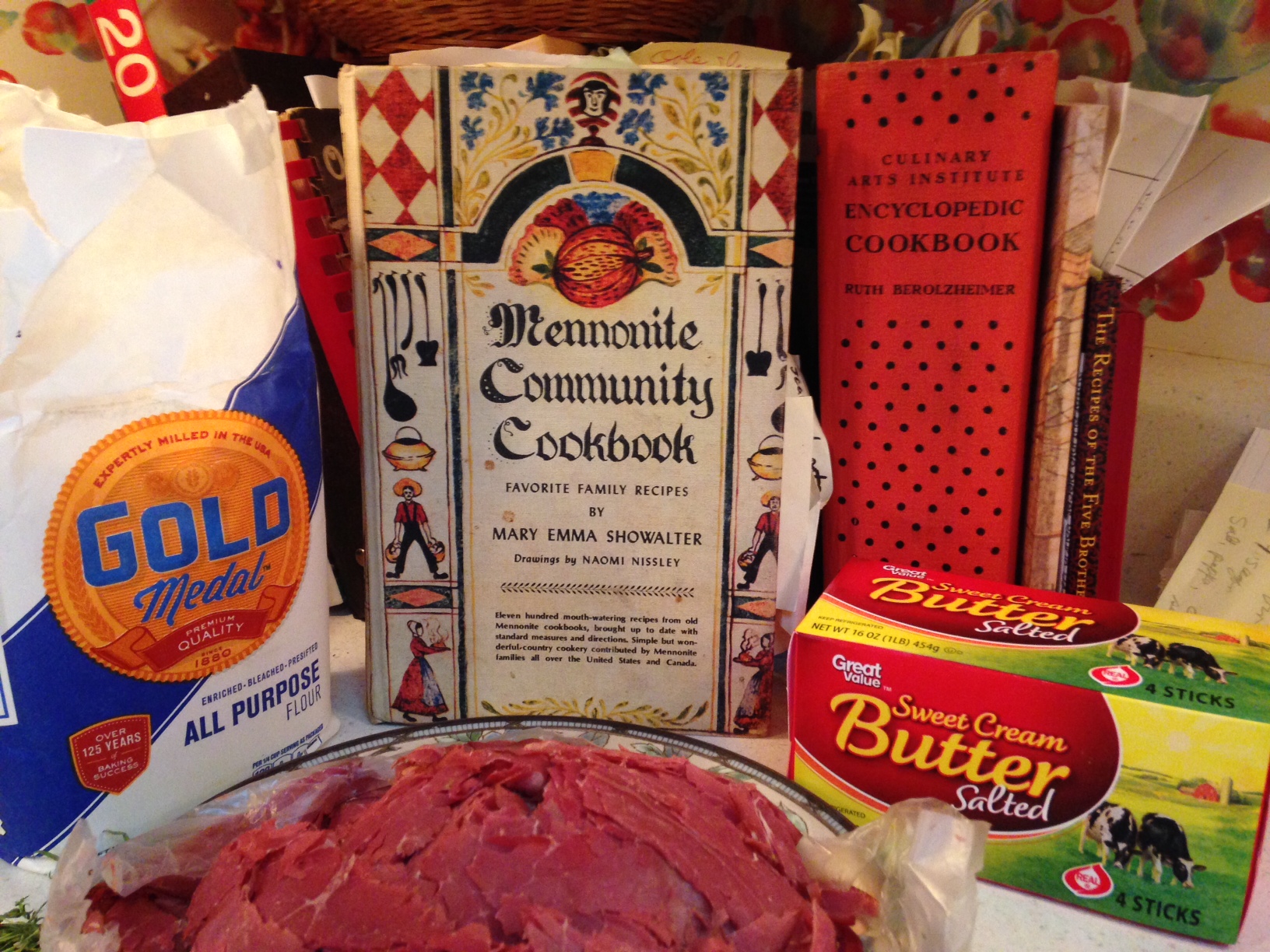
Last Wednesday, I pulled out my trusty Mennonite Community Cookbook by Mary Emma Showalter, a book of 1100 favorite recipes gleaned from Mennonite families all over the United States and Canada. Usually, I use Mother’s recipe in my head and knowing the ingredients to what she called dried beef gravy I add a hunk of this and two cups of that, “just what you think” as she used to say. This time though I will follow the cookbook’s recipe for creamed dried beef, which I see browns the beef with the butter.

DriedBeef RecipeNOname

RecipeDriedBeef

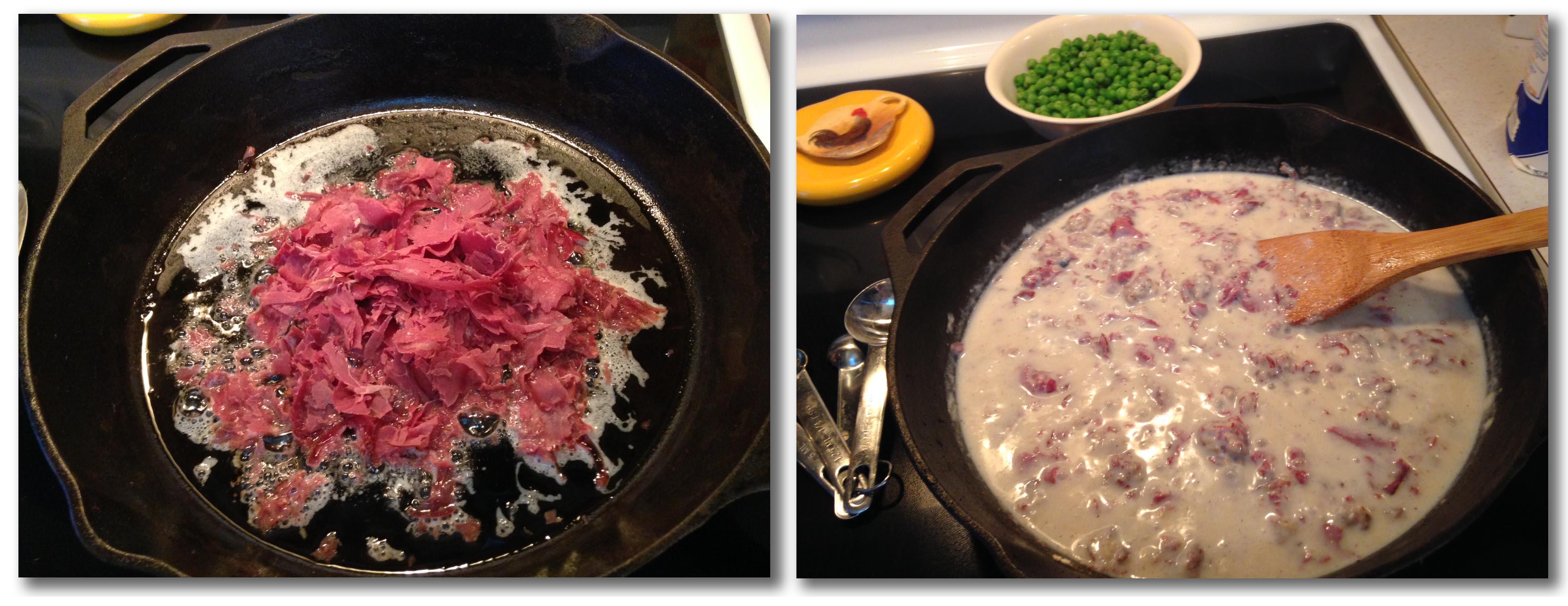
Next I assemble all of the ingredients and fire up the stove, beginning with melting butter in a hot skillet.

butterMelt

Adding the dried beef to the melted butter sends a hearty aroma throughout the kitchen. Then, sprinkling flour over the butter and beef, I create a roux to which I slowly add milk. Depending on your sensitivity to calories, you could use water, milk, or cream. I always use milk. Keep on stirring until the mixture becomes smooth and thick.

Dried Beef+ButterFlourStir

Finally, your creamed dried beef, which Mother always referred to as dried beef gravy, is ready to serve over toast, over mashed potatoes, as you wish.

foodDisplayed

Typical Menu

Dried Beef Gravy over Mashed Potatoes

Garden peas

Applesauce

Mark Bittman would probably raise his eyebrows over the amount of butter and flour in the creamed dried beef recipe. And of course this menu is heartier than his lower calorie menu of vegetable soup, roast chicken with pear crisp but, oh, is it delicious!

*  *  *

For years I thought of creamed dried beef as a Pennsylvania Dutch dish. After all, it appeared on page 58 of the Mennonite Cookbook, 1972 edition. Recently, my sister-in-law Terry told me her mother made the same recipe when she was growing up in California.

How about you? Did you enjoy creamed dried beef (or a variation) growing up? Is this recipe part of your cooking repertoire now?

 Inquiring cooks want to know. . .