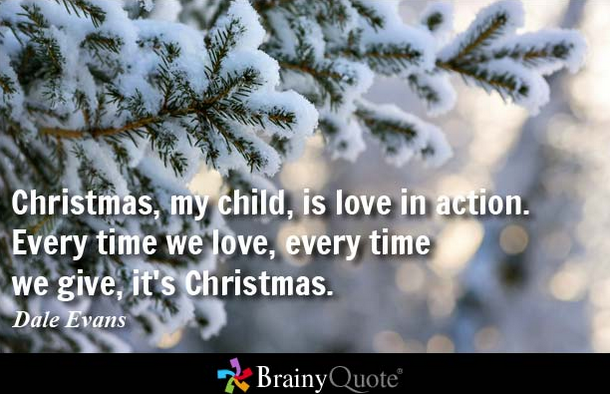
Christmas is not [just] a time nor a season, but a state of mind. To cherish peace and goodwill, to be plenteous in mercy, is to have the real spirit of Christmas. – President Calvin Coolidge
I will honor Christmas in my heart, and try to keep it all the year. – Dickens
* * *
Time to be Aware
Time back tracking:Hezekiah prays for a longer life, and the sun moves backward 10 degrees, for a sign of that promise fulfilled.
Isaiah 38:8b So the sun returned ten degrees, by which degrees [on the dial thereon] it was gone down.KJV
Time standing still:Joshua asks God for the sun to stand still to ensure victory for Israel.
Joshua 10:13bSo the sun stood still in the midst of heaven, and hasted not to go down a whole day. KJV
Fretting over time:“But at my back I always hear / Time’s winged chariot hurrying near. . . “ — Andrew Marvell “To His Coy Mistress”
According to a recent study cited by Jennie L. Phipps (top 20 weekday activities), many retirees spend most of their time sleeping and watching TV or movies.
Apparently, not everyone hears “Time’s winged chariot hurrying near!”
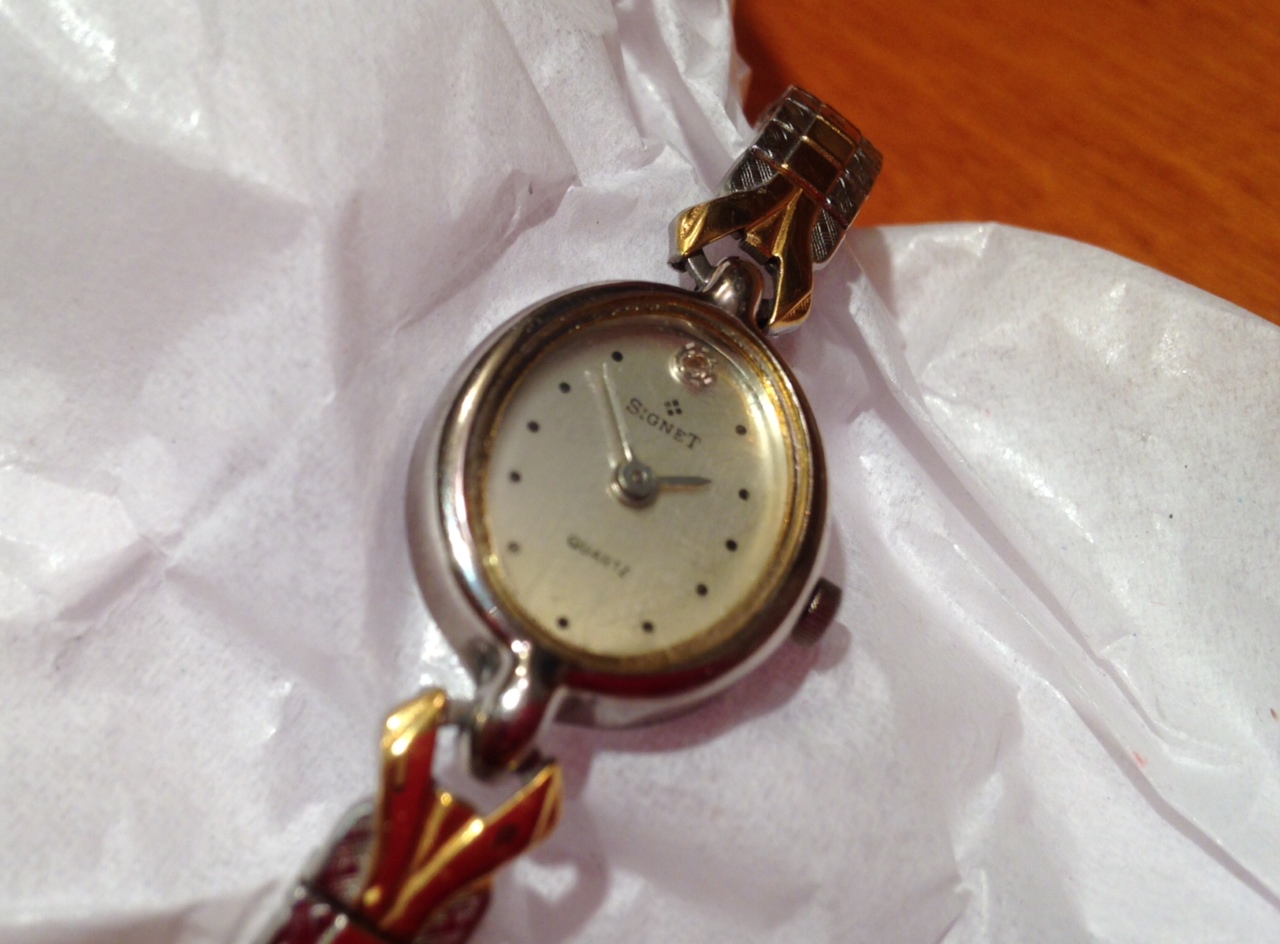
Mother’s wristwatch
Time, in Balance:
To every thing there is a season, and a time to every purpose under the heaven. Ecclesiastes 3:1 KJV
* * *
Holy Curiosity: Time to Stay Alive
The important thing is not to stop questioning. Curiosity has its own reason for existing. One cannot help but be in awe when he contemplates the mysteries of eternity, of life, of the marvelous structure of reality. It is enough if one tries merely to comprehend a little of this mystery every day. Never lose a holy curiosity. – Albert Einstein, German-born physicist
Life must be lived and curiosity kept alive. One must never, for whatever reason, turn his back on life. – Eleanor Roosevelt
Time for Blessing
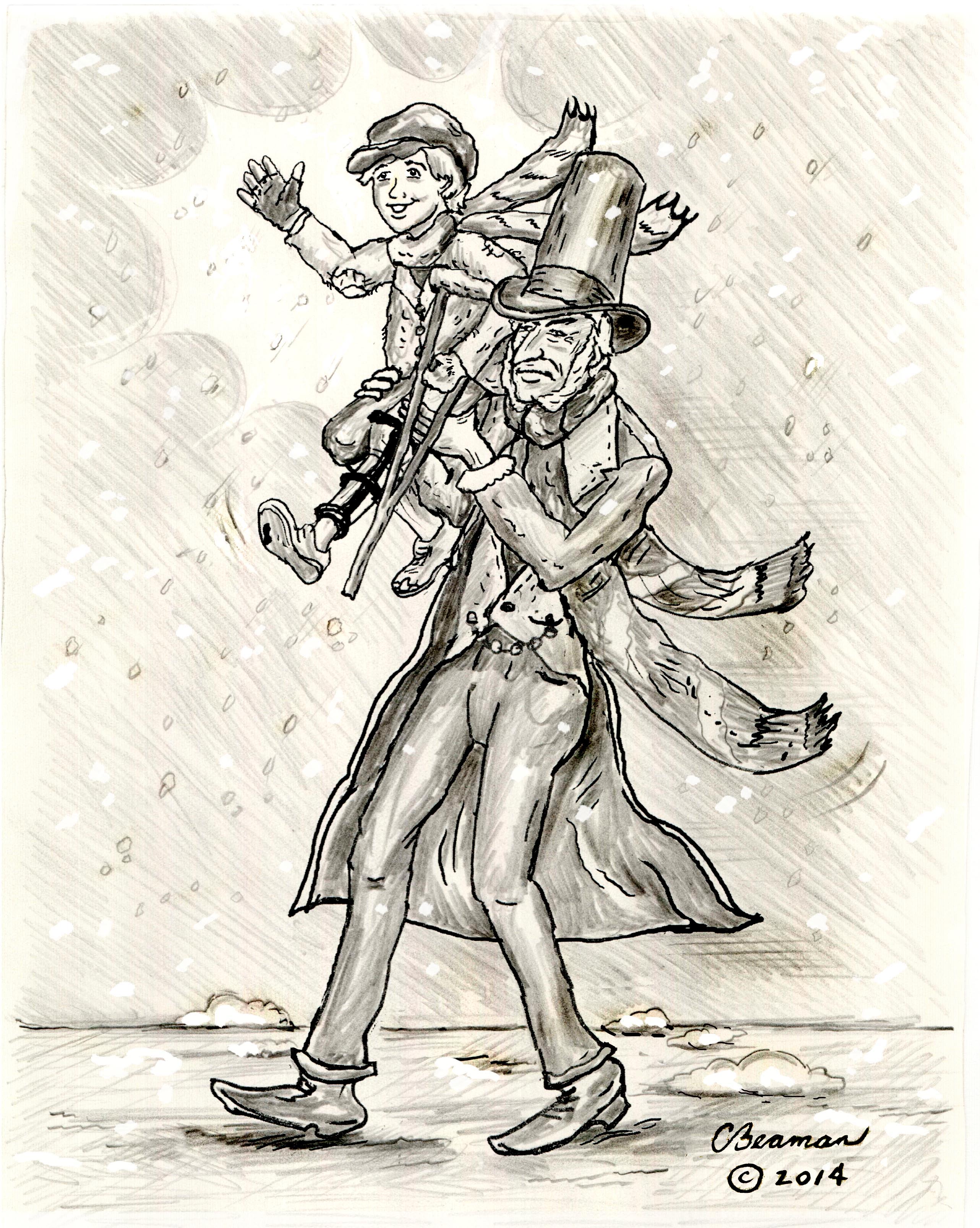
GOD BLESS US, EVERYONE! Tiny Tim
Your turn: How does the passage of time affect you? What are you most curious about? How do you keep the spirit of Christmas (or Hanukkah) alive after the season passes?
This post first appeared Christmas 2013. The trees are similar, the presents are different, but the message never changes. Blessings to all my readers and commenters this past year!
Well, there was none. Not one. Not ever. Despite the fact that the Christmas song, “O Tannenbaum” is of German origin, most Pennsylvania Dutch Mennonite homes of the 1950s and 60s did not light Christmas trees. Decorated trees were lumped together with other worldly pleasures like jewelry, makeup, and movies and therefore not permitted. At least the Ray Longenecker family did not have one. We were plain and I longed for some fancy.
One year I found a limb from our maple tree out front with little branches that looked as forlorn as Charlie Brown’s tree. I brought it into the living room and tried to find trinkets and a red ribbon or two for decoration.
It was a sad little tree. It looked something like this, only wedged into our living room radiator and anchored by balled-up newspaper no doubt.
Baby Jesus and his mother Mary are the focus of the beautiful Christmas story in scripture. In a typical nativity scene, by Mary’s side is Joseph and then in a widening circle shepherds and wise men (an anachronism, for they came much later in the story) and assorted stable animals. Interestingly, Mary is the only woman pictured in the scene.
Recently, I pulled out a box of tiny Christmas greeting cards printed in Belgium from one of the drawers in Mother’s dining room buffet. Here, two female figures dominate the drawing, one an angel with tiny wings in sandals and the other an inquisitive little girl. But the Bethlehem stable with the brilliant star overhead is obviously the topic of their conversation.
Little Girl: What’s going on here? Why is there a dazzling star just above the manger?
Angel: A special baby has been born tonight.
Little Girl: What is his name?
Angel: His name is Emmanuel, God with us.
Little Girl: Who else is in the stable with the baby and his mother?
Angel: Standing right by Mary is Joseph, who will help take care of Him until he grows up.There are shepherds who were told by other angels appearing in the sky to find the baby Jesus in a manger. These angels told them such great news that they left their sheep to see the wonderful sight.
Little Girl: I want to go to the manger too. Will you come with me now?
* * *
Whatever your beliefs, the cards and carols of this season call us all to listen with the third ear, that inner sense where the possibility for hope and joy reside. These twin themes resonate in so much of the music we hear:
I Heard the Bells on Christmas Day, cited in a recent blog post
Do you Hear What I Hear? (See . . . Hear . . . Know . . . Listen)
And finally the narrator’s last lines in The Polar Express:
At one time, most of my friends could hear the bell. But as years passed, it fell silent for all of them. Even Sarah found, one Christmas, that she could no longer hear its sweet sound. Though I have grown old, the bell still rings for me. As it does for all who truly believe.
What story or song this season has special meaning for you?
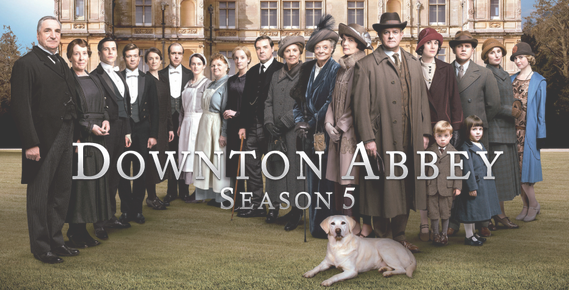
When I registered online for the 5th season premiere of Downton Abbey, there were fifty-nine (yes, 59!) salutations to choose from on the drop-down menu. These included Father, Monsignor, Cantor, Rabbi, Lieutenant Commander, Dean, Major, Mayor, and the humbler Mr. or Ms. I didn’t see “Lady”! Other designations included Sister and Professor. At different stages of life I have been both: Sister Longenecker and then Professor Beaman.
Downton Abbey is a cross-section of the social strata of post-Victorian England, an assemblage of characters from both upstairs and downstairs. Here it is reflected in the postures and apparel of cast members in the series: maids in aprons, ladies in plumed hats, men hatless or in fedoras.
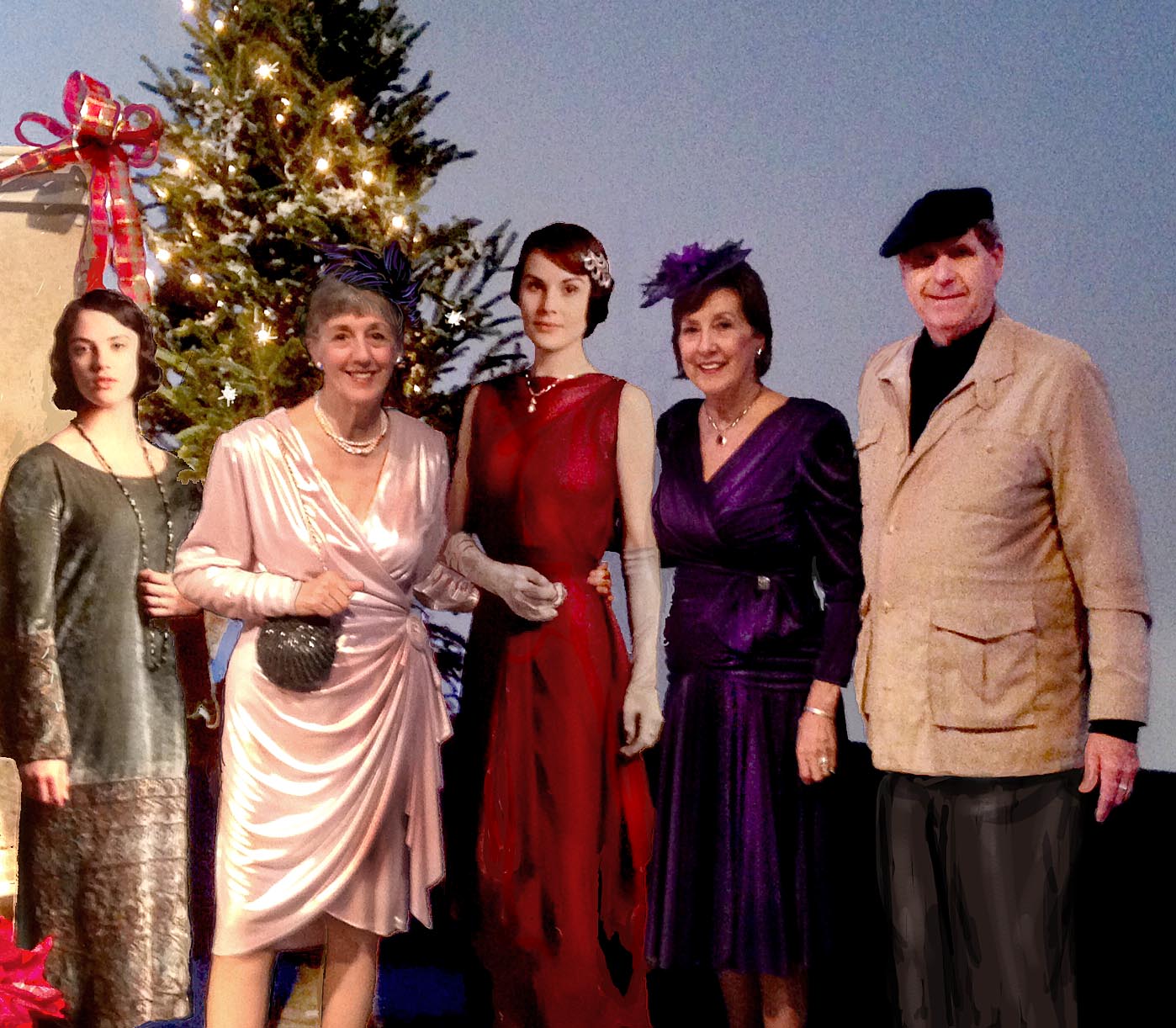
Last year when our PBS station invited us to a gala celebration for Season 4, we stepped right into the show along with other party goers wearing period costumes and cast members appearing as life-size cutouts for picture taking. You can see it here.
This year we were greeted at the door with a trivia card. Among the questions was this: Lady Violet thinks her new gardener, Pegg, has stolen what item for her home? The choices are knife, cane, bell, or nutcracker. I don’t remember, do you?
With souvenir tea bag and an invitation to join in the #BIGsip with #DowntonPBS
First, we met a maid from downstairs with duster in hand . . .
A clansman from across the border, clad in plaid . . .
Middle-class Americans making a vain attempt to mingle with the British aristocracy . . .
Sister Janice and I pose before the entire cast with headgear rivaling the goofiness of Princesses Beatrix and Eugenie at the wedding of Will and Kate:
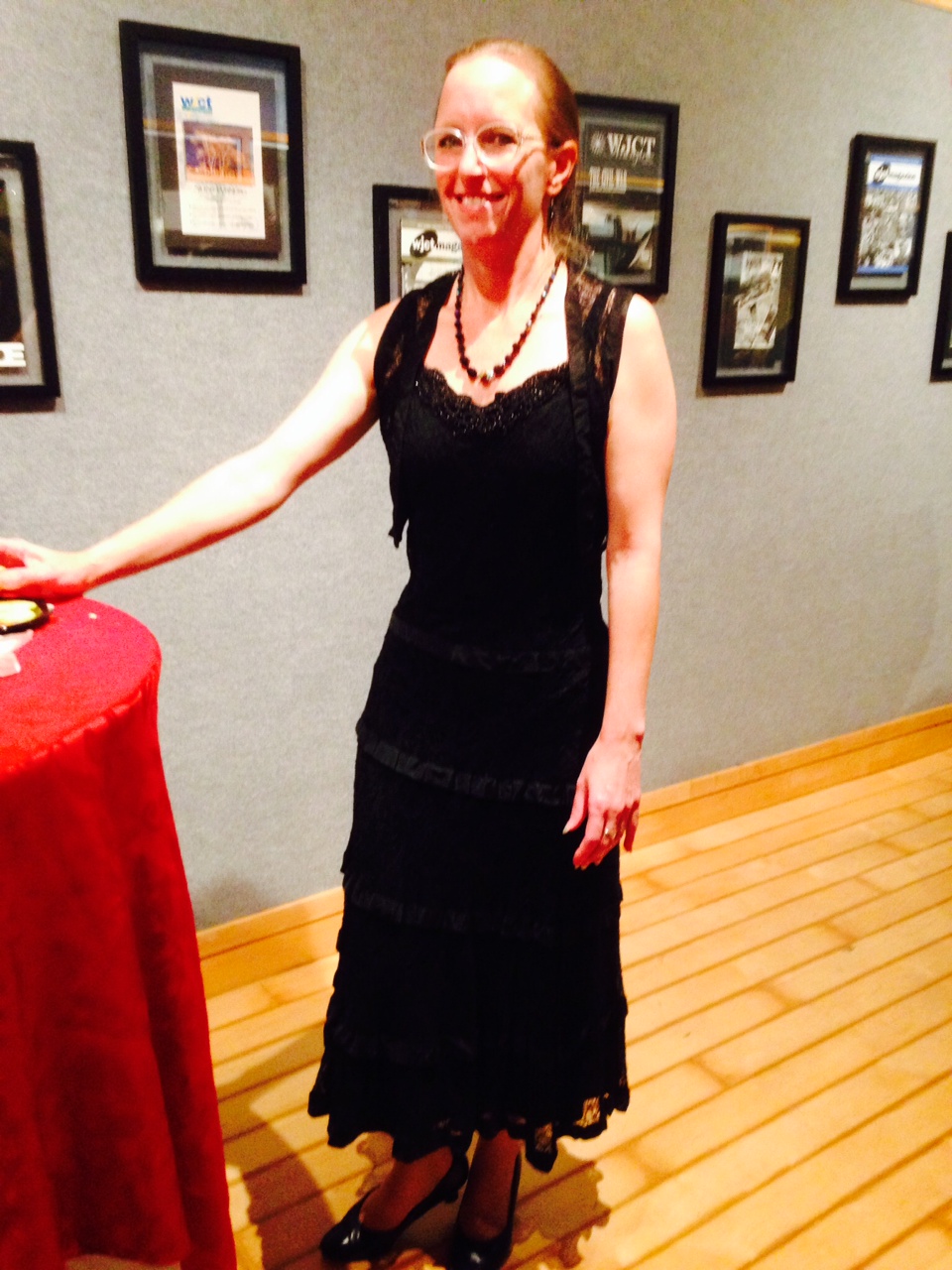
And finally, the genteel Jennifer Pastore, proudly garbed in a more-than-100-year-old dress worn by her great grandmother, Elizabeth Vann, the first woman editor of a newspaper in Florida (Madison, FL). A flawless little black dress – a perfect fit!
And then, the climax of the evening: the screening of episode 1, season 5, which begins in 1924 – the radio a hot, new technology.
We were on the edge of our seats as each scene unfolded, asking, What happened to Edith’s child? Where is the fire? What about Anna?
And then of course, scenes with seeds for future episodes:
Who outwits the wily Thomas?
Who wears a wedding gown?
Does Mary have a new love interest?
What is Carson up to?
Throughout the movie, there were more zingers than usual from the Dowager Countess, Lady Violet: “There’s nothing more simple than avoiding people you don’t like!”
Do you think Dowager Countess Violet is right in either quote? Why or why not?
Care to comment about social class in the show? Or in present-day society?
P.S. Despite rumors to the countrary, the station manager announced unequivocally that there will be a Season 6!
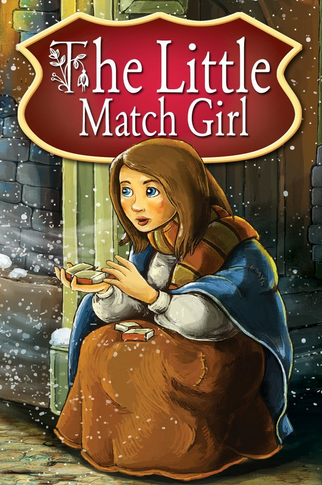
On a cold winter’s eve, a poor girl shivering on the street tries to sell matches afraid to return home to her father who would beat her for not selling all her matches.
Cover: Courtesy Amazon Books
Finding shelter in a nook, she lights matches to warm herself. The matches ignite her imagination and she envisions a Christmas tree and a holiday feast. As she looks skyward, she spies a shooting star and recalls her dead grandmother remarking that such a star means someone is dying and going to heaven. As she lights the next match, she catches a vision of her grandmother, the only person ever to treat her with love and kindness. Finally running out of matches, she dies and her soul is carried to heaven. The next morning, passersby find the little girl dead in the street. They feel pity for her but cannot bring her back to life.
Lives Cut Short
Trayvon Williams and Michael Brown must have had visions of a better life, a bright future. Their visions will be unrealized, their lives cut short by a bullet. While there is still controversy over the details surrounding each case of police intervention, there is no doubt that the outcome raises questions about police reaction in a perceived threatening situation. It should be noted here that black officers, greatly outnumbered by whites in the police force, account for little more than 10% of all fatal police shootings according to one report. But of those they kill, 78 % are black. Main stream media, however, gives little attention to such stories or to those involving black officers and white offenders.
Author Mary Gottschalk speculates on what prompts these high profile shootings of black teens. In a recent blog post, she comments on the lack of respect for cultural differences and asks, “. . . is it a system that trains a white police officer in a black community, when confronted by what appears to be an angry or aggressive black man, to shoot first and ask questions later?”
One commenter to this essay, Janet Givens, offered one explanation: “I’d say fear plays a factor . . . the fact that we often fear what we don’t know: we demonize our enemy to feel morally superior so we can justify defending ourselves.”
And so the conversation continues . . . .
Another Time – A Different Story
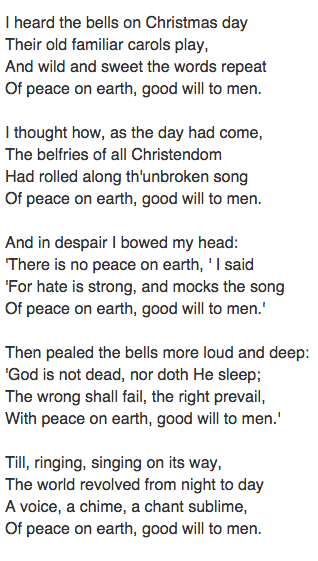
We tend to believe that we live in the worst of times. Maybe this is true. Yet poet Henry Wordsworth Longfellow (1807-1882) documents a terrible time in our nation’s history, the Civil War, fought to secure freedom from slavery. He wrote one of his most famous poems, I Heard the Bells on Christmas Day, having survived the outbreak of the Civil War, the untimely death of his beloved wife Fanny during a house fire, and a severely wounded son Charles. Theses lyrics written in 1864 show the depth of his sorrow but suggest hope and peace as the stanzas progress:
At Christmastime 2014, celebrating peace and joy seems like a mockery given the tumultuous year we have experienced. But wars and unrest have always existed. “Hate is strong and mocks the song of peace on earth goodwill toward men.”
Yet, hearts open to hope can bring a renewed call to action toward peace.
Call to Action
Author Gottschalk in her post last week revealed the little-known personal details about Michael Brown’s mother, Lesley McSpadden, who “was not allowed to approach him as he lay in blazing sunshine in a public street for four hours. Once his body was removed from the street, she was not allowed to see it for two weeks.”
Shirley Showalter, another commenter on Mary’s post, demonstrates what a peaceful call to action looks like as she remarks:
Because of this essay and the story you told about Lesley McSpadden (the mother of Michael Brown), I am going to write her a letter. It’s a little thing, but I want her to feel how this story touched me. Thank you for writing.
Like the little match girl, none of the lives lost on our streets or in our schools can be brought back, but they leave a legacy that can motivate us to hopeful action.
For a shorter version (2′ 20″) of “I Heard the Bells on Christmas Day” by Burl Ives, click below.
Your Turn
What is your take on any of these stories? An opposing viewpoint?
Welcome to my 200th blog post! It’s here because you have visited this blog, a time or two, or maybe way more often. Writers write for many reasons, most importantly to express themselves. But most writers don’t like to write in a void. Writing is communication. And communication, for me at least, is a two-way street.
Julie Powell agrees with me. Remember Julie Powell in the movie Julie & Julia?
Julie, using Julia Child as her muse, conceives an idea for her blog in this scene:
The quotes below are excerpted from the movie script, all based on her best-selling book with a much longer title:
WHY DO YOU DO IT?“It’s a regimen, Mom, like doing pushups!”
SOMETIMES IT’S FRUSTRATING!Julie shouts at her computer: Is there anyone out there reading me?
Then later: Today I had 12 comments from readers and I didn’t know any one of ‘em!
WHY WE CONTINUE . . .
Julie comments: Julia taught me what it takes to find your way in the world. It’s not what I thought it was. I thought it was all about-I don’t know, confidence or will or luck. Those are all some good things to have, no question. But there’s something else, something that these things grow out of. It’s joy.
Remember getting a gold or silver star on your homework papers in grade school? Well, writers who read each other’s blog posts do something similar – they nominate those they admire for the One Lovely Blog Award. It’s not a gold star. It’s a red heart and looks like this:
In October, two admirable authors nominated me. Thank you to authors Kathy Pooler and Mary Gottschalk. In November, notable writer Joan Rough nominated me, so it is high time to acknowledge this honor and pass on the baton. I consider all three of these writers my mentor/encouragers.
The Rules:
Name and thank those who nominated you.
Share 7 things about yourself that others may not know.
Nominate 15 bloggers (or as many as you like) to whom you would like to pass on the nomination.
7 Little-Known Facts about Me:
I don’t wear false teeth.
My hair was not cut until I was 26 years old.
I’m still married to my first blind date.
My first engagement ring was flushed down the commode by our 3-year-old daughter. She doesn’t remember. I forgave. She was only three.
One summer after college I traveled to 47 states with a friend from college. I had no idea then that my husband-to-be was living in the Pacific Northwest.
One winter a snowboarder hit me while skiing. I became a pretzel, untwisted myself, and stood up again, wobbly but unharmed. I thank God and Mr. Pilates.
First time in over 30 years I haven’t washed the windows in my house. (They didn’t crack or hit me with blinding light.)
My nominees come from South Africa, Australia, and all over the United States. Two are men, who I hope are not too shy to accept an award with a red heart in it. Note: I did not nominate those whom others have named.
These nominees may choose to participate or not. Also, there is no pressure to respond immediately. Remember, it’s taken me more than a month! Just know that I admire your writing and want to honor you in this way:
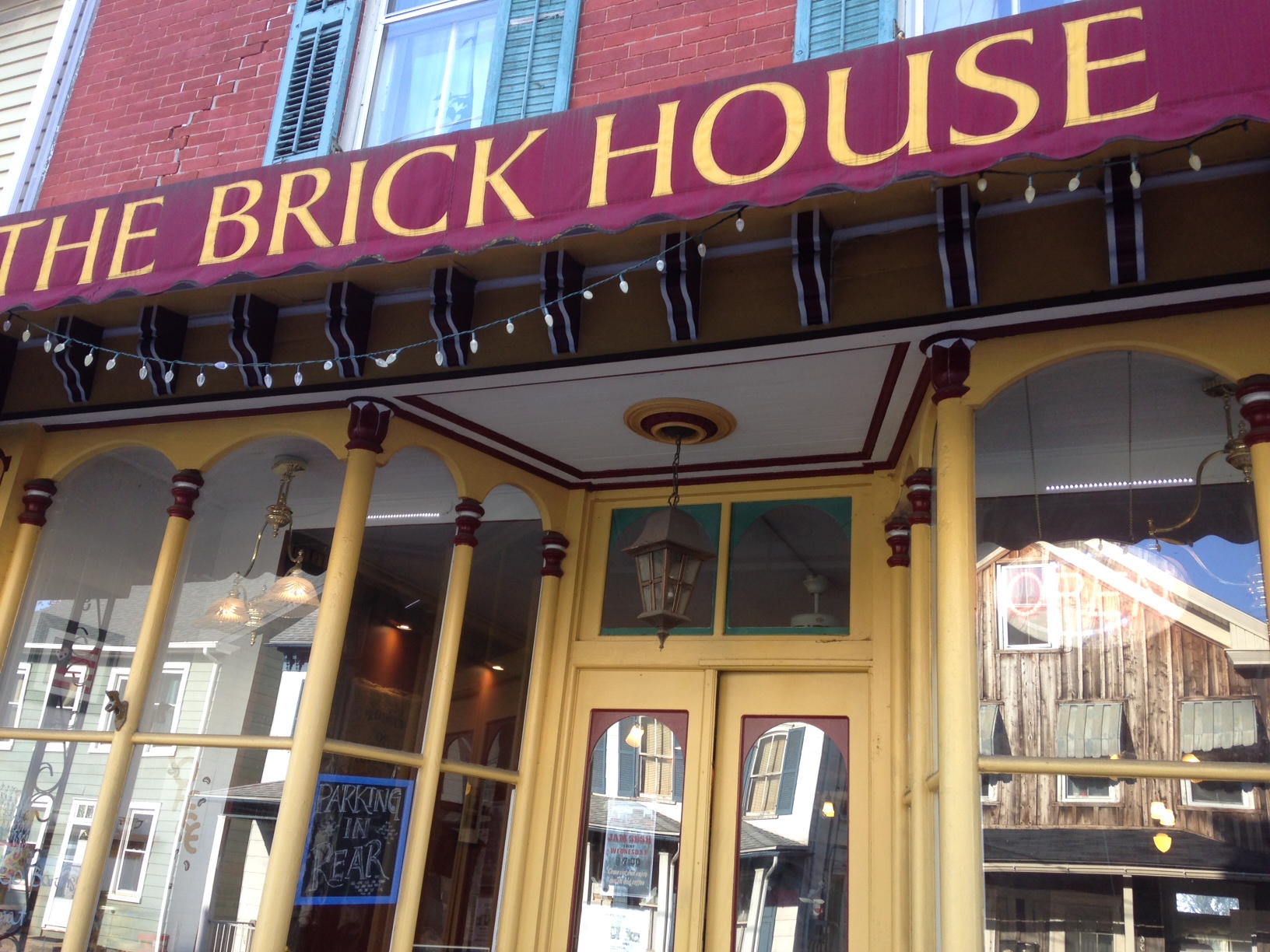
The Brick House Cafe along Main Street in Manheim, Pennsylvania, is getting free advertising from me today.
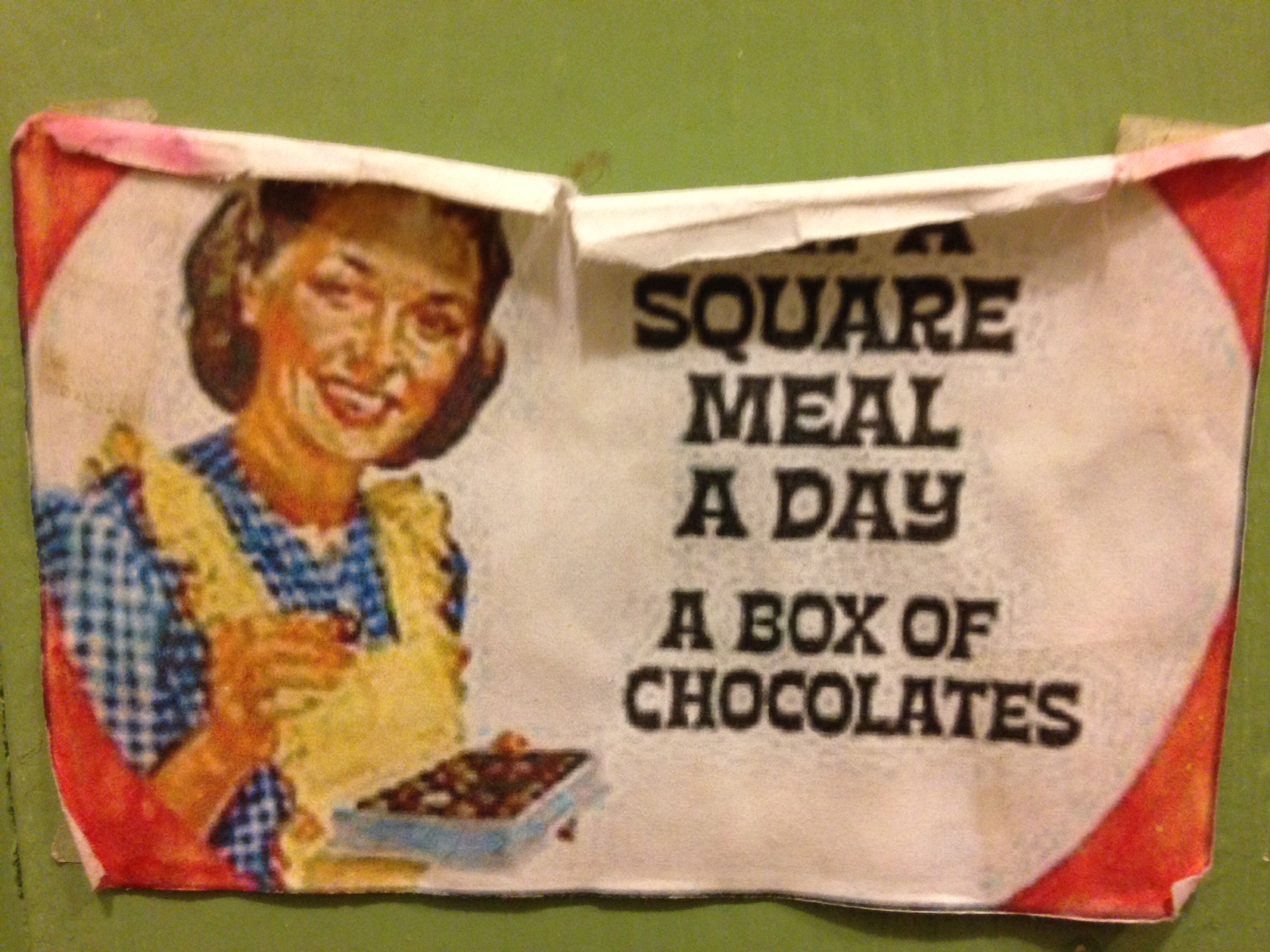
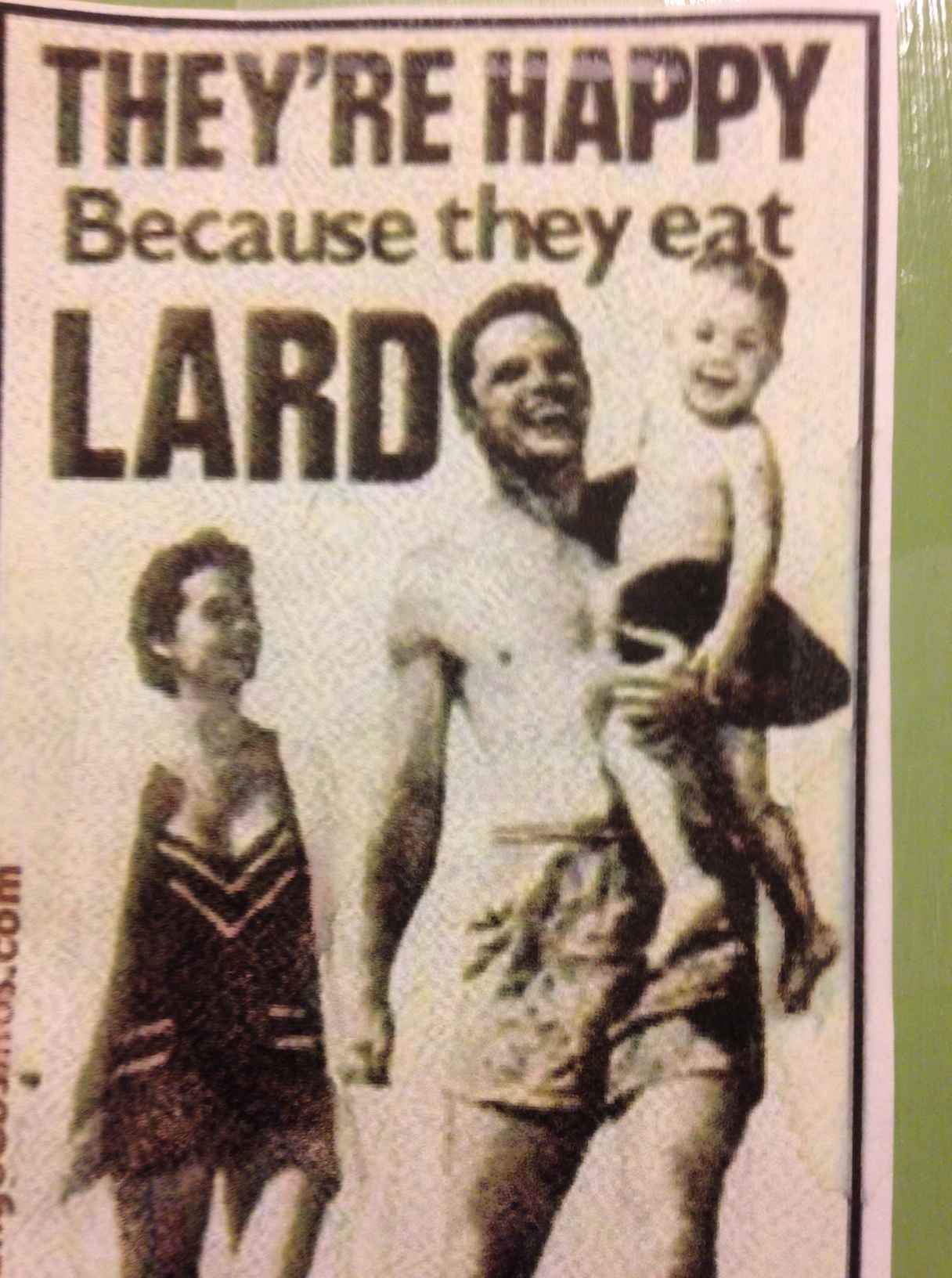
In a sister city named for its counterpart in Mannheim, Germany, The Brick House serves freshly prepared soups, salads, and sandwiches. It also serves up another “S” – Signs from the 1950s. Take a look!
And finally, this:
All posted on the back of the Ladies’ Restroom door! Now I have to wonder what was posted in the Men’s Restroom. . . .
Country Meadows restaurant, nestled in a grassy knoll northwest of Elizabethtown, boasts a menu of stick-to-your-ribs PA Dutch food along with some high-calorie choices.
Signs are few here, but there is lots of neon in the decor . . .
. . . and advertising their specials:
If you are waiting for a table, you can see all the specials in every rainbow hue.
John Lanchester, a confessed foodie, talks about our eating habits in the November 3, 2014 issue of The New Yorker. In an essay entitled “Shut Up and Eat” Lanchester explains that
Once upon a time, food was about where you came from. Now, for many of us, it is about where we want to go–about who we want to be, how we choose to live. Food has always been expressive of identity, but today those identities are more flexible and fluid: they change over time, and respond to different pressures.
Then he elaborates on the craze of pickles, kale, and his mother’s favorite dish, spag- bol, a British recipe “that blends a meat ragù of a northern-Italian type with the dry pasta beloved in the south. . . .”
Today’s post is a hodge-podge: Restaurants in Lancaster County and their menus, goofy signs in restrooms, and a New Yorker article on how we identify with food.
Care to comment? Any or all of the above topics are fair game. You may even add a strange sign you’ve seen!
My secret joys (and struggles) show up in my gratitude books. You can see some of them here. But my list this week has sprung from my 9-day trip to Pennsylvania to visit family and take care of Mother’s house in mid-November 2014.
In her devotional book One Thousand Gifts, Ann Voskamp begins with a chapter entitled Surprising Grace in which she discusses how she and her Farmer Husband “give thanks even when things look like a failure.” Or when one experiences loss.
This year Mother died, we’ve had to sell her beloved house and its contents, I’ve struggled with a motley crew of personal challenges, and still I give thanks:
Health – I have an odd muscular neck pain (yes, pain in my neck!) yet I went up and down 3 flights of stairs from attic to cellar dozens of times, no problem.
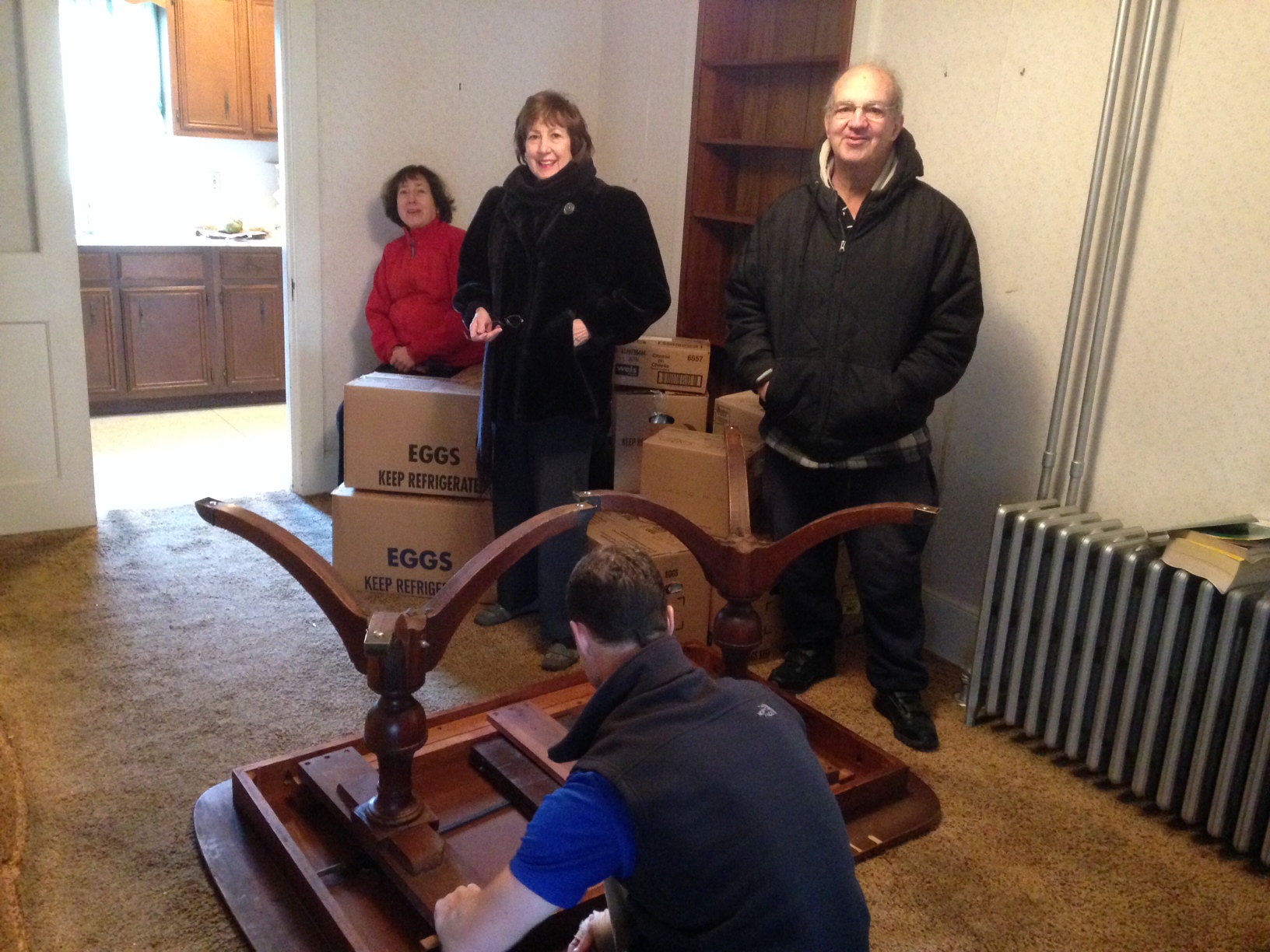
My sisters and brother – We sorted, boxed, laughed, cried, disagreed, but ultimately met the challenge on time.
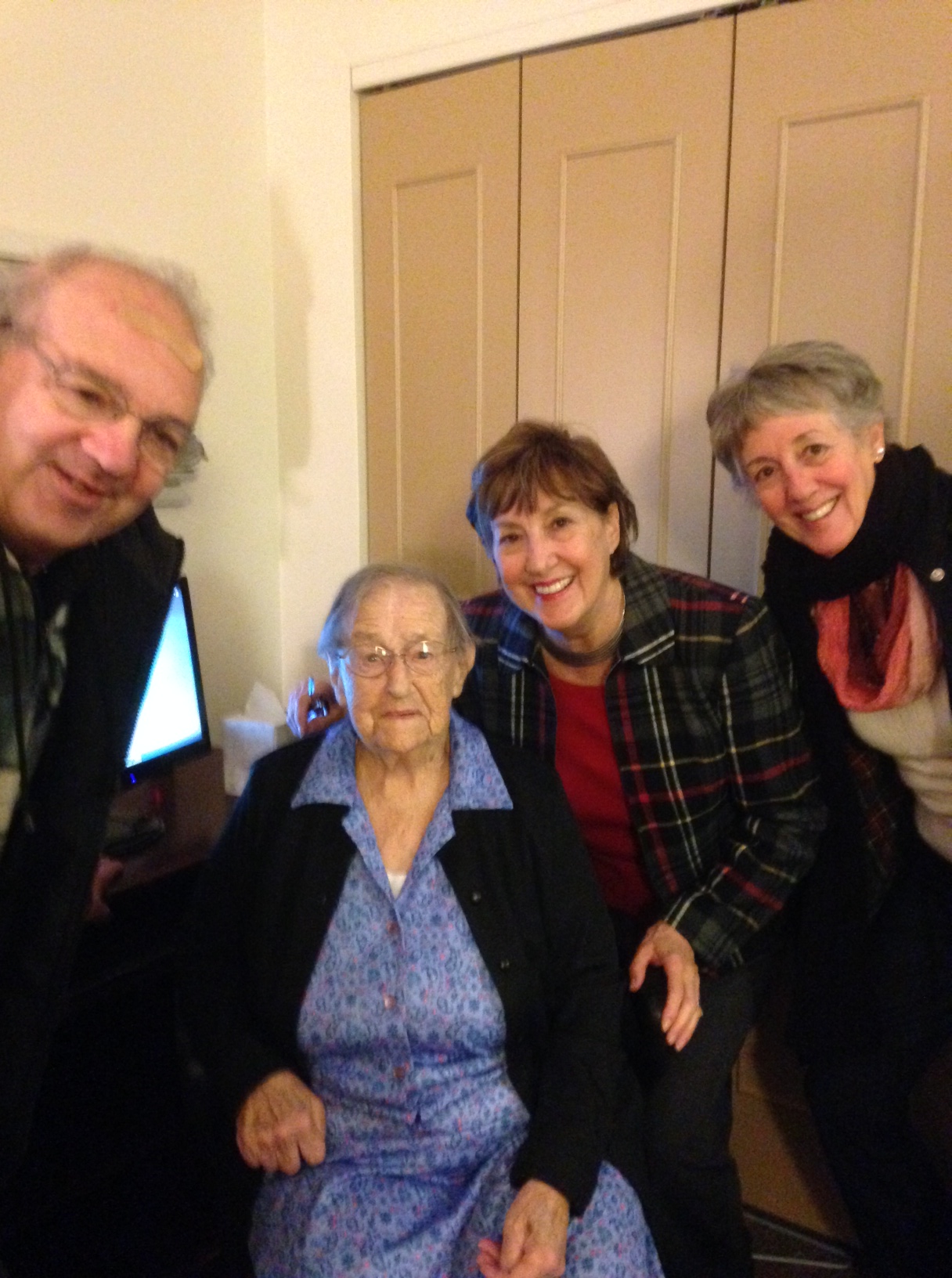
My Aunt Cecilia – She’ll be 100 years old in March, still going strong. We found Aunt Ceci cheerfully playing the Tumbling Blocks game on the computer beside her. “It keeps my mind sharp!” she laughs. A Mennonite preacher’s wife, Aunt Cecilia Metzler raised a family of five children on a Lancaster County farm.
My Aunt Ruthie – The photo is fuzzy here, just like her memory. But after she viewed some of the movies she filmed in her 20s and 30s that appear on other blog posts (here and here) she smiles, “ These pictures really make my mind come alive.”
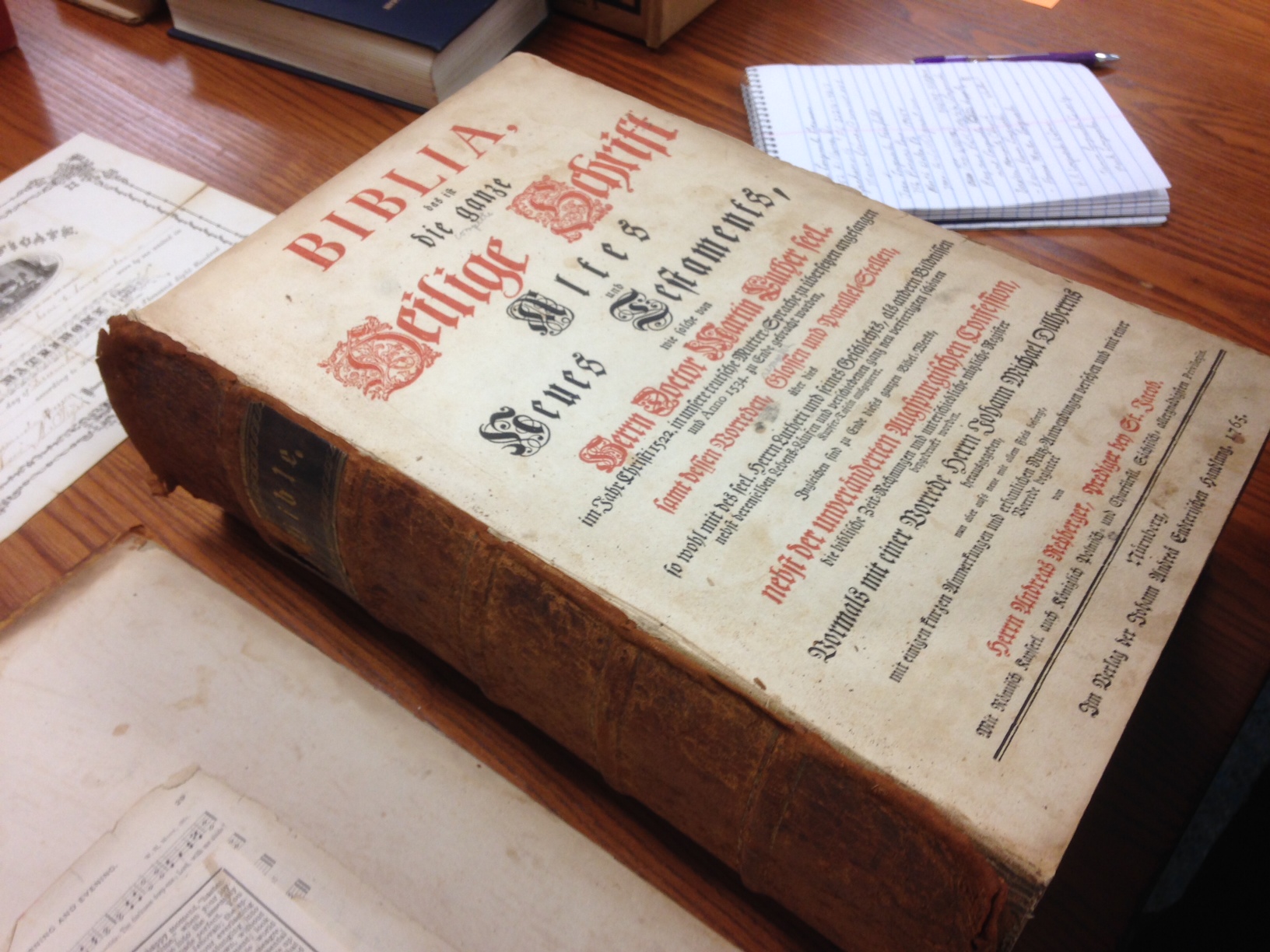
An heritage with spiritual depth – When my ancestors arrived in The New World, they brought with them the Holy Scriptures. This one, the Nuremberg Bible, is dated 1765.
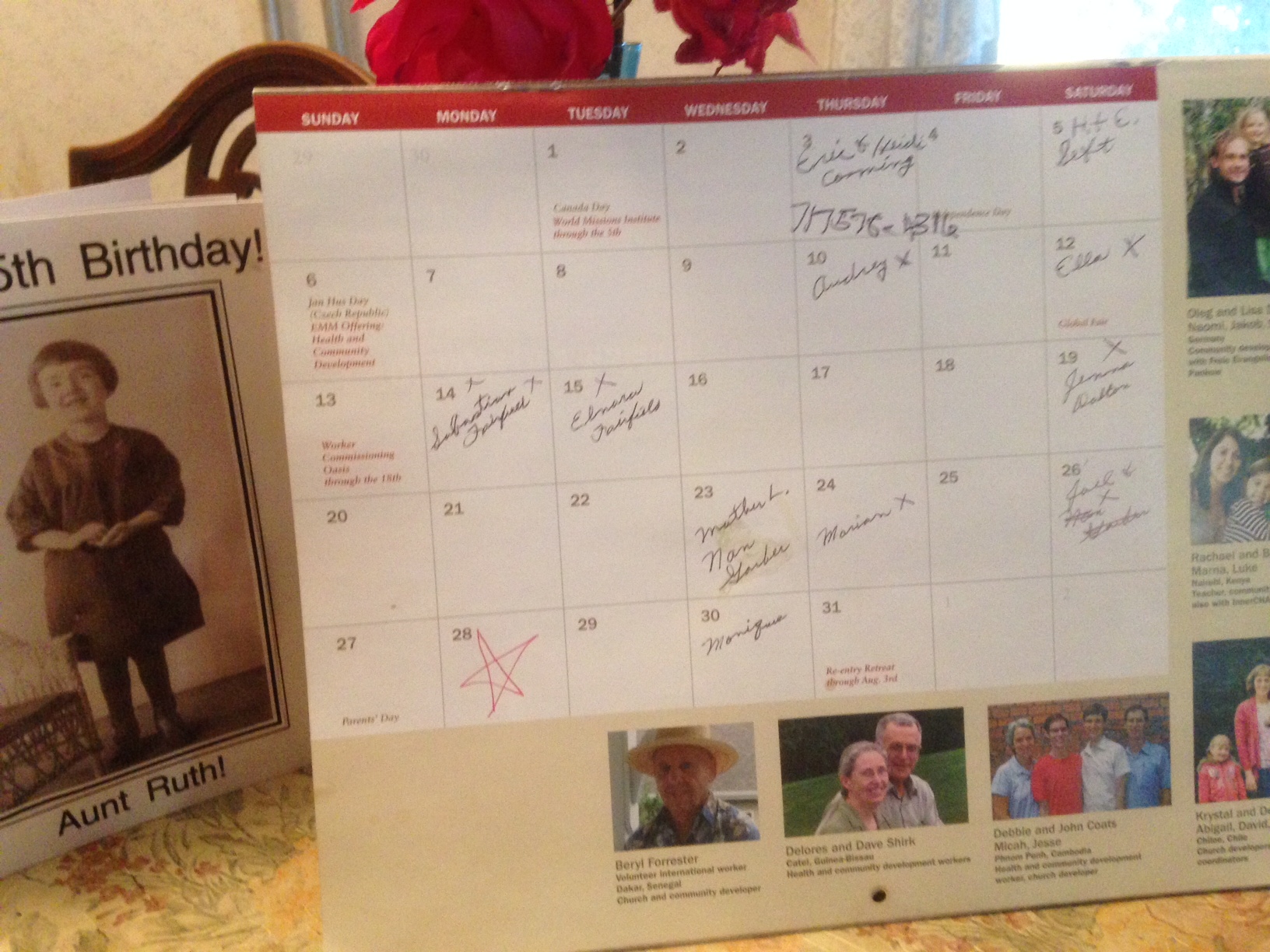
The memory of my Mother – When Mother died, she still had a current driver’s license, paid all of her bills by check, and kept appointments on her calendar. She sent birthday cards to all her children, grand-children, and great grand-children, represented by names penned into the blocks. She died on the 28th of July, a date we marked with a red asterisk.
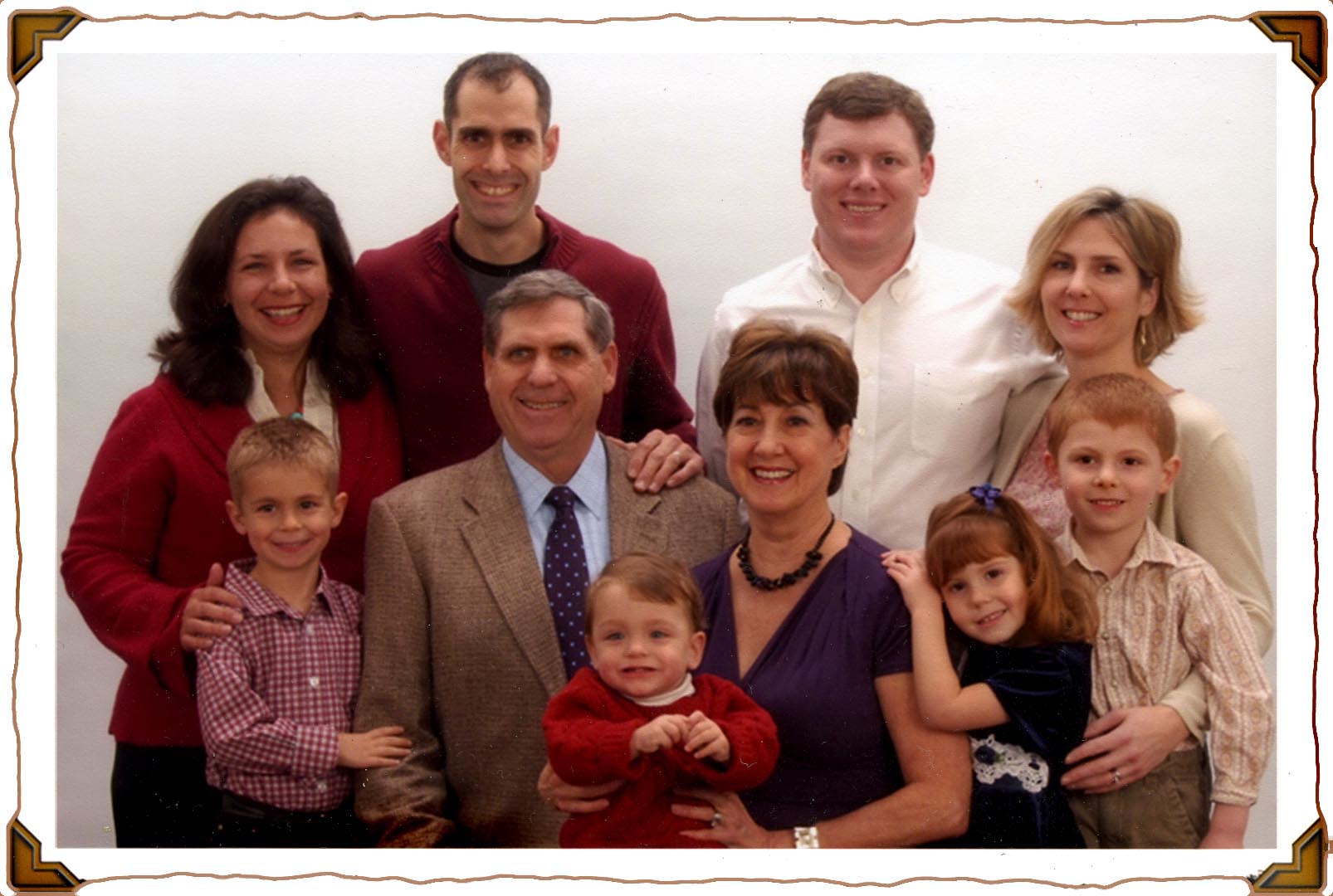
My family – This photo is six years old, taken when baby Ian no longer needed a breathing apparatus. Just so you know: our daughter Crista is blonde, Joel, dark-haired. With the older boys now 11 years old, we are due for an update!
Ann Voskamp continues by quoting the first reference in Scripture containing the word thanksgiving, mingling peace and gratitude:
And this is the law of the sacrifice of peace offerings that one may offer to the LORD. If he offers it for a thanksgiving, then he shall offer with the thanksgiving sacrifice unleavened loaves mixed with oil, unleavened wafers smeared with oil, and loaves of fine flour well mixed with oil. With the sacrifice of his peace offerings for thanksgiving he shall bring his offering with loaves of leavened bread.
Leviticus 7:11 – 13 ESV
My conclusion: Gratitude brings peace and ultimately joy.
Writer Voskamp concludes: ” . . . standing straight into wind is how to fly on His wings of grace.”
Finally, a song I remember from childhood from that seems appropriate for the season:
What are you grateful for? Join me in naming your blessings.





















 Plain and Fancy