Raise a Mug to the Irish!

Is there a drop of Irish blood in my veins? I doubt it. I grew up Mennonite in the Longenecker family in Pennsylvania Dutch country, a hot-bed of Swiss-German ancestry.

Still, the Irish-named Donegal Springs is a mere 3-mile, 5-minute drive from Rheems, Pennsylvania near my birthplace. In the adjoining Dauphin County are Londonderry Township. In Bucks County, a town named Dublin, sister city to the capital of the Republic of Ireland.
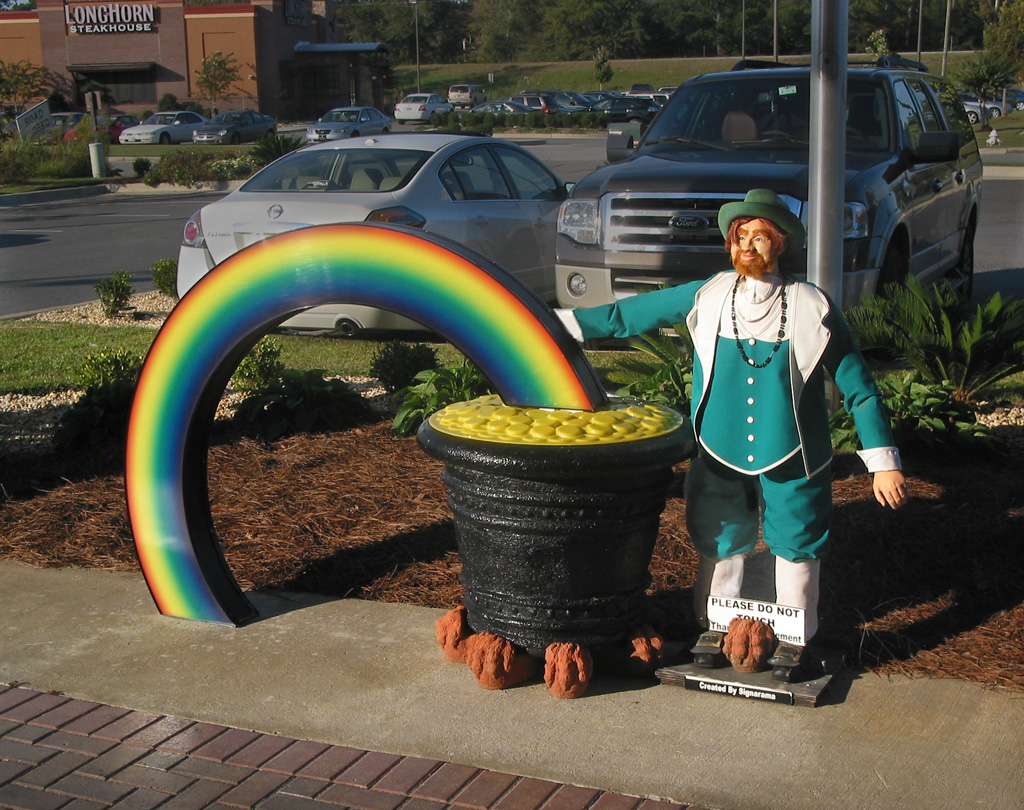
Photo courtesy of Artist Cliff Beaman Dublin, GA
Photo courtesy of Artist Cliff Beaman traveling through Dublin, GA

When we visited Ireland, we met a congenial gentleman named Buchanan, who remarked that he has immigrant relatives buried in the Donegal Presbyterian Church cemetery, a place he once visited.

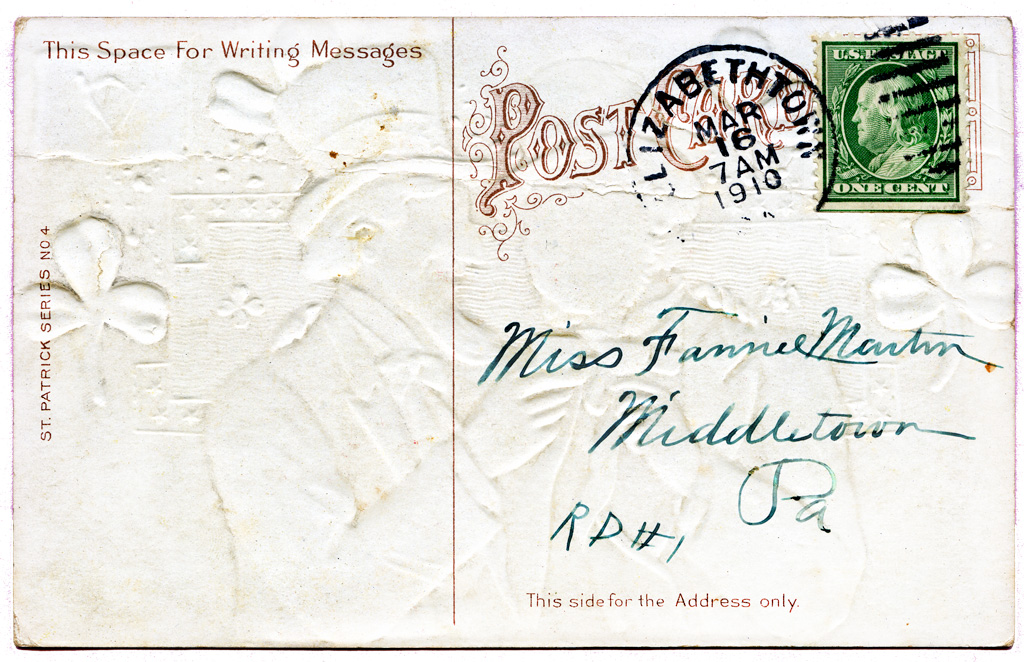
During my last trip to Pennsylvania, I discovered some vintage postcards stamped with penny postage, sent to Miss Fannie Martin, my Grandma Longenecker. Many of her postcards are embossed and saturated with color – no Photoshop filters needed.

In an era long before smartphones and text messages, postcards were valued. Instead of instant messages easily deleted and forgotten, these cards have become artifacts of my family history. The one below over one hundred years old is dated 1910.

StPat1912MUGfront

StPat1912MUGback

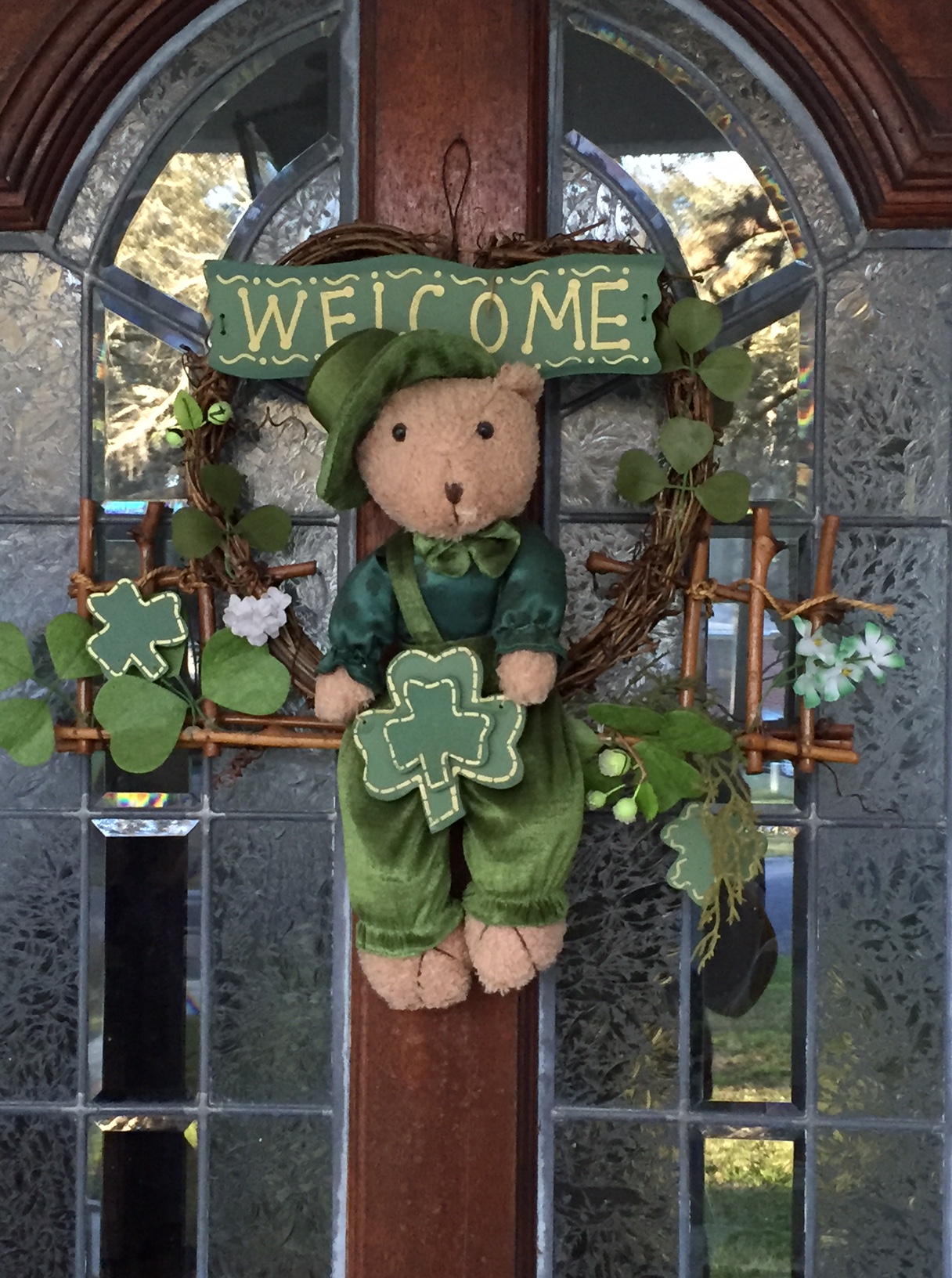
I live in a neighborhood where Irish names abound: Blarney Stone Court, Killarney Drive, Leprechaun Court, St. Patrick Lane. Names on residents’ mailboxes have included Dunleavy, O’Neill, and Kelly. We once had to fight a major retailer to retain charming shamrocks and moss-footed oaks in a wooded area adjoining our community. The hanging on our front door reflects the neighborhood and the season.
StPatBearDoor

St. Patrick’s Day this year falls on a Thursday, March 17. Until then, I wish you the luck of the Irish.

May the wind be always at your back and your pathways peaceful. If you are Jewish, Mazel Tov!

To enjoy these Irish limerick lines below add just the right word to complete the rhyme. Keep in mind the missing word must rhyme with the first and second lines. (Answer key in next week’s blog post.)

A bather whose clothing was strewed

By winds that left her quite nude

Saw a man come along

And unless we are wrong

You expected this line to be __________.

~ Anonymous


His sister named Lucy O’Finner,

Grew constantly thinner and thinner;

The reason was plain,

She slept in the rain,

And was never allowed any _________.

~ Lewis Carroll

There was an old fellow of Trinity

Who solved the square root of Infinity,

But it gave him such fidgets

To count up the digits,

He chucked Math and took up _________.

~ Anonymous

There was a young farmer of Leeds,

Who swallowed six packets of seeds.

It soon came to pass

He was covered with grass,

And he couldn’t sit down for the_______.

~ Anonymous


Edward Lear, Ogden Nash, and Lewis Carroll are among the best versifiers of this humorous form. If you want to cook up your own limerick, here is a link to the recipe with a pattern for the rhyme scheme.


Coming next: Wanted, Forty Winks
 

How to Teach a Piano Lesson

“Joel, I’m going to the Christian Light Press in E-Town for some birthday cards, do you want to go along?”

“Okay, Mommy, do you think they have lollipops?” queried my mischievous son.

“I don’t think bookstores have lollipops at the counter like doctor’s offices do, but maybe they have other fun things to look at,” I said, thinking he would enjoy an excursion into town while visiting his cousins in Pennsylvania.

Entering the store, I spied precious novelties tempting to touch, a fact that struck me with a fearsome shudder because I had an 8-year-old in tow.

“Now don’t touch anything. Just look. Do you see the sign on the display? It says ‘If you break it, you buy it!’”

“Uh huh,” he said racing to the music boxes and other curios.

I turned to the bank of colorful greeting cards not far away eyeing cards appropriate for Mother and sister Jean.

“Squeak-thunk,” was the next sound I heard across the aisle, close to where I saw the top of Joel’s thatch of brown wavy hair.

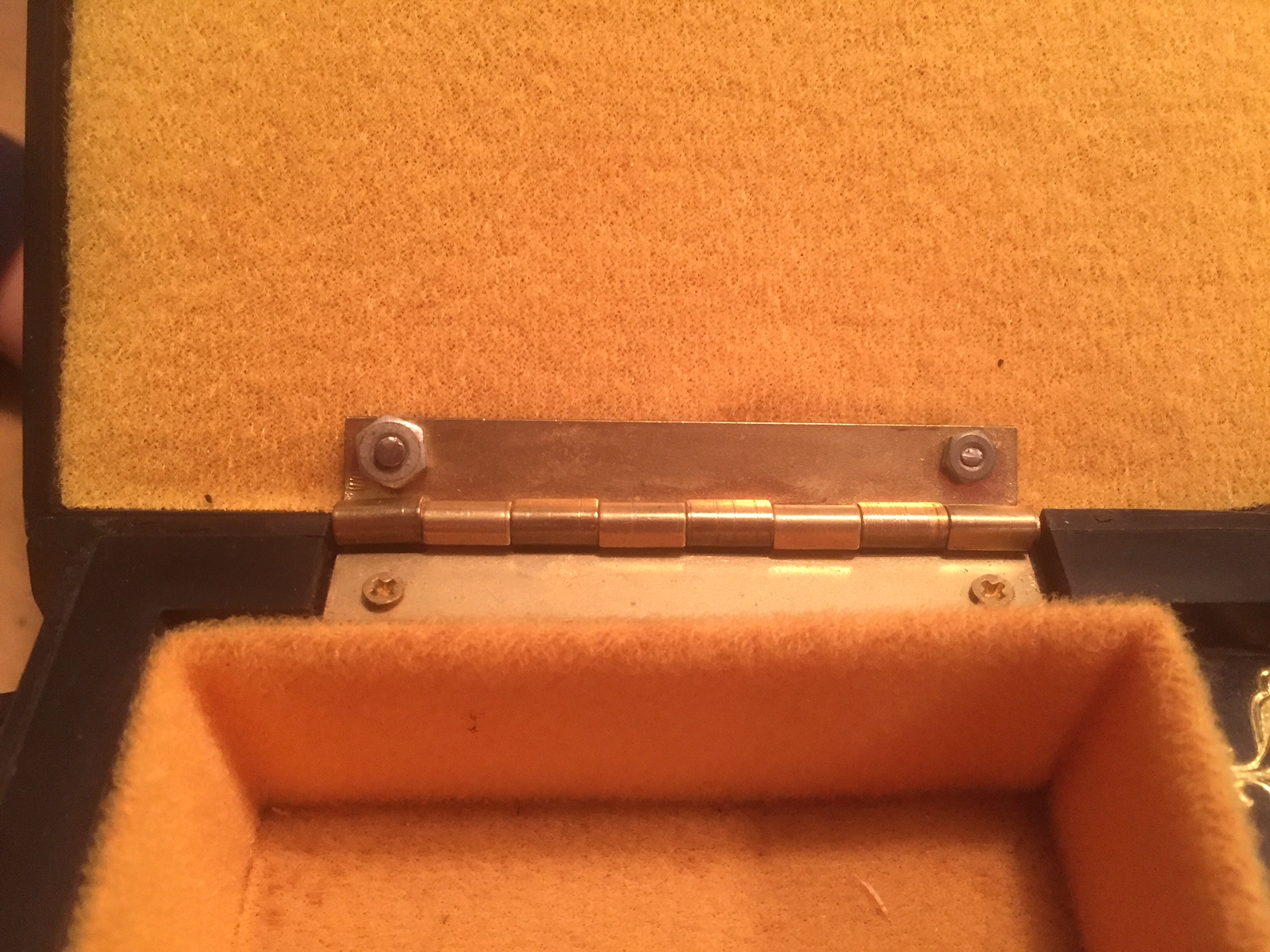
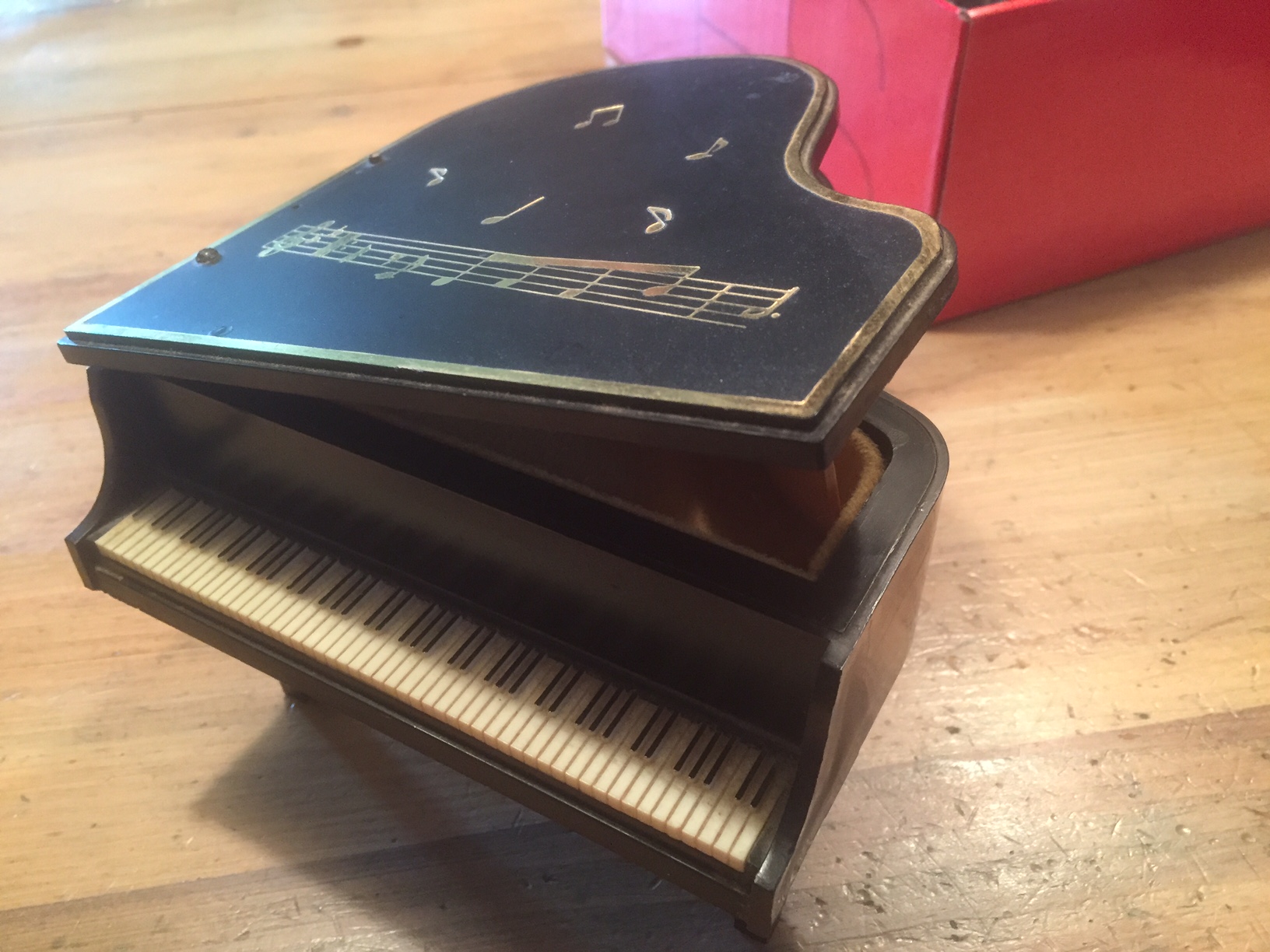
Cards in hand I strode over toward Joel and saw him holding a toy baby grand piano. As I looked closer, I noticed the hinge to the piano lid was halfway broken off. Turning the piano upside down to reveal a music box attached underneath, I noted a sticker. The price tag announced: $ 13.95. Please understand, we were a struggling young family in the 1970s, my husband and I both teachers, so the money registered on my mental calculator as a staggering figure.

Right there and then I had a double D attack: disappointment at my son’s disobedience and dread coursing from head to toe knowing we had to face the owner and admit to the breakage.

My feet felt like lead as I led Joel by the hand and I trudged down the aisle toward the clerk/owner who appeared to be glowering at us behind a tall metal cash register with raised keys and a bottom drawer that slammed shut.

I approached the counter speechless but managed to turn over the music box revealing the price tag. Swallowing slowly I formed words, “I guess we’ll need to pay for this. My son broke it accidentally.”

“Yes, you will. You see what the sign says.” I knew the warning only too well.

Opening my wallet hesitantly, I shelled out the dollars and cents, Joel standing by my side his head hanging, embarrassed and chastened.

* * *

Leap forward over thirty years, and son Joel now has his own son Ian, also age eight.

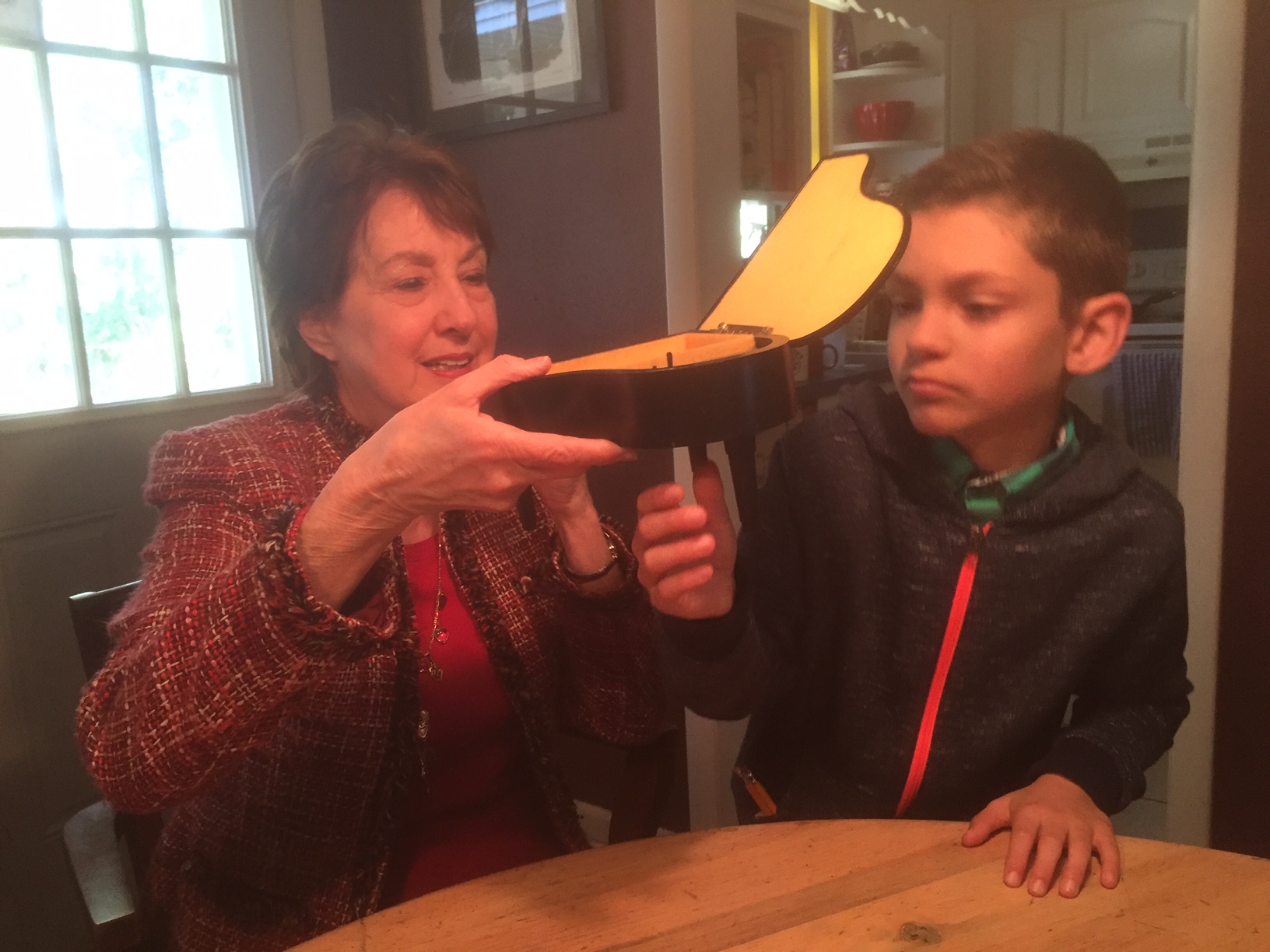
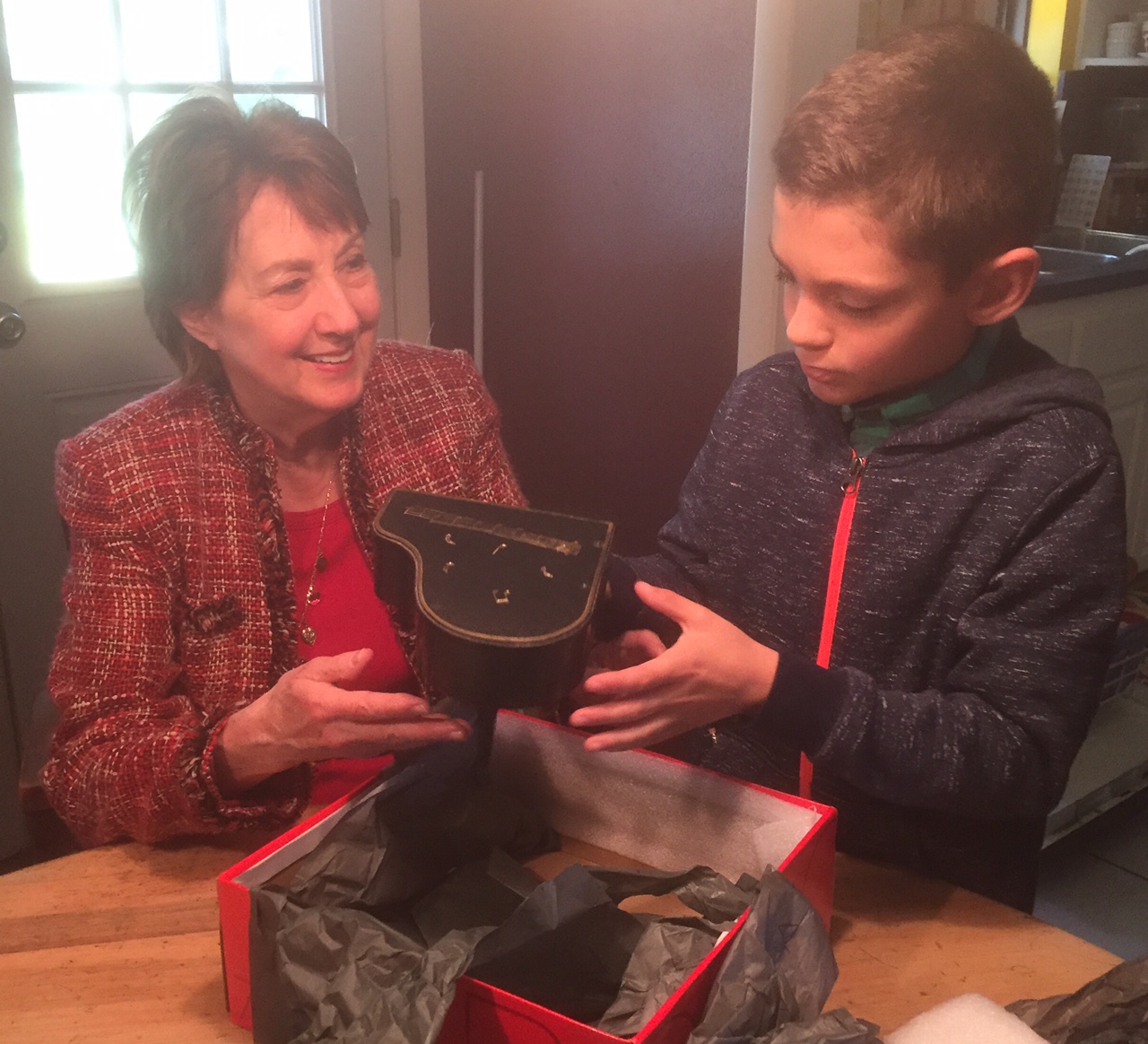
Several weeks ago I presented Ian with this same piano that has sat on my bookshelves for decades, occupying space between American poetry and art history books. Because we are downsizing, I have been passing along keepsakes to the next generation.
Joel was privy to my intention and approved my gifting the piano that plays the Lord’s Prayer as a tinkling, lullaby tune.

The presentation of the bequest began with a sturdy, red shoebox surrounded by tissue and foam padding. And then the unveiling . . .

IanOpeningPiano

Turning the wind-up key, voilá – sweet music filled the air.

PianoTwist Key

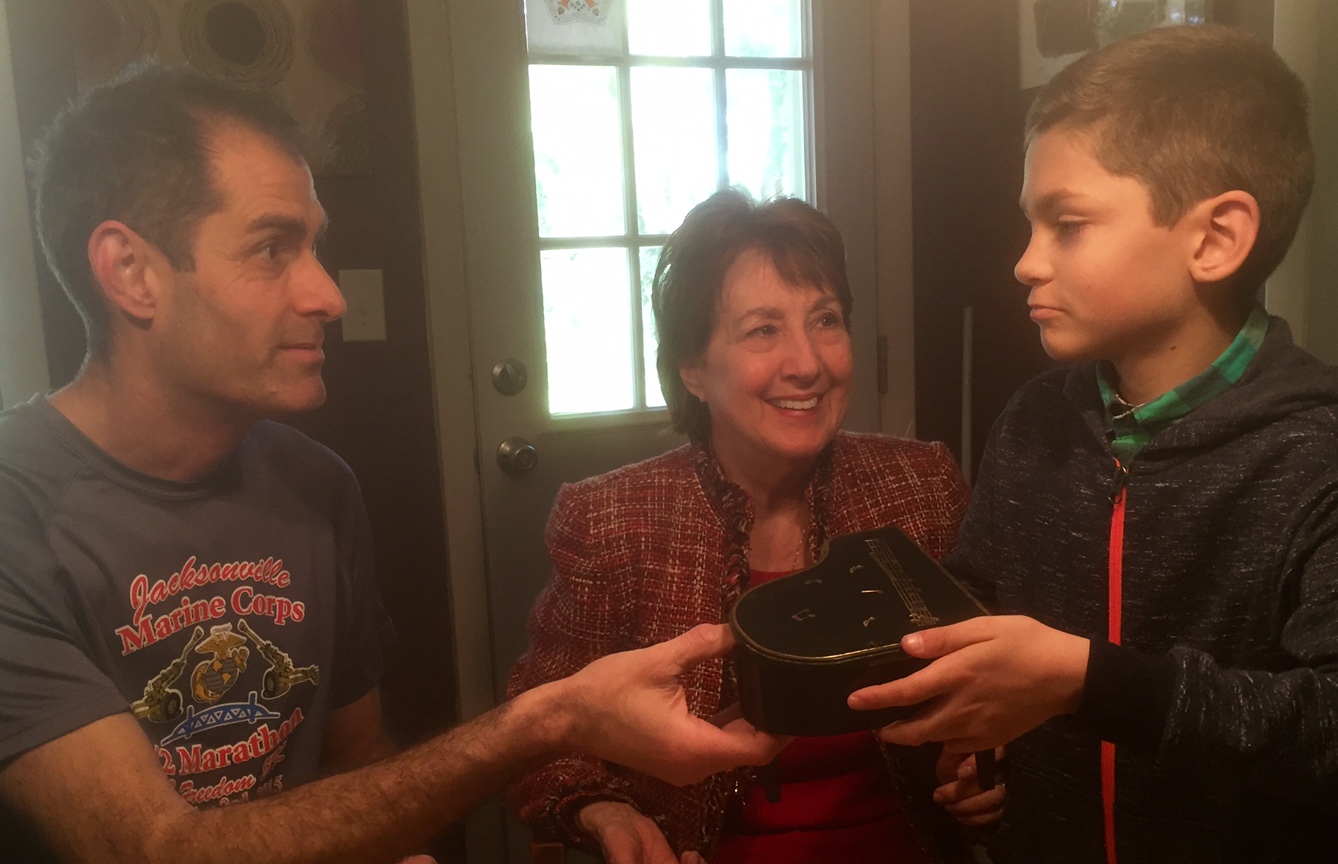
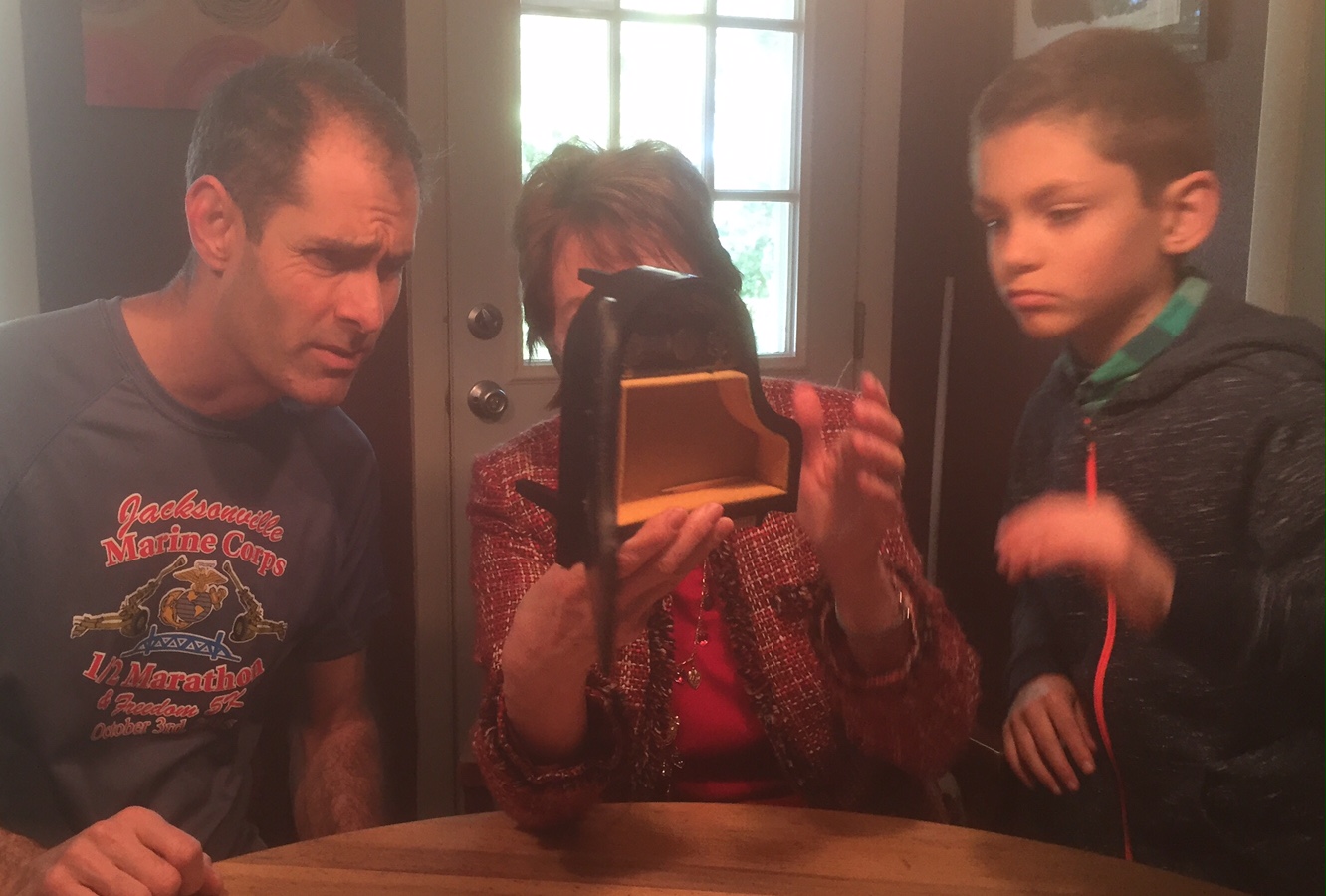
I announced, “When, he was your age, your dad broke off one of the legs on this toy piano.”

“Oh, no, not a leg, the hinge was broken off,” Joel corrected.

JoelPassingToIan

My memory had played tricks on me and the cause of the accident had morphed into something else.

Memory can be fuzzy sometimes. It’s not fixed as a photograph / locked in an album, / but it changes, it develops, mixed with time,” as Barbara Crooker wisely observes in her poem, Not a Spoon, a Key. Sometimes memory can even be wrong.

Squinting now at the underside, I see the replacement on the left, slightly larger screw and bolt than those on the other side. Lid held up with two toothpicks.

IngeFixed

ChristianLightPress13.95

And here it is, good as new!

PianoUpClose


Not a word was spoken about doing the right or wrong thing.

Words weren’t necessary.


Can you relate to my dilemma here?

Has your memory of family incidents every played tricks on you? Readers will enjoy your story and so will I.


Coming next: Raise a Mug to the Irish

Are You Ready for Spring?

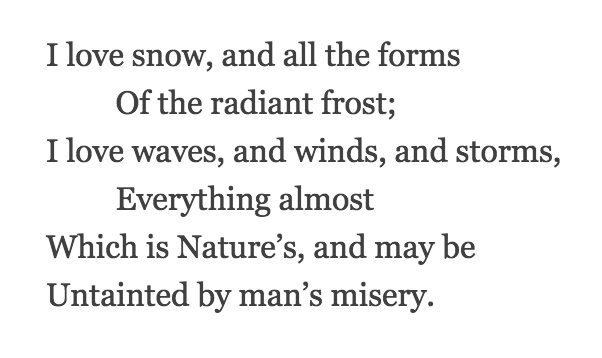
Today marks the end of February. In less than a month spring will have sprung, Still, you may be ready for spring now, not in three weeks. Here are the thoughts of Jane Kenyon, once New Hampshire’s poet laureate, anticipating the blooms of spring in her meditation “February Thinking of Spring”

Screen Shot 2016-02-23 at 8.07.19 AM

. . . or the appearance of blooms on dogwood

Dogwood

Before winter turned into spring, visits to the flower show in Philadelphia restored my Grandma Longenecker’s spirits. Or leafing through a Burpee Seed catalog.

In a letter to me during my sophomore year in college Grandma wrote about her May flowers that followed a harsh winter:

Lots of people have colds but daffodils are out “with their yellow frilled bonnets” (I have 5 kinds of them) were a joy to behold. Double tulips are at their best. Next the lilacs and valley lilies.


Yes, fickle February will soon melt into March madness. To herald the coming month, I shall make a poetic prediction. My good friend/muse Merril Smith has inspired me to try a new form, the shadorma, one of the many poetry challenges she has embraced on her website recently along with echo poems, triolets, and lantern shapes.

The shadorma must form 6 lines of 3-5-3-3-7-5 syllables and make sense.

Fickle month

Bye, February

St. Pat’s Day

Irish rule

Daylight Savings Time, Oh Dread

Celebrate: Easter!


Did you count the syllables?   🙂

What flowers populate your dreams of spring?

If you live in South Africa or Australia, your seasons are reversed so you may have a different vision. What in nature lifts your spirits right now?

* * *

Coming next: How to Teach a Piano Lesson

Are You Too Big for Your Pot?

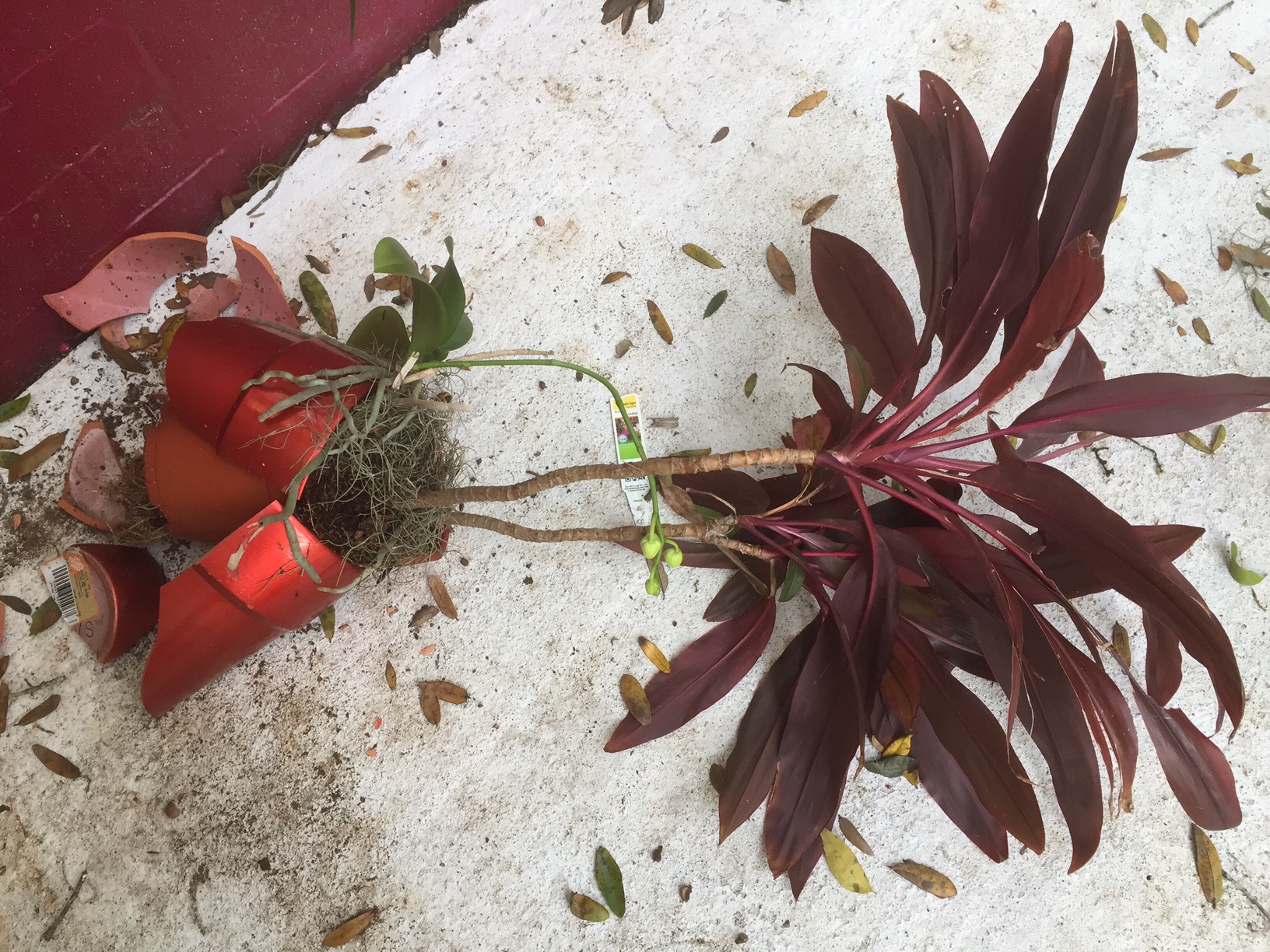
I didn’t hear a Bang. I didn’t see the pot Fall. But when I looked from the upstairs bedroom window, I saw shiny red chards of pottery on the patio floor. I really liked that red pot and now it was in pieces.

Broken Pot

How did that happen?

There was no wind. I was not aware that a storm had come through during the night. Still the pot had apparently fallen from its perch on the maroon planter, three feet above the concrete. Now it was smashed to bits on the patio.

Encased within the pottery was a plastic inner pot from which roots were dangling. The plant was apparently pot-bound, “longing to break free”!

RootBoundInnerPOT

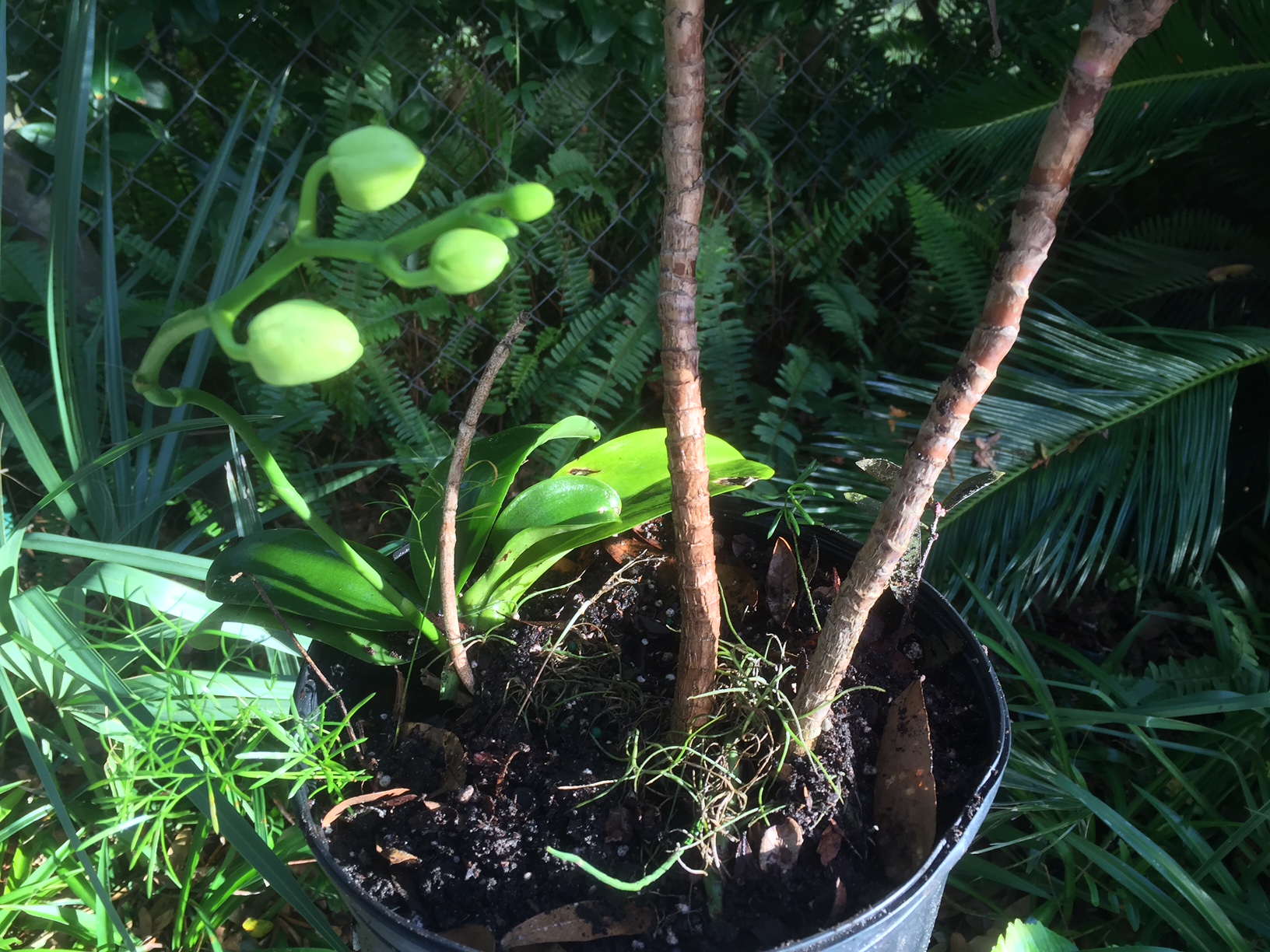
It doesn’t take a genius to see these tall plants had outgrown their tiny pot: roots bursting through the pot hole.

My solution? Re-pot the plant. Add fertile soil. Use a bigger pot.

Plant Re-pot

I heard my orchid, a rare re-bloom, sing morning praises.

And then I made the planter pretty too – with an unbreakable basket

BasketPotPlant

Some of the most memorable lines in Leonard Cohen’s “Dance Me to the End of Love” speak of cracks ~ “Ring the bells that still can ring / Forget your perfect offering / There is a crack, a crack in everything / That’s how the light gets in.”

I see at least 3 lessons here:

  1. Even cracks have a function: they can let the light in.
  2. You don’t have to be perfect to be beautiful. What’s broken in you can be a metaphor for human aspiration. Your flaw can show effort and growth.
  3. When you are pot-bound, move into a bigger pot.

My blog friend writer Dorothy Sander recently published a post with a poem “Finding Her Here” exalting our cracked and broken parts. You can find encouragement by reading it here.


Psalm 51:17 “A broken and a contrite heart thou wilt not despise.”

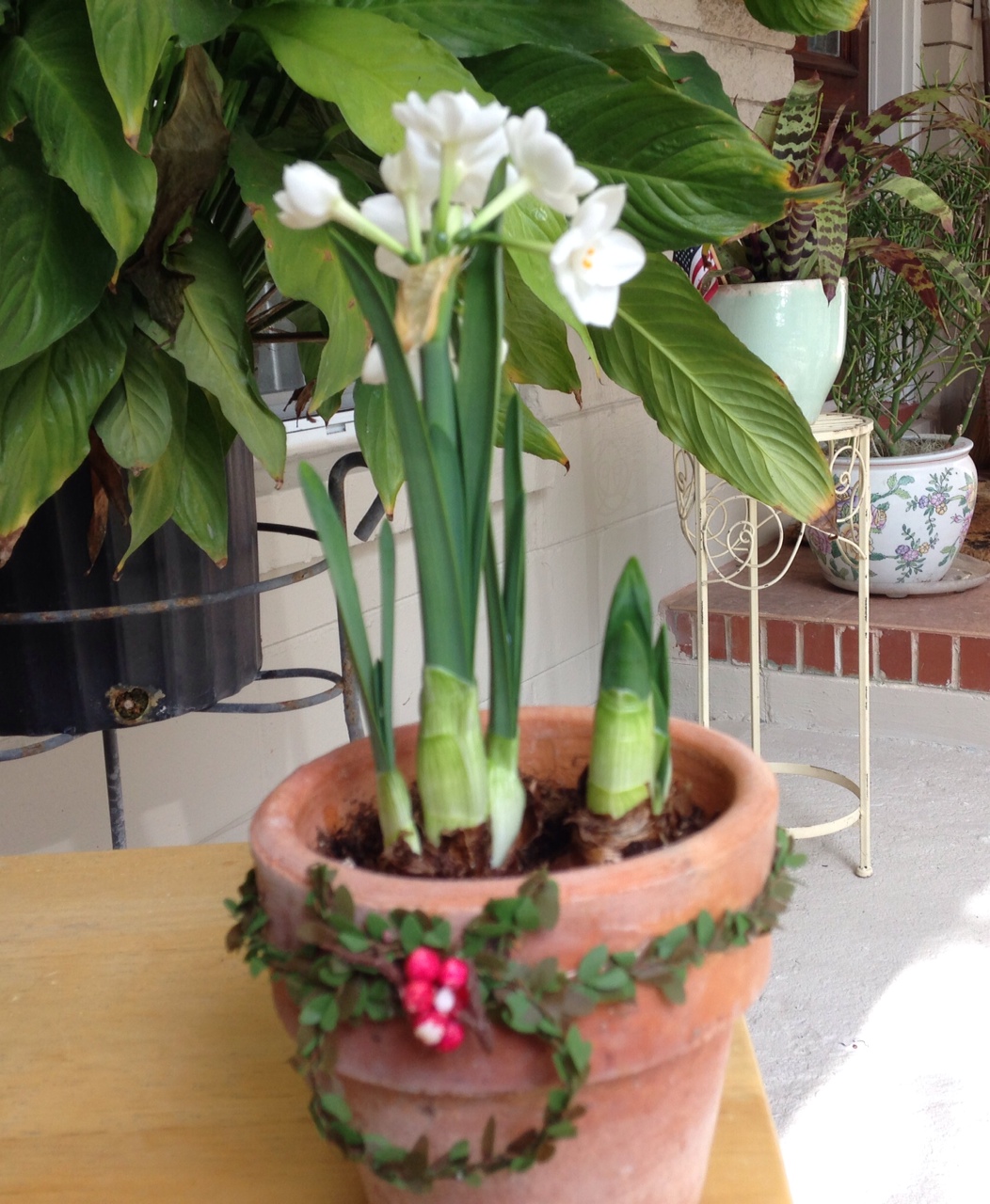
Paperwhites

What are your thoughts about the broken pot? Is there an explanation I may be overlooking, either literally or metaphorically?

Have you outgrown the pot you are planted in?

Or, when you outgrew your “pot,” how did you find a bigger one?

Coming next: Are you ready for spring?

My Day of CHANGE @ a Middle School

“Mom, would you like to volunteer for Challenge Day at Mandarin Middle School in a few weeks?” Joel asked.

“I probably would but I would need to know more about it,” I answered.

Then my son proceeded to tell me about an initiative at the school he helps sponsor, “Be the Change,” a movement to help students break down walls of isolation and loneliness and replace them with compassion, understanding and love.

My day of change came on a Tuesday, when student ambassadors greeted me at the door and pointed me to the gym, where I found my daughter Crista, also a volunteer.

Challenge Day Ambassadors

CristaMeVol

Seventh and eighth grade students filed in under an arch of welcome, volunteers forming a path of entry with our bridge of arms. Later, we found out students thought doing this was hokey.

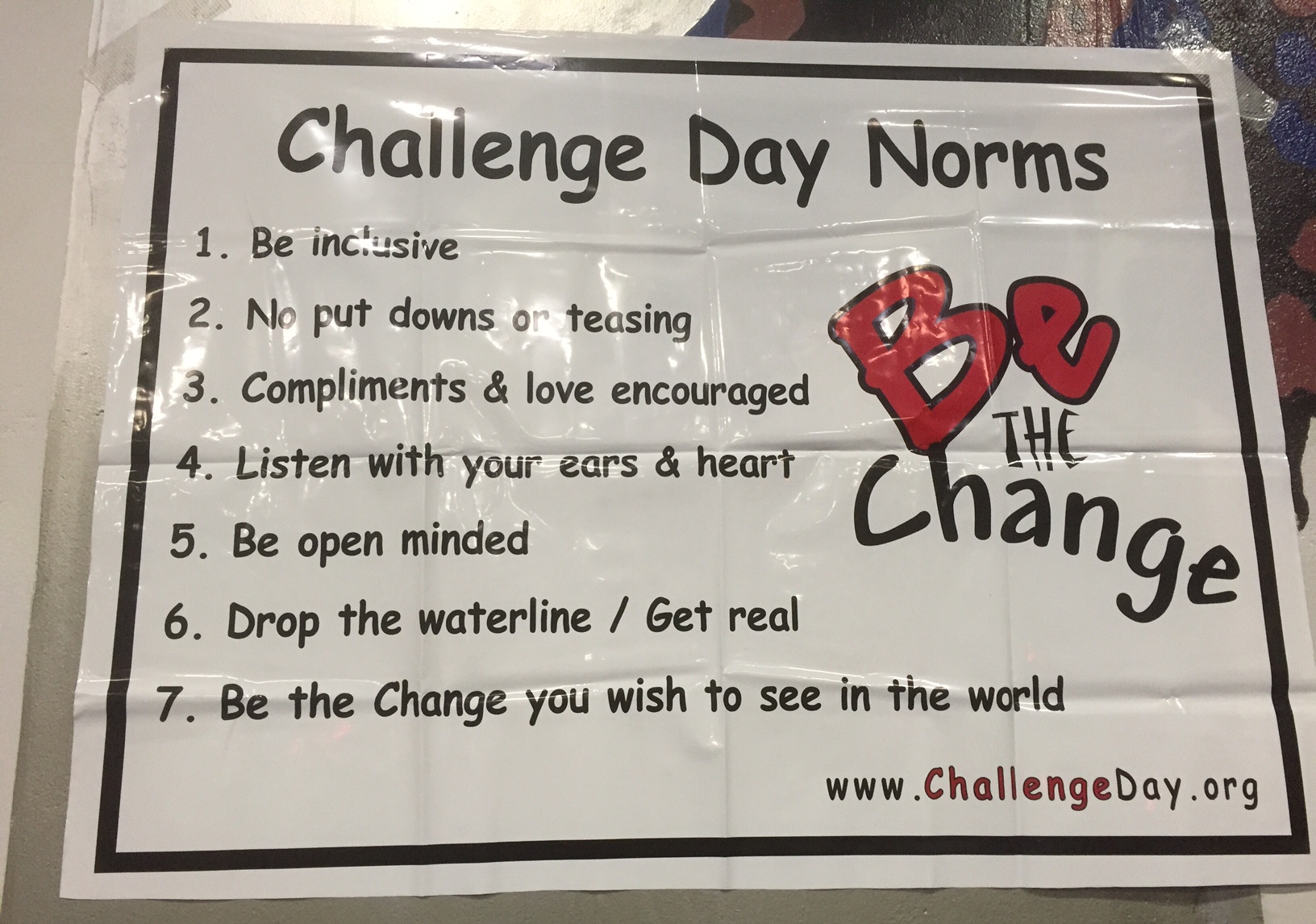
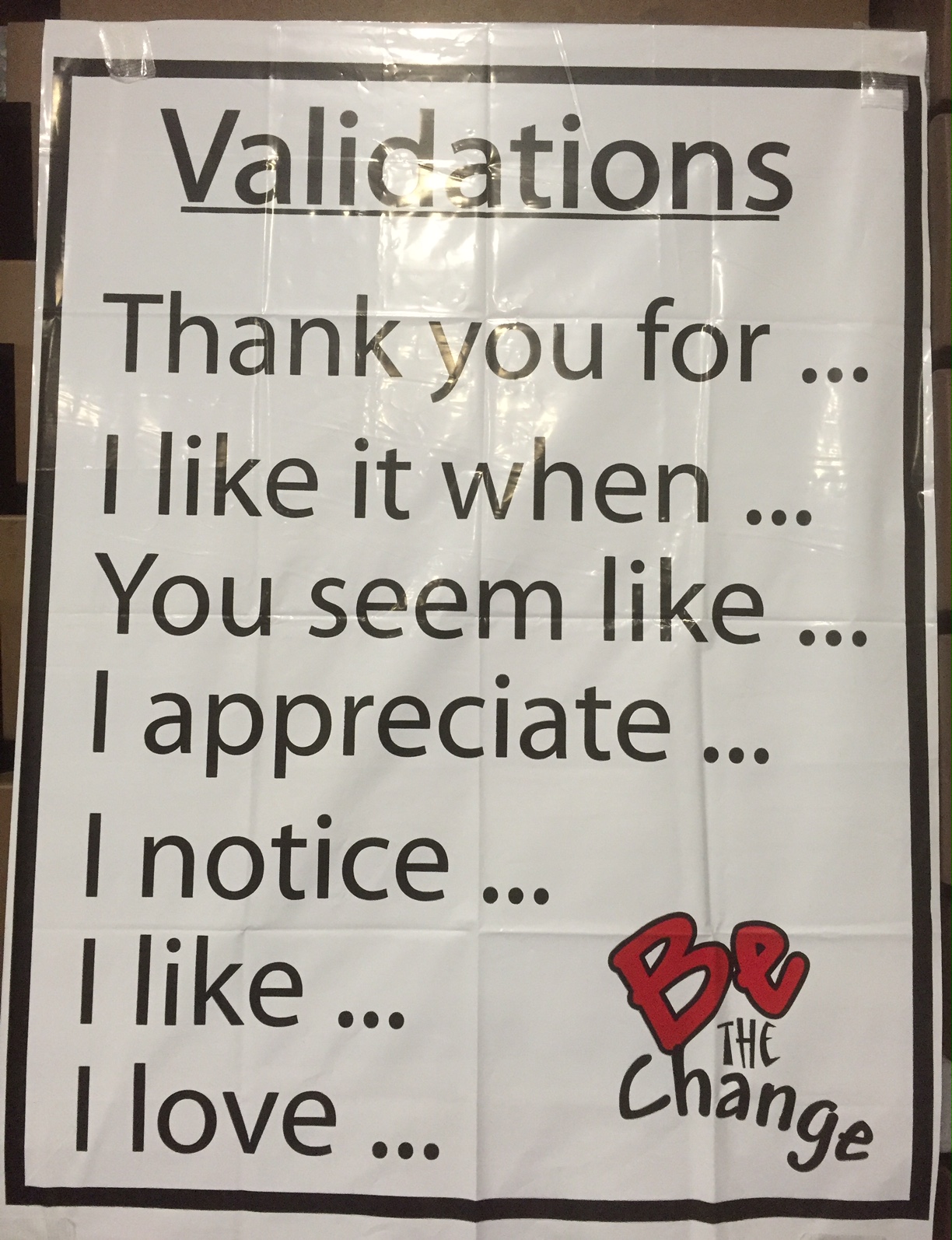
There were rules:

NormsChallenge

ChallengeValidations

The facilitators, Chris (a guy) and Trish began with games: “Find 10 people you never met before and give them a high five.” All the students were strangers to me, so that was easy. The day proceeded with other forms of friendly physical contact: fist bumps and eventually hugs.

“Now, with your partners, slap the ball to the other side,” students stabbed at a super-sized beach ball to earn points. Music and dance underscored many of the day’s activities: Soul Train, Wildest Dream, Where are You Now? Time of Our Lives . . . .

Then the facilitators turned more serious, referring to parallel lines of blue tape they had previously attached to the gym floor.

“Cross the line if . . .”

  • you have ever been hurt by what someone said about your skin color, religion, or how you dressed.
  • you have been hit, beaten or abused in another way by a parent or other authority figure in your life.
  • someone you know hurts the family because of alcohol or drugs.
  • you have lost someone you loved recently or a long time ago.

Emotion was palpable as students and volunteers alike crossed blue lines. Viewing their somber faces, I intuitively felt students’ dawning awareness of similarities in the lives of their friends and classmates. One of the facilitators shared her challenging life story of abuse and neglect. Students sat agape, eyes transfixed as her startling story unfolded.

Before lunchtime we were assigned to family groups of 4 or 5, two boys and two girls. With guidance, each was ready to share something heartfelt in my group.

  • My parents fight all the time and I think they might get divorced.
  • I don’t know who my dad is and my mother left. I live with my aunt and cousins.
  • My mom died last summer and then we had to put my dog to sleep.

Tears flowed. Each group leader doled out Kleenex tissues.

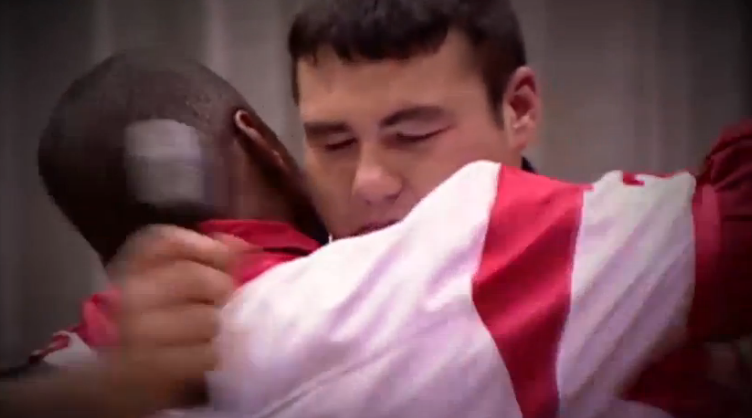
There was share time, with scenes similar to this photo clip from a Challenge Day video in Michigan, which appeared on Oprah’s website.

ChallengeDayVideoOprah

Most of the students who grabbed the microphone at Mandarin Middle confessed to prejudice or bullying and then publicly asked for forgiveness. More hugs and tears.

The day closed with students writing a thank you note to express gratitude to a special person in their lives. Most chose their mothers. One girl in my group wrote two notes!

* * *

Rich and Yvonne Dutra-St. John are co-founders of the innovative Challenge Day program and the Be the Change Movement. Rich is a former high school teacher and championship wrestling coach. Yvonne is a gifted speaker, educator, and program designer.

Mark Twain joked, “When a child turns twelve you should put him in a barrel, nail down the lid and feed him through a knothole.” I’m suspicious of the quote because I couldn’t find the attribution on http://www.bartleby.com, a website I trust. Yet, these lines survive in pop culture as does its sequel: “When he turns sixteen, seal up the knothole.”

The leadership at Mandarin Middle School, including my son, doesn’t believe this quip. And neither do I.


  • Have you heard of this program or one similar to it?
  • How have you made a change, major or minor, in your life?


Coming next: Are You Too Big for Your Pot?

Comparison Shopper Finds His Valentine

Gump-a-bump-a-rump-a! (Repeat – repeat)

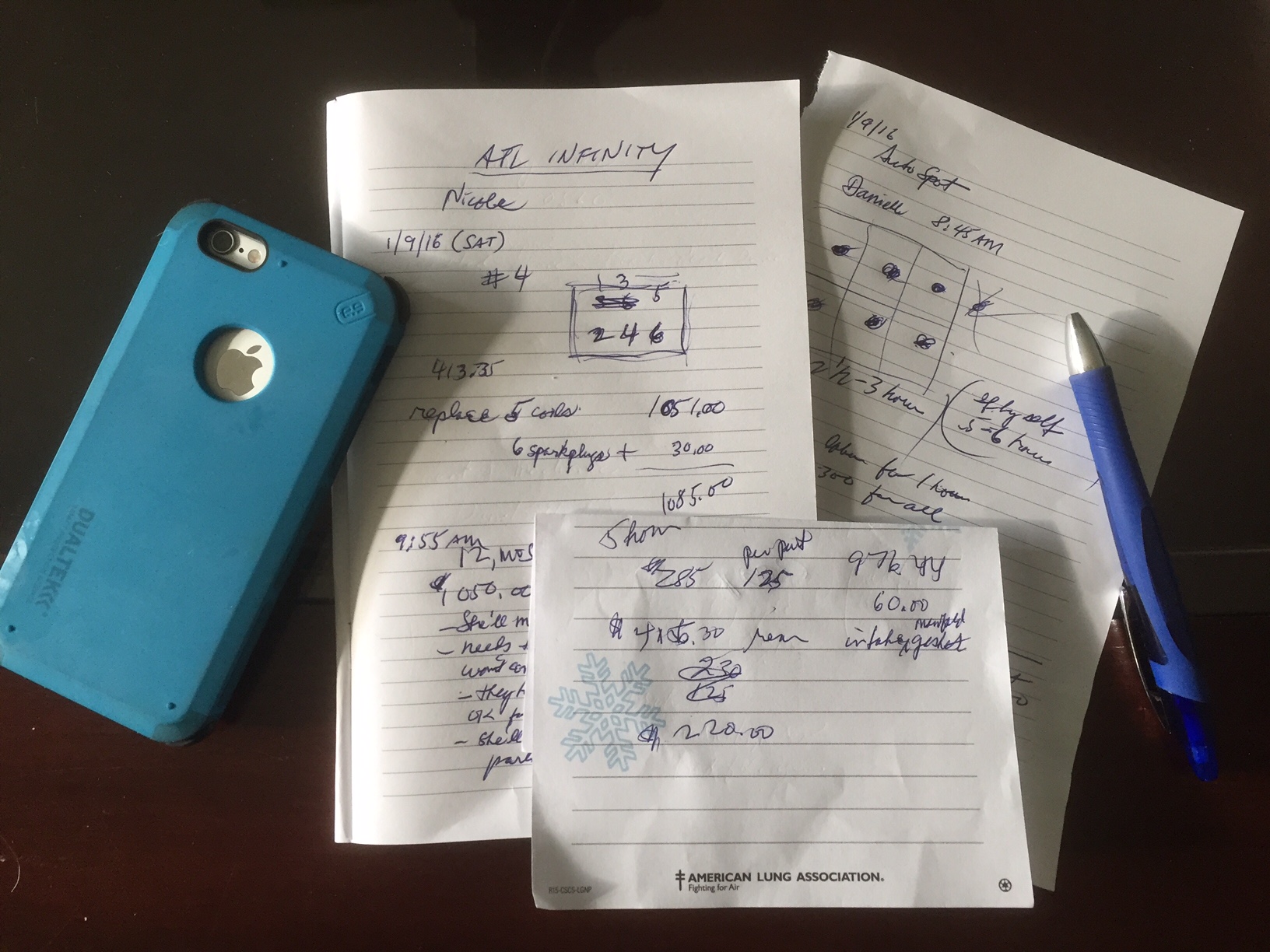
No driver wants to hear this coming from under her car hood, even if it is my aging Infiniti. When I reported these scary noises to my husband Cliff, he immediately went into Investigator Mode. His problem-solving scenario proceeded like this: visiting a neighbor who restores antique cars, checking with an auto shop we’ve used before, and then contacting the dealership, the most expensive option. He wrote down notes for each, notes with names, dates, schematics, and most importantly, dollar signs.

ComparisonShopperNotes

He handles plumbing problems at home or HVAC hang-ups the same thorough way. Whether buying a new lawnmower, computer equipment or making travel plans, my husband Cliff is a comparison shopper supreme.

Once upon a time, Cliff used this same methodical system to find suitable dates. During college he had a little black book in which he entered names of girls to date. After they passed the sensational-physical-attributes test, their names and interests were entered into this book. Some girls’ names were crossed off the list because they were too giggly, walked like a duck, or were unable to sing on key.

Cliff went into serious search mode to find a mate after an unofficial engagement fell apart. Then his college roommate suggested he meet his next-door neighbor, a teacher and a Mennonite, during Christmas vacation. We met on a blind date In December 1965. I say blind because the normal-looking Mennonites he had known from the West were very unlike the girl standing in front of him, plain with hair coiled up under a prayer cap – me.

Maybe because of the mystique of our differences or because we had similar interests, ours was a whirlwind romance sustained by letters for months after Cliff returned to post-graduate work and me to teaching. Then his letters dwindled, probably because of his hesitation about dating a girl like me from such a strange background.

He went into comparison shopping mode again as he began his first year teaching, dating a nurse from a fine family. Later, he said after he had come to his senses, “I couldn’t get you out of my mind. I thought I would miss something if I said goodbye to you forever.”

According to Cliff, two things I did sealed the deal for him.

  • I made him a monogrammed bath robe for Valentine’s which kept him from freezing on off-campus housing his last few months in college
  • I called various hospitals to try to figure out in which hospital he was a patient when he had pneumonia and was too sick to contact me.

Fortunately our friendship was rekindled when we both attended the August 1966 wedding of the couple who introduced us. Now it was Christmas 1966, and Cliff drove from Jacksonville Florida to pick me up in Charlotte, North Carolina where I was teaching. From there we headed to my hometown, in Elizabethtown, Pennsylvania in his white Plymouth Savoy.

Replica of Cliff's 1963 Plymouth Savoy now offered on eBay, poster
Replica of Cliff’s 1963 Plymouth Savoy now offered on eBay, poster

There one snowy evening before Christmas Cliff said, “Let’s take a drive.” So we bundled up and headed out, crunching footprints in the new fallen snow. Fat flakes were falling from the sky even thicker as we slid into the car, the plastic seats crackling from the cold. Memories of the evening have become a movie in my mind.

“Where are we going?” I quizzed.

“Oh, I don’t know. We’ll just take a drive in this beautiful snow,” Cliff replied rather lamely.

As he tried hard to urge the heater to warm us up, we reminisced about our first dates the Christmas before. “Do you remember how deep the snow was when we went to see the Sound of Music?”

“Of course I do!” The car’s windshield wipers were swishing away mini-cotton balls of snow now.

In the back of his mind, Cliff wondered, “What will she say if I ask her to marry me?”

As we approached the archway between Rheems and Mount Joy, I exclaimed, “The road hasn’t been plowed any farther. We’re at a standstill!” We had come to a crossroads.

Then he said, “If you thought it was God’s will, would you marry me?”

Quickly I responded, “Of course I would.” But in an instant I recognized this as a marriage proposal encased in a tricky question, a snowy fleece.

“Well, then, will you marry me?”

With a “Yes,” the camera dissolved into hugs and kisses.

And yes, the little black book has been destroyed long ago.

Vintage Cut-out Card, Cliff Collection


Is there a comparison shopper in your family? Are you such a shopper?

You are invited to share your marriage proposal story here too.


Coming next: My Day of Change @ a Middle School

Hoorah, 300th Blog Post with an Oops and an Aah!

Oops!

An apple cake with half the recipe batter left out . . . the baked remainders landing on the floor. Double dumb mistakes.

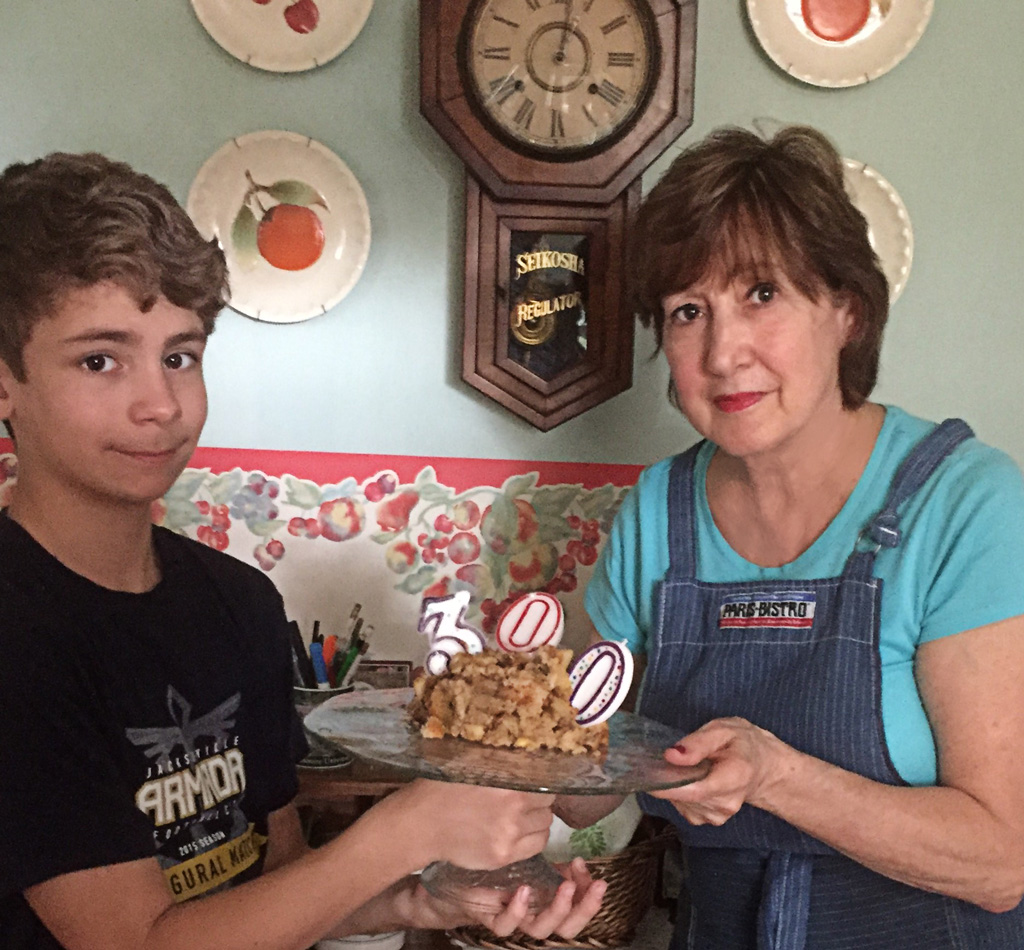
That’s not the way I envisioned marking my 300th blog post.

The Plan

To mark this milestone, grandson Curtis and I planned to make an apple cake together, perfect for feasting two days before Christmas 2015. He likes to be in the kitchen and remembered our success with a spiced pork recipe a few weeks earlier.

The ingredients were laid out, I placed cups and spoons on the counter, the tube pan at the ready.

Curtis and I both donned aprons (his flowery, mine denim) and got to work. He helped core and dice the apples, careful to curl his fingers away from the knife blade. We both chatted happily over the hum of the mixer, adding apples, nuts, cinnamon, and vanilla to the mix.

CurtisCakeBeaters


What Happened Next

When the batter was ready, I poured the mixture into the tube pan and set the timer on my iPhone to a “check-me” time. Then Curtis and I sang Christmas carols around the piano, a first for just the two of us.

I heard the ping, ran to the kitchen, switched on the oven light and gasped. The cake had risen to only half of the height I had expected. Then my eye caught a glimpse of a bag on the counter with half of the mix inside. Sadly, I’d failed to fold it into the batter. That could account for the low rise. Still, the cake looked edible as I pulled it out of the oven, rounded and fragrant, and placed it on a rack to cool.

Just when I tilted the tube pan, the whole thing went SPLAT. Half of the cake flopped into the sink and the other half plopped onto the floor.

CakeMess300

There were moments of silence. 10 . . . 20 . . . 30 seconds?

Then Curtis quietly asks, “Nana, where do you keep your broom and dustpan?”

Here is the space for the cleanup photo:

(Imagine broom and dustpan)

Disappointment

AppleCakeSadFaces


After the Dust Settled

We ate a few morsels that fell into the sink. They were actually quite tasty. Then I asked Curtis what he had learned from the experience. Of course, I expected a snarky remark about his addle-brained grandma.

Instead, he began recalling bits of advice I gave him over the mixing bowl:

  1. Drizzle a little lemon juice over the apples to keep them from turning brown.
  2. Use a toothpick to test for cake “done-ness” even if you use a timer.
  3. Insert a toothpick between pan and its lid on the stove to keep a simmering mixture from boiling over (his Great Grandma Longenecker’s trick).
  4. When you remove a pot from a hot burner, put a teakettle with a small amount of cool water over the burner to absorb the heat, especially during hot weather.

Was he just being kind?


What I Learned

  1. “It’s not that bad,” one of Curtis’ own sayings when things go awry.
  2. Even baking disasters can taste good. (The result was a passable apple “cobbler” even if it didn’t have the consistency of cake.)
  3. “Life doesn’t have to be perfect to be wonderful,” another wise saying making the rounds these days.

Epilogue

Curt and I played Scrabble afterwards. He won, but not by much!


The Apple Cake Recipe, donated by my friend Bonnie Evans

1 yellow cake mix  (All of it!)

2 cups chopped/diced apples

1 cup chopped walnuts

I teaspoon vanilla

1 teaspoon cinnamon

brown sugar for sprinkling on top of cake

Blend oil and eggs into cake mix as directed. Add vanilla & cinnamon. Then add apples & nuts. Pour into tube pan and sprinkle brown sugar on the top. Bake at 350 degrees until done. Pour icing over top of the cake.

Icing

Melt 1cup brown sugar, 1 stick of butter and ½ tsp. vanilla. Stir until dissolved. Pour over top of cake.


A Miracle – Ahh!

Out of the blue, the very next day at breakfast my long time friend Wanda Rogers Long presented me with a perfectly baked apple cake – glittering in cellophane and topped with a red bow!

WandaMarianCake

All’s well that ends well . . .

CakeTriumph


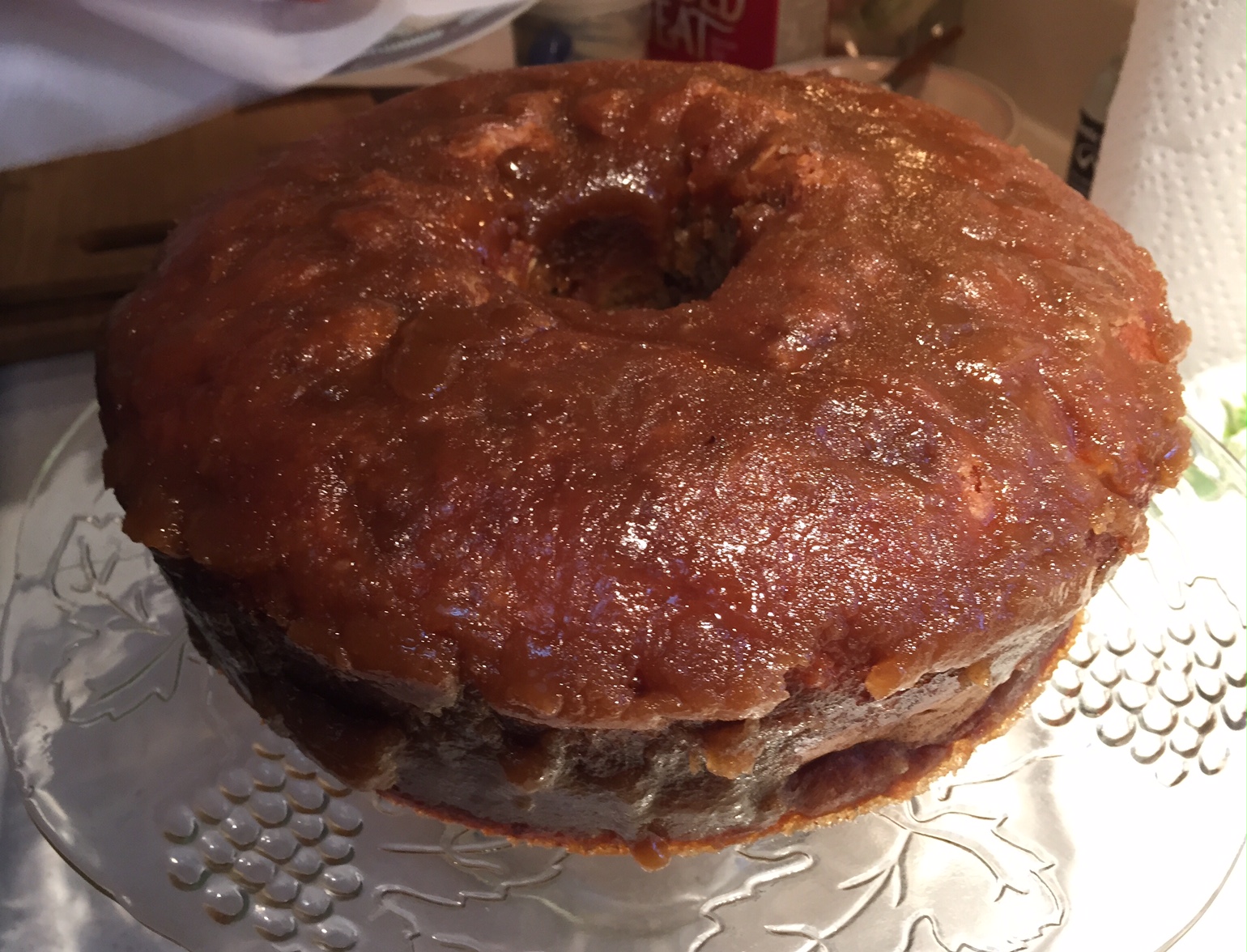
Several weeks later I baked the same cake with better results for my husband Cliff’s January birthday . . .

AppleCakeSuccess

Most everyone has a similar story whether it’s a mishap in the kitchen or someplace else. Here’s where you can tell yours.

Was there a happy ending to your story – Yes? No?


Coming next: Comparison Shopper Finds His Valentine

5 Memoir Lessons Learned from a Special Birthday Cake

Earlier in January I baked an apple cake for my husband Cliff’s birthday celebration. All agreed it was scrumptious. However, it was my second attempt at the same recipe for reasons to be divulged in my next blog post. As they say, practice makes perfect! Matilda Butler, who earlier followed a similar plan on her website, would agree.

AppleCakeSuccess

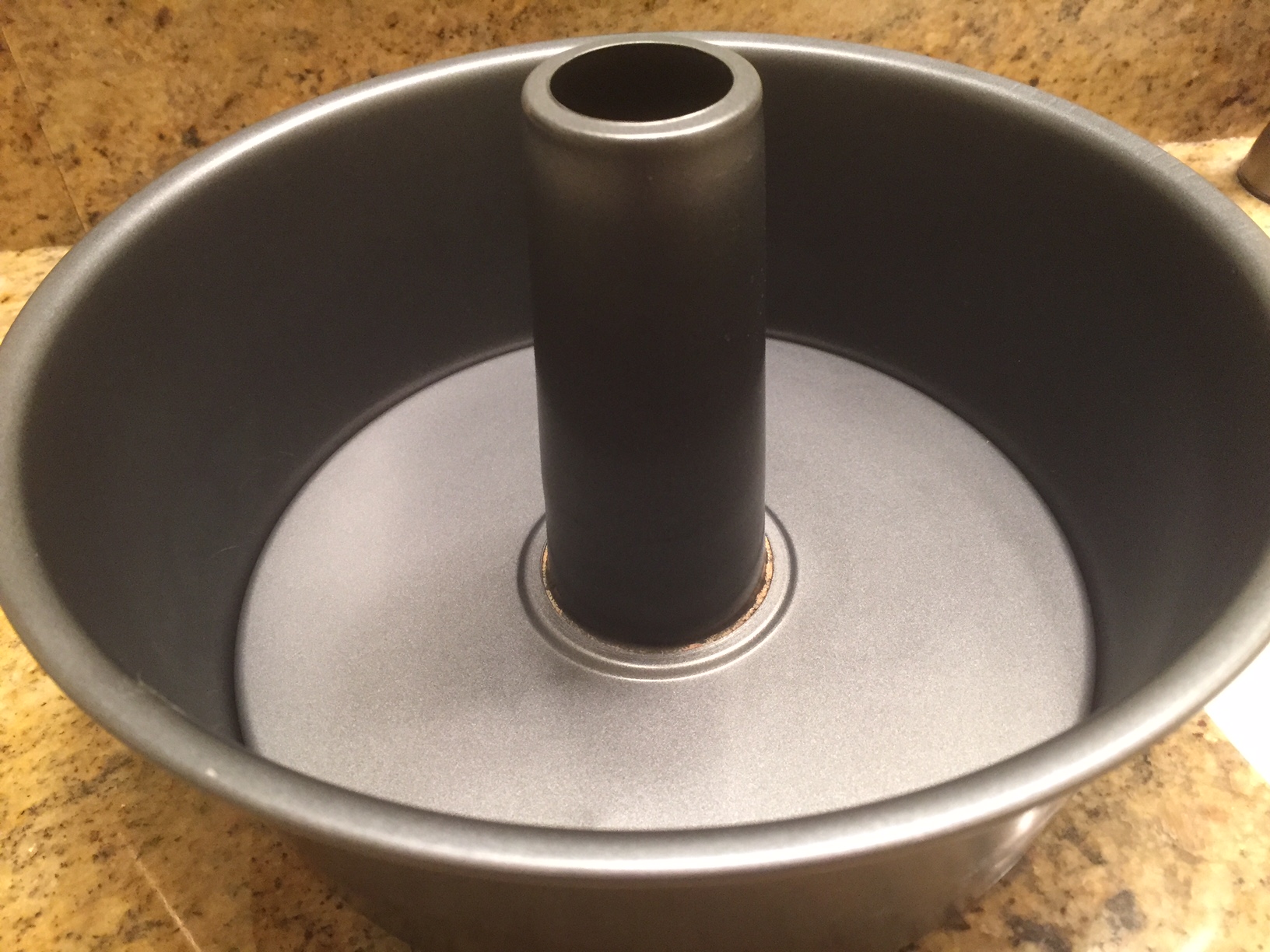
Step 1: Make a plan. Even if you are an accomplished chef or fabulous cook (I’m neither), read the recipe carefully and anticipate how you will proceed. I didn’t have a tube-shaped bundt pan, so even before I began, I had to make a trip to the grocery store for the proper pan.

BundtPan

Memoir Lesson 1 – Don’t fool yourself into imagining writing will be easy. Writing is certainly rewarding, but learning a new skill can be hard. I had done plenty of writing as an academic, but switching to a new genre like memoir required a totally different mindset.

Even if you end up changing your plan, you have something (like starter dough!) to begin with.


Step 2: Assemble what you need. Anticipate the ingredients and tools necessary. Pull out the mixer, bowls, wooden spatula, measuring cups and spoons. Take the eggs out of the refrigerator to bring to room temperature if necessary.

Memoir Lesson 2 – A memoir is a slice of your life, not a biography. Ask yourself some serious questions: What part of your life will you depict – your childhood, a traumatic experience, a thrilling adventure like sailing around the world? Can you sketch out this “slice of life” in a series of memorable moments? Scribble random thoughts on colored sticky notes? Draw it as a timeline? Write an outline?

What is your theme? If it’s success after a failed first marriage, that controlling idea will be the filter through which you tell your story. Flashbacks can add dimension to writing, but only if these stories connect to your theme.


Step 3: Be aware that you may need to make adjustments. Even though I knew where I was headed before I began (a perfectly baked cake, I hoped!) I had to make a few changes. I ran out of clean measuring cups, so I had to wash one. A phone call interrupted the process, so I had to quickly drizzle some lemon juice onto the apples so they wouldn’t turn brown.

Memoir Lesson 3   I didn’t open up the spice cabinet or pull everything down from my dry ingredients’ shelves and dump them into the batter. I had to be selective. Just so, you can’t tell every story that happened in your life. Stories have to fit your theme.


Step 4: Keep at it until it’s done. I was not done with the cake until it had been iced. Preceding this was planning –> mixing –> baking –> cooling –> de-panning–> icing.


Memoir Lesson 4   Memoir writing requires a series of steps to name a few: writing multiple drafts, revising, revising (Did I say revising?), writing a book proposal, finding various types of editors and an agent, planning for publication. You can find a more complete list of steps on Laurie Buchanan’s website here. 


Step 5: Celebrate! Light the candles and let the birthday boy blow them out. Serve everyone else a slice.

Cliff and birthday cake ablaze with candles

Memoir Lesson 5  Cake bakers hope the eaters will find their slice delicious. What delicious morsels of truth do you want your reader to get out of your book? That’s the memoir’s takeaway. Brooke Warner says it’s “ a gift to the reader, something heartfelt, universal, and true.” Figure out what that something special is in your memoir.


As a reader and/or writer, what writing tips would you add to this list?

Any cake-baking advice? Have you ever tried a baking project that turned out to be too elaborate?


(Watch next post for full apple cake recipe.) Coming next: Hoorah, My 300th Blog Post with an Oops and an Aah!

Sastruga, Snowy Winter Blankets

A long, wavelike ridge of snow . . . formed by the wind: Sastruga, a word of Russian origin.

A snowdrift is a beautiful thing if it doesn’t lie across the path you’ll have to shovel or block the road that leads to your destination.

Prehistoric Humps

Snow Drift, Google Images
Snowdrift, Google Images

James Thomson’s “Winter” from The Season portrays drifts as “one wild dazzling waste, that buries wide / The works of man.”


Snow So Pure

ShelleyQuoteSnow

~ Percy Bysshe Shelley, # 497 Invocation


Snow So Fun

[to] mimic in slow structures, stone by stone / The frolic architecture of the snow. – from Emerson, The Snow-Storm

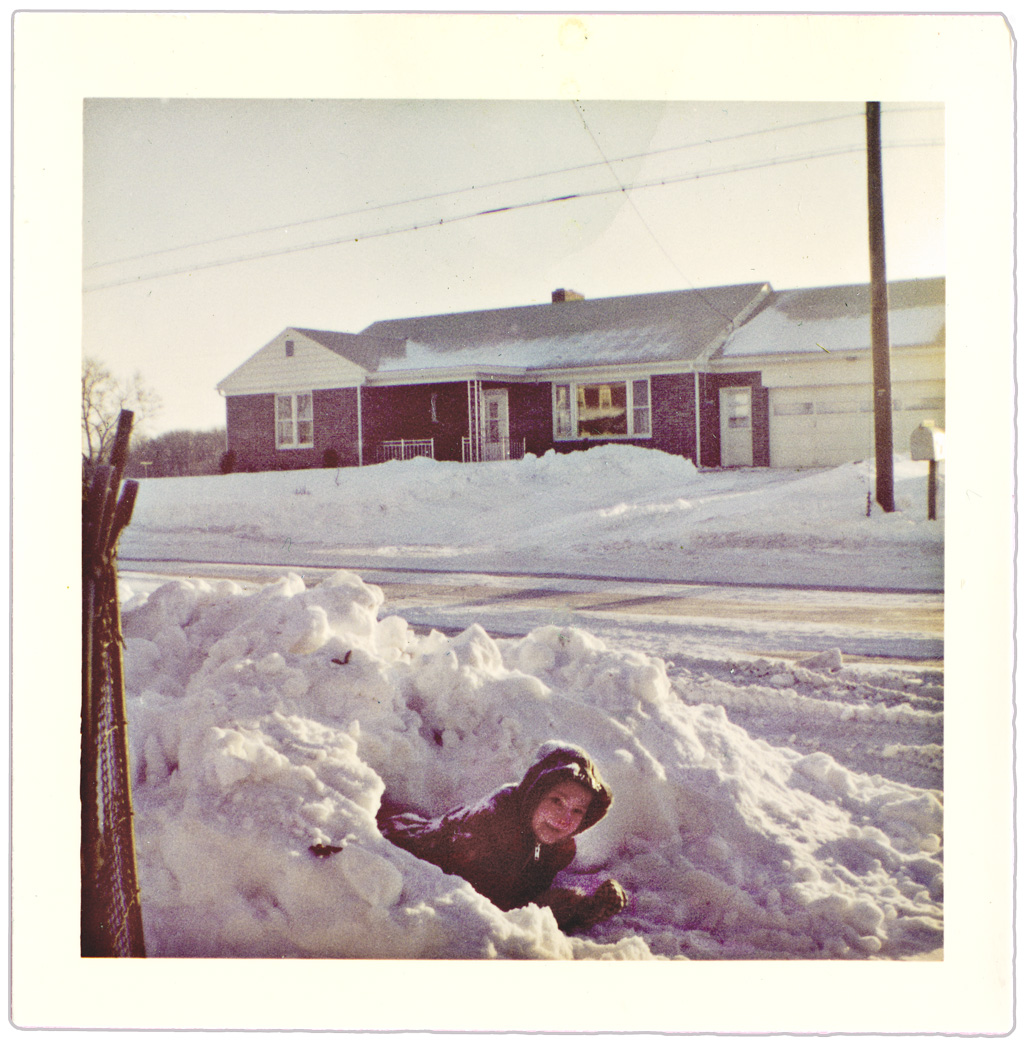
Snow-faced Mark in "igloo" 1961
Snow-faced brother Mark Longenecker in “igloo” 1961


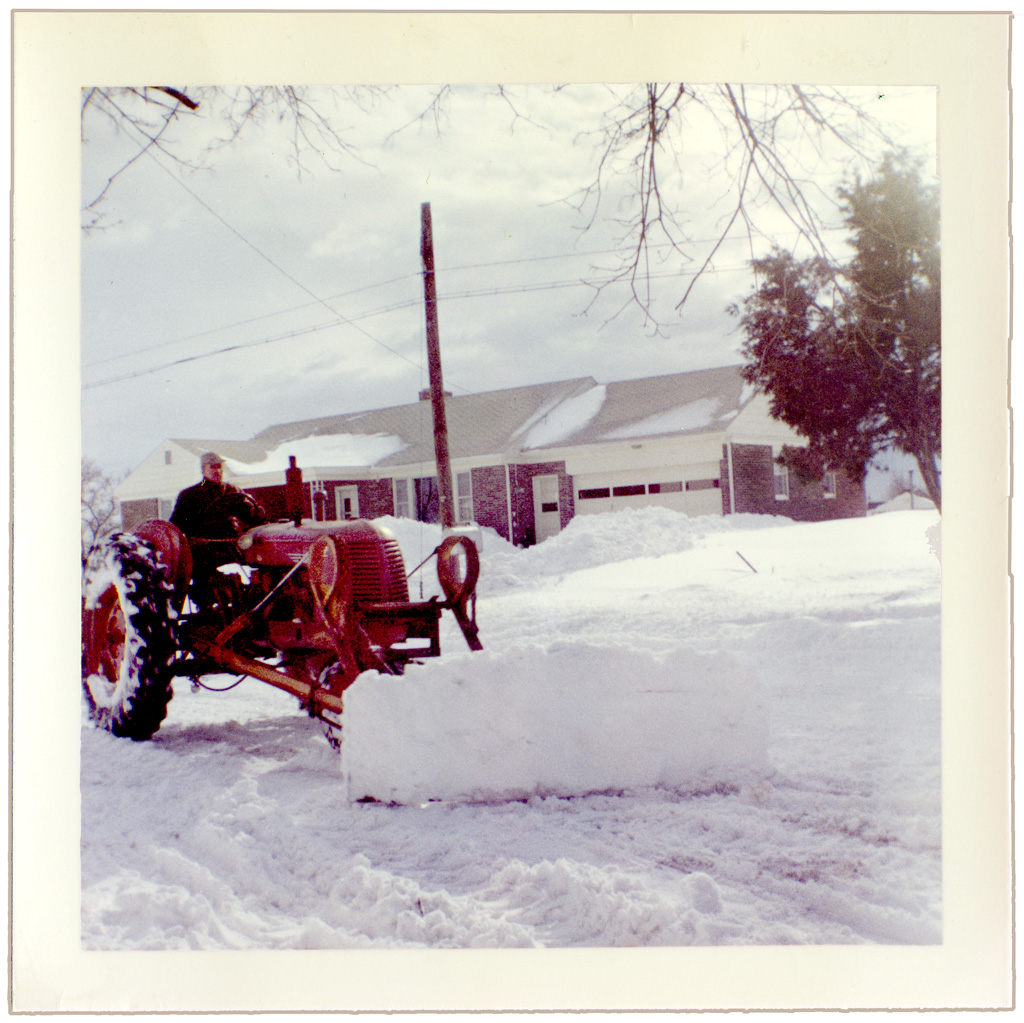
Snow Plow: Carving Out the Road Again

Ray Longenecker, my dad, plowing Anchor Road, 1961

A smooth white mound the brush pile showed, / A fenceless drift that once was road  ~ from Whittier’s Snow Bound: A Winter Idyll


Snow in Childhood . . . Never Ends

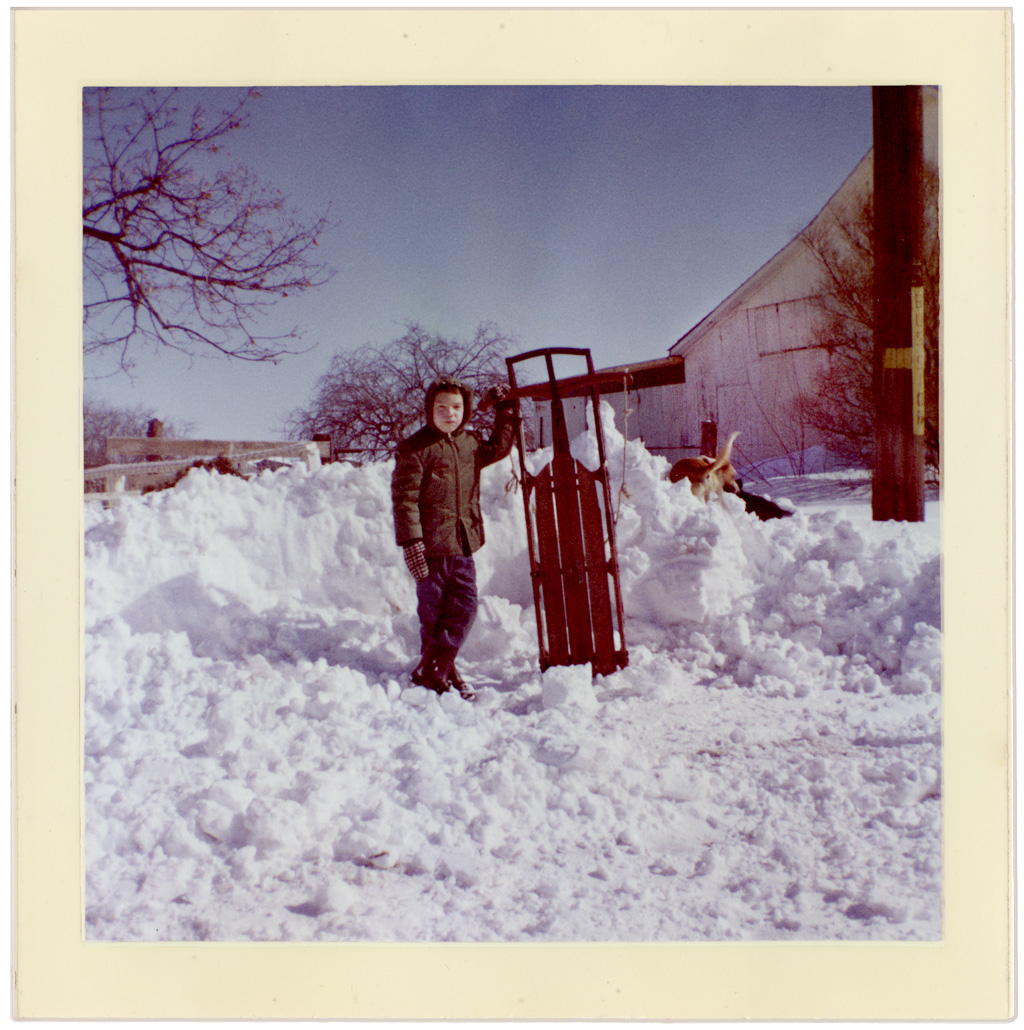
Brother Mark with sled and Skippy in the snow 1961

William Matthews in “Spring Snow” depicts a place where “childhood doesn’t end / but accumulates” and memories . . . disperse “in flecks, like dust, like flour, like snow.”

Snow provokes responses that reach right back to childhood. – Andy Goldsworthy


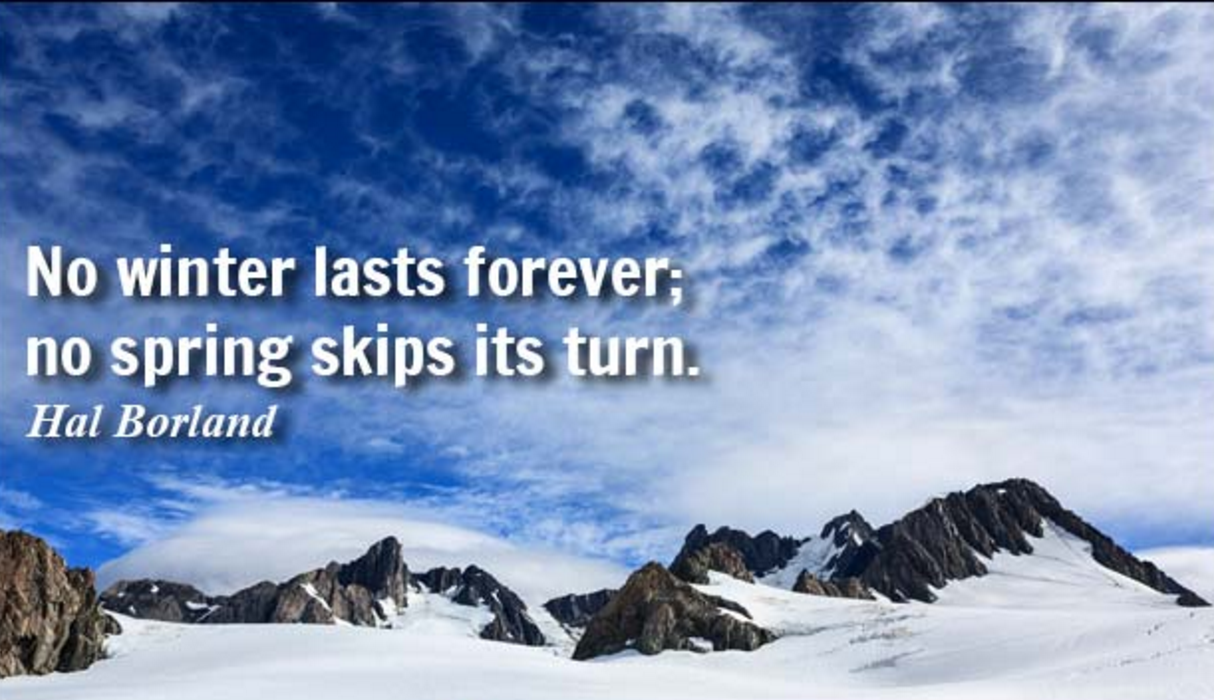
Snow Quotes

Borland in BrainyQuotes


Hast thou entered into the treasures of the snow?”   Job 38: 22a

* * *

New fallen snow is exquisite. But practical difficulties persist as snow lingers: messy cleanup, re-frozen slush, slick sidewalks.

Did you throw snowballs during recess at school? Help make an igloo? Snow memories welcome here.


Coming next: 5 Lessons Learned from a Birthday Cake

Moments of Discovery # 9: Keys to the Riddle

A Riddle

I have no head, and a tail I lack,

But oft have arms, and legs, and a back;

I inhabit the palace, the tavern, the cot-

‘Tis a beggarly residence where I am not.

If a monarch were present (I tell you no fable),

I still should be placed at the head of the table.

What am I?

You have probably already guessed the answer, a piece of furniture often passed down through the generations. Yet sorting through what is bequeathed us, we often handle family heirlooms whose origins are a riddle.

Some Artifacts

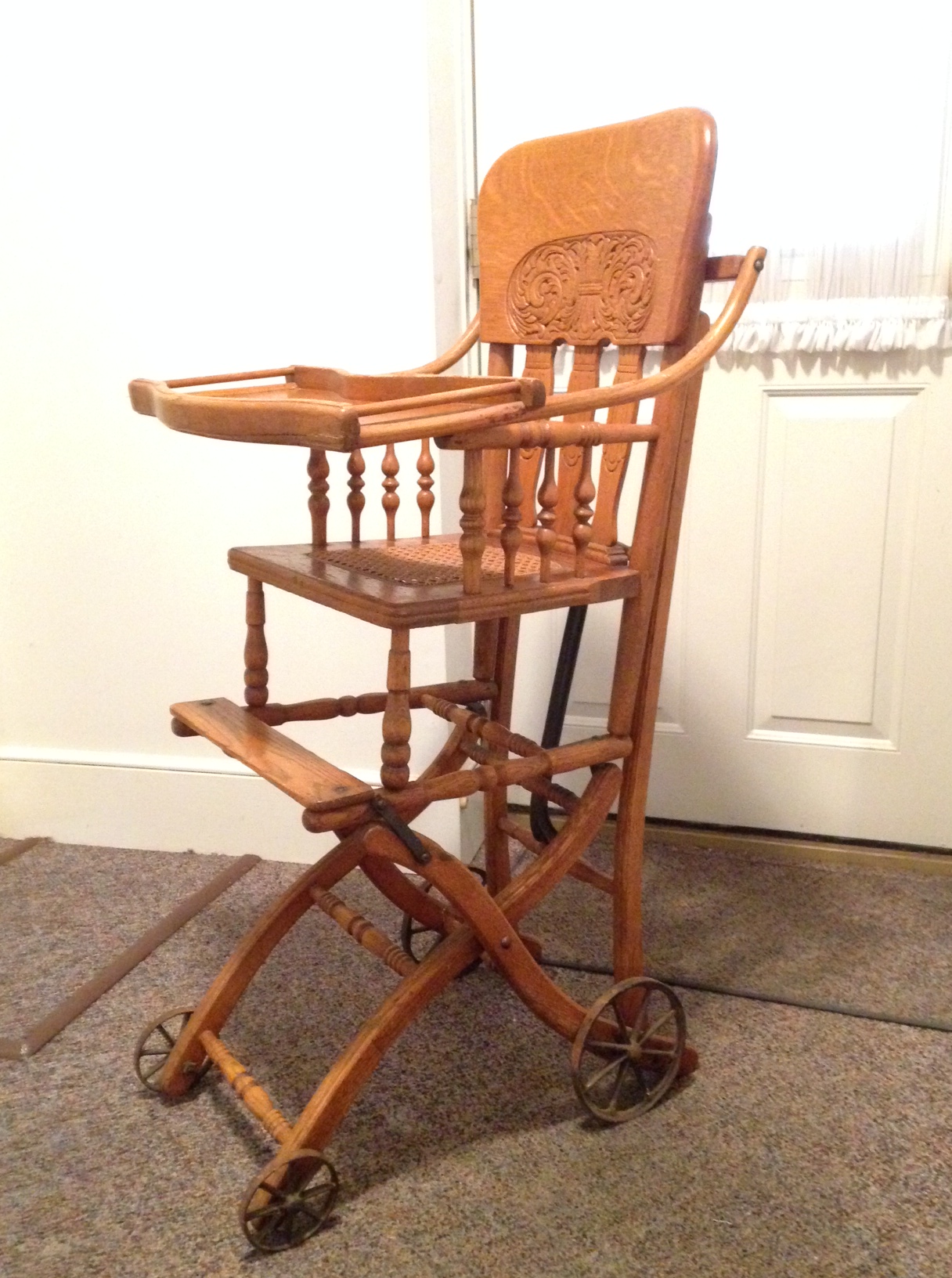
Our mother’s adjustable high chair, for example. It’s for sure from the Metzler/Landis side of the family, but we are not sure exactly where it came from. Did parents Abram and Sadie Metzler buy it new? Did the Landis grandparents present it as a gift because it was their very first grand-daughter? It looks well preserved, but its origin still a puzzle.

MomChairHigh

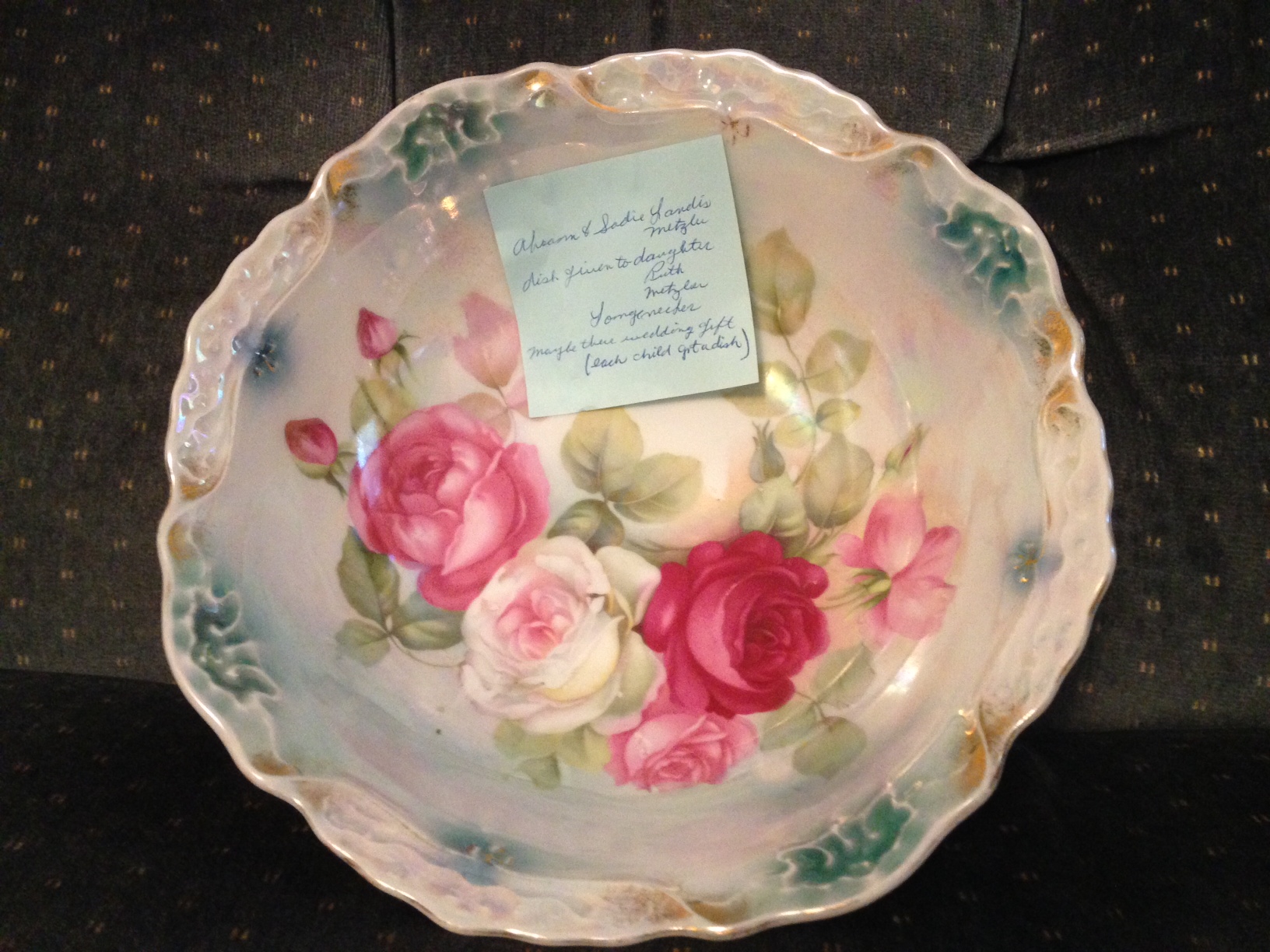
This gorgeous, glazed floral dish . . . of its vintage we are sure.

Dish given to my mother from her parents, Abram and Sadie Metzler on her wedding day

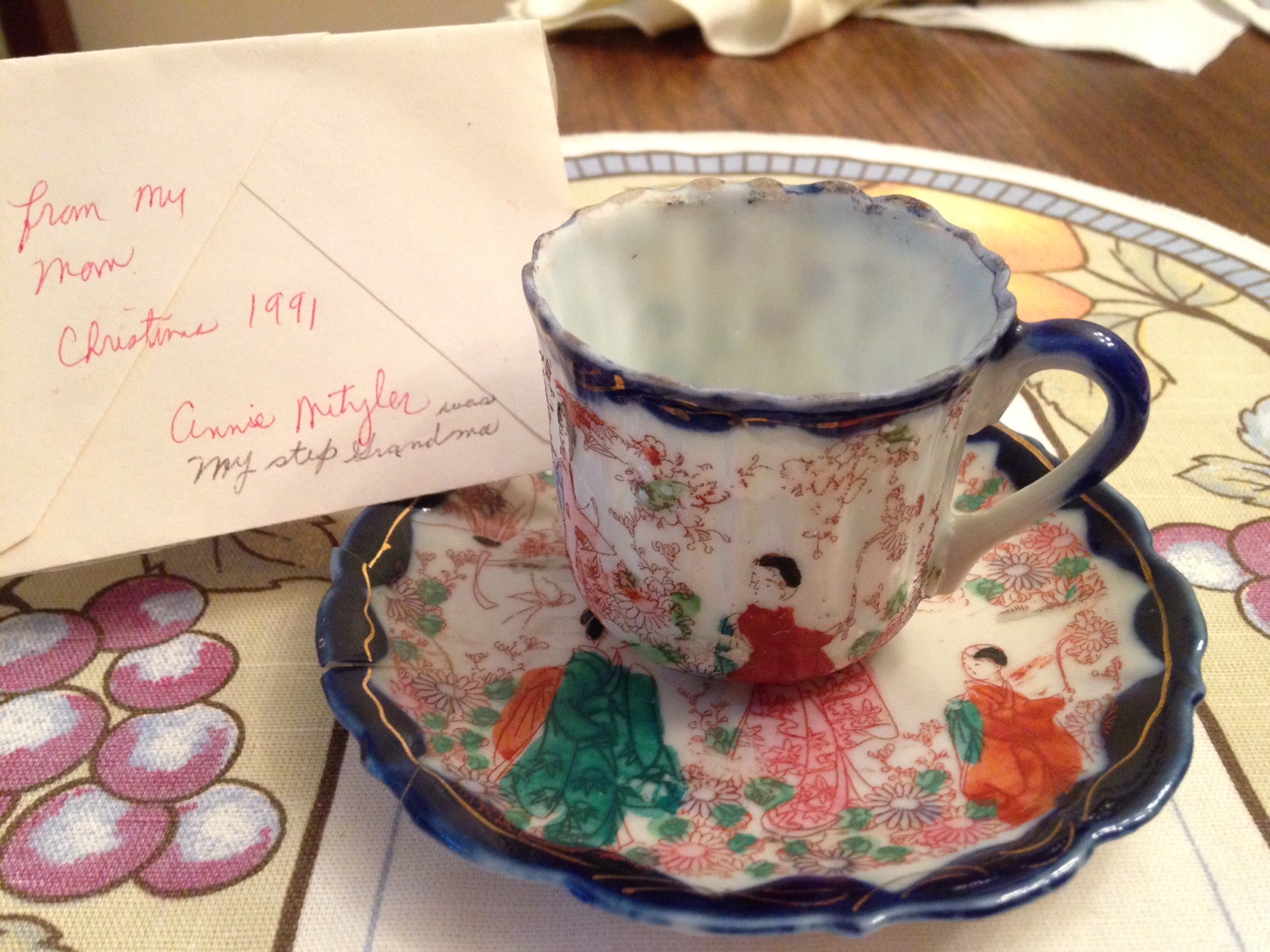
It’s no mystery where this Japanese teacup came from either. Mother, pretending to be me, wrote legibly in black that it’s from my maternal Grandma, Annie Metzler. It once survived an explosion in my curio cabinet. You can read about that here.

Japanese cup


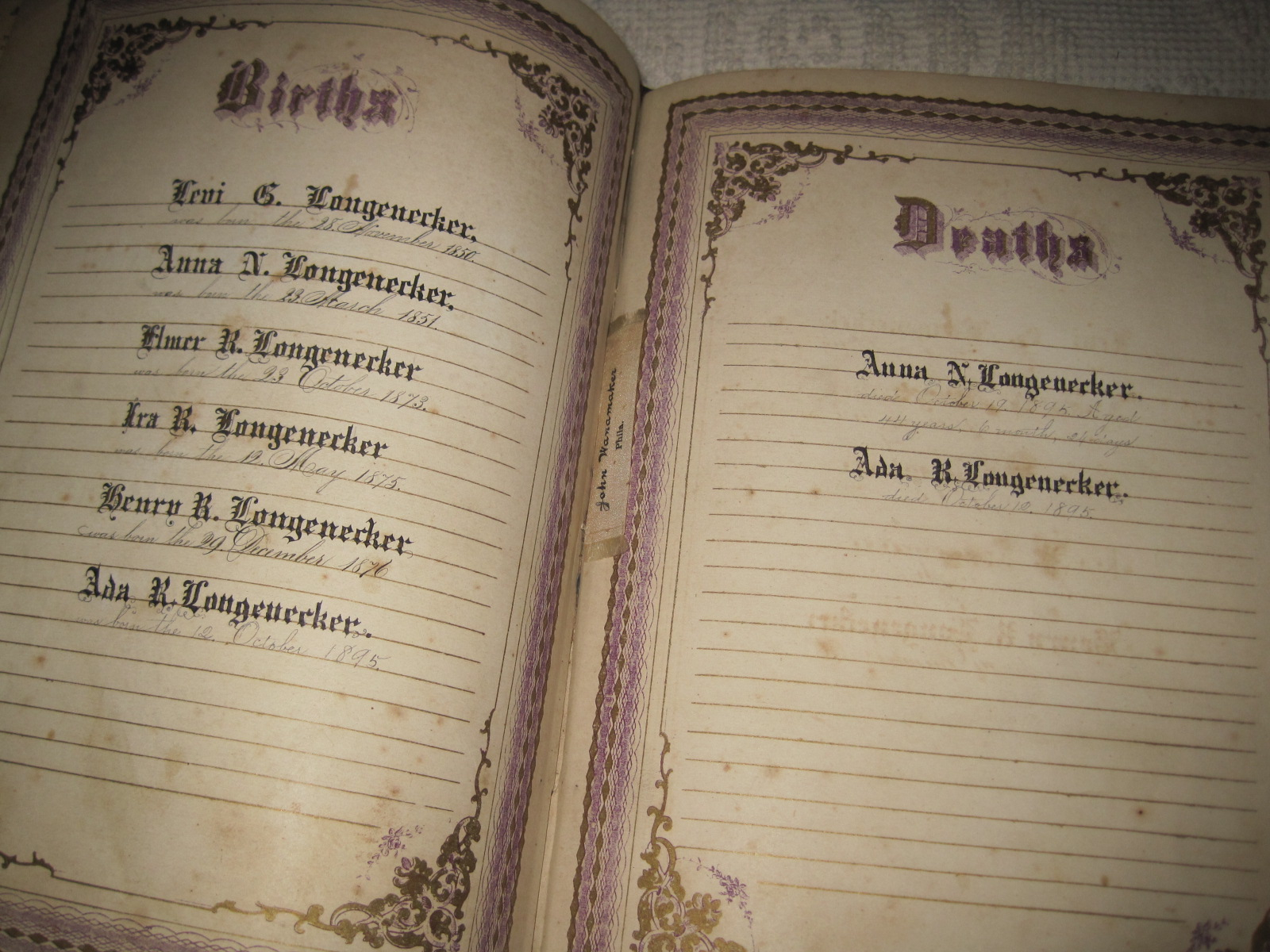
The German Bible has been in our family for centuries. The signatures signify it belongs in the Longenecker line. No mystery there.

Henry Risser Longenecker, my Grandfather, son of Levi Longenecker, listed in the family Bible.


A Special Chair

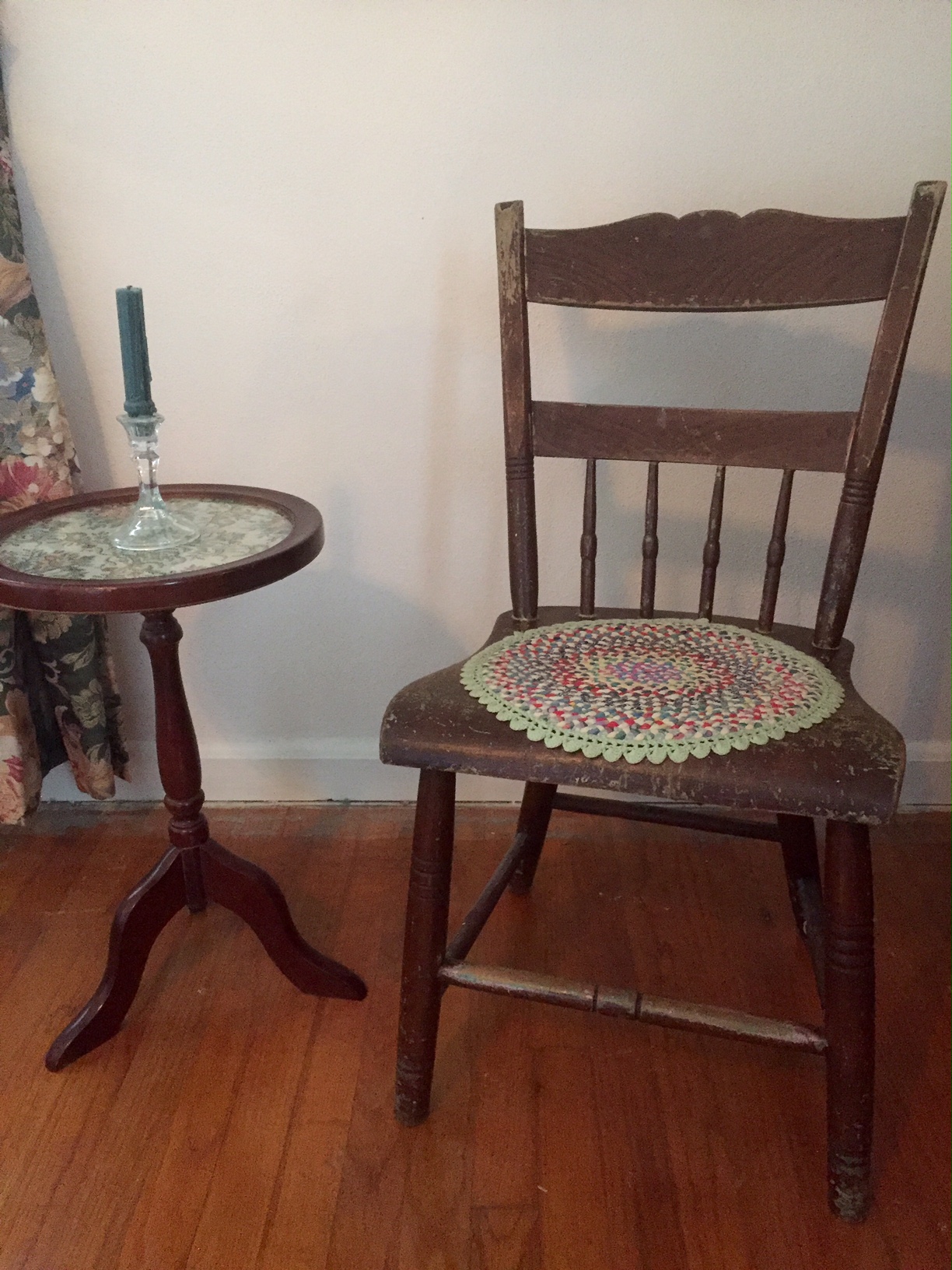
This chair below has sat in our bedroom for years. And it’s no enigma where it came from.

ChairMartinFront

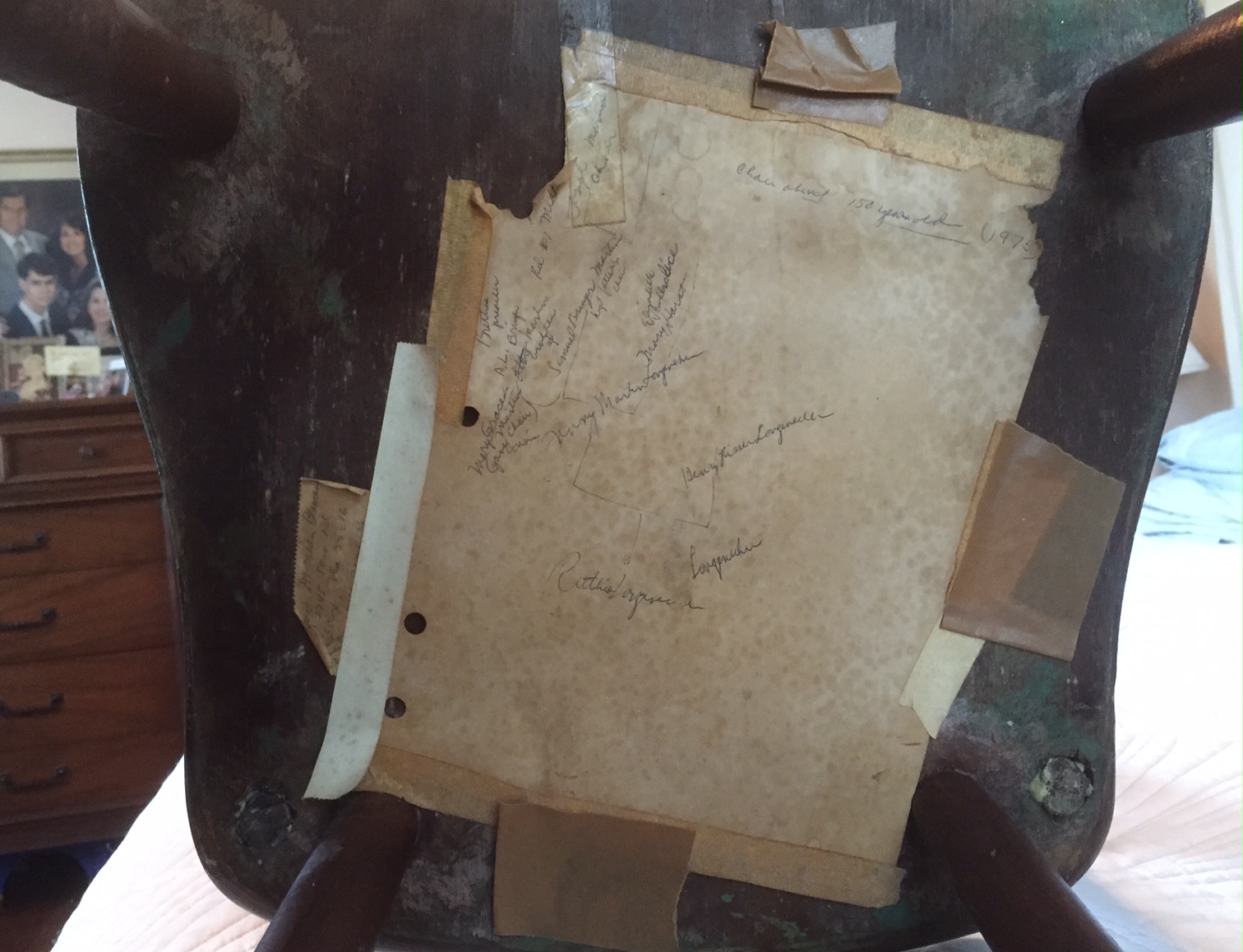
ChairMartinUnderneath

The provenance of the chair was taped to the bottom of this chair. Did I say chair? Yes, of course, this is the answer to the riddle above.

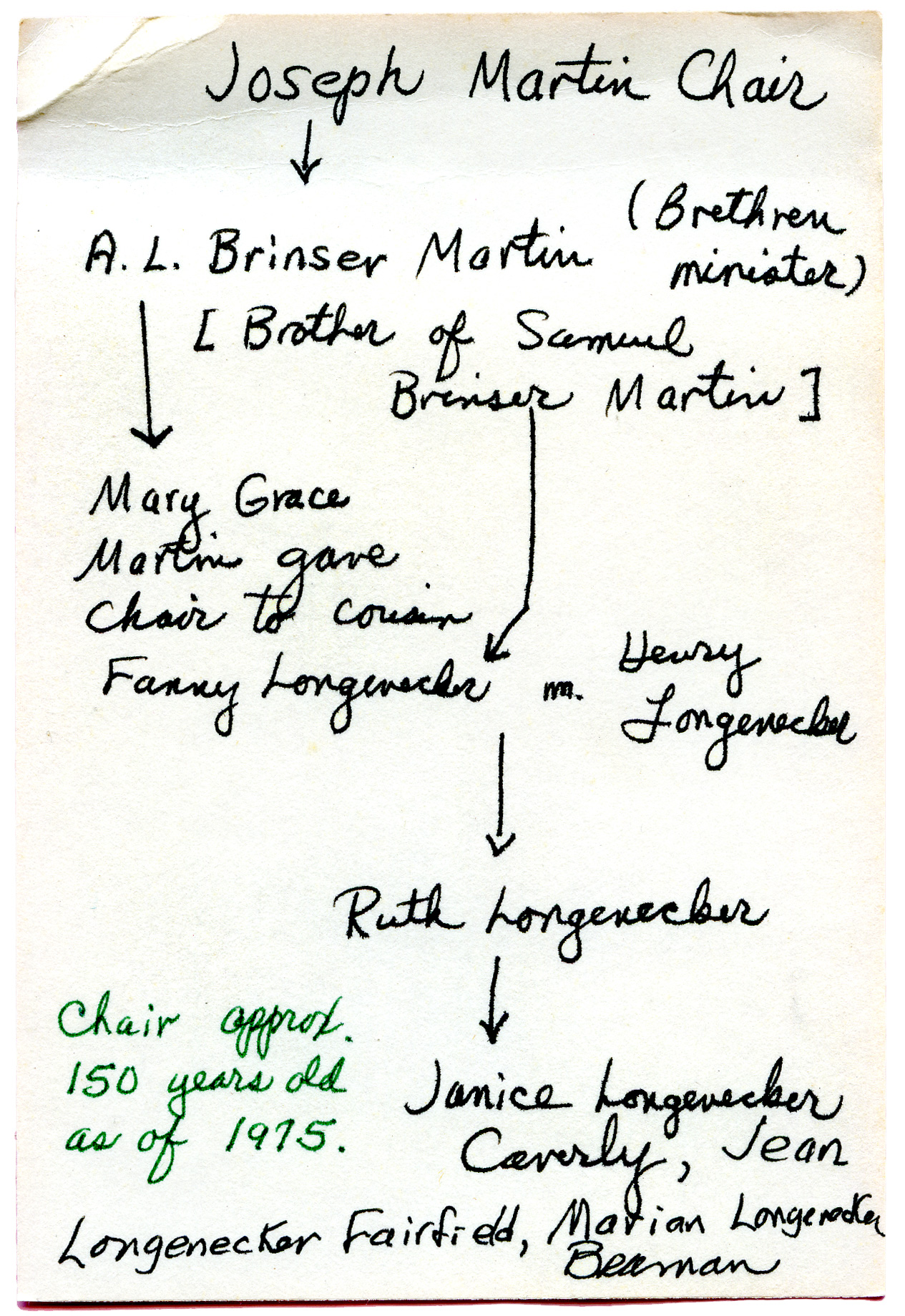
Since 1975, I have transcribed the names of generations of Martins and Longeneckers that have used this chair to host dinners. It’s called the Joseph Martin chair because it was handed down to us from Fannie Martin Longenecker, our grandmother.

ChairMartinLineage

Teacups, dishes, and chairs are inanimate. Unlike the personable “characters” in the Be Our Guest song from Beauty and the Beast, they come to life only when friends and family gather ‘round the table hospitably.

A Memorable Dinner

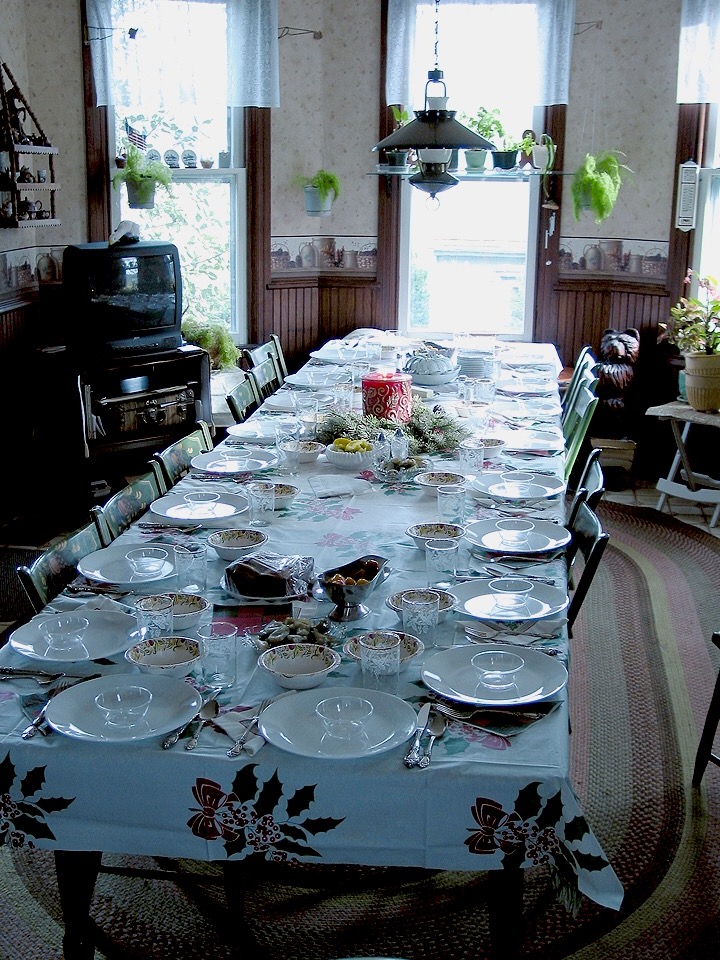
TableRuthieChrist2004

This photo was snapped just before bodies of all ages – the wiggly young, the pregnant great grand-daughters, the middle-aged, the elderly – gathered around the table at Grandma Longenecker’s house ready to dig in to Christmas dinner in 2004.

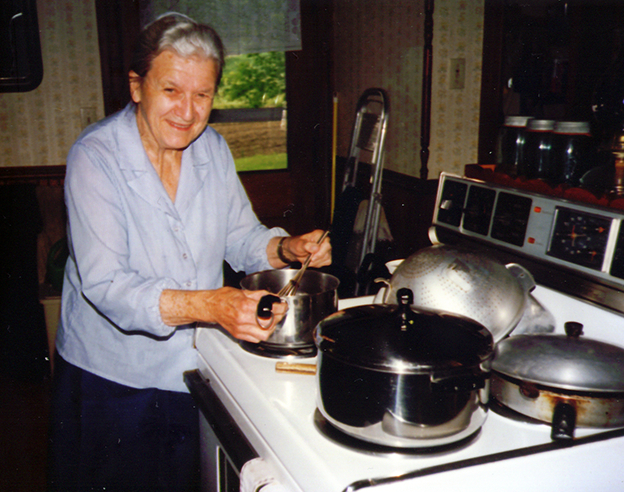
This was the last time Aunt Ruthie was able to host the dinner. She was 86 then. Of course she had lots of help, but this was the last time she sat as hostess at the head of the table, probably on an antique chair.

Aunt Ruthie (approx. age 75) busy in the kitchen, 1990s

* * *

What antiques do you regularly use at home? Have stored in the attic? Do you know a reliable website or service for valuing antiques?


Coming next: Sastruga, Snowy Winter Blankets