Baby Beads and Wooden Blocks: Happy Mother’s Day

I played with pastel-colored beads and wooden blocks with ridges, babyhood toys. Mother kept these oblong & round beads and animal-themed alphabet blocks for her grandchildren and great-grands. These sturdy toys entertained children of mothers they nurtured in their ministry for New Life for Girls too.

All of Mother's children and many of her grandchildren sat on this highchair and played with these wooden beads and blocks. We never played with plastic toys.
All of Mother’s children and many of her grandchildren sat on this high chair and played with these wooden beads and blocks. We never played with plastic toys.
These blocks are entertaining my sister Jean's grandchildren
These blocks have entertained my sister Jean’s grandchildren

To me, such simple toys bespeak innocence and the charm of a simpler life..

On this Mother’s Day 2016, these artifacts seem an apt metaphor for my mother’s contribution to our heritage.

Beads of Wisdom: Mom’s Mottos

  1. “Outen the light,” meaning turn off the light switch to conserve energy.
  2. “Ach, don’t talk so dumb,” spoken as a way to discourage silly talk.
  3. “You get what you pay for.”
  4. “Be sure your sin will find you out.”
  5. (Someone) “turned up Jack,” meaning disappointed or didn’t pan out
  6. “Be sure to add enough butter: Butter makes it better!”
  7. “Tie your head shut,” admonishing us to wear a bandanna during cold or windy weather, illustrated here with a flash of memory:

I paid attention, of course, and rushed out wearing my blue wool coat and pink and white polka-dotted bandanna on my head, eager to help Grandma set the table. In cool weather, I always had my “head tied shut,” an expression Mother used to keep us from getting a cold, she thought. But looking back, I think having my head tied shut is a metaphor for keeping out the world and all the corruption that can come in through an unlocked door, even a passageway like my ears.


Blocks of Faith

  1. Tied a nickel into the corner of a square, white hanky to teach me to give to God.
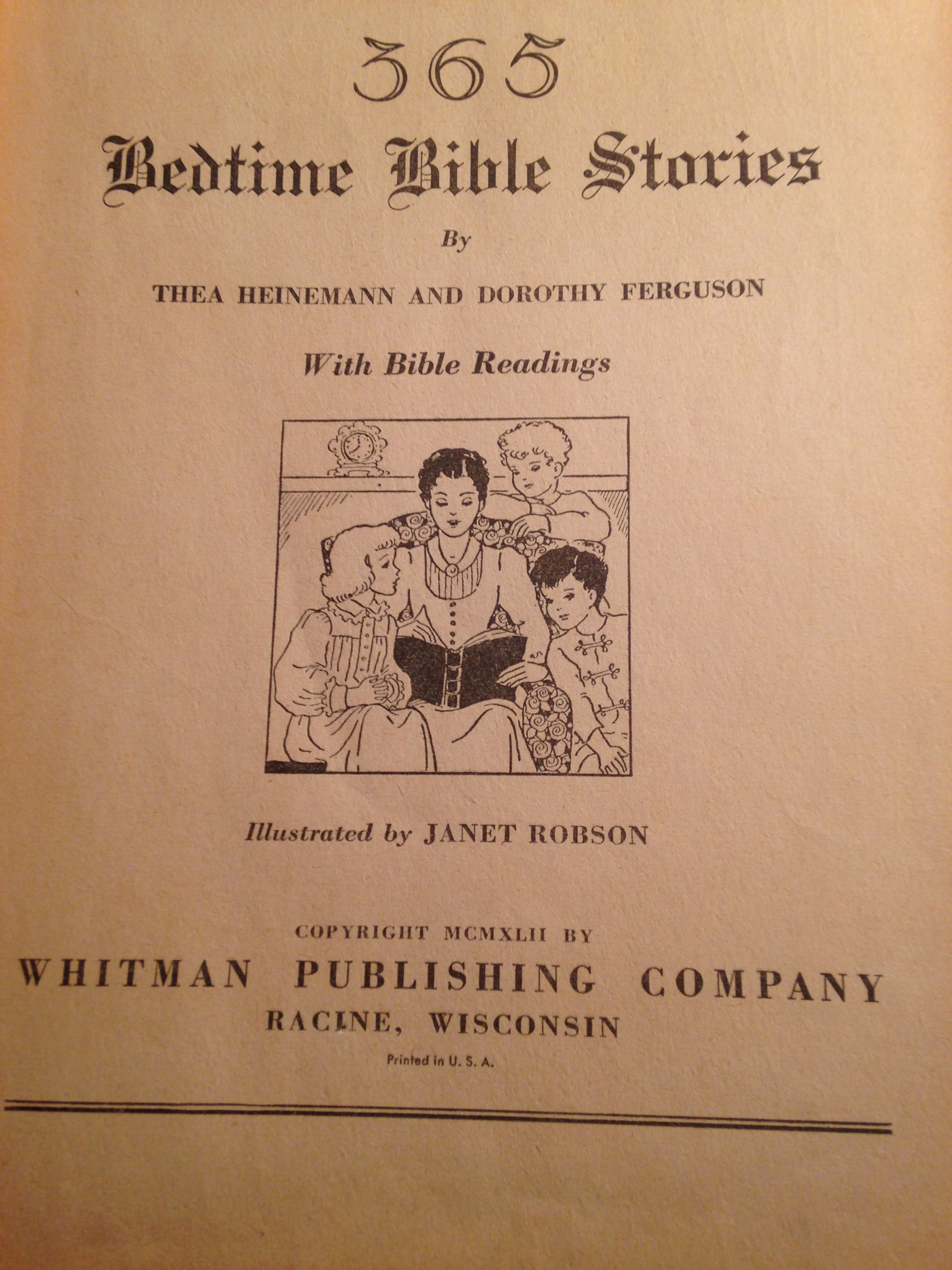
  2. Read to me from a Bible Story Book, one story for every day of the year.
BibleStoryInside copy  BedtimeBibleStories copy

The date on the flyleaf, MCMXLII, can be translated as 1942. In the years following, my sisters Janice and Jean and my brother Mark must have heard these stories too.

3. Prayed with us at bedtime: “Now I lay me down to sleep, I pray the Lord my soul to keep . . . .”

4. Led us in prayers of gratitude before all our meals. Usually, the prayers were silent.

5. Uplifted arms, palms turned upward, her gesture of acceptance, “Whatever the Good Lord wants.”


My mother wasn’t perfect. Whose is? She had moments of impatience, she sometimes complained, yet she did the best she could. I choose to celebrate those attributes of a woman who all her life sought to please God.

An invitation to you: Add words of wisdom or silliness from any source, including your mother.


Coming next: Vintage Photo in Need of a Caption, Part II

Mom’s Dandelion Recipe & the Passover Seder

“It’s a spring cleaning ritual – but for your body,” touts reporter Jennifer Sheehan, extolling the merits of eating dandelion. “It cleans your blood and you get a lot of good vitamins from it,” another endorsement I read in Sheehan’s article from Lehigh Valley’s The Morning Call.
My mother would agree. Each spring about this time, she took her wooden-handled trowel and dug out dandelion plants fertilized by cow and horse manure in the meadow next door. “Dandelion has a lot of iron,” she said of the long, spiny leaves. “And it’s so good with hard-boiled eggs and bacon.”

Last week my sister Janice shared Mother’s recipe. I was pleasantly surprised because I didn’t know it was written down anywhere.

Add a little water till soft.

Add white sugar – a little vinegar

Fry bacon and hard boil two eggs

The recipe wouldn’t pass muster for cookbook publication, lacking as it does measurements and a logical order. But reading between the lines, I constructed her dish in a slightly different way.

First of all, I bought dandelion at a local farmer’s market. The label reads organic. The dandelion stalks pictured here look too perfect The dandelion strands of my childhood were more wiry, a deeper green. “Organic” was not a selling point back then.

DandelionIngredients

I began by frying bacon and hard boiling eggs.

EggsBacon

Instead of white sugar, I used brown.

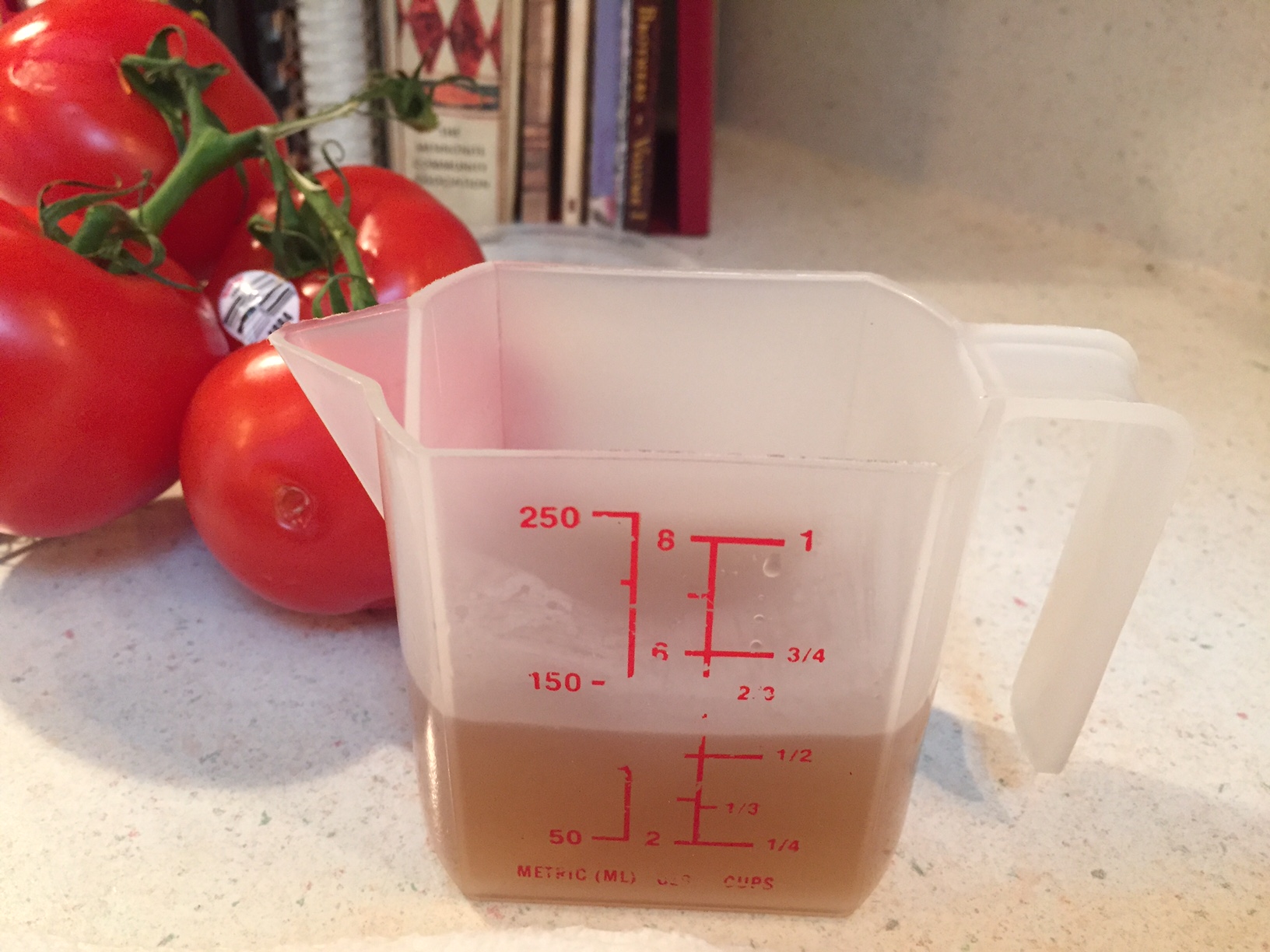
And I saved the broth from cooking the dandelion. “It’s good for what ails you,” I imagine Mother would say.

DandelionJuice

Finally, good enough to eat!

DandelionDishDone


Continuing the discussion of dandelion in The Morning Call, Sheehan quotes Patrick Donmoyer, an expert on Pennsylvania Dutch folklore, who believes eating dandelion greens is symbolic. “Donmoyer, who lectures at the Pennsylvania German Heritage Center in Kutztown, reports that some people believed that the dandelion were special, holy even, gathered as they were during the week leading up to Easter.”

Christians observed Easter nearly a month ago, but beginning Friday evening, Jewish families observe Passover, enjoying the ritual of the Seder meal. Surely no bacon will be served, but the menu will feature eggs, symbolizing renewal, and bitter herbs, signifying the agony of Hebrew enslavement in Egypt.

Traditional Seder Menu, Source: myjewishlearning.com

You can see a fully furnished Seder table here in a previous post. I wonder whether dandelion, like horseradish, would qualify as a bitter herb.


Question Mark w border1_1x1_300

What rituals do you observe in the spring – eating certain foods? cleaning house? planting a garden?

Do you have a dandelion (or endive) recipe to share, or an experience of eating the dish? Have you observed the Passover Seder?


Coming next: All Creatures Great and Small: The Power of Pets

What Lights Your Fire?

My mother wore many hats both literally and figuratively. Most of her head coverings were prayer veilings worn every day. As a young woman, her coverings were large, decreasing in size as she got older and church rules had progressively relaxed.

Mom+Marian_2 mos_5x9_300


Mother wore a sunbonnet in the tomato patch in Bainbridge, PA. As far as I could tell, Mennonite women in the 1940s and 1950s, paid no attention to Coppertone ads. (Remember billboards with that sneaky cocker spaniel pulling on a little girl’s swimsuit bottom, exposing her pale cheeks?) No one that I knew then wore sun tan lotion regularly, except maybe to the shore at Atlantic City or Ocean City. Country women, including my mother, wore bonnets in the garden and fields to protect their skin.

MomBonnetTOMATOES

The details are fuzzy here because this photo is another movie “still” captured from Aunt Ruthie’s 16 mm camera (circa 1955).

I look at this image of Mother’s sunbonnet worn in the tomato patch with two lenses, viewing the blurry film now and remembering the scene vividly then as an eyewitness:

I’m looking at a film clip of Mother in rows of the tomato patch just now, humped-over body bending toward a flush tomato bush facing the camera, her blue and white speckled sunbonnet sewn with three tiers of matching ruffles, a row along the bill, a row at the crease, another row near the crown of the hat—come to think of it now, headgear much fancier than her everyday prayer cap.


Figuratively too, she wore many hats:

Sister

Wife

Mother

Friend

Gardener

Tomato Picker

Cook/preserver

PTA/Treasurer

Dresser of chickens

Sewing circle seamstress

Volunteer – MCC Gift and Thrift

Volunteer – Choice Books in Salunga, PA

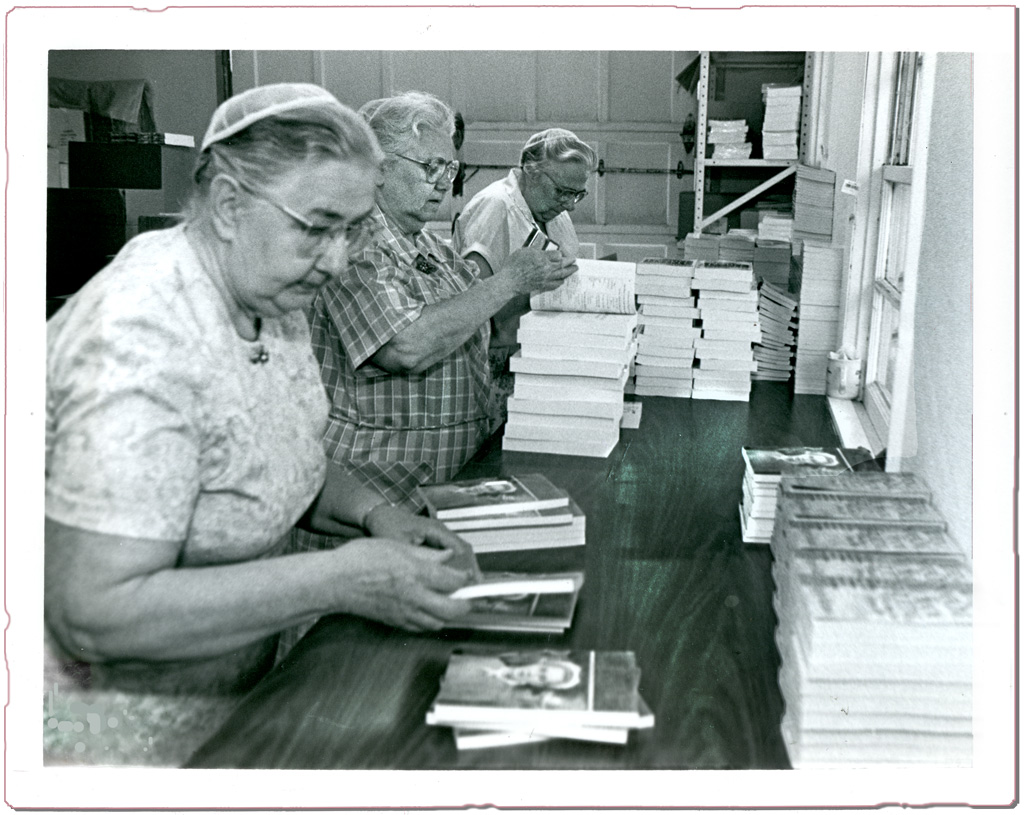
Mother particularly enjoyed her last volunteer job, stamping the Choice Books logo onto inspirational books for display on kiosks in stores around the country. During her “morning away,” she got to see her niece Dotty Metzler Martin often, met her friend Bertha, and ate lunch with other friends. She always sounded thrilled to describe this excursion when we talked on the phone Saturday mornings.

MomChoiceBooks

Even in her early nineties, she got excited about this bright spot in her life. I thought about her experience and examined my own passions when I read this verse from Psalm 39:3

My heart grew hot within me . . . and as I meditated, the fire burned. (NIV)

If someone asked Mother, “What lights your fire?” She would probably answer, “Serving others,” a motto she lived by.

The 16 x 22 inch poster created for her 90th birthday party and later, displayed on an easel at her memorial service, shows flash points of service, including her stint at Choice Books.

PosterMom2008


How would you answer these burning questions?

  • What lights your fire?
  • What burns “hot” within you?

“When God gives you an 11-by-17 mindset, you’ll never be happy living in a 3-by-5 mental framework.” Daily Devotional: The Word for You Today, April 10, 2016


Hearing from you lights my fire. Thank you for commenting here!


Coming next: All Creatures Great & Small: The Power of Pets


Any Hats in Your History?

Little Mennonite girls could be fancy before they became plain. They could wear hats. Their mothers may have worn flat, black bonnets on top of their prayer veilings (coverings) at Easter, but they couldn’t wear hats with ribbons and flowers. At least not in Lancaster County, Pennsylvania in the 1950s.

My sisters and I are standing here in front of peony bushes wearing some cast-off hats Grandma Longenecker’s friend, Mame Goss, brought from a millinery shop in Middletown, Pennsylvania.

Marian, Jean, and Janice in front of the peony bushes

I recall this scene through the lens of memory:

I’m looking now at a snapshot my mother took of my sisters and me in these hats, the three of us holding hands in front of a peony bed. The magenta peonies are in bloom, so it must have been May. The double whites mingled among them have ruby flecks in their ruffled centers. My sister Janice, three years younger, is standing at one end, with blonde hair fluffed into curls, hands obediently at her side. Jeanie, a tiny tot of two or three, appears to be looking down at the grass, her burst of tulle brushing light brown hair. I’m staring straight at the camera, two thick braids trailing down my back. Our dresses are all bedecked with ruffles and bows, embroidery or smocking, dresses surely made by our plain Mennonite mother.

I wore my first adult hat ever, a pale blue clôche with a blue chiffon dress one spring when Cliff and I were dating.

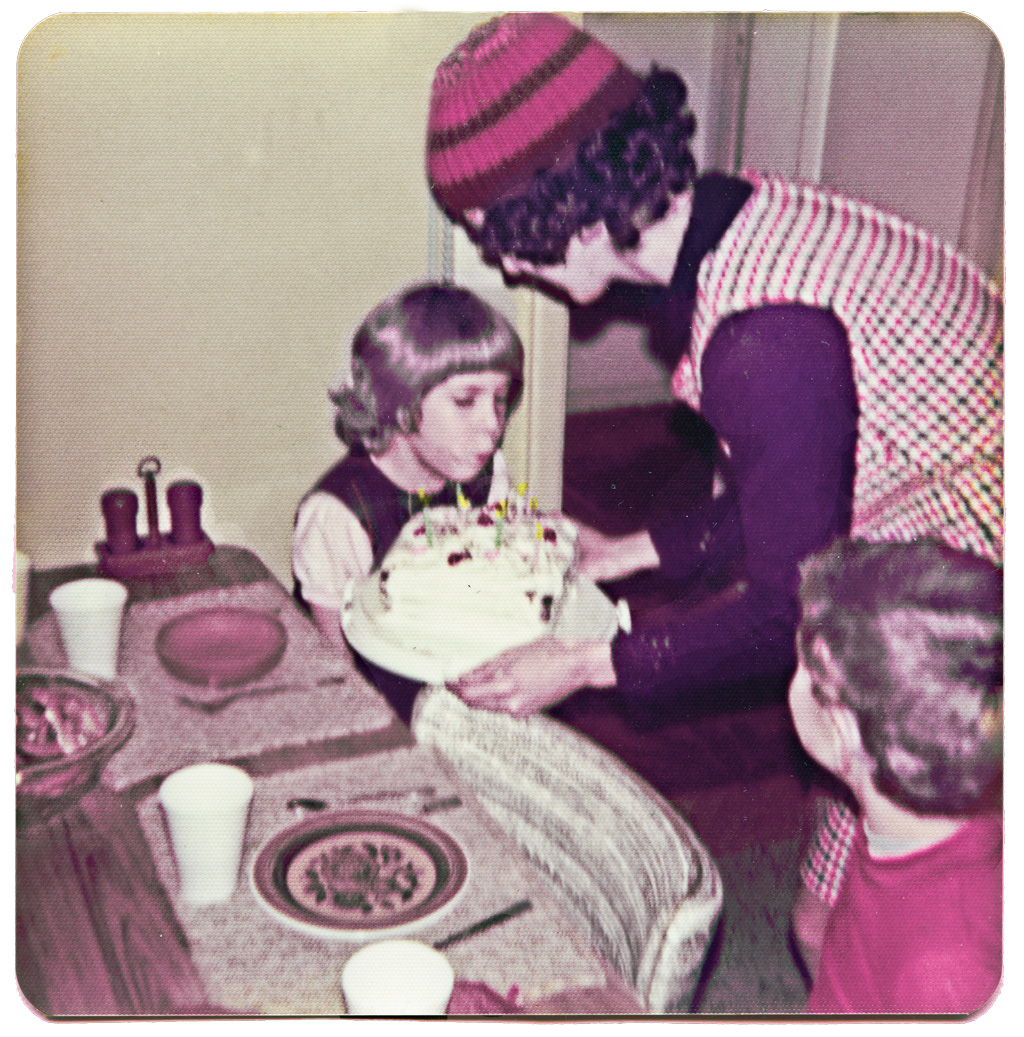
At Crista’s 5th birthday party I was wearing a knitted skull-tight cap, typical of the 1970s.

Hat1977redStocking

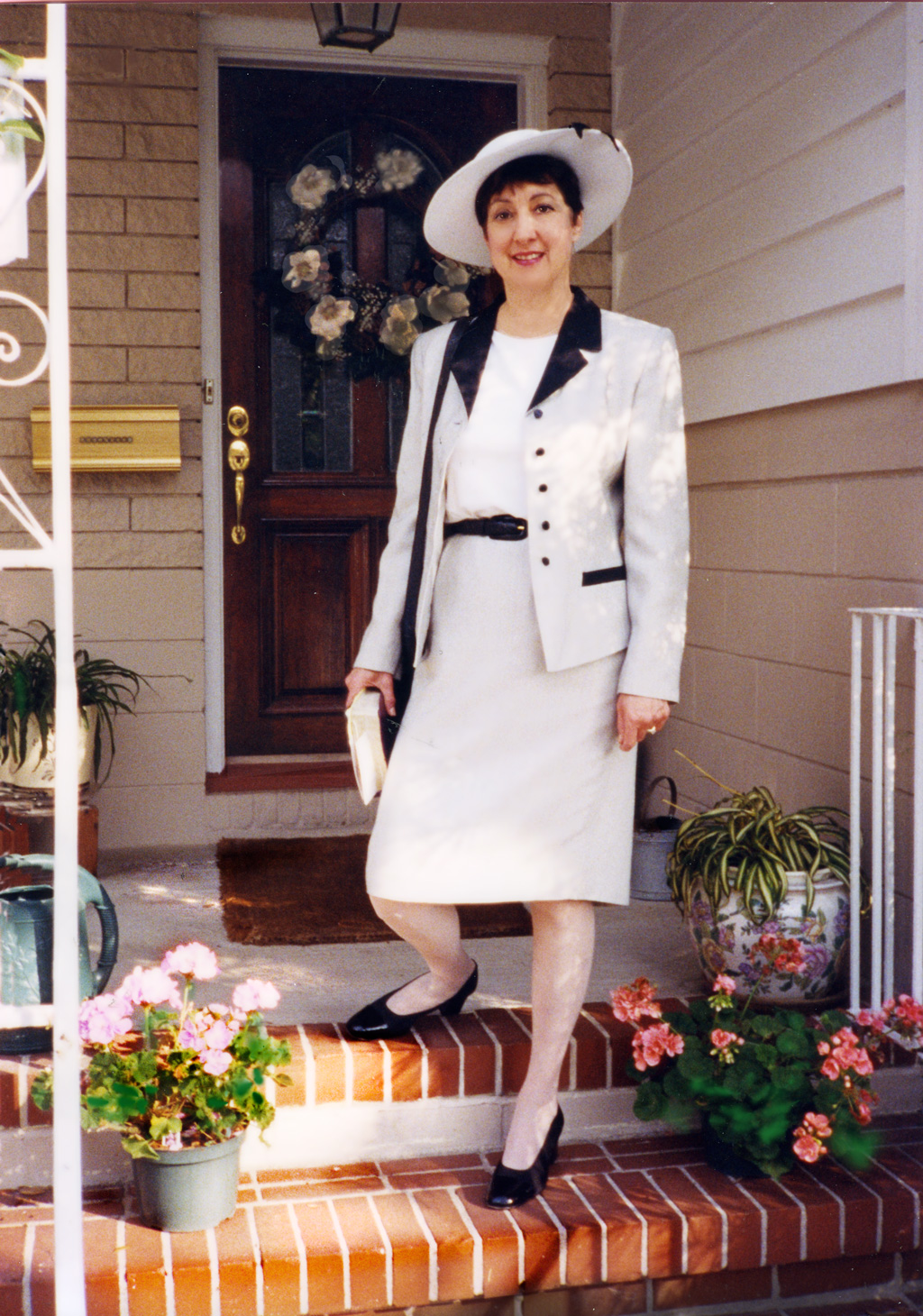
In the 1990s I bought a white hat trimmed in black ribbon and feathers, probably for Easter. I don’t wear hats anymore. I have already taken this one to Angel Aid, a charity for mothers and children.

Hat1999KillarneySteps

My sister Jan and I wore British-style hats to Downton Abbey events sponsored by our PBS station in Jacksonville, Florida. Each of our hats adorned with feathers, a flower and seed pearls cost $ 5.00 at Roots’ Country Market near Manheim, PA. We didn’t tell anyone at the gala how much our gorgeous hats cost.

JanMarianDownton

Sisters with friend Carolyn Stoner
Sisters with friend Carolyn Stoner with her fascinator hat in black and green

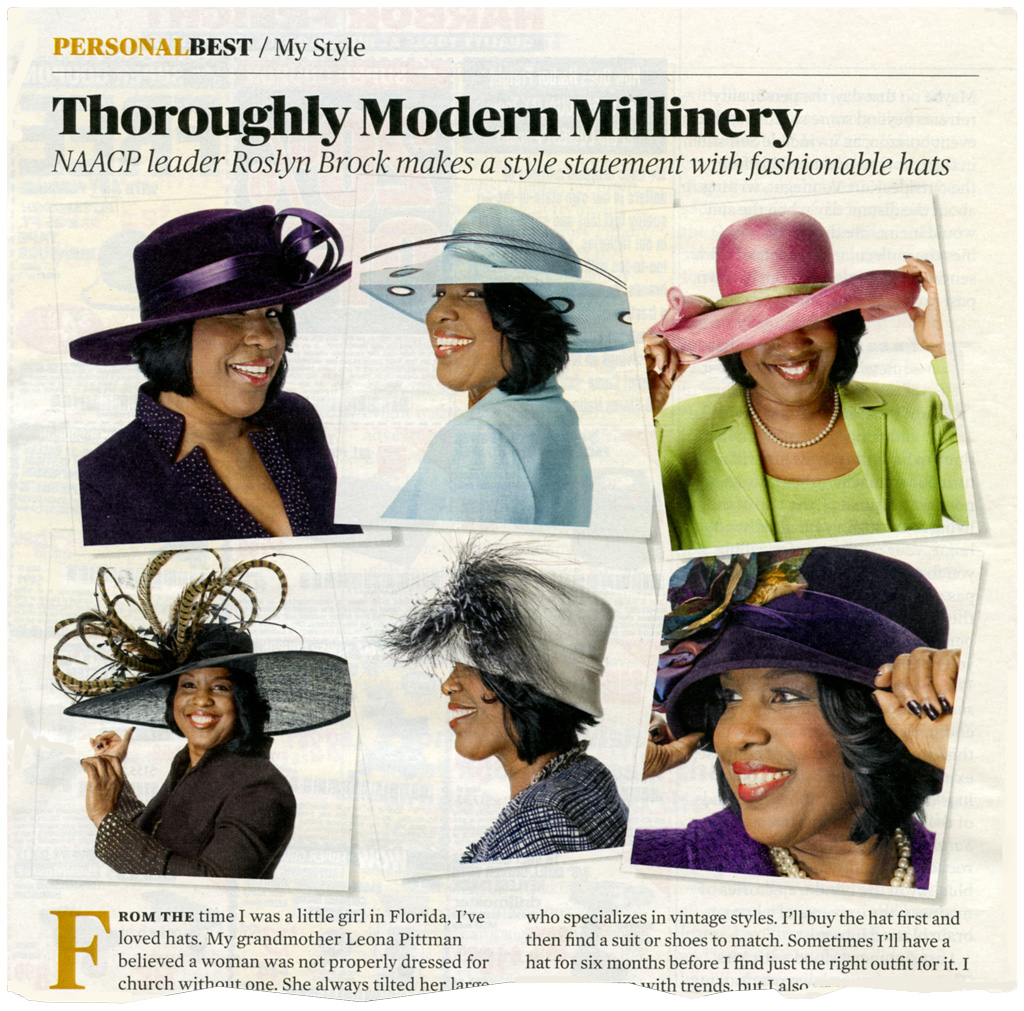
Hats have mostly gone out of fashion in recent decades, except among the trendy young. NAACP leader Roslyn Brock makes a style statement with her wardrobe of about 200 fashionable hats, expressing her love for her Grandmother Leona Pittman who “believed a woman was not properly dressed for church without one.” Brock emphasizes that

I’m following in the legacy of female civil rights leaders who completed their Sunday go-to-meeting clothes with fashionable hats.


Hats are the centerpiece of Roslyn’s wardrobe. She admits that she’ll buy the hat first and then find a matching suit or shoes. For Roslyn, who enjoys couture creations from Philip Treacy, Queen Elizabeth’s designer, wearing hats “keeps our history and culture alive.”

How a hat makes you feel is what a hat is all about.  ~ Philip Treacy

HatAARPrarticle


In June it will be two years since my mother died unexpectedly. I still miss her terribly. Grief occasionally comes over me in waves. Now less often, with less severe impact. Still . . .

On my dresser I have kept three mementoes of Mother, one on top of the other: the two-quart Ball jar with bubbles in the glass, emblematic of her love of cooking and canning. And her last Mennonite black bonnet and white prayer covering veiling made of bobbinet fabric, a see-through, hexagonal mesh. Symbols of her constant faith and hope in God, each piece of headgear is less than half the size of those she wore in her youth.

CoverBonnetMOM

Any hats in your history?

What did it look like? Where did you wear it? Do you still wear a hat? Comments are warmly welcomed. Don’t be shy.

Coming next: What Lights Your Fire?

Easter Passion: Then and Now

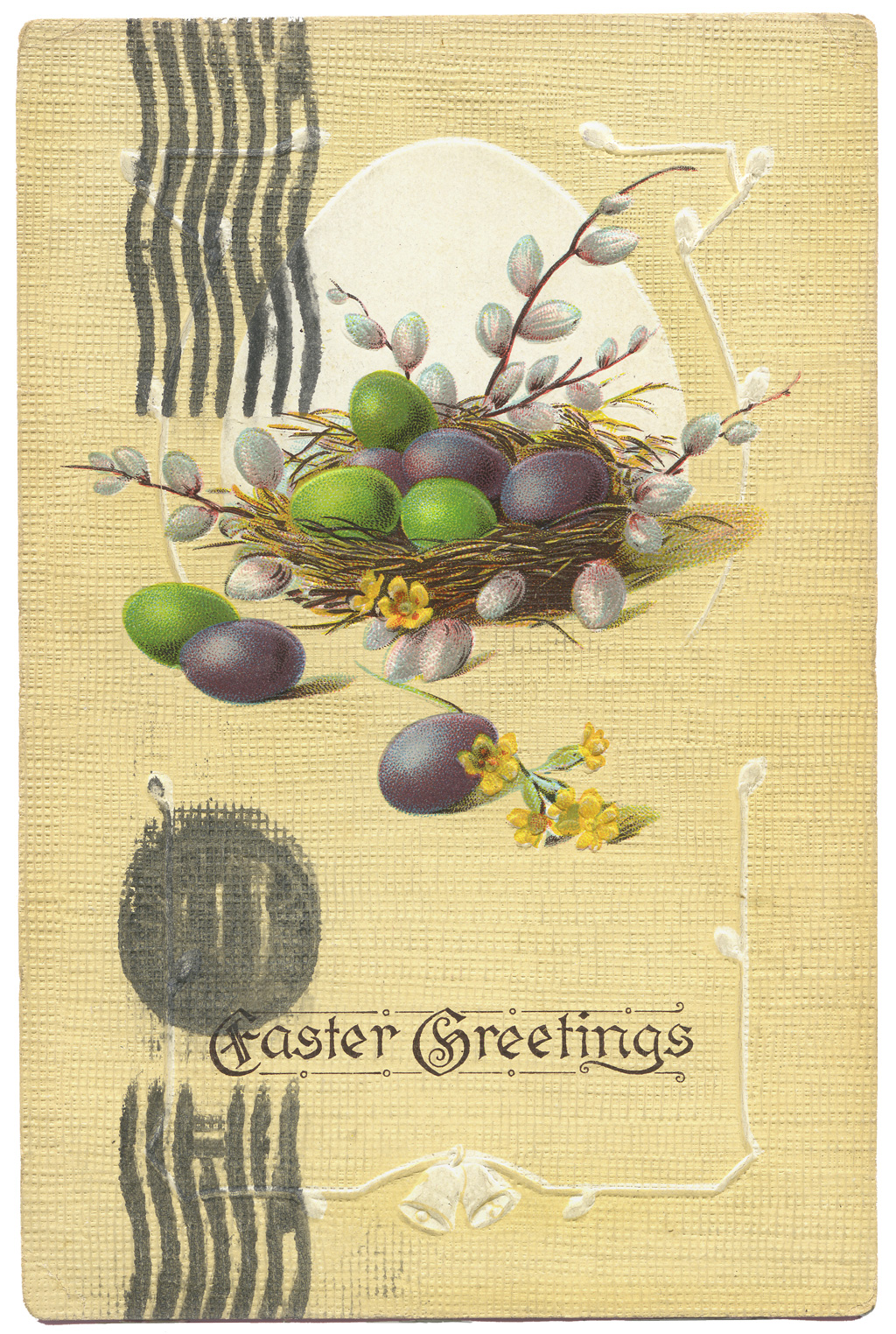
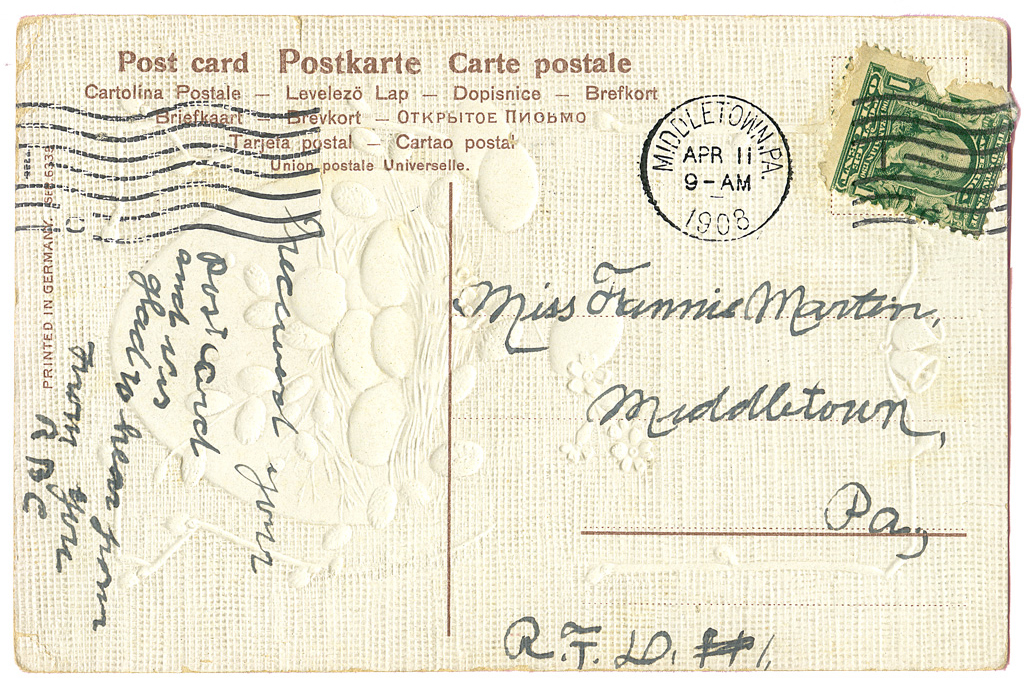
At Easter-tide I’m dipping once again into my Grandma Fannie Martin Longenecker’s stash of vintage post cards. Here is one dated April 1908 from “your RBC,” it says, with the postmark wrapped around the face of the card.

EasterPostcard1908?Front

EasterPostcard1908?Back


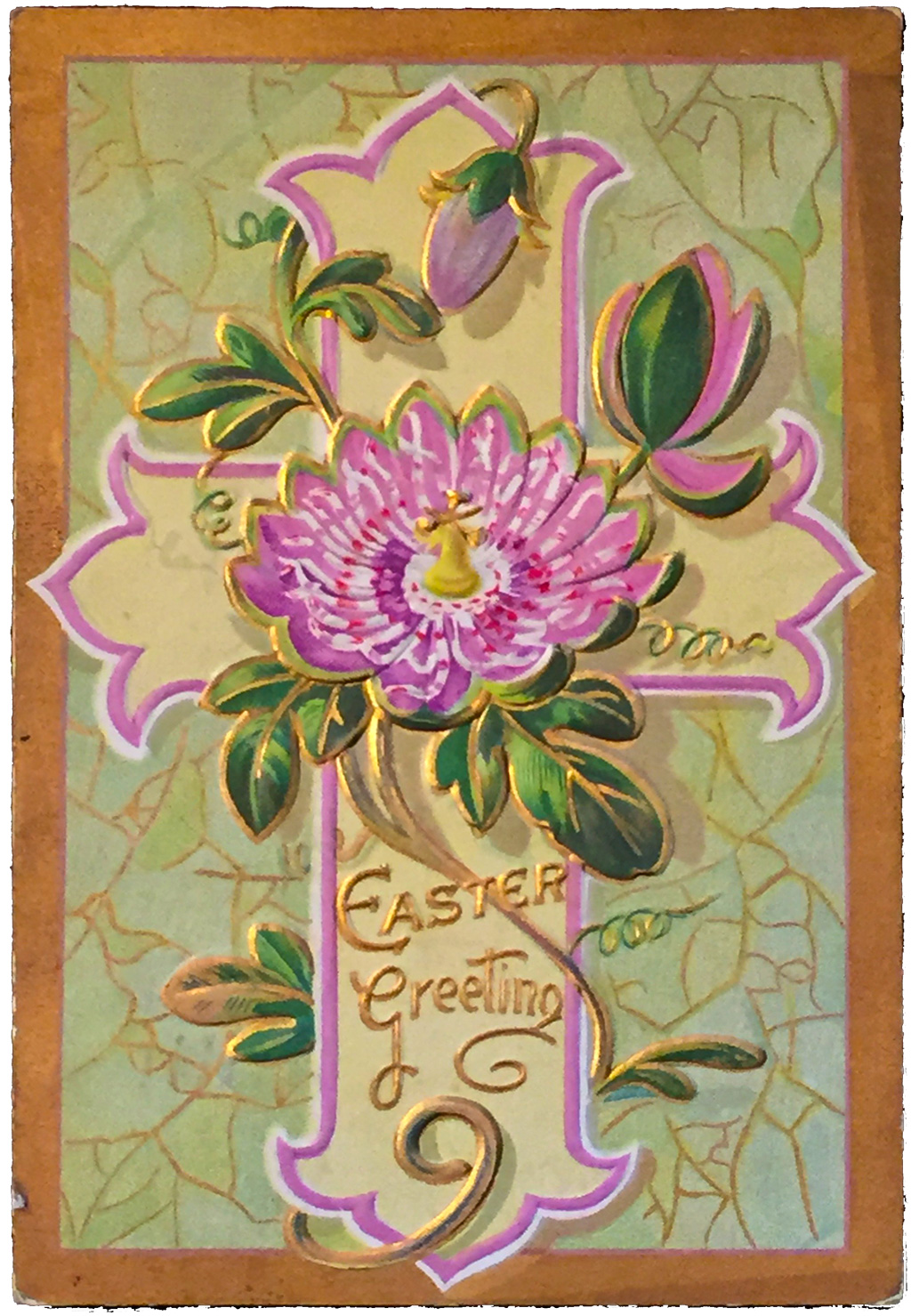
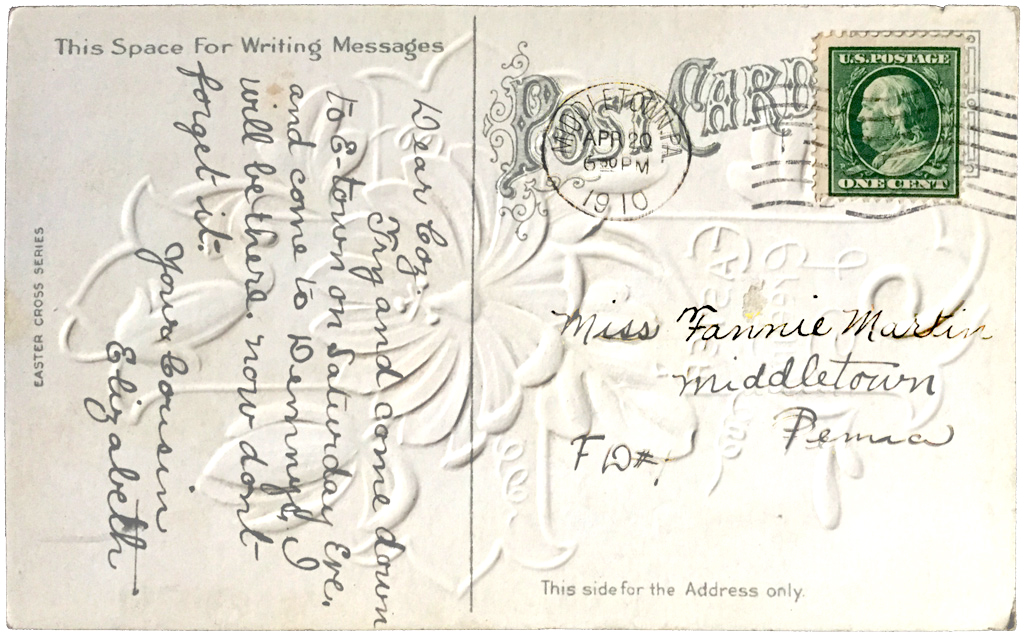
Another, from 1910, displays the marvelous passion flower adorning the cross.

EasterPostcard1910FRONT


EasterPostcard1910Front

The message from Grandma’s cousin Elizabeth begins with “Dear Coz” and in black flowing fountain-pen ink cursive begs her for a visit: “Try and come down to E-Town on Sat. Eve and come to Demmys. I will be there now don’t forget it.”


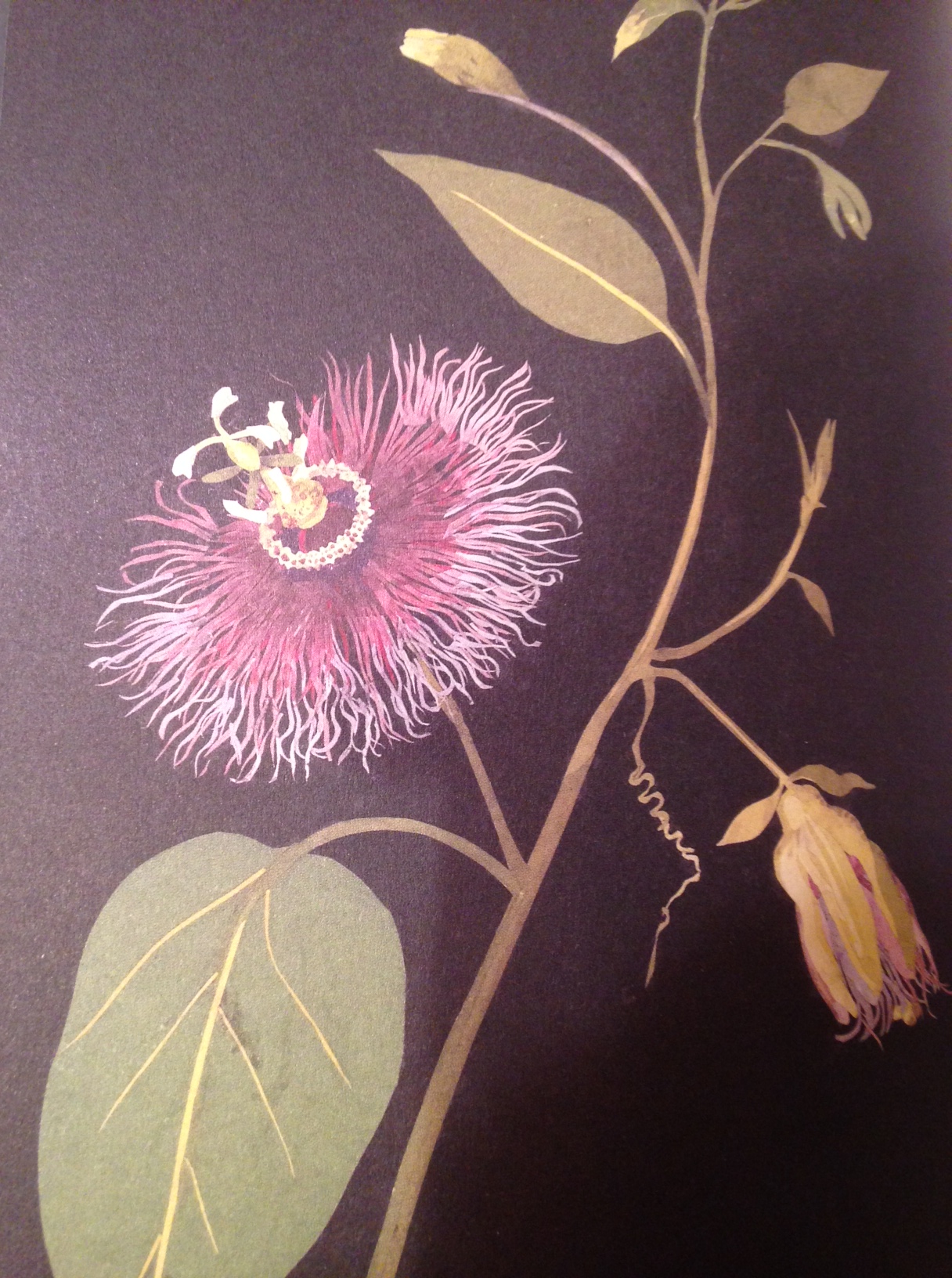
The passion flower which blooms in the spring has come to symbolize the suffering and death of Christ, hence the nickname “passion.” Mary Delany, herself a late-blooming artist, constructed a lovely flower with 230 petals with her scissors art.

passionFlower

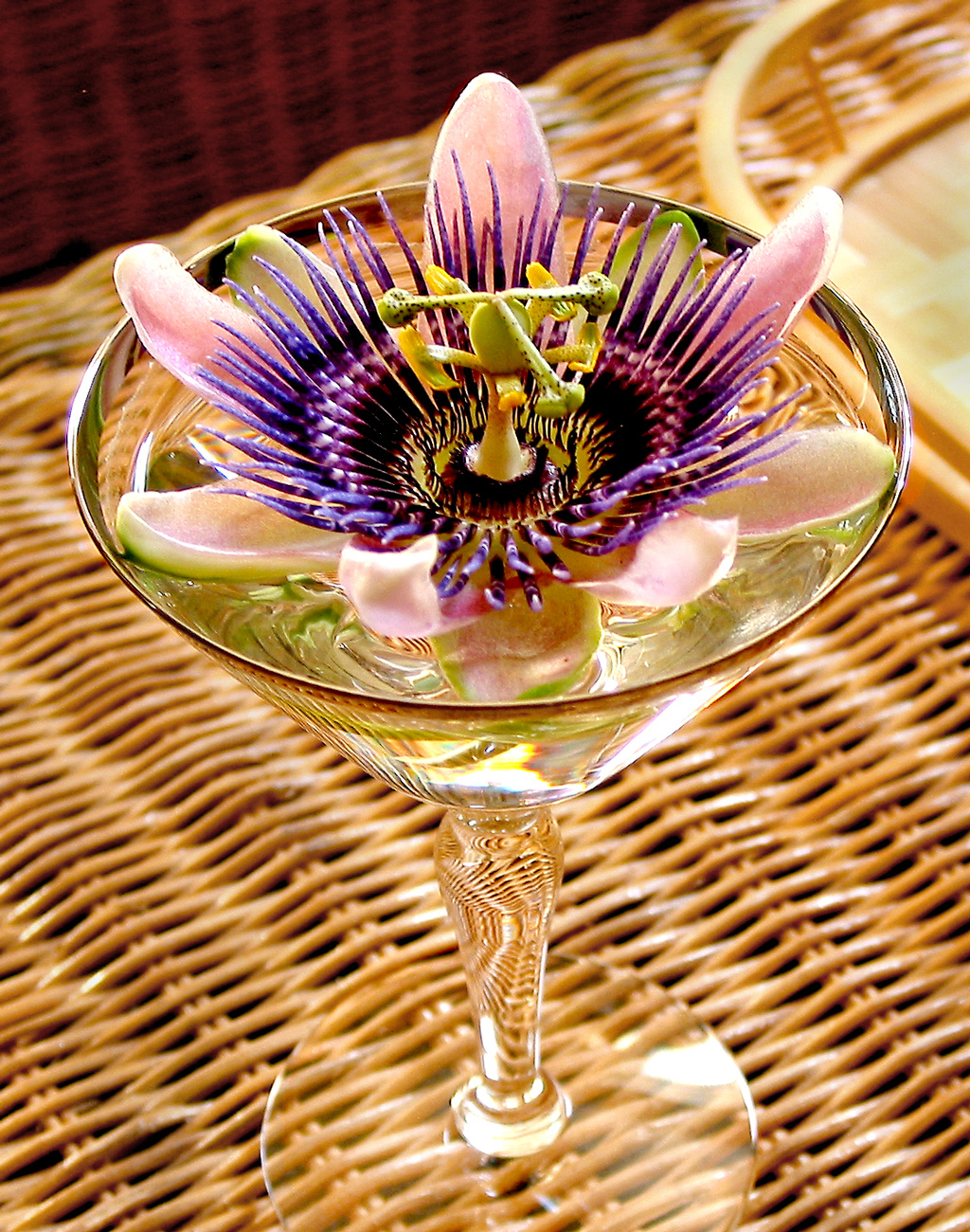
The bloom (Passiflora) grown in my garden illustrates the religious symbolism explained below.

PassionFlower2012vase

One writer, a Franciscan sister, has expressed the meaning of the flower parts in this way.

In the 15th and 16th centuries, Spanish Christian missionaries adopted the unique physical structures of this plant, particularly the numbers of its various flower parts, as symbols of the last days of Jesus and especially his crucifixion:

* The pointed tips of the leaves were taken to represent the Holy Lance.
* The tendrils represent the whips used in the flagellation of Christ.
* The ten petals and sepals represent the ten faithful apostles (less St. Peter the denier and Judas Iscariot the betrayer).
* The flower’s radial filaments, which can number more than a hundred and vary from flower to flower, represent the crown of thorns.
* The chalice-shaped ovary with its receptacle represents a hammer or the Holy Grail
* The 3 stigmata represent the 3 nails and the 5 anthers below them the 5 wounds (four by the nails and one by the lance).
* The blue [purple] and white colours of many species’ flowers represent Heaven and Purity.


This is the season of spring, Easter, and Passover. Happy Holy-day to you!


Coming next: Climbing the Swiss Alps: 7 Steps Toward a Narrative Arc


Raise a Mug to the Irish!

Is there a drop of Irish blood in my veins? I doubt it. I grew up Mennonite in the Longenecker family in Pennsylvania Dutch country, a hot-bed of Swiss-German ancestry.

Still, the Irish-named Donegal Springs is a mere 3-mile, 5-minute drive from Rheems, Pennsylvania near my birthplace. In the adjoining Dauphin County are Londonderry Township. In Bucks County, a town named Dublin, sister city to the capital of the Republic of Ireland.

Photo courtesy of Artist Cliff Beaman Dublin, GA
Photo courtesy of Artist Cliff Beaman traveling through Dublin, GA

When we visited Ireland, we met a congenial gentleman named Buchanan, who remarked that he has immigrant relatives buried in the Donegal Presbyterian Church cemetery, a place he once visited.

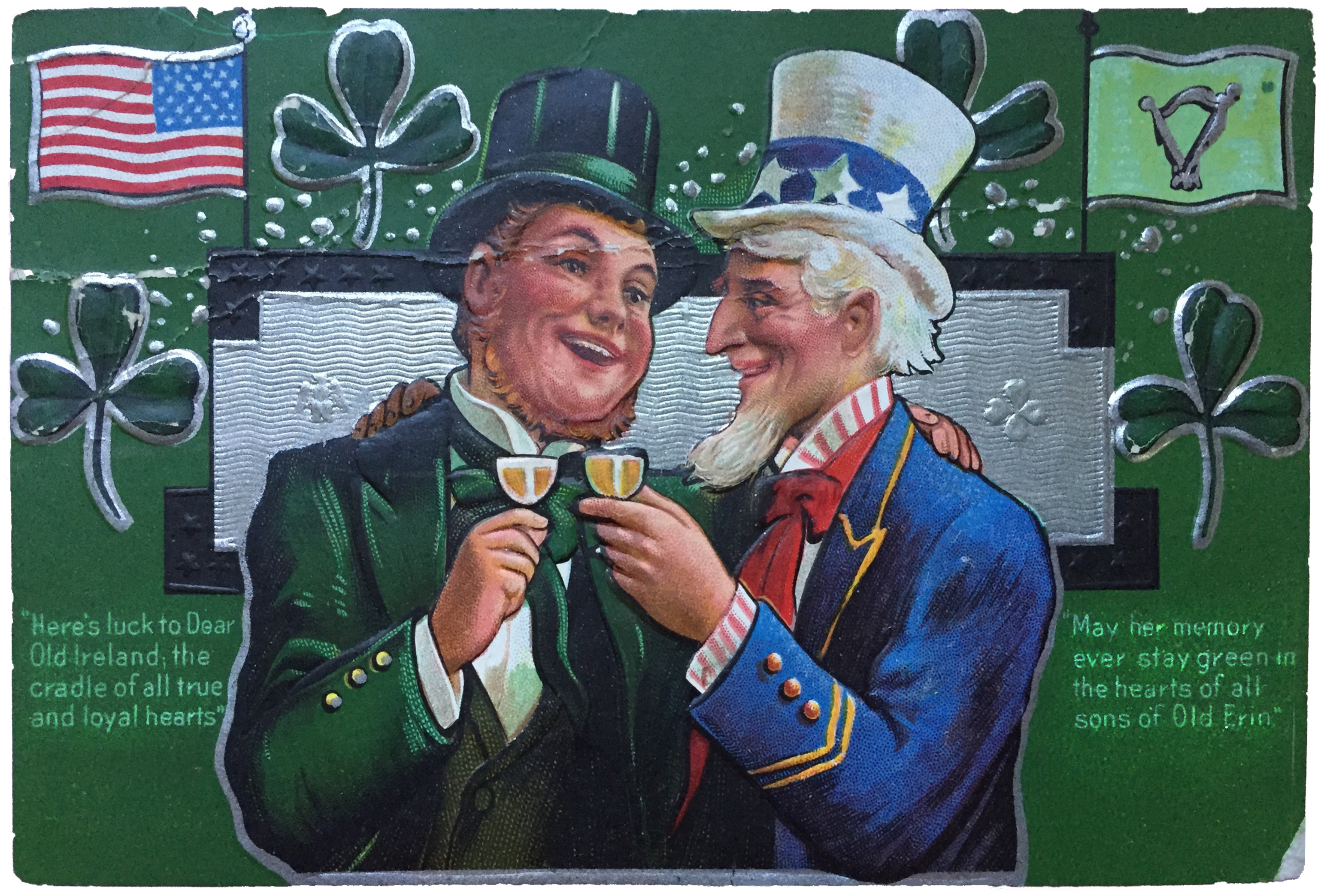
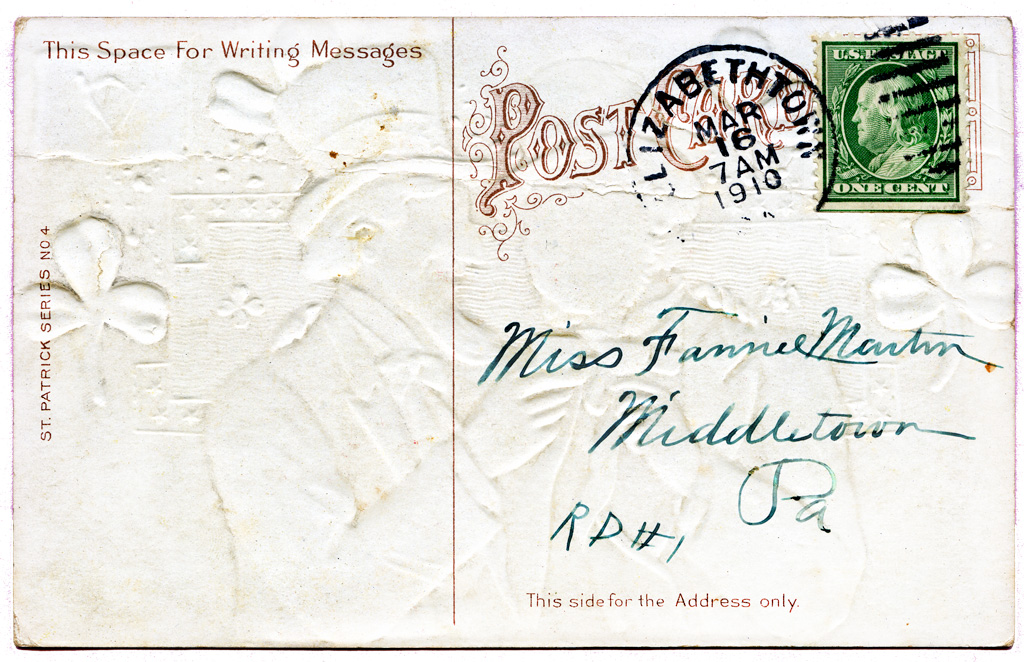
During my last trip to Pennsylvania, I discovered some vintage postcards stamped with penny postage, sent to Miss Fannie Martin, my Grandma Longenecker. Many of her postcards are embossed and saturated with color – no Photoshop filters needed.

In an era long before smartphones and text messages, postcards were valued. Instead of instant messages easily deleted and forgotten, these cards have become artifacts of my family history. The one below over one hundred years old is dated 1910.

StPat1912MUGfront

StPat1912MUGback

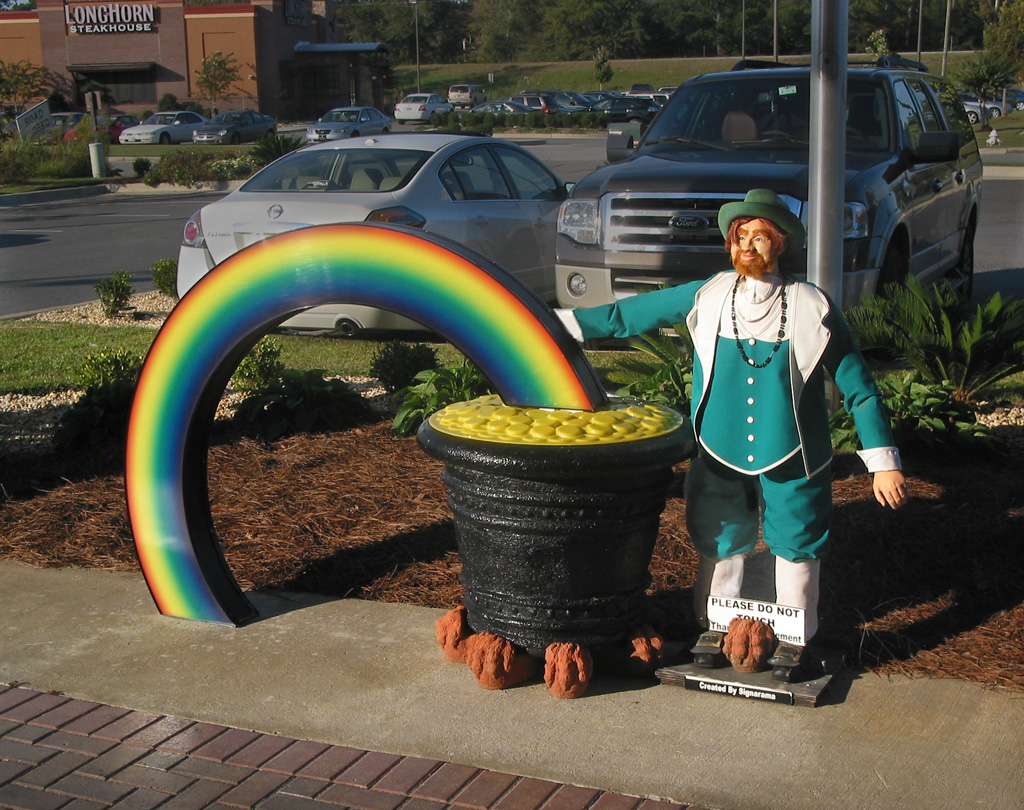
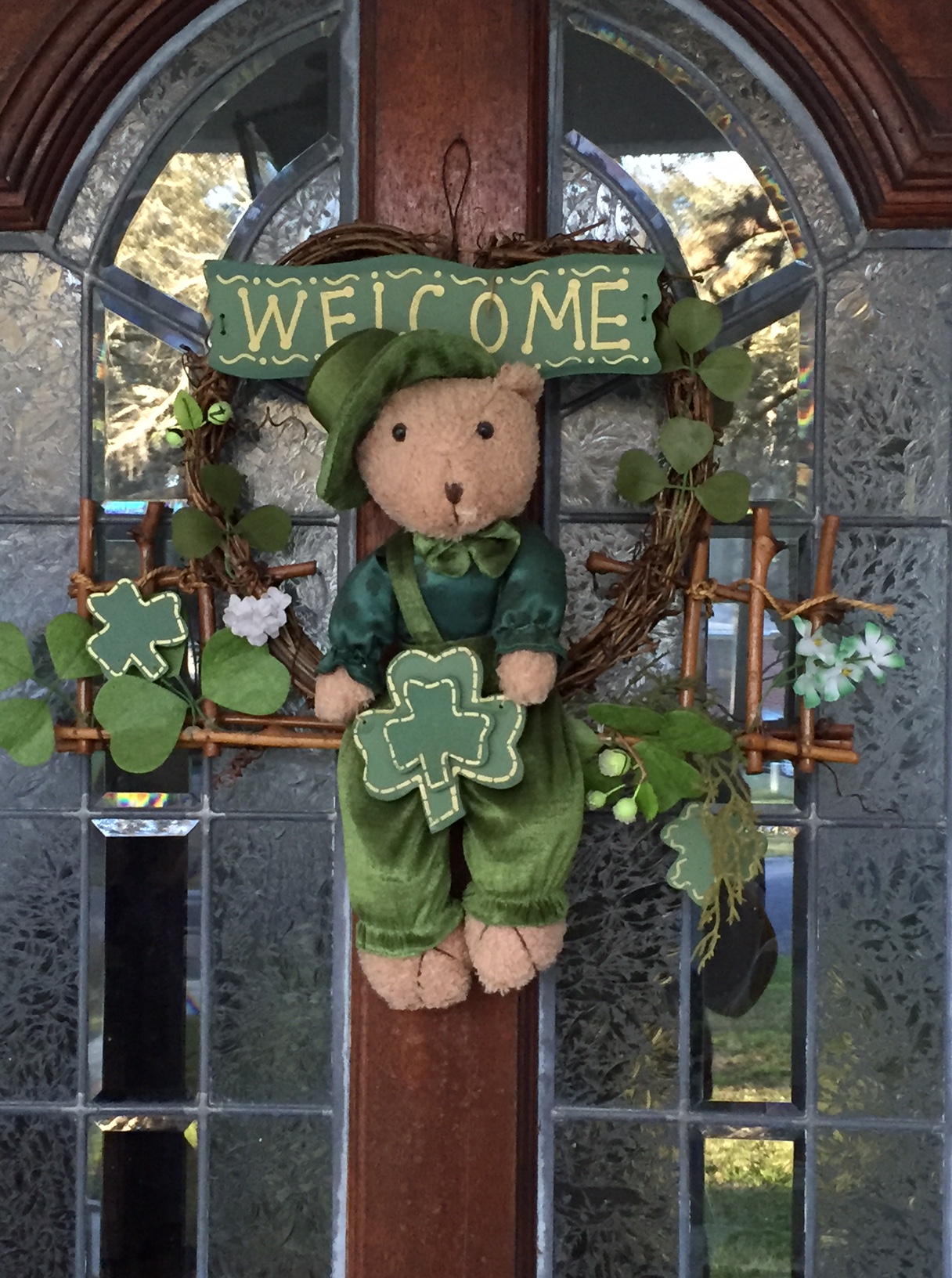
I live in a neighborhood where Irish names abound: Blarney Stone Court, Killarney Drive, Leprechaun Court, St. Patrick Lane. Names on residents’ mailboxes have included Dunleavy, O’Neill, and Kelly. We once had to fight a major retailer to retain charming shamrocks and moss-footed oaks in a wooded area adjoining our community. The hanging on our front door reflects the neighborhood and the season.

StPatBearDoor

St. Patrick’s Day this year falls on a Thursday, March 17. Until then, I wish you the luck of the Irish.

May the wind be always at your back and your pathways peaceful. If you are Jewish, Mazel Tov!

To enjoy these Irish limerick lines below add just the right word to complete the rhyme. Keep in mind the missing word must rhyme with the first and second lines. (Answer key in next week’s blog post.)

A bather whose clothing was strewed

By winds that left her quite nude

Saw a man come along

And unless we are wrong

You expected this line to be __________.

~ Anonymous


His sister named Lucy O’Finner,

Grew constantly thinner and thinner;

The reason was plain,

She slept in the rain,

And was never allowed any _________.

~ Lewis Carroll

There was an old fellow of Trinity

Who solved the square root of Infinity,

But it gave him such fidgets

To count up the digits,

He chucked Math and took up _________.

~ Anonymous

There was a young farmer of Leeds,

Who swallowed six packets of seeds.

It soon came to pass

He was covered with grass,

And he couldn’t sit down for the_______.

~ Anonymous


Edward Lear, Ogden Nash, and Lewis Carroll are among the best versifiers of this humorous form. If you want to cook up your own limerick, here is a link to the recipe with a pattern for the rhyme scheme.


Coming next: Wanted, Forty Winks


Sastruga, Snowy Winter Blankets

A long, wavelike ridge of snow . . . formed by the wind: Sastruga, a word of Russian origin.

A snowdrift is a beautiful thing if it doesn’t lie across the path you’ll have to shovel or block the road that leads to your destination.

Prehistoric Humps

Snow Drift, Google Images
Snowdrift, Google Images

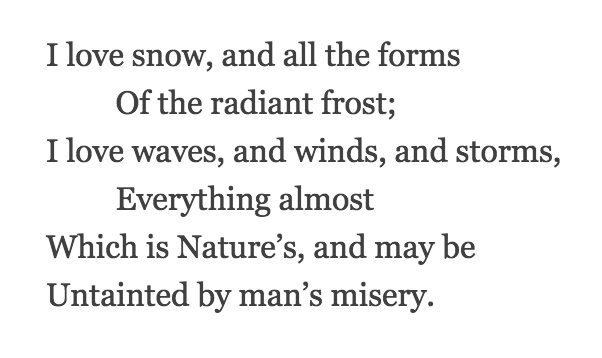
James Thomson’s “Winter” from The Season portrays drifts as “one wild dazzling waste, that buries wide / The works of man.”


Snow So Pure

ShelleyQuoteSnow

~ Percy Bysshe Shelley, # 497 Invocation


Snow So Fun

[to] mimic in slow structures, stone by stone / The frolic architecture of the snow. – from Emerson, The Snow-Storm

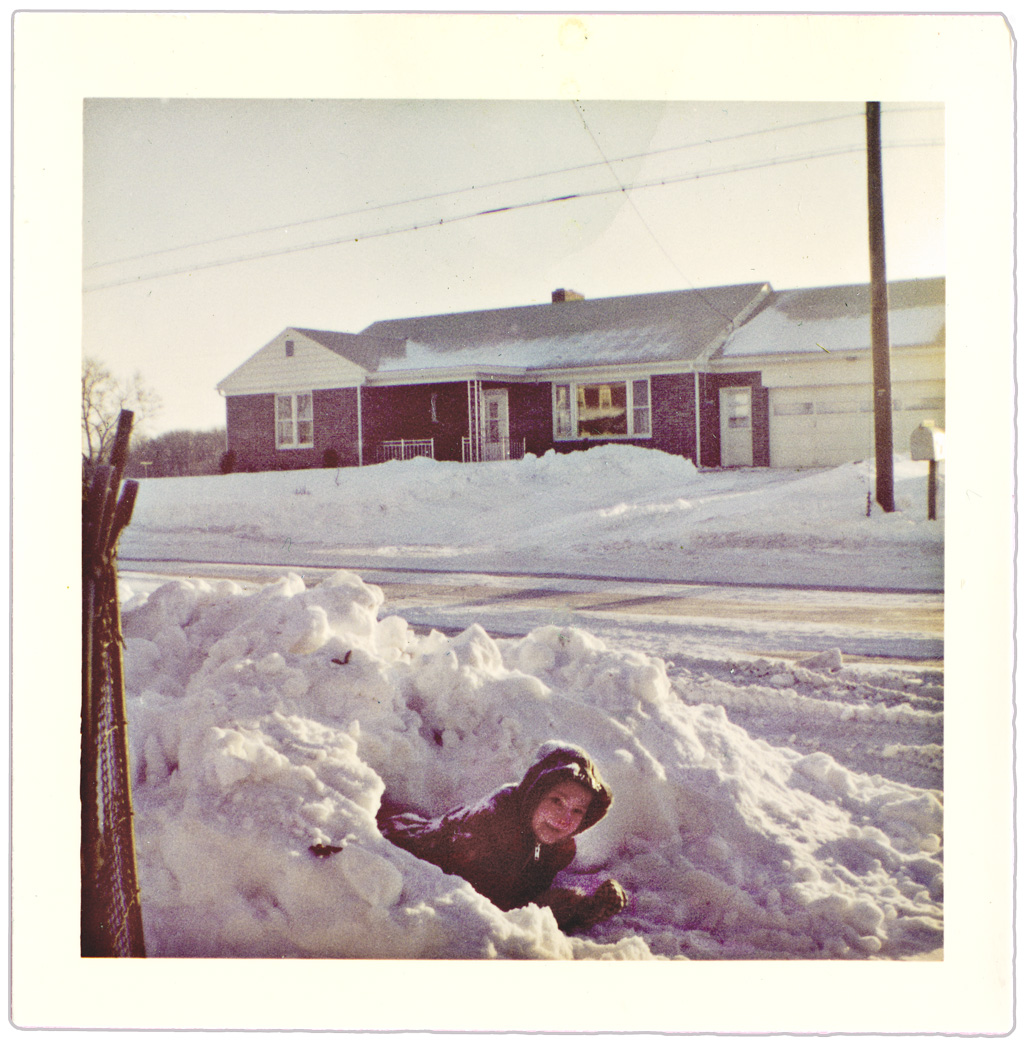
Snow-faced Mark in "igloo" 1961
Snow-faced brother Mark Longenecker in “igloo” 1961


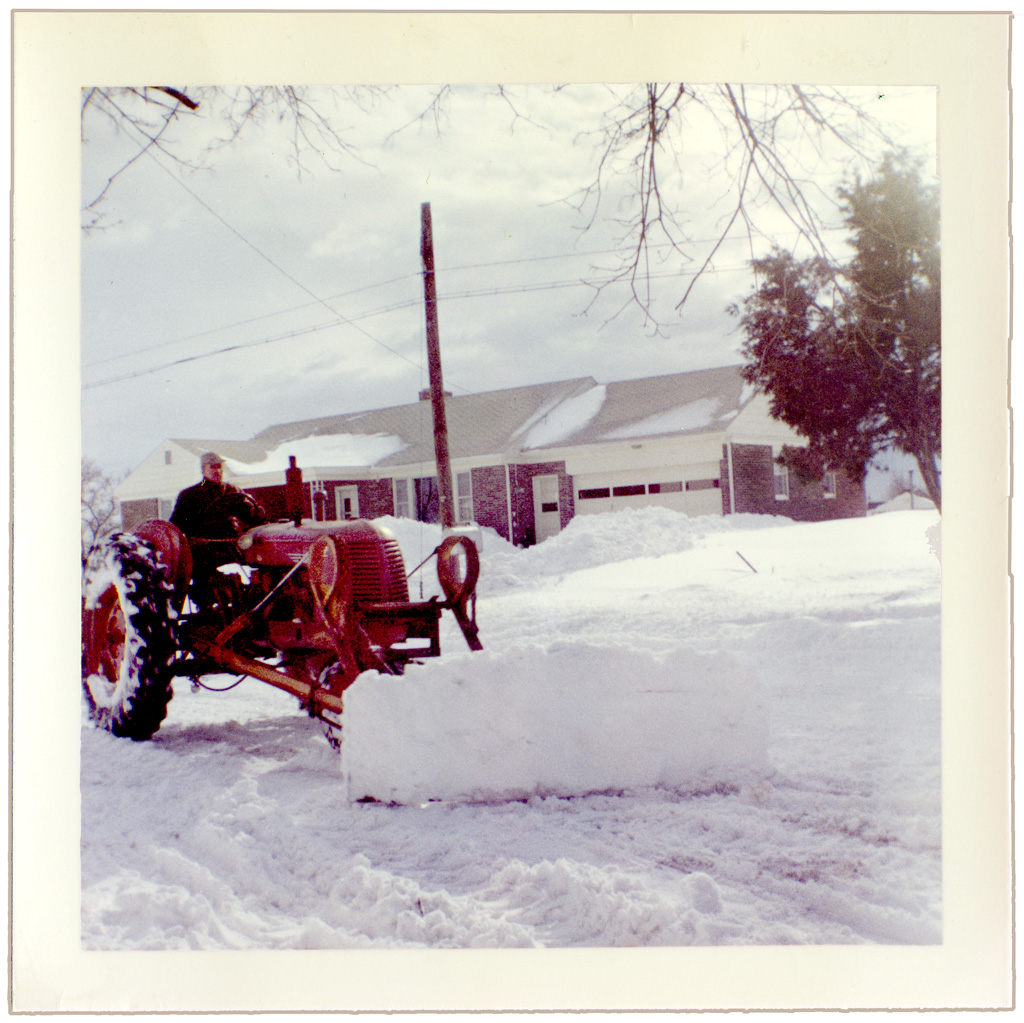
Snow Plow: Carving Out the Road Again

Ray Longenecker, my dad, plowing Anchor Road, 1961

A smooth white mound the brush pile showed, / A fenceless drift that once was road  ~ from Whittier’s Snow Bound: A Winter Idyll


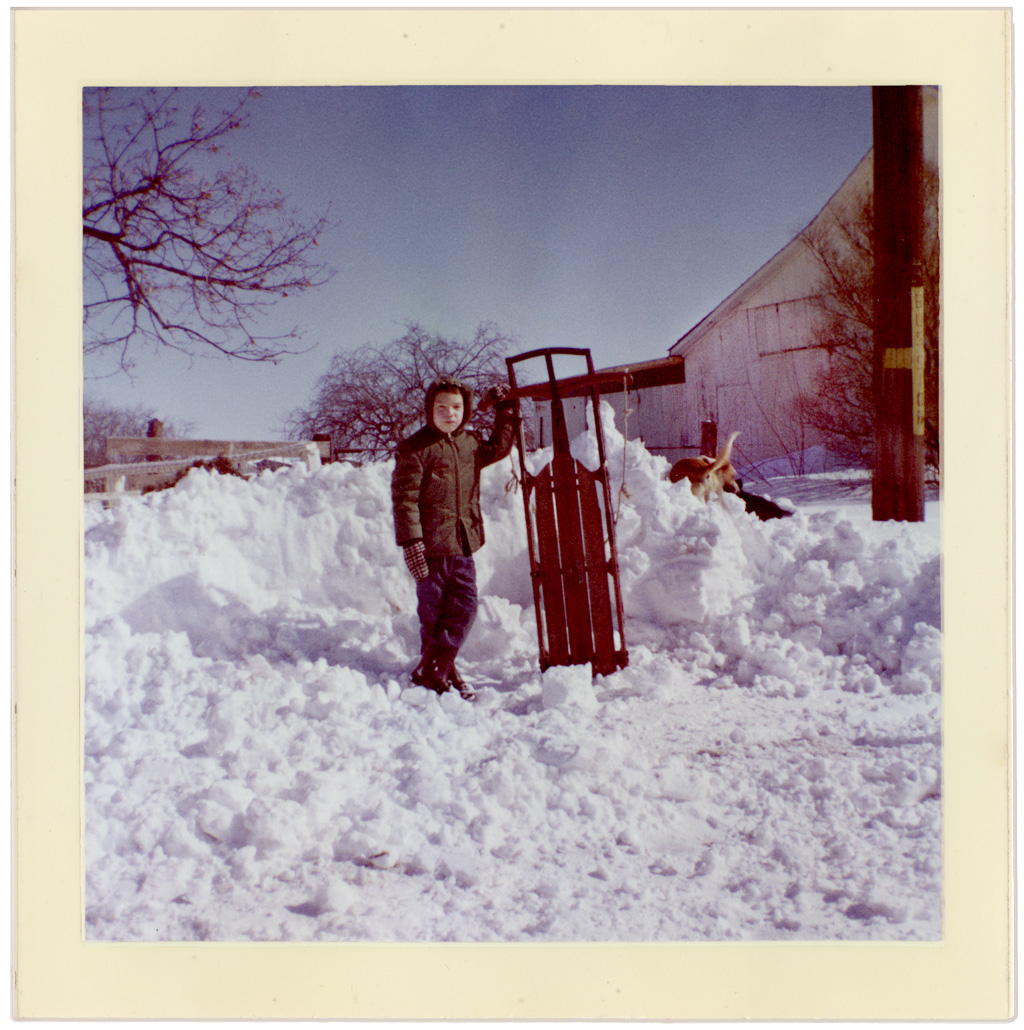
Snow in Childhood . . . Never Ends

Brother Mark with sled and Skippy in the snow 1961

William Matthews in “Spring Snow” depicts a place where “childhood doesn’t end / but accumulates” and memories . . . disperse “in flecks, like dust, like flour, like snow.”

Snow provokes responses that reach right back to childhood. – Andy Goldsworthy


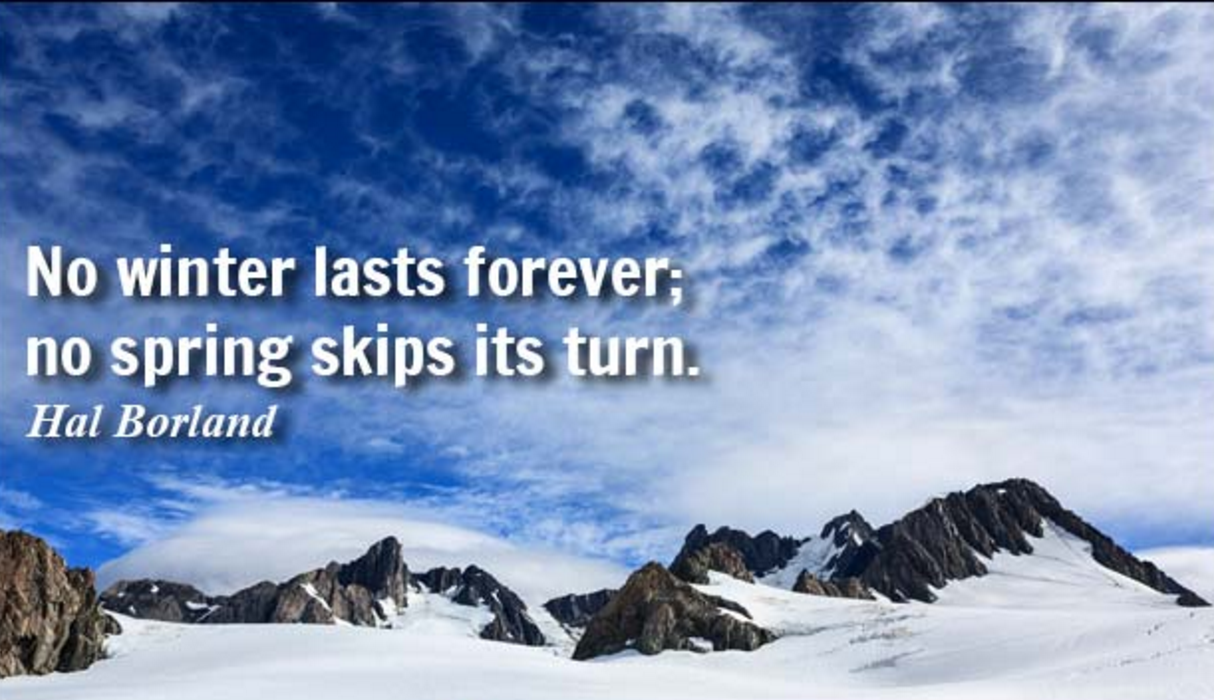
Snow Quotes

Borland in BrainyQuotes


Hast thou entered into the treasures of the snow?”   Job 38: 22a

* * *

New fallen snow is exquisite. But practical difficulties persist as snow lingers: messy cleanup, re-frozen slush, slick sidewalks.

Did you throw snowballs during recess at school? Help make an igloo? Snow memories welcome here.


Coming next: 5 Lessons Learned from a Birthday Cake

Moments of Discovery # 9: Keys to the Riddle

A Riddle

I have no head, and a tail I lack,

But oft have arms, and legs, and a back;

I inhabit the palace, the tavern, the cot-

‘Tis a beggarly residence where I am not.

If a monarch were present (I tell you no fable),

I still should be placed at the head of the table.

What am I?

You have probably already guessed the answer, a piece of furniture often passed down through the generations. Yet sorting through what is bequeathed us, we often handle family heirlooms whose origins are a riddle.

Some Artifacts

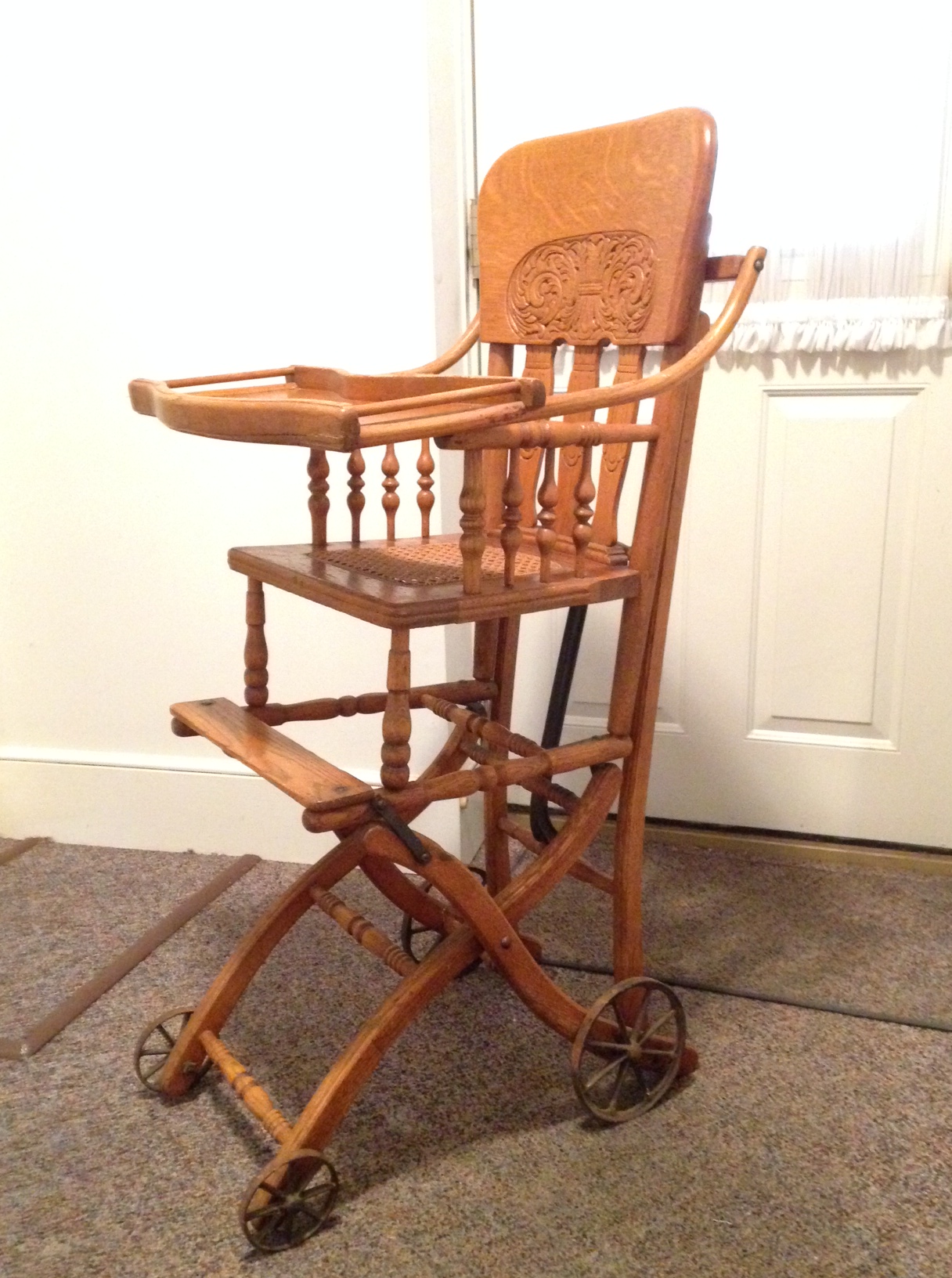
Our mother’s adjustable high chair, for example. It’s for sure from the Metzler/Landis side of the family, but we are not sure exactly where it came from. Did parents Abram and Sadie Metzler buy it new? Did the Landis grandparents present it as a gift because it was their very first grand-daughter? It looks well preserved, but its origin still a puzzle.

MomChairHigh

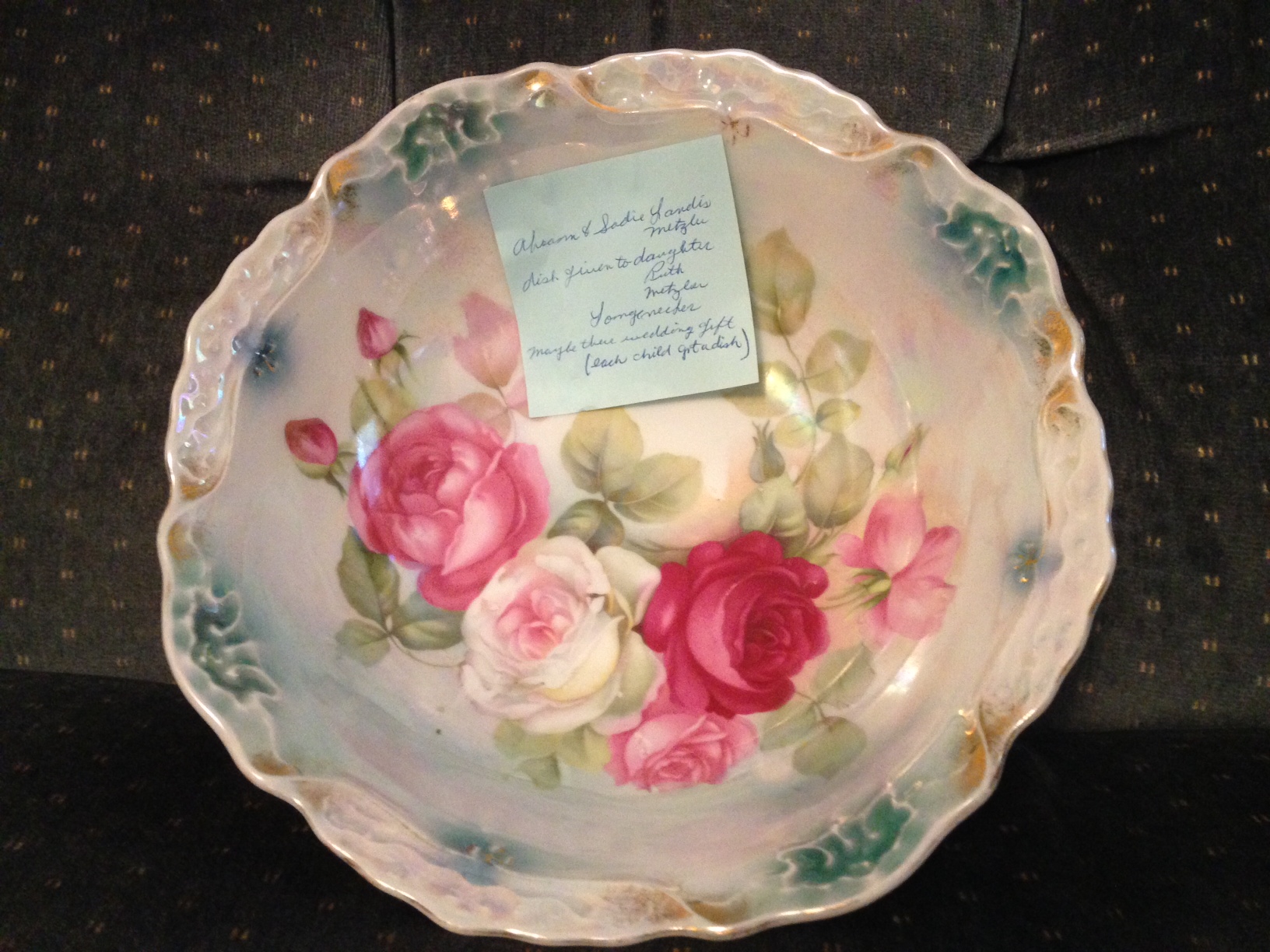
This gorgeous, glazed floral dish . . . of its vintage we are sure.

Dish given to my mother from her parents, Abram and Sadie Metzler on her wedding day

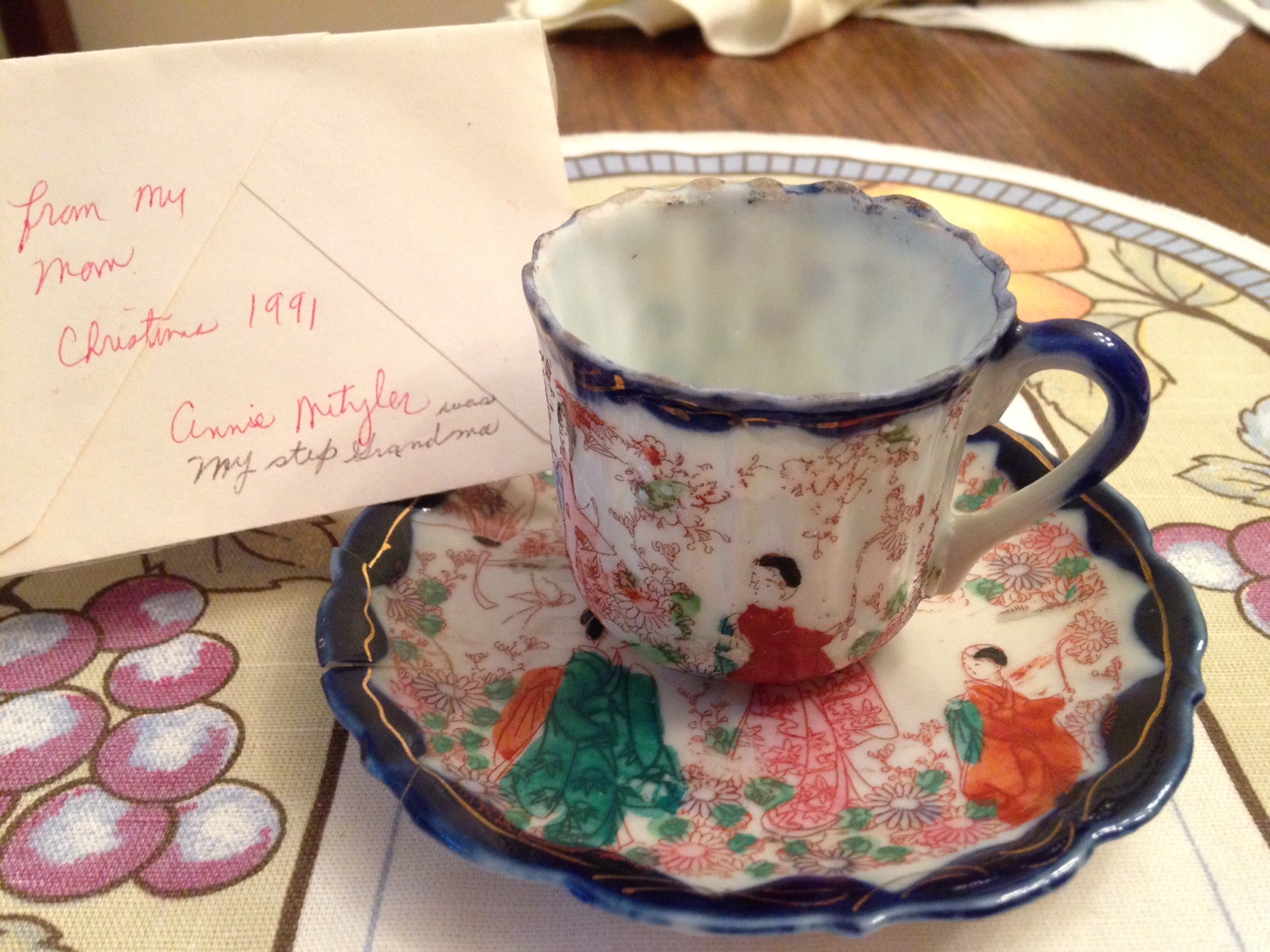
It’s no mystery where this Japanese teacup came from either. Mother, pretending to be me, wrote legibly in black that it’s from my maternal Grandma, Annie Metzler. It once survived an explosion in my curio cabinet. You can read about that here.

Japanese cup


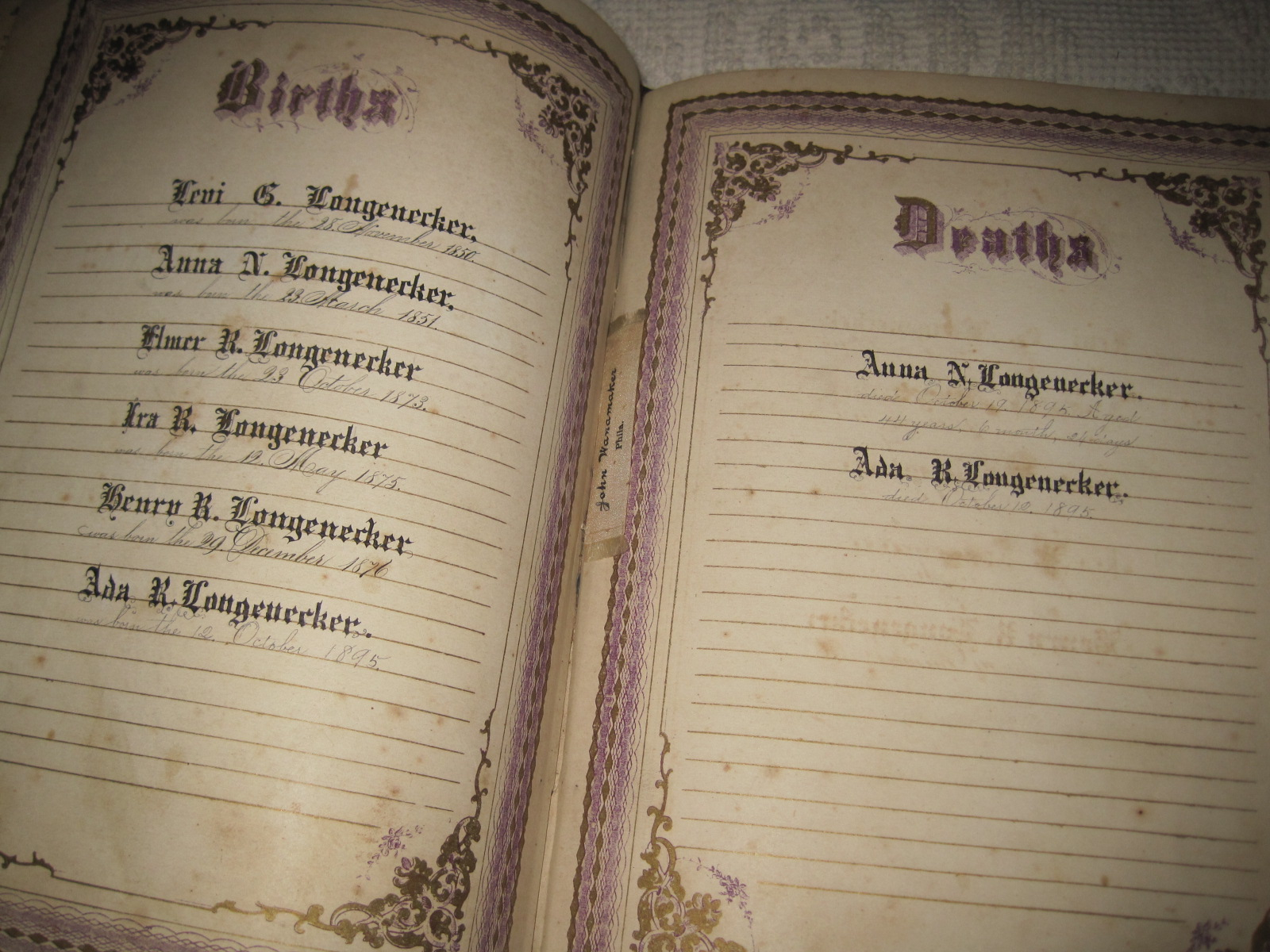
The German Bible has been in our family for centuries. The signatures signify it belongs in the Longenecker line. No mystery there.

Henry Risser Longenecker, my Grandfather, son of Levi Longenecker, listed in the family Bible.


A Special Chair

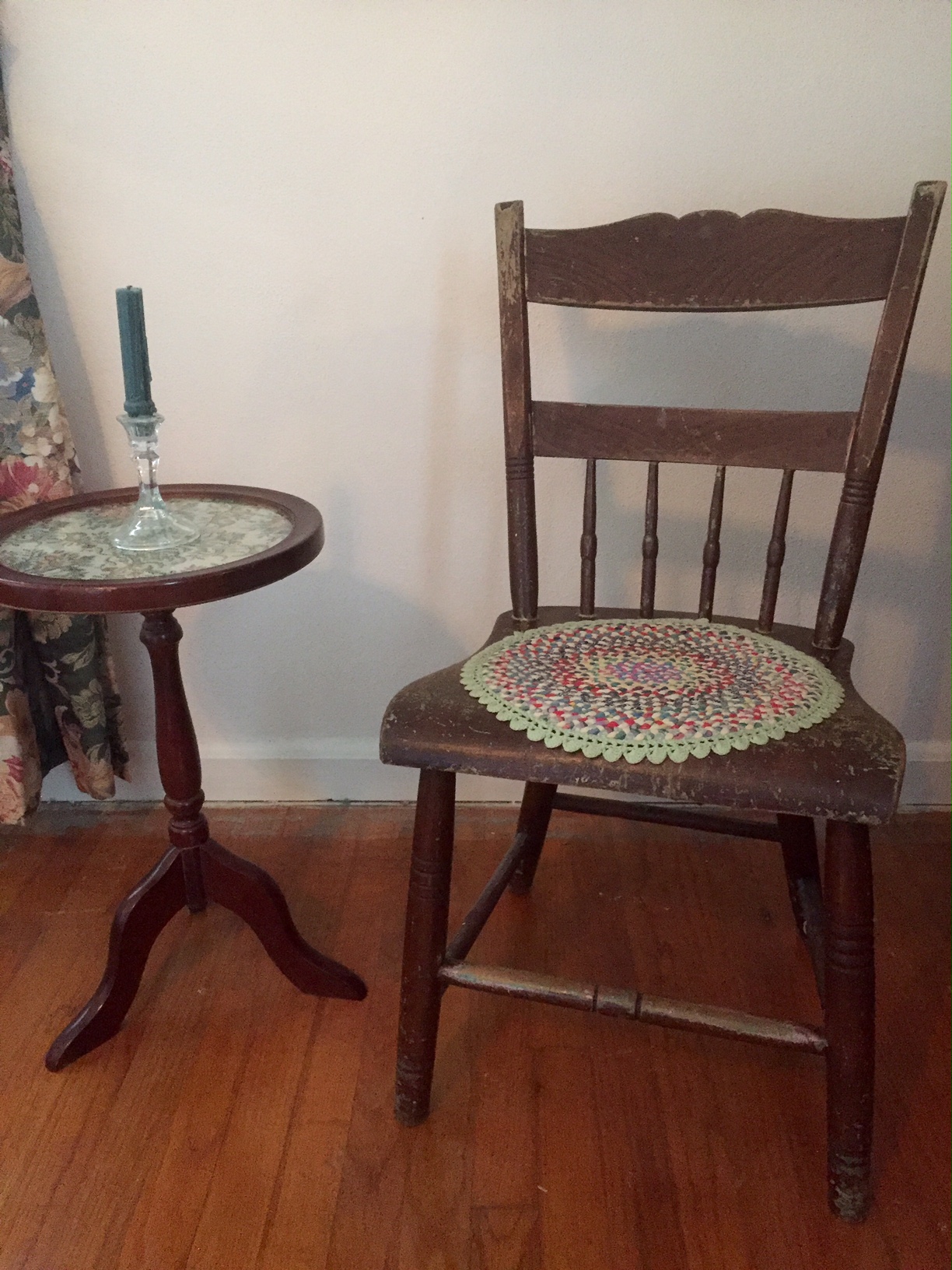
This chair below has sat in our bedroom for years. And it’s no enigma where it came from.

ChairMartinFront

ChairMartinUnderneath

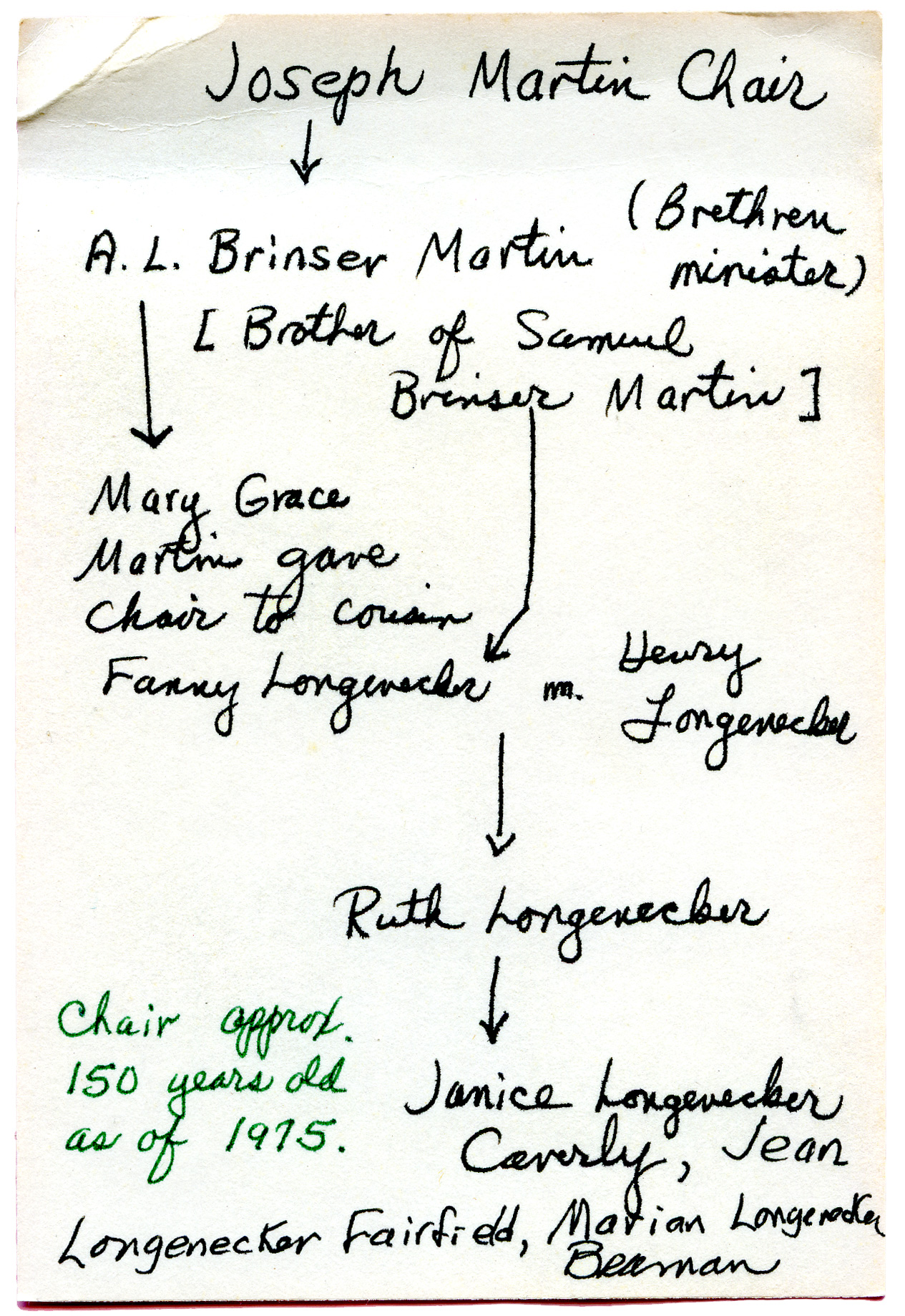
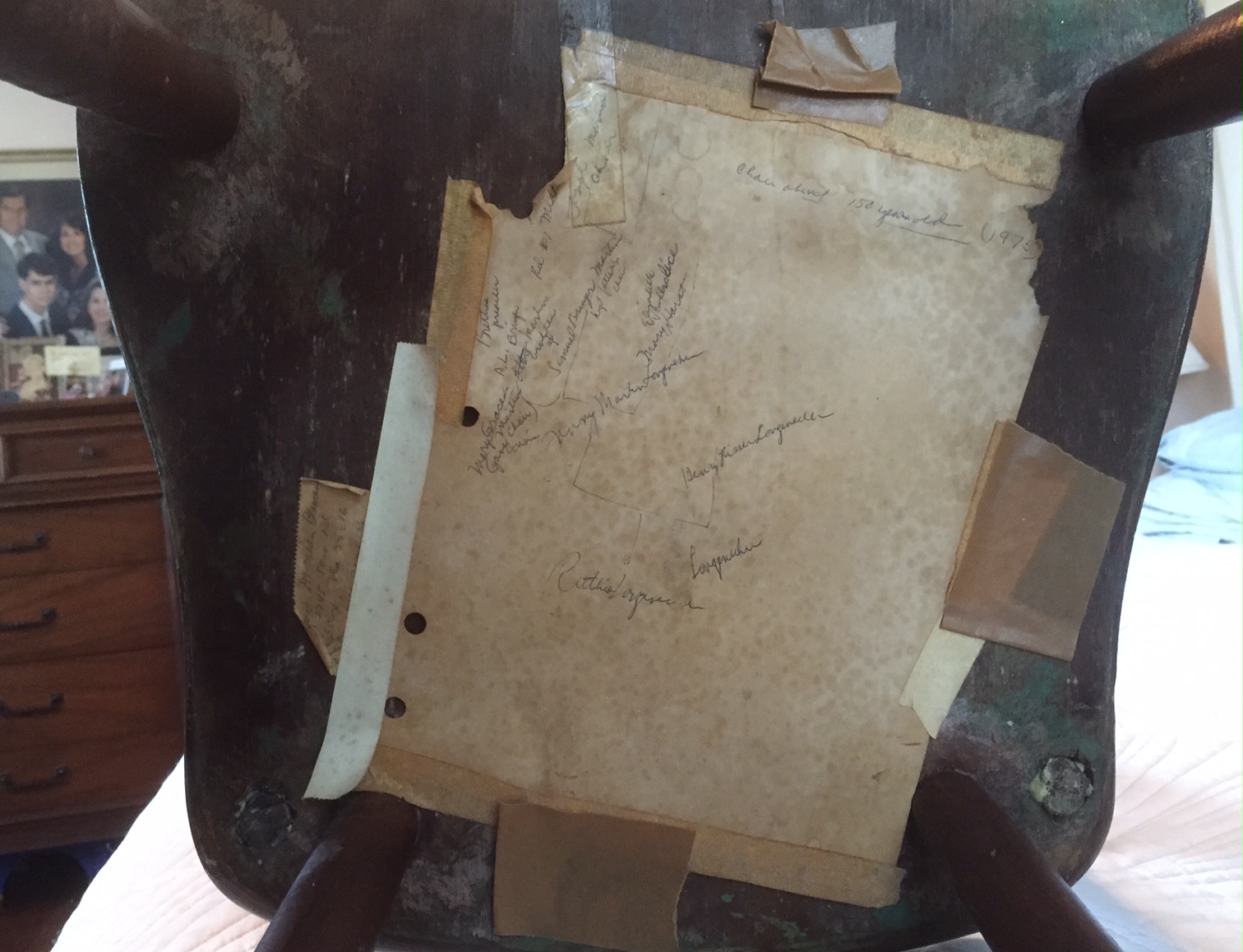
The provenance of the chair was taped to the bottom of this chair. Did I say chair? Yes, of course, this is the answer to the riddle above.

Since 1975, I have transcribed the names of generations of Martins and Longeneckers that have used this chair to host dinners. It’s called the Joseph Martin chair because it was handed down to us from Fannie Martin Longenecker, our grandmother.

ChairMartinLineage

Teacups, dishes, and chairs are inanimate. Unlike the personable “characters” in the Be Our Guest song from Beauty and the Beast, they come to life only when friends and family gather ‘round the table hospitably.

A Memorable Dinner

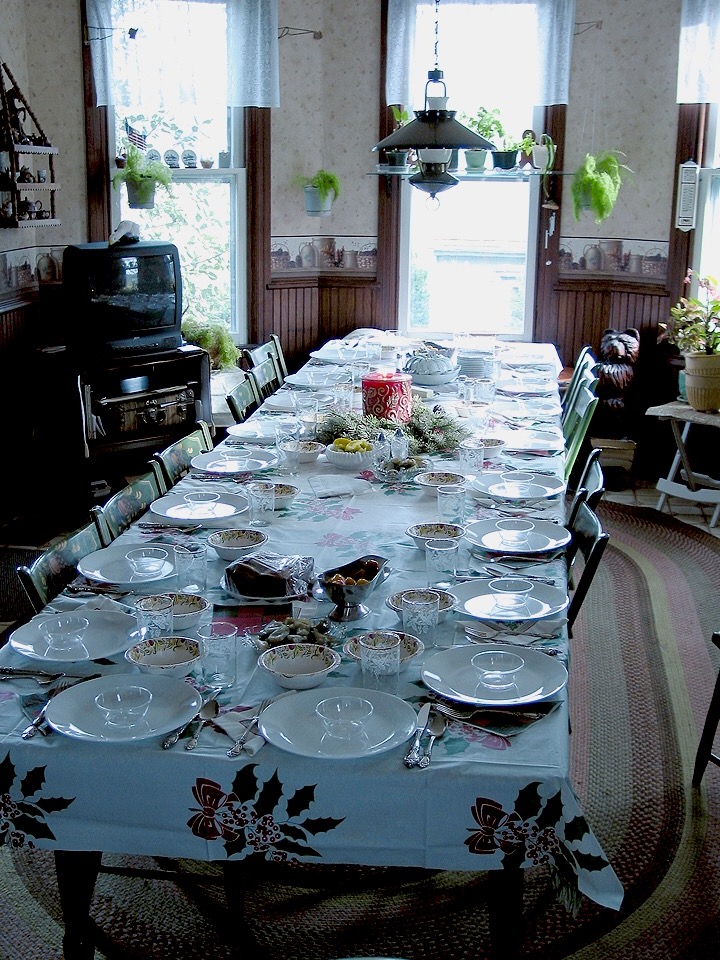
TableRuthieChrist2004

This photo was snapped just before bodies of all ages – the wiggly young, the pregnant great grand-daughters, the middle-aged, the elderly – gathered around the table at Grandma Longenecker’s house ready to dig in to Christmas dinner in 2004.

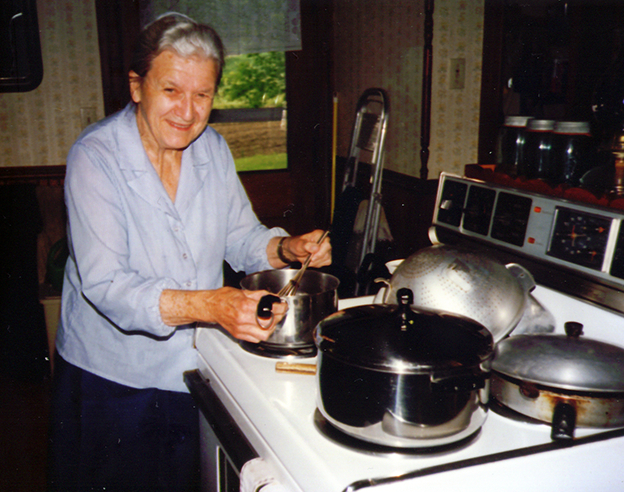
This was the last time Aunt Ruthie was able to host the dinner. She was 86 then. Of course she had lots of help, but this was the last time she sat as hostess at the head of the table, probably on an antique chair.

Aunt Ruthie (approx. age 75) busy in the kitchen, 1990s

* * *

What antiques do you regularly use at home? Have stored in the attic? Do you know a reliable website or service for valuing antiques?


Coming next: Sastruga, Snowy Winter Blankets

A Snow Bunny and a German Lullaby

On Christmas Day 2015 in Jacksonville, Florida, the temperature stood at 85, at least twenty degrees above the normal daytime thermometer reading for this time of year.

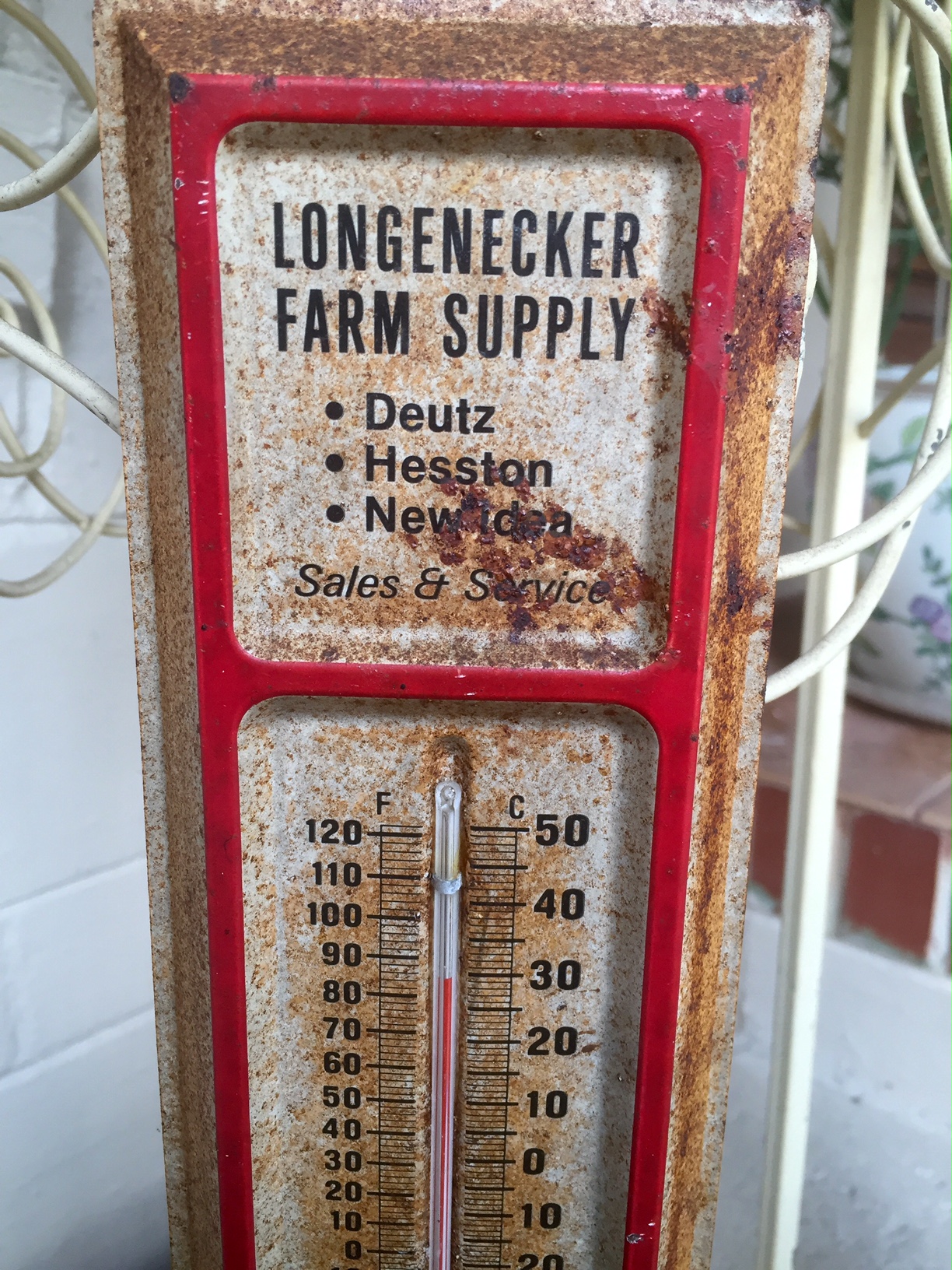
Temperature on our porch Christmas Day 2015, Jacksonville, FL: 85 degrees

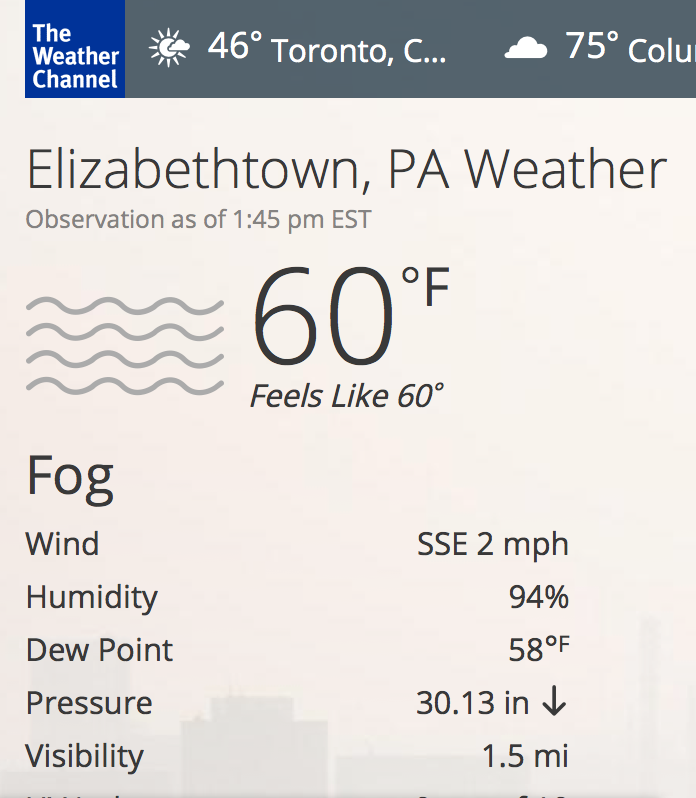
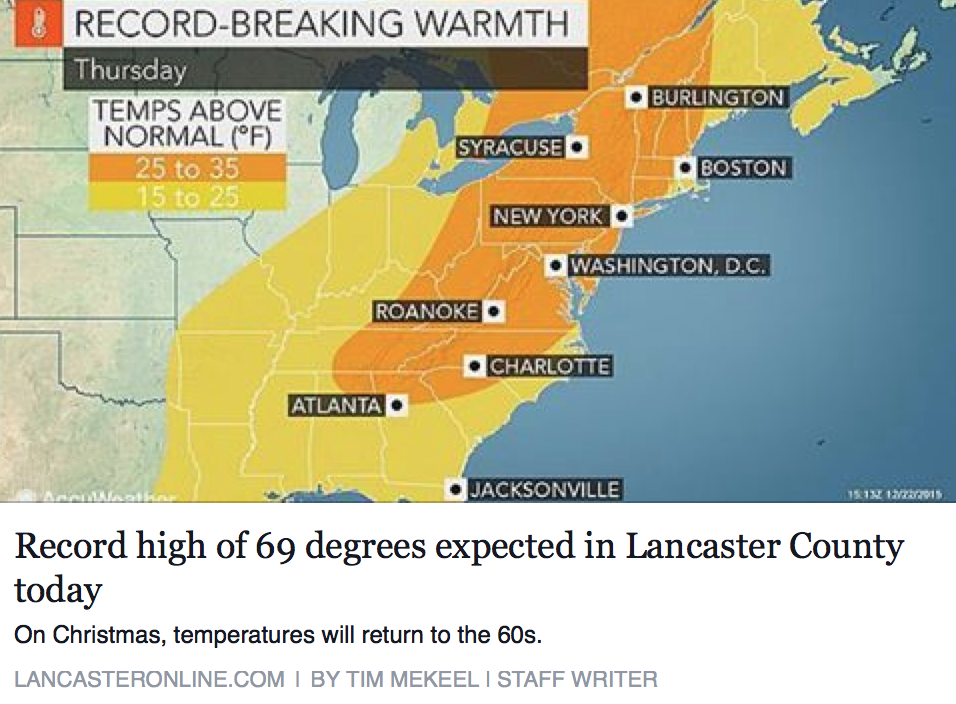
Over most of the USA, Christmas day was warmer than usual, the forecasters predicting a near record-breaking temperature of 62 degrees for Elizabethtown, Pennsylvania, once my hometown.

ElizabethtownPAweather60ChristmasWarmChristmasLancOnline2015

Years ago when our young family left Florida’s palm trees and beachy sand during the Christmas holiday, we hoped for Pennsylvania snow, praying for enough inches for sledding and making a snowman.

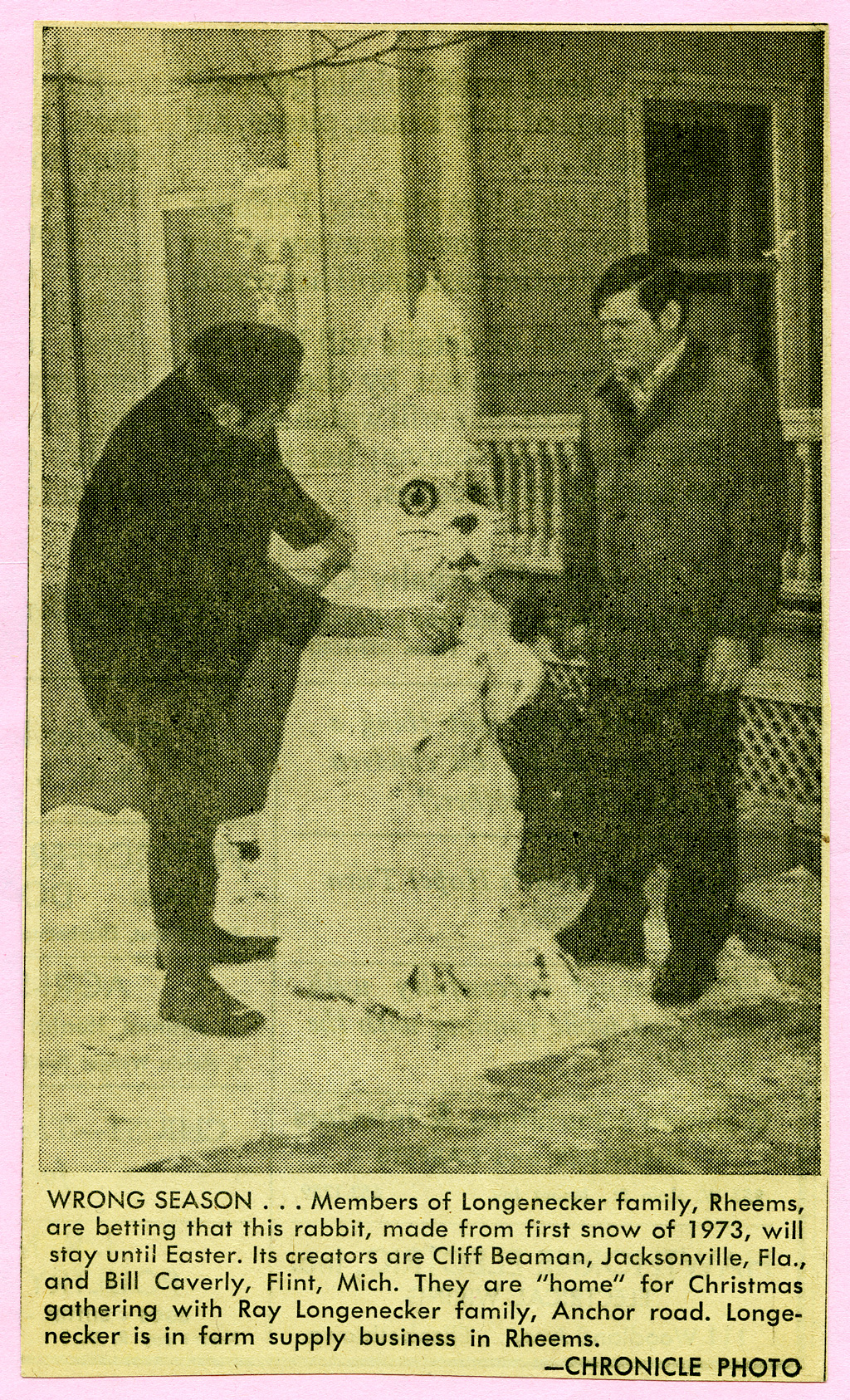
One Christmas (1973) my husband Cliff and brother-in-law Bill sculpted an Easter Bunny from snow, a photo that made it into the now defunct Elizabethtown Chronicle.

SnowBunny1973

Snow slows everything down.

Snow descends from the skies in soothing swirls, no two flakes alike. The morning after a snowfall is quiet – traffic slows, the earth sits snug in silence, wrapped in beauty.

German Carols about snow are soothing too. Grandma Longenecker sang the first verse of Stille Nacht in German to us as tots, a carol of three stanzas we learned well enough to sing for Christmas programs at Rheems Elementary School. Now in my memory a warm spot remains where I hear Grandma’s voice singing the words to “Stile, Stile, Stile,” a lullaby that evokes the image of gently falling snow in the still of the night.


Whether the weather is dull or delightful, songs from the olden days can help carry us through.

Credit: Weather.com
Credit: Weather.com    12.26.15

How was your weather during this holiday week? Weather stories during a childhood Christmas or Hanukkah celebration may have popped into your mind too. There’s always more to the story when you join in.

Coming next: My Word, It’s 2016!

Friends from Faraway and Long Ago: Kitsa and Lydia

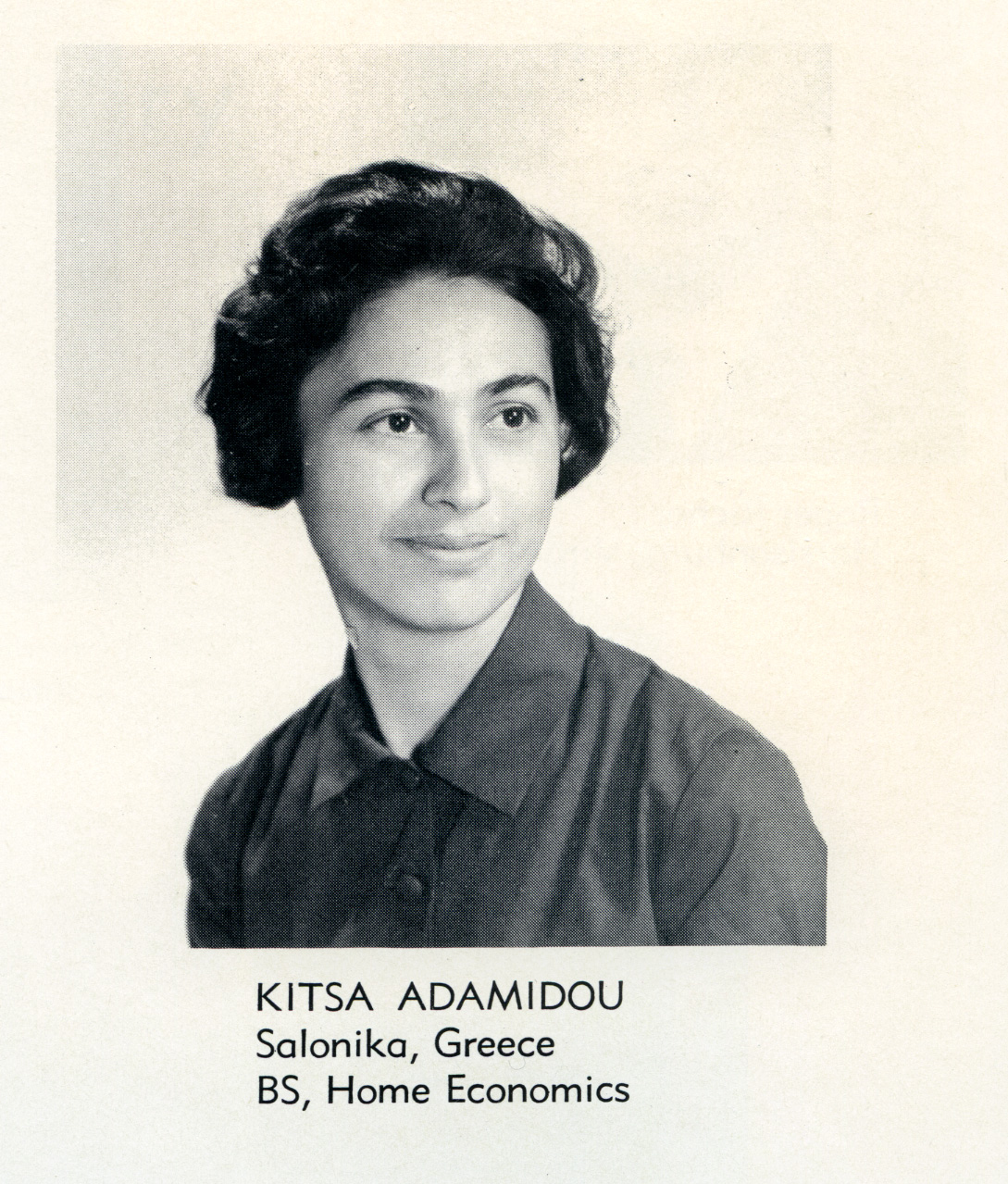
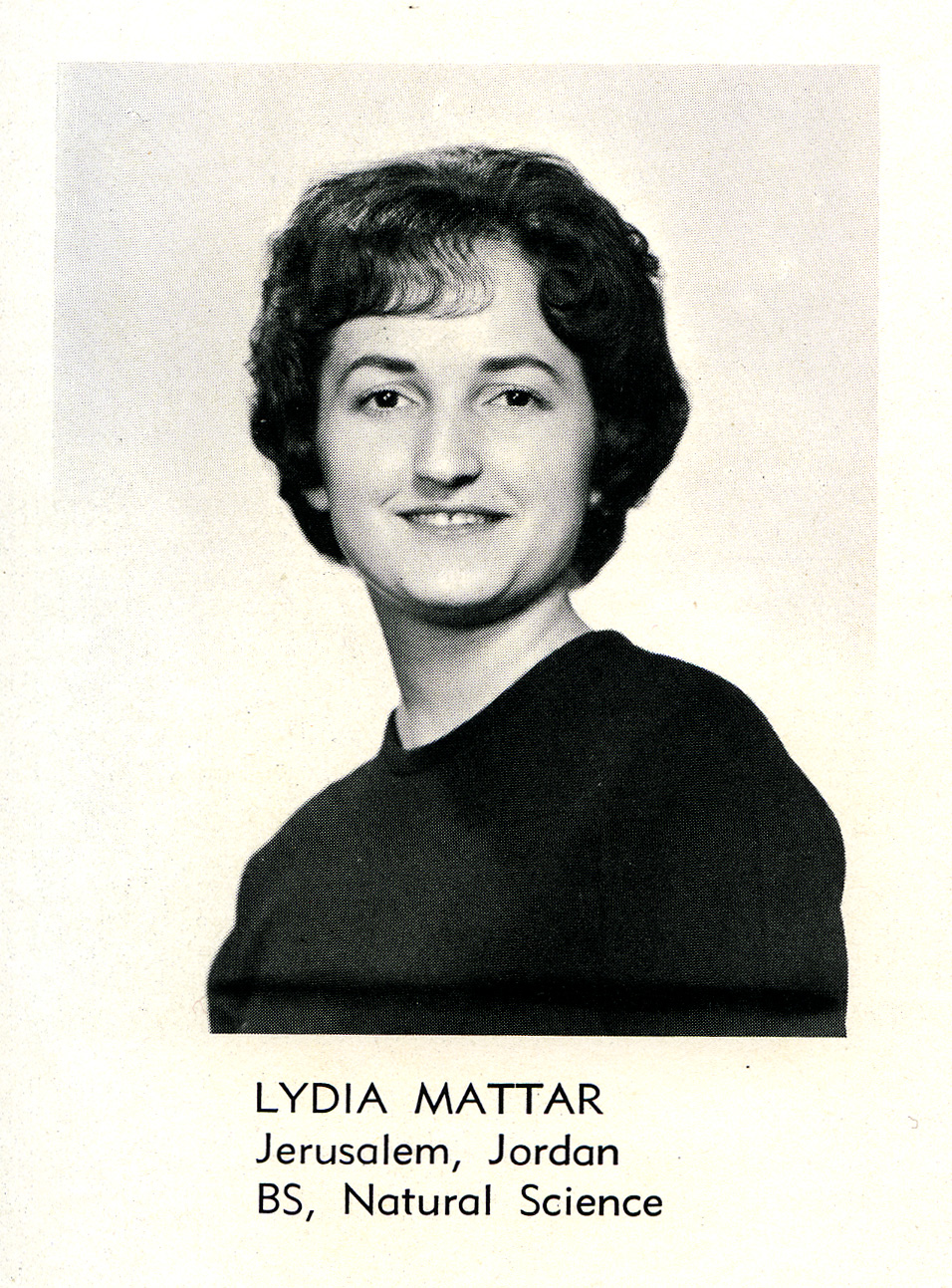
Kitsa and Lydia were among the very few women in my graduating class at Eastern Mennonite College who did not wear a prayer veiling atop their heads. Why? Because they were not Mennonite.

Lydia Mattar from Jerusalem, Jordan and Kitsa Adamidou from Salonika, Greece were international students and my good friends when I attended EMC. Their origins both have a biblical stamp: Kitsa’s hometown was originally known as Thessalonika, the name of two New Testaments books (Thessalonians I and II) and Kitsa’s father from Jerusalem was the Keeper of the Garden Tomb, the site of Jesus’ burial and resurrection. (Photos from 1963 Shenandoah yearbook)

KitsaYearbookPortrait

Always on the look-out for fun!
Kitsa, always on the look-out for fun!

And then Lydia . . .

LydiaYearbook Portrait

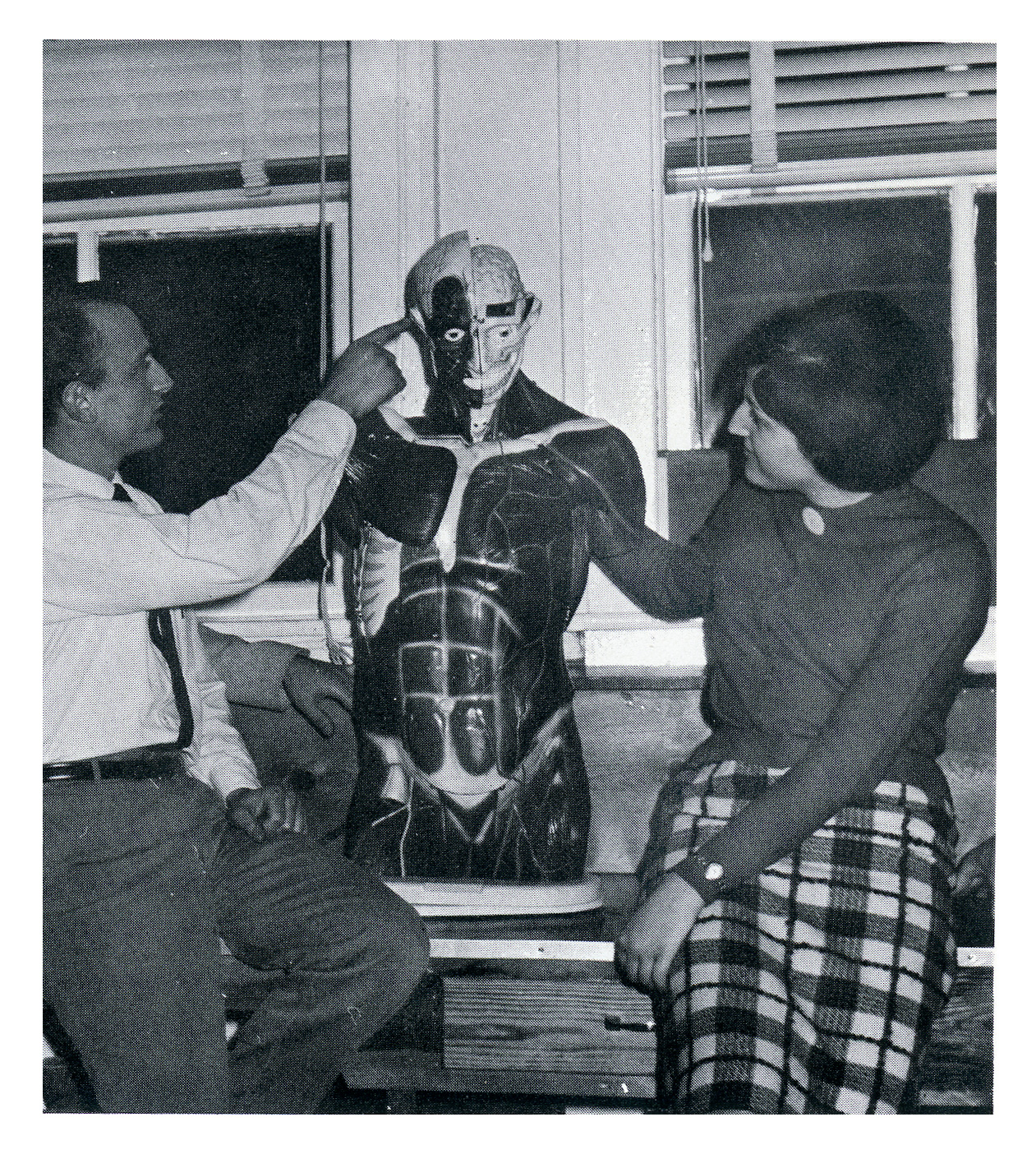
Lydia in Dr. Daniel Suter's Anatomy class
Lydia in Dr. Daniel Suter’s Anatomy class with lab assistant

I was drawn to Kitsa and Lydia during my freshman year because I have always been curious about other cultures. In fact, one year Lydia was my roommate. It appears this inclination has run deep in my DNA. Now as I hold in my hand one of my Grandma Fannie Longenecker’s letters from college I can sense her keen interest in my “foreign” friends and a deep longing to know them better.

In this letter dated December 1, 1960, she insists that she would like both girls to spend Christmas at her home. Born in 1892, Grandma Fannie Longenecker was 68 when she wrote these words to me:

Dear Marian – Guess you’ll be surprised to hear from me, I sure wanted to write before, just didn’t get at it – (Reason) older and slower . . . . Ruth was looking for a letter from you so be sure and bring Lydia & Kitsa along home over Christmas, and forget all about paint etc, two of you can stay here & we’ll have a good time that’s the thing that really matters, I think I’ll be Kitsa’s Grandma of America – Do you know what she needs or wants for Christmas? Forgot to say I’ll pay her way up & we really want them to come, so make it strong, times soon here!

Later in the letter, Grandma admonishes:

Be sure and get arrangements to come home early & if possible bring the girls along. I’ll pay Kitsa’s fare on arrival & find out what she would like for Christmas. This $ 5.00 spot is for you, maybe you need a little for odds and ends or transportation home. Tell us what you are hungry for, that you don’t get at school.

Mark tells me ‘Marian will soon come home’ and his face lights up, so we are all looking forward to that day. Hope your old toe is better.

Grandma’s interest in Kitsa persisted through most of my college years. In her letter of March 8, 1962, she referred to Kitsa and her roommate pictured on the front page of Christian Living magazine (February 1962).

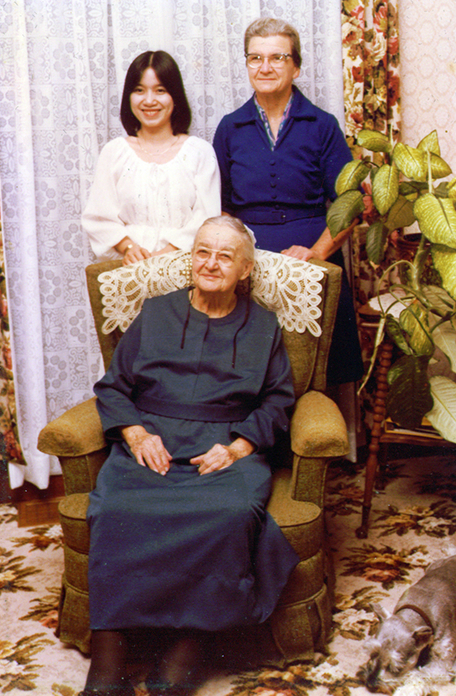
For over 25 years, my Grandma and Aunt Ruthie practiced peace and goodwill toward all, as they opened their home to refugee and immigrant families, beginning with Phuong (pictured below), a young woman who arrived by boat from Vietnam. Their home was a warm cushion absorbing the cultural shock of leaving home and family; it was a safe haven, welcoming refugees from a colláge of countries including Bosnia, Croatia, Serbia, Russia—anywhere there was political upheaval.

1979Grandma,Ruthie, Phuong_small

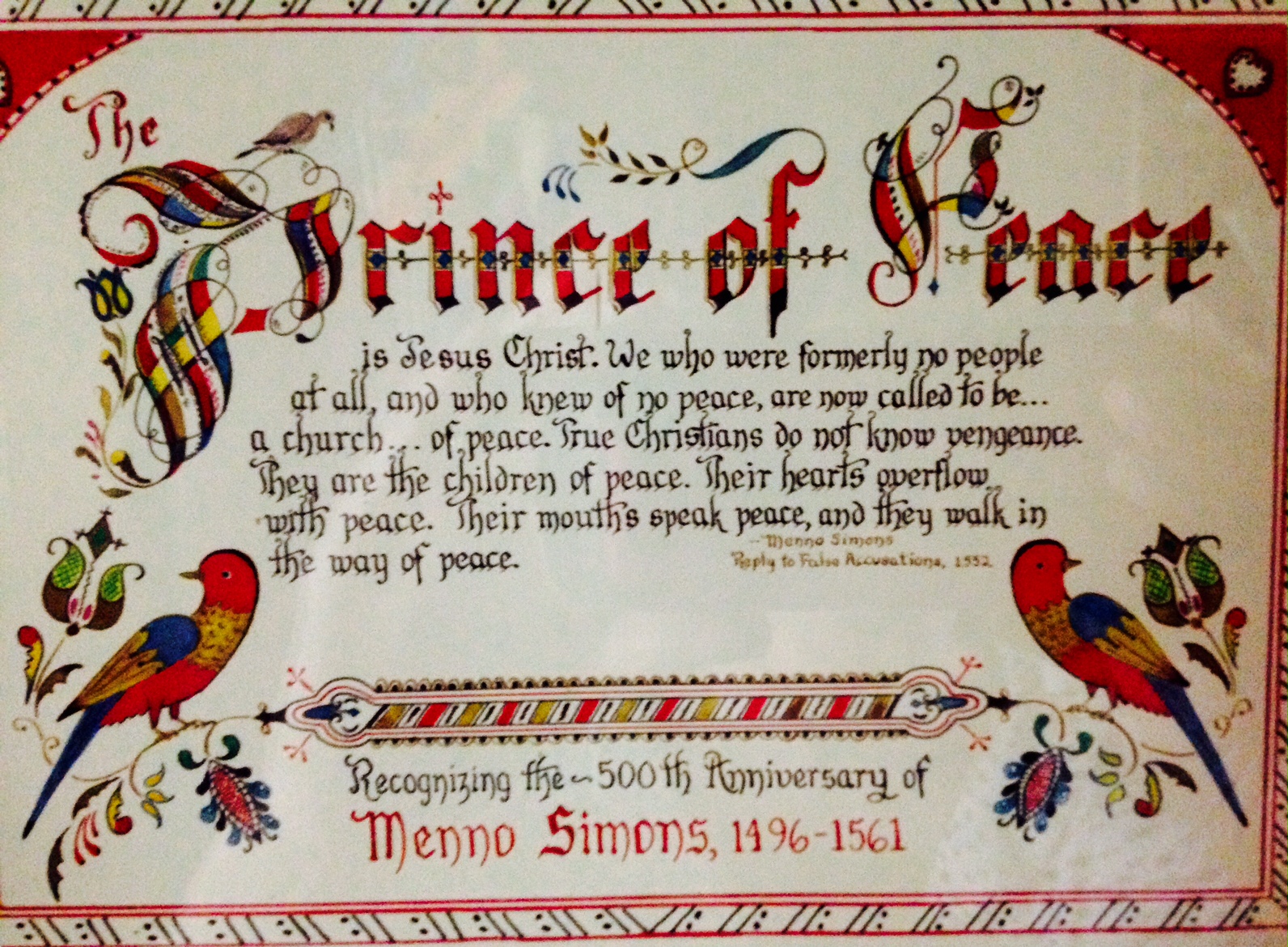
Although she graciously accepted the Salt of the Earth Award from Lutheran Social Services in the 1990s, Aunt Ruthie never bragged about her benevolence. From her perspective, she was merely sharing the love of Christ and fulfilling the statement of Menno Simons, founder of the Mennonite faith:

Framed print on the wall of Grandma and Aunt Ruthie's sitting room, 1996
Framed illustration on the wall of Grandma and Aunt Ruthie’s sitting room, 1996

In a noisy world where some speak of building tall walls and wish to spread terror and violence, I am thankful for my heritage including an education at an institution, now Eastern Mennonite University, where the language of peace is preached and modeled. In fact, it is now possible to earn both under-graduate and graduate degrees in justice and peace-building at the University.

EMUJusticPeaceQuote


Regrettably, the contact information I have currently for both Kitsa and Lydia has not yielded any results, so I don’t know what paths their lives have taken. But I do know that their lives, like mine, have been imprinted with the power of peace, a message this world could stand a good dose of in these troubled times.

Postcript:

Just this morning, December 11, 2015, I had a long phone conversation with Kitsa, her smooth, alto voice music to my ears. She now lives with her husband in North Carolina and is very active at St. Nicholas Greek Orthodox Church where she is head of the Hellenic Culture initiative. She also gives private Greek language lessons.


How have international friendships affected your life? Have you connected with long-lost friends recently?