4 Months, 4 Gifts: A Tribute to My Dad

March 1986:  Mom and Dad Longenecker visit the families of my sister Janice and me in Jacksonville, Florida. We all enjoy Epcot in Disney World, Dad’s chance to see a faux version of the Switzerland he never actually visited but planned to some day. My super-charged Dad seems more mellow now, slower, even takes naps. “Hey, Dad, I see you’re getting a pooch here,” says son-in-law Cliff, commenting on my dad’s weight gain as he playfully pinches his waistline.
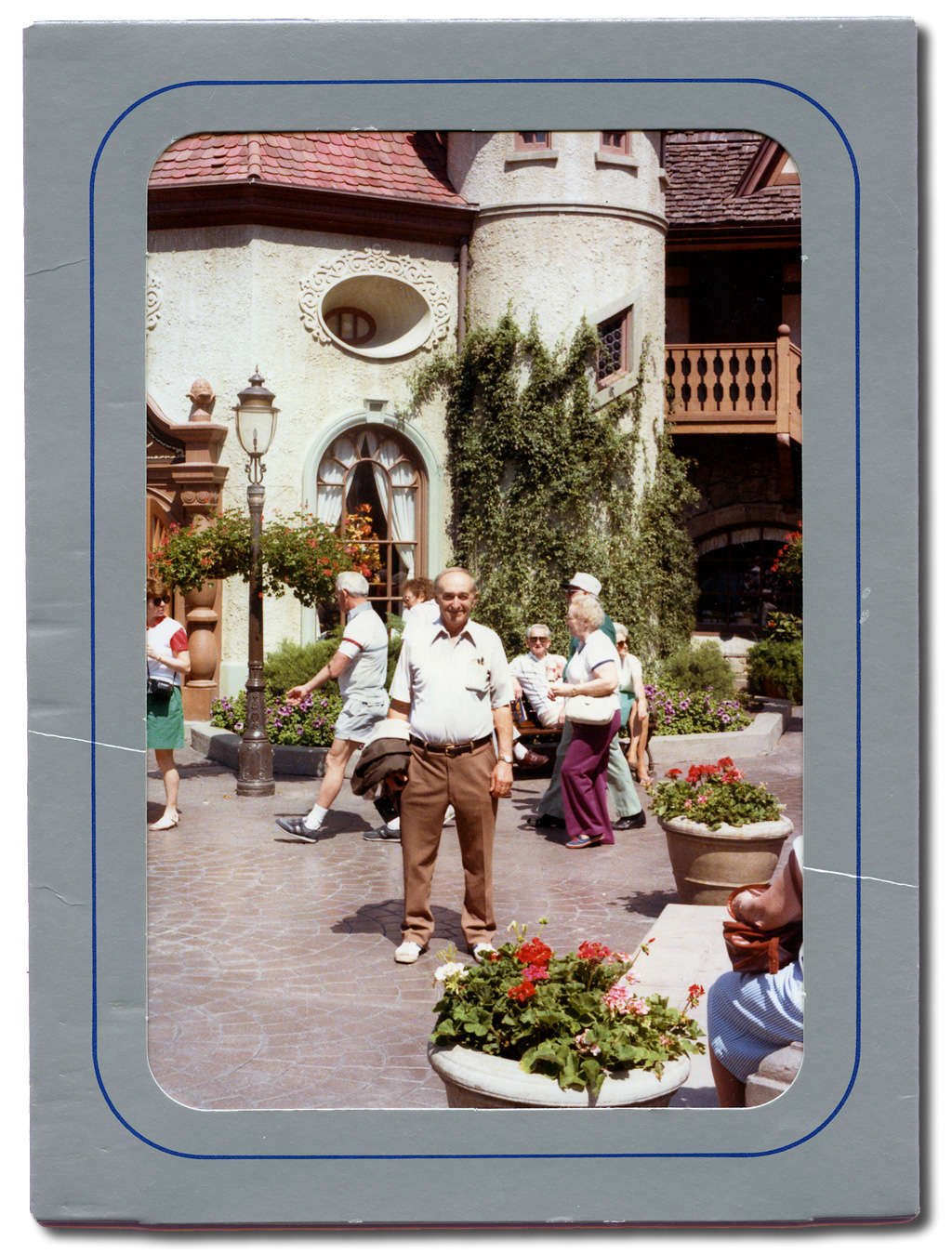
DadEpcot

April 1986:  We get a call from Pennsylvania, “Dad has been diagnosed with lymphoma. Blood cell tumors have developed in the lymphatic system. Stage 4 . . . it’s too advanced to operate . . . they can try chemotherapy, maybe radiation after that  . . . .” Like an earthquake, the news sends shock-waves through our family. Why, we just saw him a month ago.

May 1986:  My father is now dying of lymphoma. I leave my husband and children and fly up to Pennsylvania, alone, to see him alive for the very last time. He looks nothing like my image of him in March. His skin, scorched red-brown from chemotherapy, reminds me of a starving Indian. He is wasting away. “I don’t want to live like this,” he says, calling a halt to the treatment. Too weak to climb to the upstairs bedroom, he reclines now almost motionless on the pull-out bed in the living room, a solitary pillow under his head. On May 17 his 71st birthday comes and goes.

My flight south leaves a few days later. This is probably the last time I will see my father in this life. I approach him to say goodbye, and I add: “I love you, Daddy.”

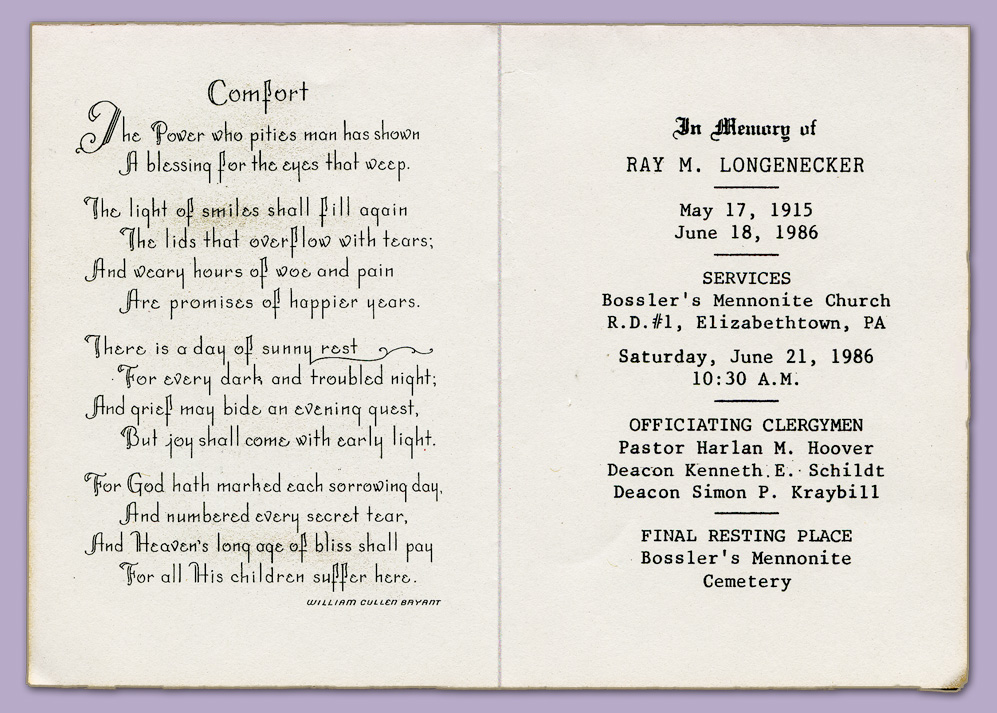
June 18, 1986  Daddy breathes his last, less than three months after his cancer diagnosis. We get the dreaded call and make plans to drive north for the funeral. My mind flits around in reminiscence.  And then leaps forward with prediction: Now Dad won’t be attending the ceremony where I receive my Master’s degree in December. He won’t stand up to be photographed at any of his grand-children’s weddings or get to play with his great-grandchildren any more. At age 71, he has reached his heavenly home.

Had he lived, he would have turned 100 years old this year, like Aunt Cecilia.
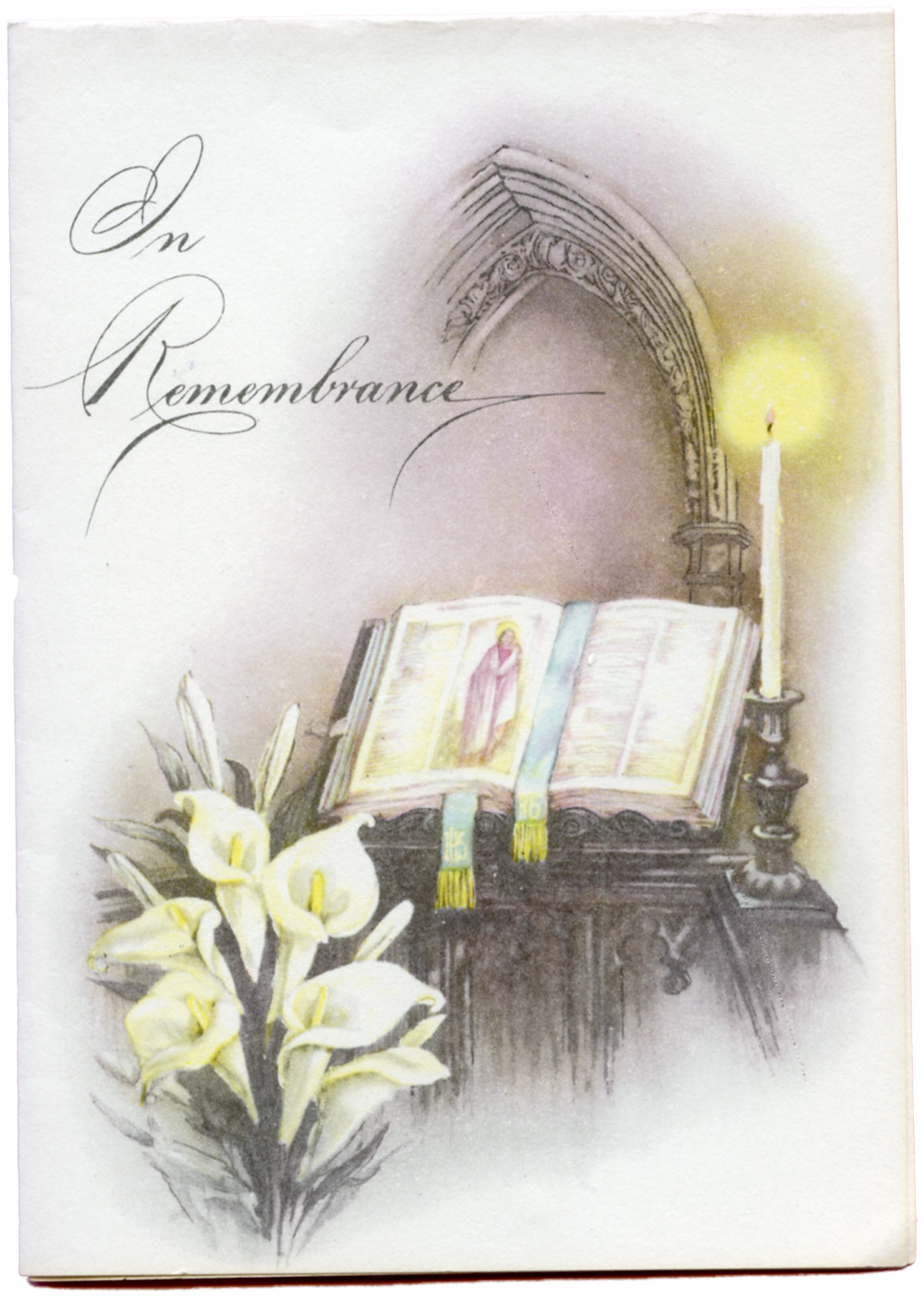
DadFuneralFront

DadFuneralInside

On this Father’s Day nearly 30 years later, I pause to give thanks for the gifts my father has given me:

1. Love of nature  He went on walks in the wide meadows and sun-dappled woods close to Rheems, PA on Sunday afternoons. Sometimes I went with him.

2. Love for music   He played a banjo, guitar, and piano with gusto and bought me a violin. Music has formed the sound-scape of my mind since then.

3. Intellectual curiosity  He perused US News and World Report and The Wall Street Journal, listened to Edward R. Murrow, Paul Harvey, and Lowell Thomas, engaged in conversation about world events.

4. Value of hard work  There was the tomato field, the sweet potato plot, the shop . . . .
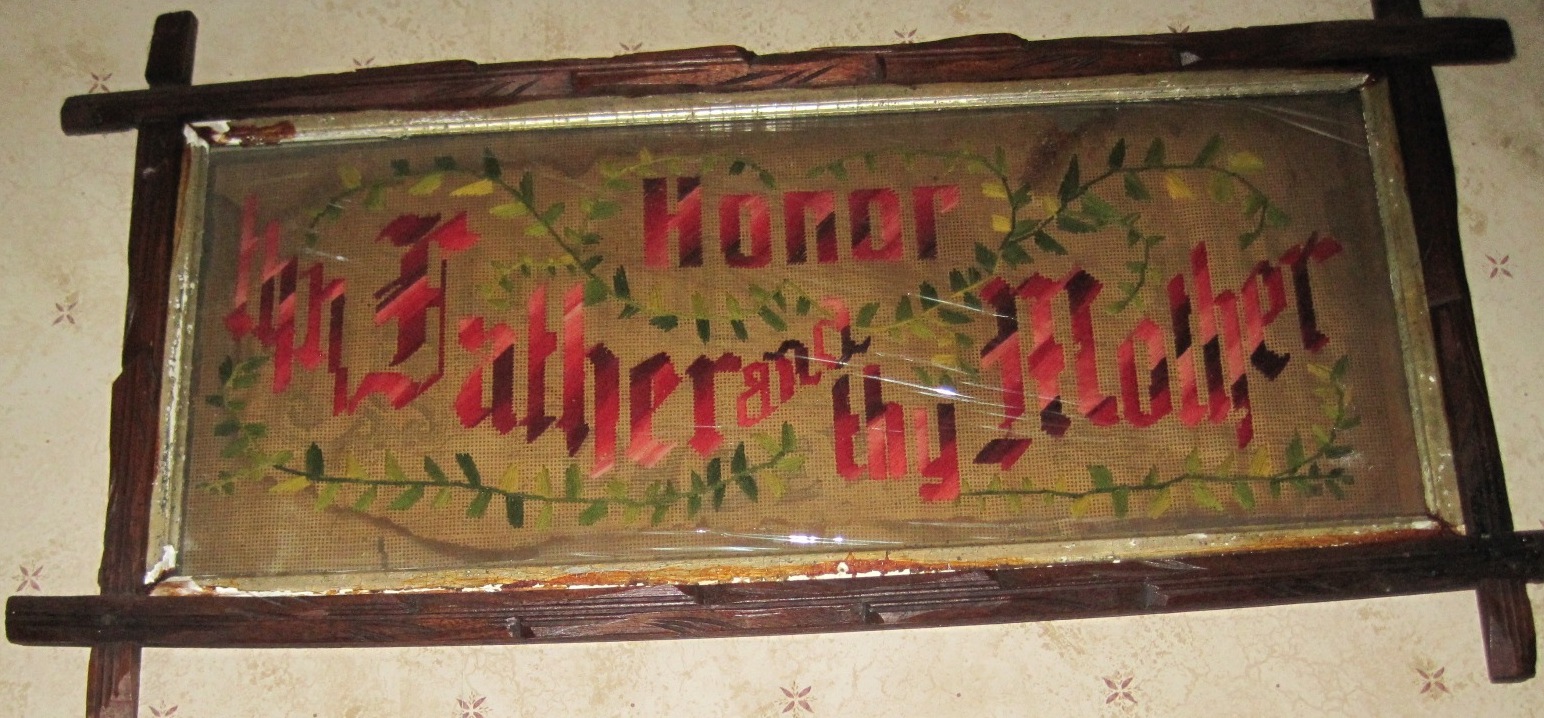
Framed needlework above one of the kitchen doors in Grandma Longenecker's house
Framed needlework above a kitchen door in Grandma Longenecker’s house

Exodus 20:12  Honour thy father and thy mother: that thy days may be long upon the land which the LORD thy God giveth thee.  (King James Version)

My father’s deep faith in God included honoring his own parents.

* * *

Thank you for your thoughts on Father’s Day 2015. You always make the conversation richer!
A Corny Post

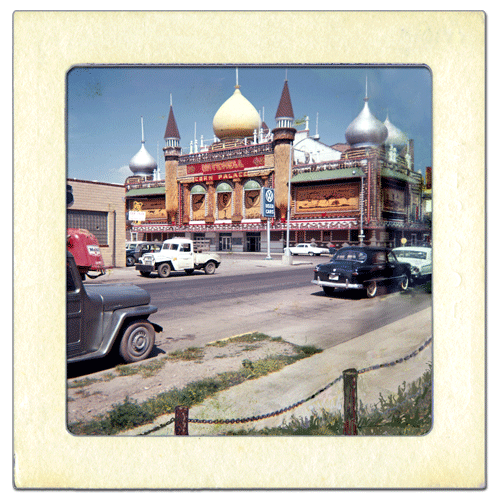
The Corn Palace

Bird beaks peck away at grains of corn on the walls of The Corn Palace. Still, the murals created with several colors of dried corn and grain arrest the eye. On our trip West we visited this grand monument to farmers and the grain industry they represent in Mitchell, South Dakota.

Web_1964_Corn Palace

A Quote about Corn:

“A light wind swept over the corn, and all nature laughed in the sunshine,” said Anne Bronte, poet and novelist of West Yorkshire, England, 1800s

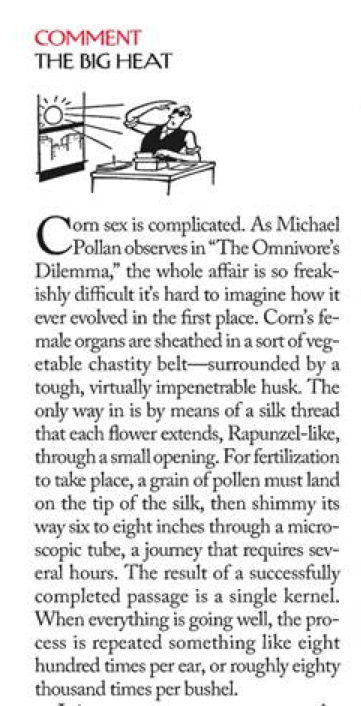
Corn Sex, according to Elizabeth Kolbert in “The Big Heat,” The New Yorker, July 23, 2012 issue

CornCartoonArtNewYorker

CornTalkOfTownNYorker

Mennonites and Corn

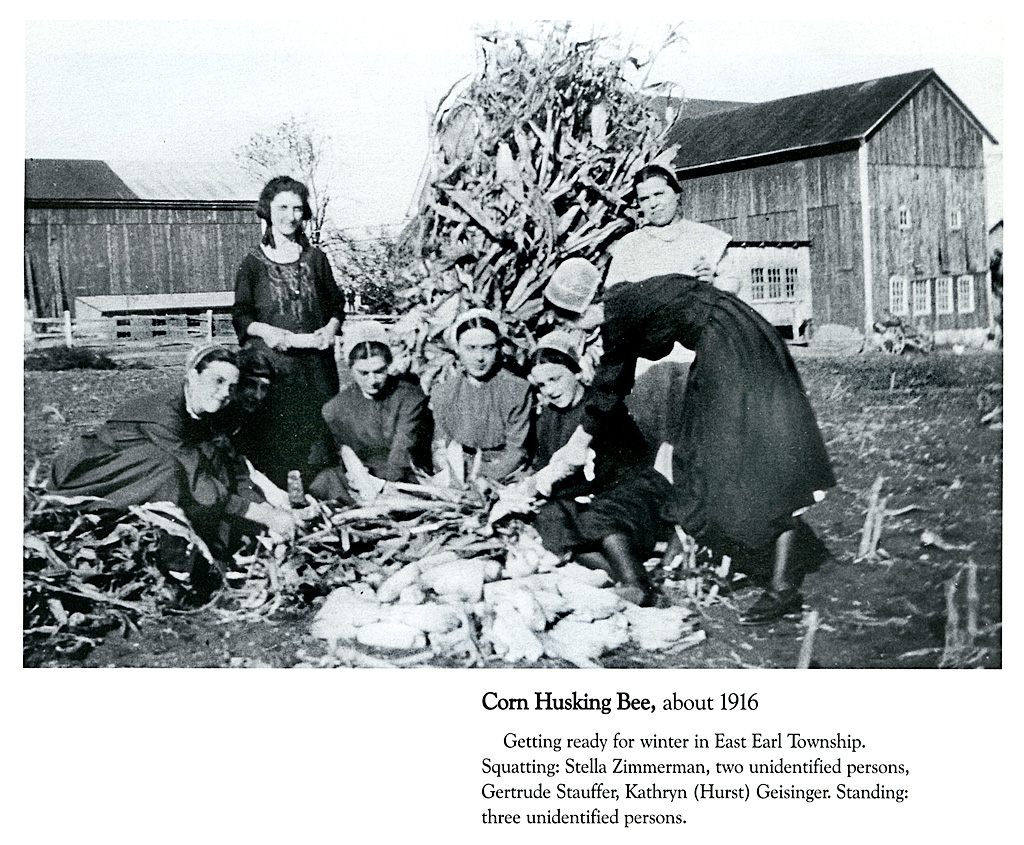
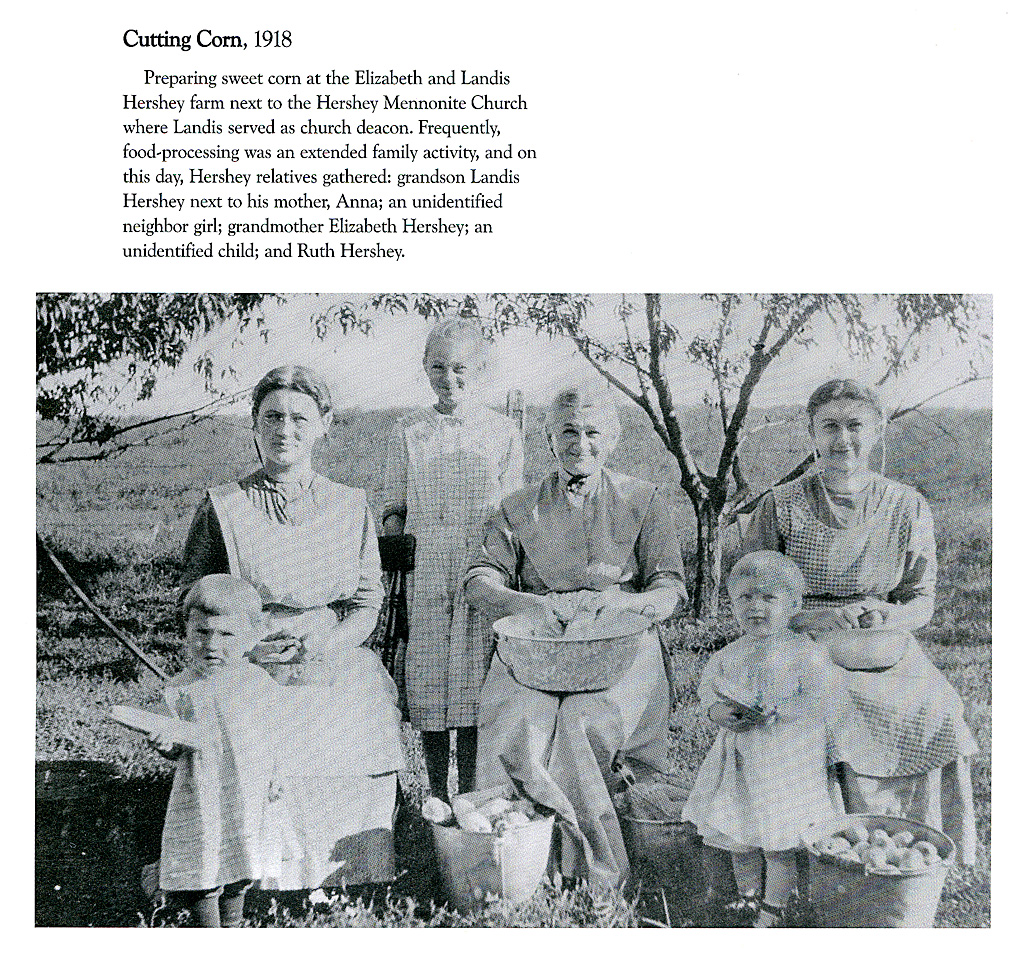
Mennonites in Lancaster County, including the Longenecker family, participated in the whole process of corn production: planting, hoeing, harvesting, husking, canning, freezing – and best of all – eating the succulent grains of corn on the cob, the buttery juice running down our chins and forearms.

In her book Mennonite Women of Lancaster County, Joanne Hess Siegrist features photos of Mennonite women hard at work husking and cutting corn off the cob (pages 124, 124)

Web_Mennonite-Women_Husking-Corn_p123

Web_Mennonite-Women_Cutting-Corn_p124

My Mother Ruth loved making her baked corn recipe from the Mennonite Community Cookbook. She served it in a chocolate-brown Pyrex casserole dish nested in a basket of tight weave. We loved every bite, especially tasty during corn season.

Baked Corn Recipe

CornRecipeMCC

Want More Corn?

Pablo Neruda, Chilean poet, diplomat and politician, apparently loved vegetables too. He wrote about tomatoes, corn and more. Here is the link to his poem “Ode to Maize.”

Share something corny here. We are all ears!

Coming up next: Going Male, Amish Romance Novels

Two Mennonite Girls Survive a Cross Country Road Trip

Yes, imagine two Mennonite girls tripping across the country . . .

  • In a blue-gray 1958 Chevy Impala sedan
  • With a chauffeur and navigator
  • Through 47 states + Mexico
  • Five weeks in 1964: July 18 – August 24

Web_58-Chevy_Made-in-USA

My Travel Partners: The Metzlers, whom I call Aunt and Uncle, and their daughter Joann

Unlike John Steinbeck who wrote Travels with Charley about his one-man, one-dog travelogue in the 1960s, we were a four-some, Joann Herr, my new best friend, her parents, John and Mary Metzler, and me. But like Mark Twain, we were “innocents abroad,” leaving our cozy Mennonite countryside and venturing through the wild and wooly West to the Pacific coast, eyes agape with wonder.

Best Bud: Joann Metzler (Herr) whom I met while she was student teaching at Rheems Elementary School, where my Aunt Ruth Longenecker was principal. “She’s such a nice girl. You ought to meet her,” Ruthie said about Joann. She was right! I even thought so at the end of the trip.

Chauffeur Extraordinaire, Uncle John: One day he drove 748 miles! John Metzler, who raised crops and cattle, is related on my mother’s side of the family through a common ancestor, Valentine Metzler, whose immigration to Pennsylvania was celebrated in the reunion in 2013. During this thousands-of-miles-odyssey behind the wheel, he sometimes came up with quotable expressions:

“Oh, schmatza (PA Dutch for pain),” he frets when there are too many switchbacks on mountain roads.

“Now we’re caught with our pants down!” when he makes a wrong turn.

“I thought I’d be hen-pecked with three women around and by golly I am already!” he exclaims 11 days into the trip.

Navigator with a Built-in Compass, Aunt Mary: With only a road map and keen sense of direction, Joann’s mother “Aunt Mary” was quite a trooper. She made sure we were ready to roll between 6:30 and 7:00 am every day. When I felt road sick, she doled out Chiclets. She was eager to see her spry, 81-year-old Aunt Susan in Los Angeles.

In Cheyenne Uncle John was taken for a German because of his PA Dutch accent, and Mary tells him “ta be more English!” Here are the two smiling at Crater Lake, Oregon.

Web_John-and-Mary_Crater-Lake_Ektachrome

The Big Loop – Like Steinbeck, we did follow a northern route across the Mid-west, angling down through California and sweeping across the Southwest into Texas and further east to Florida and then north back home to Pennsylvania. Along the way, we sometimes fancied ourselves in foreign lands: Parts of Utah looked like Greece to us, the Rockies like the Swiss Alps, and some of Oregon, the Holy land because of myrtle trees.

 Web_MN-sign

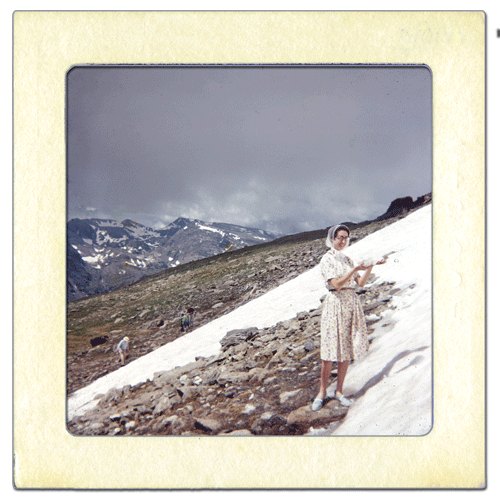
In the Rockies, I make a snowball on my birthday!

Web_Marian-making-snowball

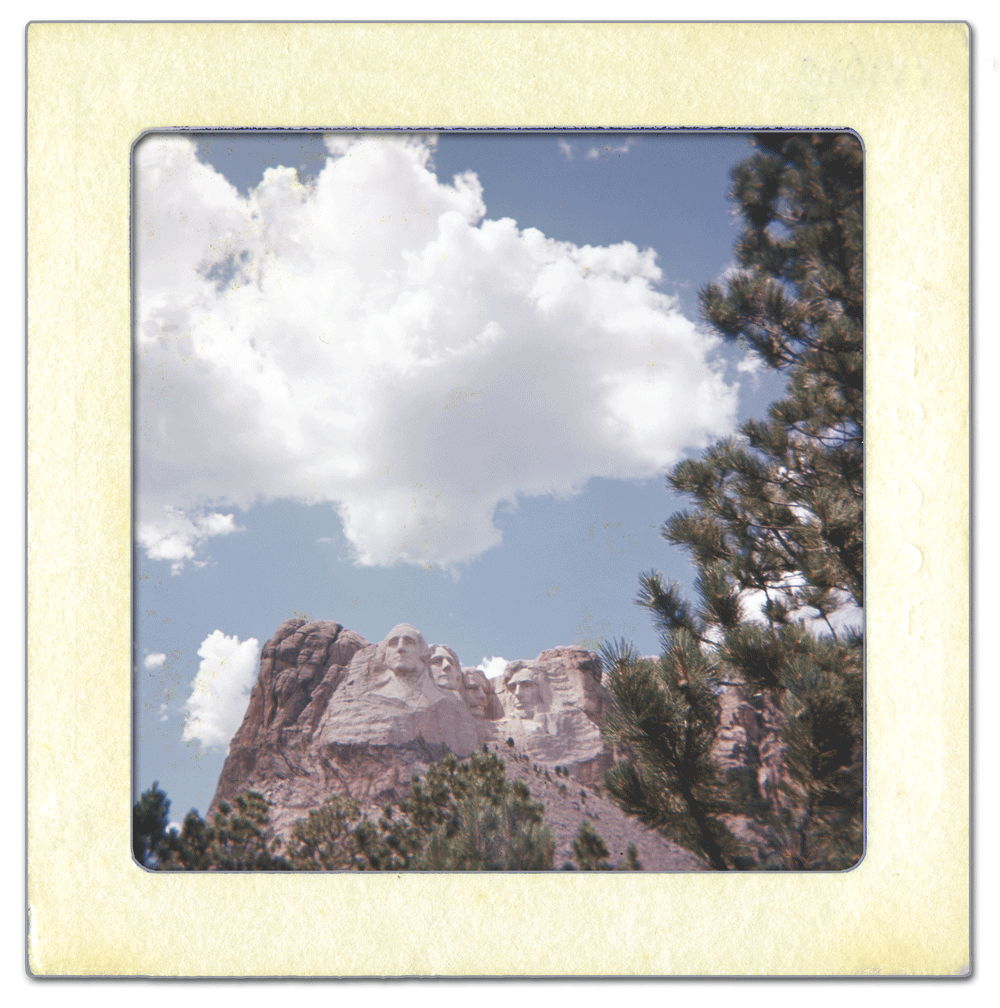
We were entranced by presidents, puffy clouds, national parks  . . .

__1964_Mt-Rushmore_02_+NATural-mount_1000pix_72dpi

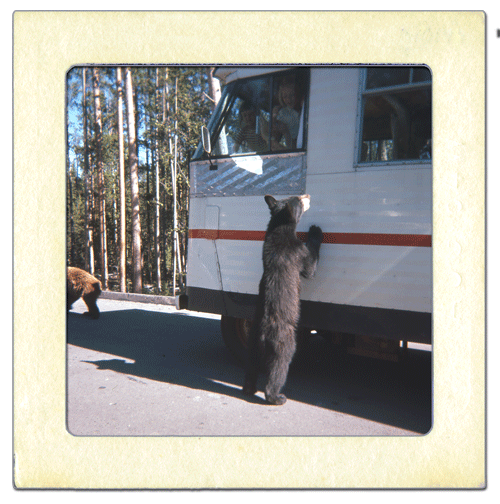
Yellowstone, 12 million acres of gorgeous scenery - even bears want a part of the action
Yellowstone, 12 million acres of gorgeous scenery – even bears want a part of the action

And the Magnificent Grand Canyon

Web_Joann-and-Marian_angled_Grand-Canyon

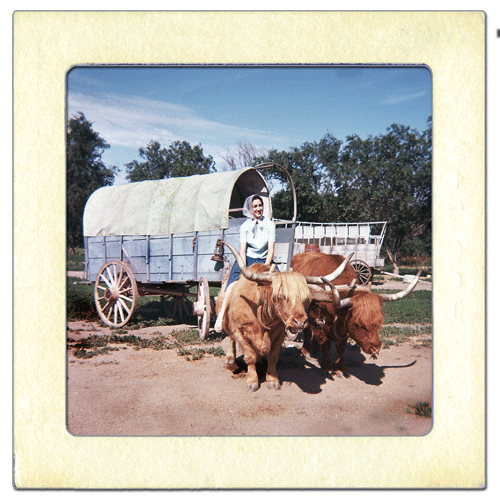
Web_Marian-and-steer

Oregon and California: Myrtle trees, Joshua trees, Dates and Olives!

Web_Joann-and-Joshua-tree

Joann and almond tree
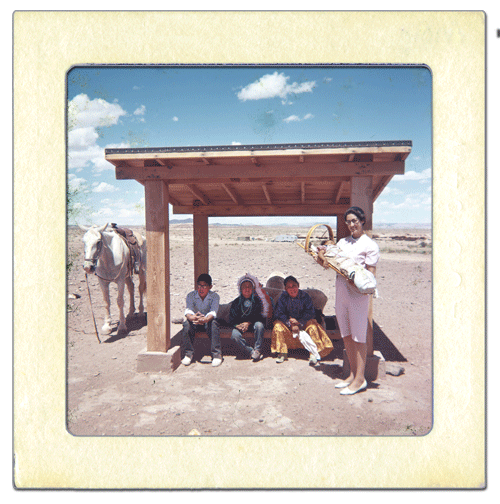
Navajo Indian Reservation: Family was pleased to pose in exchange for some pesos

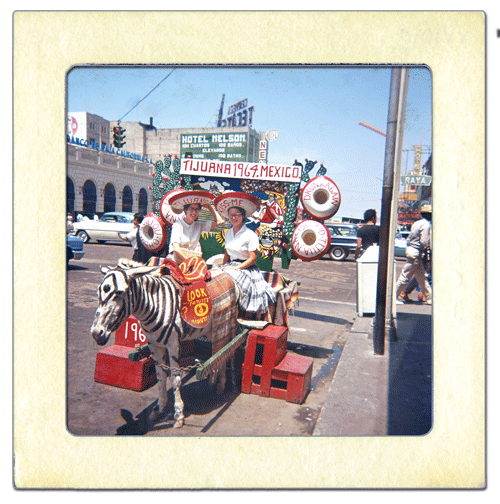
Tijuana, Mexico: sombreros, a heady substitute for our prayer caps. Joann had no idea she was inviting kisses!

Web_Marian-and-Joann_Tijuana

What We Wore

The photos prove our plainness. We always had something on our heads: prayer coverings, black bonnets on top of our caps for Sunday in Salt Lake City, Utah. Accordion pleated plastic wind-breakers for stiff breezes or rain. Dresses or skirts – absolutely no slacks or shorts.

Grandma Longenecker gave me a travel iron – no permanent press fabrics yet in our wardrobes in the Sixties.

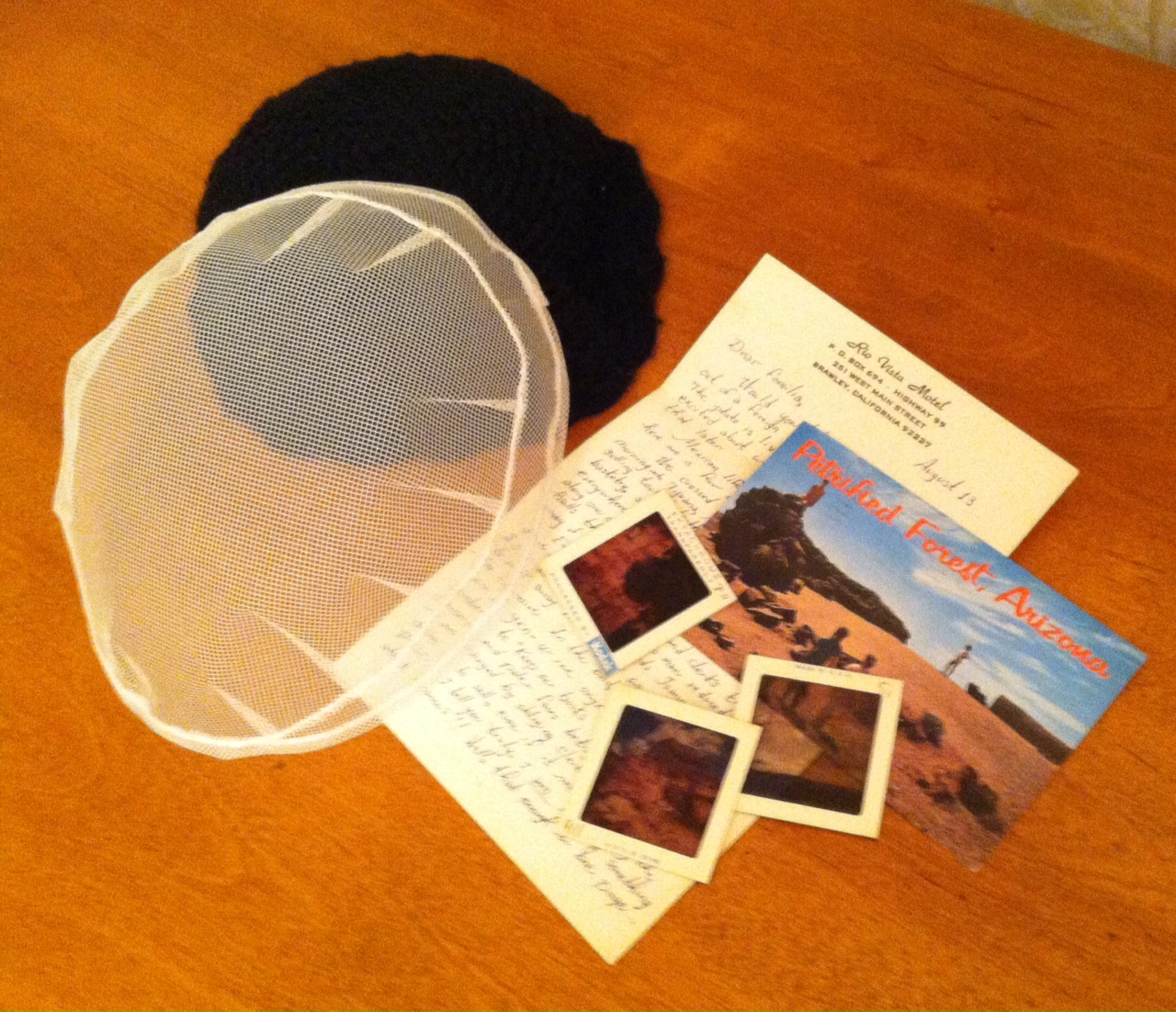
Closeup of prayer covering and bonnet like Joann and I wore on the trip with Kodak Ektachrome slides, letter home and post card from the Petrified Forest, Arizona

Days were HOT!

One day it was 110 degrees in a car with no AC. Our Boontonware cups melted in the rear view window. Our backs made puddles on the seats, so we tried the feet-in-air position, backseat monkeys! Here below are the Boontonware cups before they melted! And, yes, photos at state lines were staged – part of our ritual.

Web_Wyoming-sign

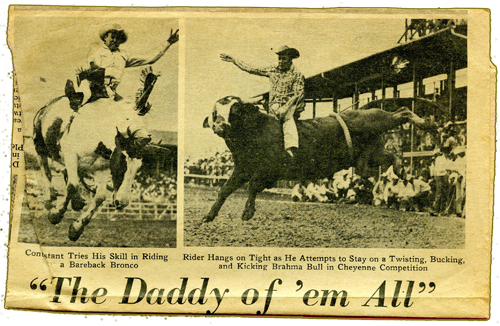
Uncle John couldn’t wait to get to Cheyenne, Wyoming to see the Rodeo, The Daddy of ’em All during Frontier-land week.

*1964_Wyoming Rodeo_newspaper_300pix

What We Did at Night

Sometimes Joan and I disturbed the peace of the Metzler pair next door in the motel. Once I kicked down a picture on a motel wall in Wisconsin and nearly fell on my head to try to retrieve it. Daily we wrote in our diaries and totted up our expenses down to the last penny.

Usually we snacked and read books. One night I lowered the hem on a skirt with my sewing kit to comply with standards of Lancaster Mennonite School, where I would return to teaching in the fall. Here I’m making a feast of boysenberry bread near Kanab, Utah.

Web_Marian-and-boysenberry

Many thanks to photo-enhancer Cliff for bringing faded memories back to life!

How did I pay for this trip on my slim school teacher’s salary? What secrets did my diary and expense book reveal? Did anyone from home remember my birthday? Find out in my next post!

Memorial Day Snaps: A Truck and a Quilt

Catchy caption needed. Your suggestions please!

Just as every issue of The New Yorker features a cartoon in need of a caption, today’s post offers a photo calling for your input. There’s one below to get your wheels turning, but I think there are other possibilities.

Even eighteen wheelers have patriotic ties.


The back story: This photo was taken in 2005 when Cliff was in the Chicago area doing his art/music shows. Most likely our son Joel, who was in graduate school in the city at the time, was driving as Cliff snapped the picture of this truck on the Interstate.

*  *  *

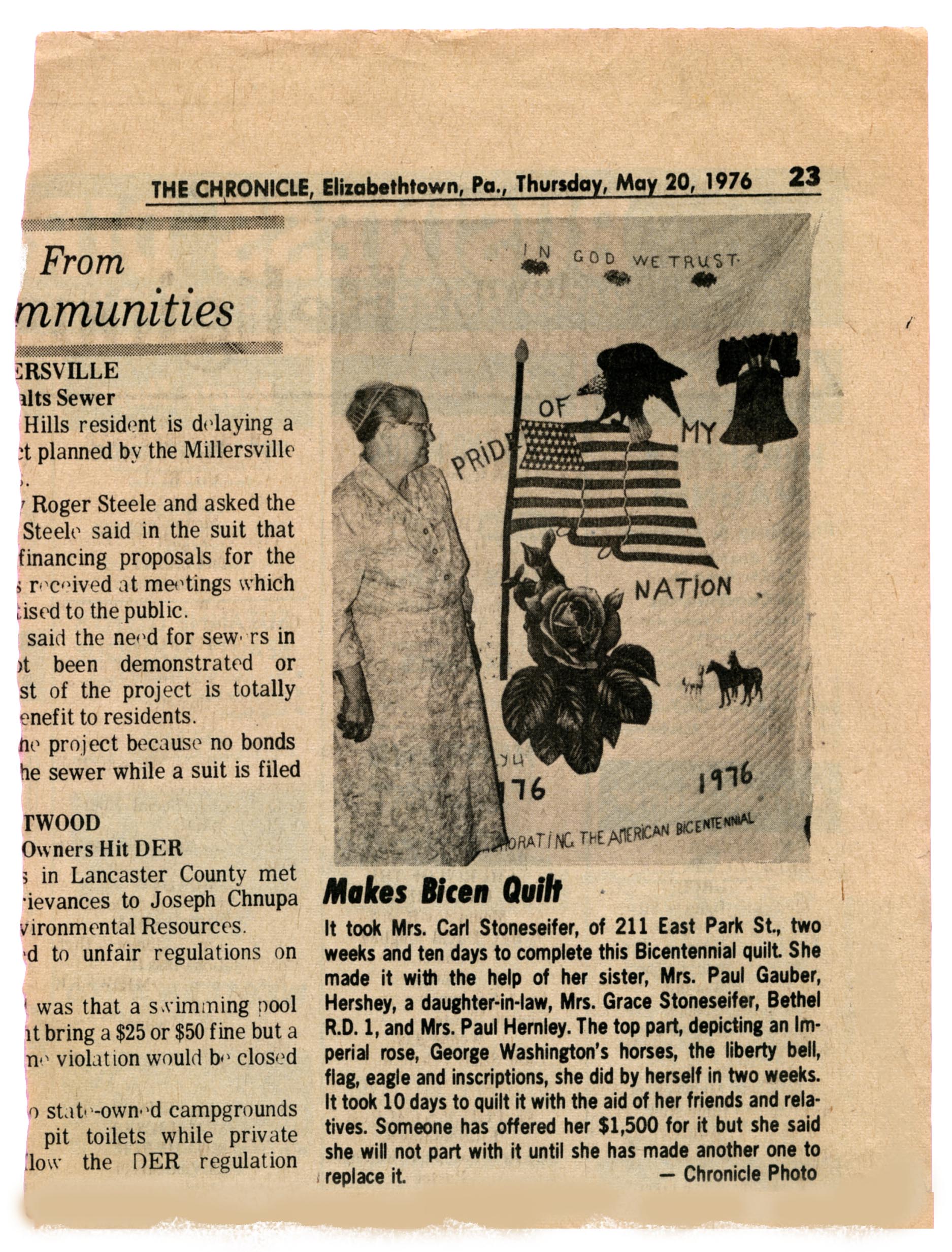
Carl Stoneseifer was one of my dad’s best employees at Longenecker Farm Supply in Rheems, PA. He was both personable and competent, as my dad would say, a “crack” mechanic. I remember how sad Daddy felt when Carl moved on.

His wife Helen was a talented quilter. On May 20, 1976 Helen’s picture and write-up appeared in our hometown newspaper, The Elizabethtown Chronicle. The quilt, in honor of the American bicentennial, was a cooperative effort by her sister, her daughter-in-law, and another friend. However, the designs featuring various patriotic symbols were her own.

1976_0520_The Chronicle_Elizabethtown_Bicentennial Quilt

Memorial Day is a time to remember all those who sacrificed for our country. This weekend also heralds the first official holiday weekend of summer.

How do you observe it?

Can you provide a caption for the photo? I’m excited to see your suggestions!

Coming next: Purple Passages: Secrets of the Grimké House, Charleston

My Dad’s Bachelor Trip to Florida

Nose-to-the-Grindstone, that’s my dad. But I have proof in pictures that he once took a fling to Florida with his Lancaster County Mennonite buddies. Judging from the photos that remain and Mother’s comments, I can pretty much guarantee that there were no stops at a roadhouse, nights spent bar-hopping, or brothel visits.

According to their Swiss-German work ethnic and the spirit of the times, these five men, Parke Garber, Dick Sauder, Bud (Wilbur) Martin, Howard Longenecker and Daddy were destined to be dutiful farmers or businessmen, faithful husbands and fathers. But until they hit the groove for the rest of their lives, they would see the world, traveling over 800 miles from Pennsylvania to Florida.

My Dad

1938RayinFlorida_3x5_300

They traveled in a car of this vintage with a road-map, certainly no GPS!

1939FloridaBoysCars300

To Cypress Gardens, Florida 1939

1939WilburBudMartinFlorida BoysCypress Gardens_300

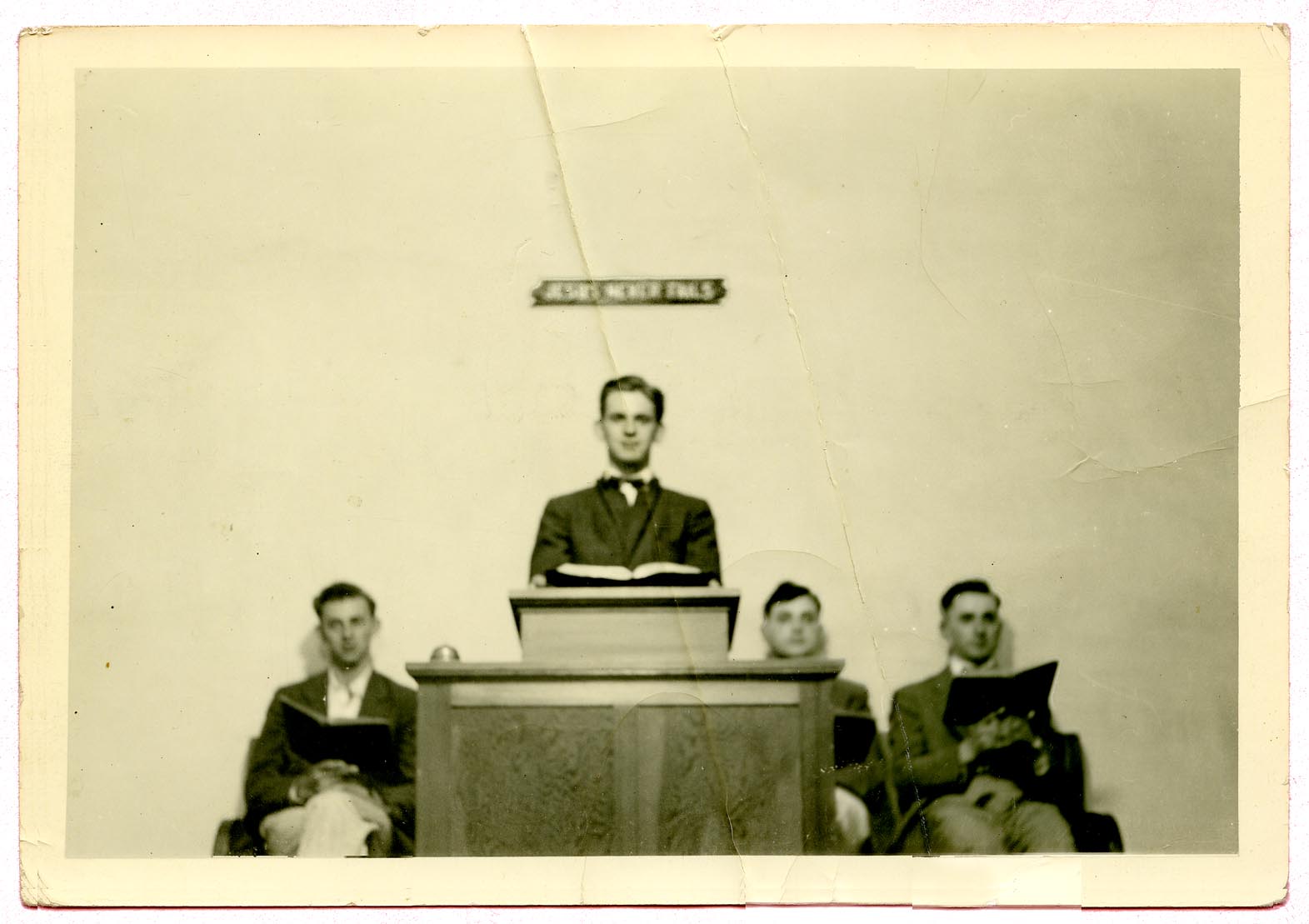
The craziest thing recorded is a snapshot of the men playing church under the skinny wooden banner Jesus Never Fails. I say they were playing church because that was what Mother told me and I never heard anything to the contrary. The “preacher” was a farmer turned car salesman and my sanctimonious-looking dad (at right), a farm implement dealer, holds a hymnbook or Bible.

Richard Sauder in pulpit, to the right Parke Garber, extreme right Ray Longenecker, my father  (Unidentified man at left)
Richard Sauder in pulpit, to the right Parke Garber, far right Ray Longenecker, my father (Unidentified man on left)

All these pictures were stored in a heap inside our family’s piano bench for decades. Only recently have they seen the light of day.

Based on the date here, my dad was 24. He was married in 1940 when he was 25, a year younger than my age at marriage. Men of this era did not usually marry until they could support a wife. The first question Daddy queried Cliff when he asked for my hand in marriage was “Do you think you can support her?” Looking back, the question seems a little strange as I was already a teacher of four years with a salary.

What I’d like to know:

  • Who’s idea was this trip?
  • Where did they eat? (These men were used to home-cooked meals.)
  • What did they talk about?
  • Did they ever wear casual clothing? (All I see here is white shirts, suspenders, ties and long trousers.)
  • Did they send postcards to their girlfriends?
  • Did they laugh and carry on?

Wouldn’t Dad have been astonished back then if he had known two of his daughters would be raising their families in Florida, so far away from their Lancaster County, PA childhood roots?

Do you have photos in your family albums that pose questions without answers?

Rhubarb in Grandma’s Garden

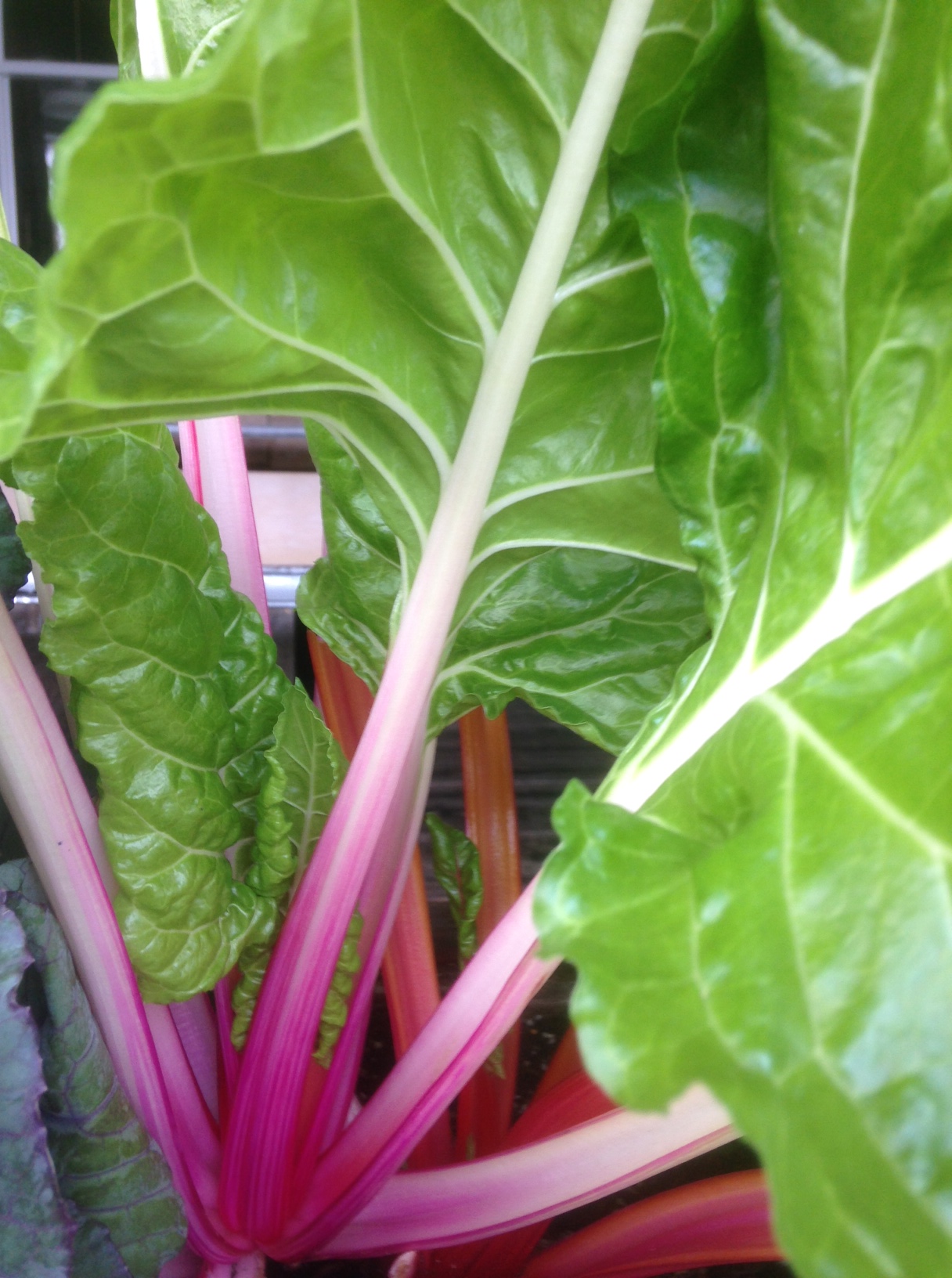
Hot-house rhubarb spotted in shop window, Brunswick, GA  January 2015
Rhubarb plant spotted in front of shop window, Brunswick, GA
January 2015

Grandma and I in the Rhubarb Patch

It’s me, pigtails flapping in the May breezes, skipping beside Grandma toward the rhubarb patch. Behind Grandma’s house toward the woods a thick nest of rhubarb stalks stands sentinel over a ridge facing the twelve sweet cornfield rows. In her garden, the pinkish-red rhubarb spears get back-row status but I think they are pretty enough for her flower garden out front.

“You said you are stopped up – didn’t have any luck when you went to the bathroom.” Grandma with her sunbonnet and apron pulls off the biggest pinkish-red stalks, the green heart-shaped, crinkly leaves falling to the ground with one swath of her knife. “A dose of this will fix that.” She’s looking intently at the rhubarb but I know she’s talking to me.

I have eaten Grandma’s rhubarb sauce before, but I never thought of it as a laxative. “It has roughage in it. It’ll really clean you out.” She runs her rough hands along the spine of the stalk to show me the fibers.

“I see,” I say but right now I wonder if it tastes as good as it looks, so I bite into a stalk and find out too late that it has plenty of pucker power. “Eeee-ow. It tastes sour,” spitting the mouthful out on the ground.

“Goodness gracious, you have to boil it first in sugar water to make it taste good, don’t ya know!” She giggles at my ignorance and finishes pulling off more rhubarb stems with a twist of her wrist like separating a stalk of celery from the bunch. Then we head back toward her kitchen.

Making Rhubarb Sauce

The round, dented aluminum pot is simmering on the stove. With every passing minute the mixture of sugar water and rhubarb cut into 1/2-inch chunks is becoming more ruby red. At the last minute Grandma says, “ Just two shakes,” and I flick my wrist to shake the little can of cinnamon twice as swirls of steam half-scald my hand and wrist.

When it cools, it will taste both tart and sweet. That I know!

Rhubarb Pie from The Mennonite Community Cookbook, 2015

RhubarbPieRecipe

(Adding Strawberries to the rhubarb adds another layer of flavor.)

My Mother's Garden, an embroidered poem
My Mother’s Garden, an embroidered poem in Grandma’s bedroom

What You Might Not Know About Rhubarb

Yes, rhubarb has good cathartic (laxative!) powers, but according to Marion Owen, co-author of Chicken Soup for the Gardener’s Soul, rhubarb is out to save the planet too:

Rhubarb not only saves our plants from aphids, it may also save the planet. In the mid-1980’s, when a hole was discovered in the ozone layer, researchers found that CFC’s were one of the primary reasons for the ozone’s decline.

One of the most common forms of CFC’s is freon, which is used as a refrigerator coolant. Conventional methods for breaking down CFC’s were costly and dangerous. But in 1995, two Yale scientists discovered that oxalic acid, found in rhubarb, helped neutralize CFC’s. Rhubarb to the rescue!

Marion Owen from Kodiak, Alaska, also publishes a newsletter titled The UpBeet Gardener.

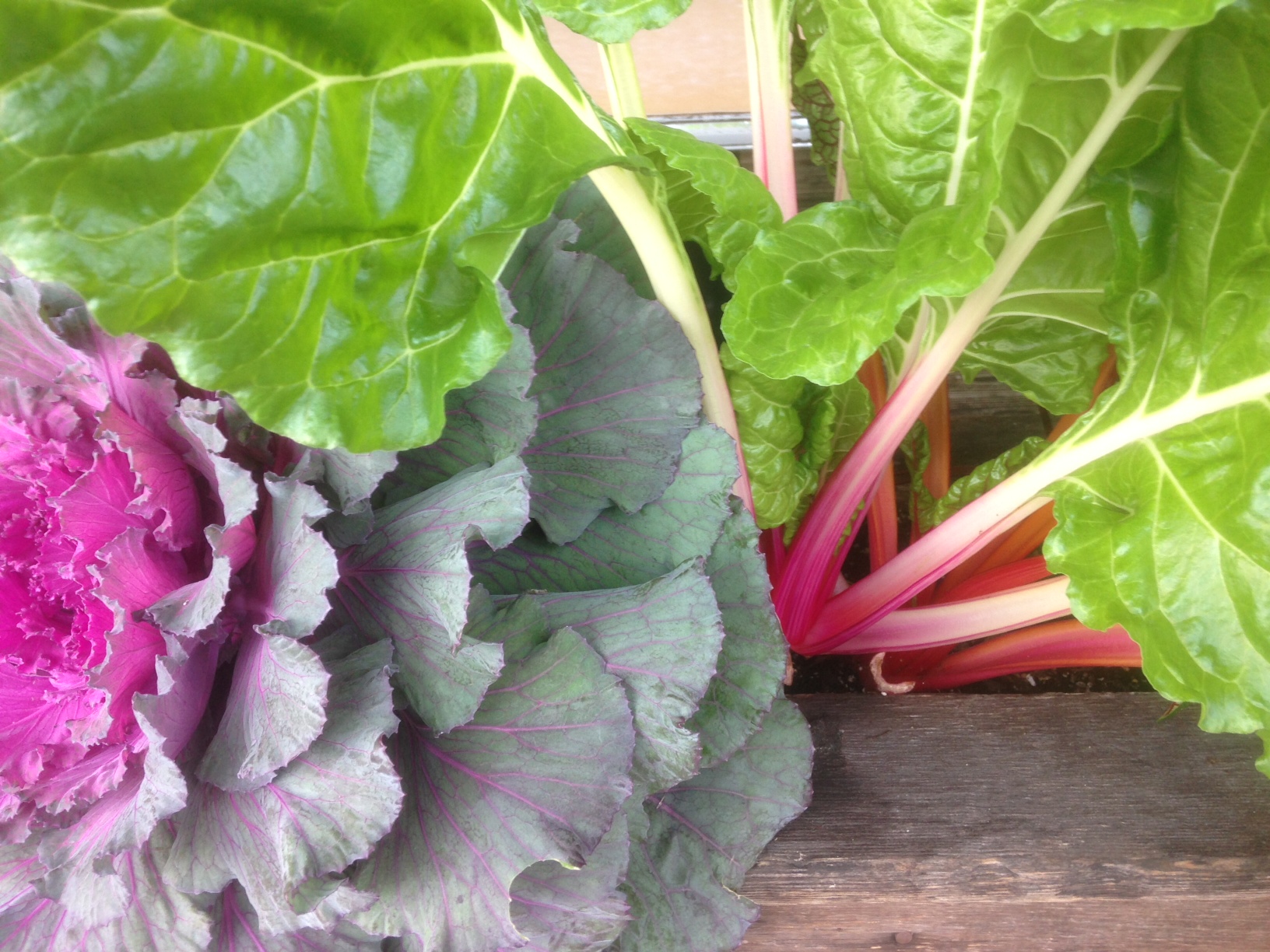
RhubarbCabbagePurple

Beets, rhubarb, memories of springtime in the garden – all are on the table for today’s conversation!

Coming next: Mennonite Girls Can Cook

Lincoln, Lilacs, and Grandma’s Outhouse

Lilacs in Washington State

Earlier this month, my husband Cliff and family laid to rest his father Lee Beaman in a tiny urn above the coffin of his mother in the cemetery adjoining the church. Across the street from the simple, white-plank Methodist Church near Ridgefield, WA, are lilac bushes in full bloom this April. If you live in the Pacific Northwest, here is a website you may want to check out: //lilacgardens.com/

Lilacs along McCardy Road, Bethel Methodist Church, Ridgefield, WA
Lilacs along Carty Road, near Bethel Methodist Church, Ridgefield, WA

Like floral fireworks, these blooms explode in vivid lavender, each blossom bursting in “bullet-shaped buds.” Poet Richard Wilbur seems to scrutinize the lilacs he describes by looking into not just at the hundreds of teeny buds arranged in each bursting bloom tighter than stick pins in a pincushion.

LilacsRWilburPIC

As poet Wilbur points out, each tiny lavender bud appears “quick and bursting,” not holding back its beauty – is open and free. Similarly, when friends and family eulogize the beloved, their remarks tend to be candid, “quick and bursting,” revealing true feelings, knowing this is probably the last time to express their sentiments publicly.

Lincoln and Lilacs

Another poet, Walt Whitman, connected grief to the springtime and lilacs as he expresses his deep attachment to Abraham Lincoln, whose death April 15, 1865, is commemorated in his famous poem When Lilacs Last By the Dooryard Bloom’d. Written in private, the poem is a public elegy to the President the people adored. The poet revered the President too and when the cortége passed by, Whitman placed a sprig of lilacs on the coffin:

“With delicate-color’d blossoms and heart-shaped leave of rich green, /A sprig with its flower I break.” (stanza 3)  Then admitting that “the lilac with mastering odor holds me,” Whitman will forever associate the fragrance of lilacs with his fallen hero (stanza 13).

Finally, referring to Lincoln as a “Powerful western fallen star” the poem closes with the lines

For the sweetest, wisest soul of all my days and lands—and this for his dear sake,

Lilac and star and bird twined with the chant of my soul,

There in the fragrant pines and the cedars dusk and dim.

Kathy Beaman holding lilac after Dad's memorial service
Kathy Beaman holding lilacs after Dad’s memorial service

Lilacs Bushes and Grandma’s Outhouse

Please permit me this odd segué!

I love lavender and purple – and I love lilacs and wisteria. Wisteria climbing joyfully on a trellis on Grandma’s verandah and lilacs some distance away. . .

Close to an oak tree that Grandma Longenecker’s grand-children planted in her honor after her death in 1980, was an outhouse (now long gone) surrounded by a clutch of lilac bushes. The lilacs around Grandma’s house served as a fragrant air freshener. Of course, there is nothing elegiac about an outhouse, a tallish, square white structure with a roof, equipped with a Sears & Roebuck catalog or better yet for the job – a phone book. The outhouse, dedicated to defecation, bears evidence that bodily functions continue, that you are still alive. Lilacs thrive there.

Long live the lilacs. Long live symbols of life, death, and rebirth!

* * *

. . .  and a bush nobody had noticed burst into glory and fragrance, and it was a purple lilac bush. Such a jumble of spring and summer was not to be believed in, except by those who dwelt in those gardens.

The Enchanted April, Elizabeth von Arnim

Now, your turn. What is your relationship to lilacs or other spring flowers? To commemorating the death of loved ones?


My Little Black Bookends Tell All

Growing up in rural Lancaster County in the 1950s, I had very little opportunity to meet people of other ethnic groups, but I did have a Little Black Sambo book that introduced me to a culture different from mine. So, I have not always been embarrassed by this book. Fascinated, yes, but embarrassed, no. The picture of the tiger running around an African palm tree as the tiger morphed into a golden round pool of butter mesmerized me as a child, butter that would become one of the ingredients of the pancake recipe. The next page shows Black Sambo’s mother Black Mumbo with her glossy brown arm stirring a mound of melted butter making pancakes. The picture made me hungry. And on the last page:

Little Black Sambo_pancake_web shot

And then they all sat down to supper. Black Mumbo ate twenty-seven pancakes, Black Jumbo ate fifty-five. But little Black Sambo ate a hundred and sixty-nine because he was so hungry!!! (Yes, there are three exclamation marks in the book I am holding.) 

Characters in folktales are typically overblown, with exaggerated details like Little Black Sambo’s super big eyes, through which he gazes at three heaping plates of pancakes with a pot of syrup dribbling all over the table. Obviously, he is ready to stuff his mouth with piles of pancakes.

But there are other tales in the book with the Little Black Sambo cover: The Little Red Hen, The Tale of Peter Rabbit, and The Country Mouse and The Town Mouse. Mr. McGregor and the kitchen maid in the “Mouse” story have white faces, but there is no reference to their whiteness. Their race is assumed as white and therefore not particularly notable.

Little Black Sambo_Cover_web shot

I paged through this book recently as we cleared out books in Mother’s house and marveled at the stereotypes about black people back then and was embarrassed by it: A black woman with a big butt and goofy name wearing a “maid” cap on her head, black people eating nothing but fried foods, everyone eating too much.

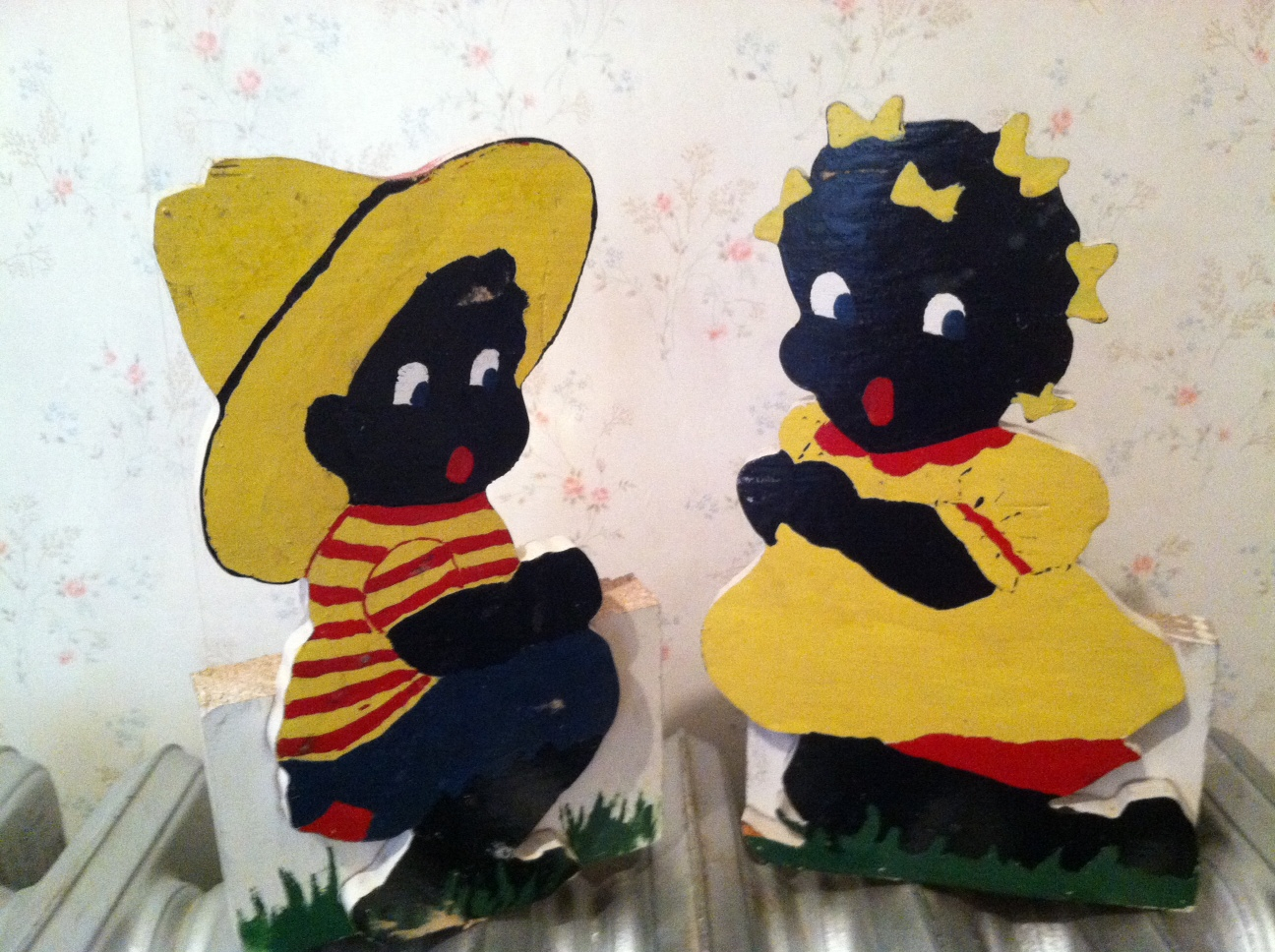
Another find un-earthed in our sifting through “Stuff” – a pair of book-ends I made in school that portrays black children as a novelty.

blackBookends

Interestingly, my niece Shakeeta, my brother Mark’s daughter, choose these as one of the few things she wanted as a remembrance from her Grandma Longenecker’s house. She hoists them up with a smile here:

KiKiBlackBookends

I guess it’s time I catch up with the times and adjust my ideas about black memorabilia. Singer Anita Pointer certainly has. In an article entitled “A Lesson in History,” (AARP Feb/March 2015) Anita, one of the Pointer Sisters, says she collects black memorabilia so she’ll never forget how her people were once depicted.

BlackMemorabiliaAARP

We grew up in Oakland, California, but when I was 10 we visited my  grandma in Arkansas. I couldn’t believe how people were living there. They had a white and a black part of town, and you stayed off the white side. At the department store, they had colored and white water fountains. I don’t want to ever forget that’s what it was like for us — and collecting black memorabilia is how I do that.   (66)

Like Whoopi Goldberg and Spike Lee, Anita collects black memorabilia as museum pieces including a “Mammy” cookie jar, and a 1970s John Henry whiskey decanter made by Jim Beam. When the prestigious house of Sotheby’s came to appraise her collection, it took a year to sort and categorize it. She comments, “The appraiser said that I could pretty much charge what I want because most of the pieces are one of a kind.”  In the end, Anita Pointer sees her collection of thousands of pieces as part of her personal history. She doesn’t apologize for any of it.

Of course, I’m hanging onto my Little Black Sambo book. It’s a part of my personal history.

Your comments welcome here!

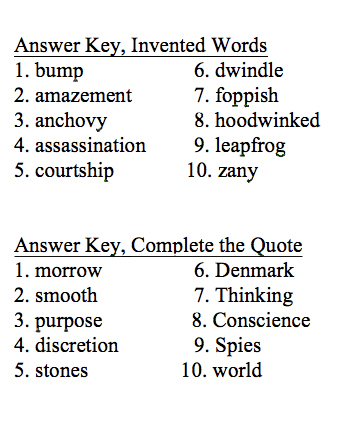
(Answers to Shakespeare puzzlers from April 22, 2015 post below.)

Answer Key2_mod

Enchanted April: Renewal and Possibilities

Are you wishing for different weather just now?

Maybe a change in scenery is all you need to perk up. After a rough winter, the drowsy dreaminess of a warm, languid clime may sound very appealing.

If so, you have something in common with the middle-aged Lottie Wilkins and Rose Arbuthnot, both members of the same London ladies’ club, who become acquainted after reading a newspaper advertisement for a small, furnished medieval castle to be rented for the month of April on the balmy shores of the Mediterranean. They are seeking enchantment – and in April.

*  *  *

In February, I met Timeless Lady, a blogger who blends quirkiness and a strong, spiritual core in her posts. In a recent piece about the book/movie Enchanted April, she published the words in the newspaper ad that enticed these ladies to exchange London fog for idyllic Italy at a castle in Portofino, Italy no less. Here is The TImes newspaper ad that drew them in:

To Those Who Appreciate Wisteria and Sunshine. Small mediaeval Italian Castle on the shores of the Mediterranean to be Let furnished for the month of April. Necessary servants remain. Z, Box 1000, The Times.


Lottie Wilkins and Rose Arbuthnot, both wishing to escape the drab days of winter, also share a desire to leave the day-to-day drudgery of housekeeping and the struggles of marriage, Lottie to the klutzy Mellersh and Rose to her gawky Frederick. But there is the matter of money, so to share expenses they take on the elderly, crotchety Mrs. Fisher played by Joan Plowright, and the stunning, but aloof Lady Caroline Dester. As the wisteria and sunshine slowly work their magic, the characters are rejuvenated and re-discover hope and love.

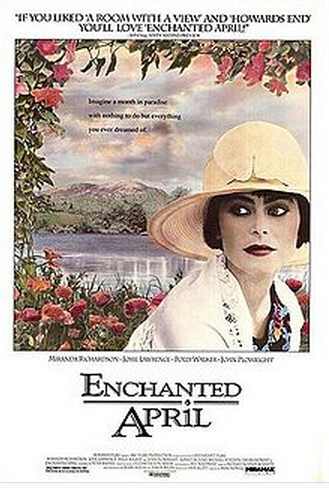
Film, 1992  Courtesy Wikipedia image
Film, 1992 Courtesy Wikipedia image featuring Lady Caroline Dester, who is sick of being grabbed by men!

In the early 1920s, just after World War I, author Elizabeth Von Arnim vacationed in the serenity of Portofino, Italy at Castello Brown, the same castle featured in the movie. Inspired by the magnificent medieval castle and the luscious gardens of San Salvatore, Von Arnim wrote “Enchanted April,” the book on which the movie is based.

I discovered a link to a free copy of the book via the Guttenberg Library, where you can search and find links to other books and stories you read as a child.

Want more Elizabeth Von Arnim? Click here for her Collected Works!

Cover image: courtesy Amazon Books

In case you haven’t seen the movie, or if you want to succumb once again to its captivating charms, here is the trailer from Miramax Films:

Quotes from Enchanted April

I want to just sit and not talk and not think . . . .  ~ Caroline

If you wish for something hard enough, it happens!  ~Lottie


Wisteria in patio garden
Patio garden wisteria


When you want to get away from it all, where do you escape?

What is on your bucket list – Where would you like to go right now, or sometime soon?


Coming next: Moments of Discovery # 6 ~ Food for Thought, Stirred with Imagination

A Robbery, Sad Friday, and a Clump of Daffodils

“I’ve been robbed!’ These are the only words artist/performer Cliff can utter as he walks toward his Dodge van, noticing that the air-vent window on the driver’s side has been pushed in at an odd angle. It’s about 4:30 a.m. Good Friday, April 1, 1994.

Rushing around the vehicle to open the side doors, he begins to take inventory of what’s missing: sound equipment including a stereo mixer, a professional-grade tape player, a recorder and at least 150 treasured CDs missing from cases. An envelope with cash – gone. All gone! He walks frantically around the parking lot of the Quality Inn he is leaving and spots a black suitcase, which the thieves have thrown into a ravine. Empty!

It was the end of a very productive month presenting 35 multi-media school assembly programs in Florida and Georgia. Cliff had driven to Nashville, Tennessee because his next shows would be in the Memphis area. He had been looking forward to boarding a 6:00 a.m. Delta flight to come home on Good Friday and spend Easter weekend with his family. This weekend, however, turned out to be a mixed blessing – The splendor of the resurrection service at church conflicted with the discordant thoughts about his recent loss: Lost equipment, lost musical discs, remembering malfunctioning hotel parking lights that had probably contributed to the thieves finding his van easy prey. And after all, it was Nashville, music city.

After returning to the Nashville airport after Easter to continue his itinerary, he takes stock. Though the robbery has felt like a violation, a form of rape actually, he could count his blessings: 1. His CD player vital to the music that accompanies his drawing was in a separate case, undisturbed and  2. He had copies of program music at his home base, Jacksonville.

Still reeling from the impact of the loss of inanimate “friends” that provided the musical score to his chalk drawing on a large easel, he must soldier on toward St. Louis, Missouri for next week’s shows. Behind the wheel again, he popped in a cassette tape, a musical companion on the long hauls between cities: soaring classical music and uplifting hymns, a distraction from the recent robbery. His itinerary takes him through Cape Girardeau, Missouri, where his journal notations begin:

The undulating ribbon of asphalt in Interstate 55, the hum of the van engine, rumbling of tires, and rushing air together with the music combined their forces to calm my mind . . . .  Now a spot of yellow caught my attention. Was it litter – or something else? The blurry image that I imagine are daffodils soon vanished from my side view mirror.


I keep driving but feel an urgency to turn around. The nest of daffodils keep calling me. “Come back. Don’t go another mile. You may miss a special moment in your life, a moment that can put a special gladness in your heart.

 Finally, he turns around at the next exit, heading south, as he wonders, “How far had I traveled since I had seen the flowers? I honestly had no idea, but I retraced my path even farther than I thought necessary to spot those daffodils again.” He gives up and heads north again. But feeling a tug even more insistent, he turns the van around one more time.

Passing over the exit I continued searching, almost holding my breath. My jaw set, my eyes straining for anything yellow.


I nervously looked at my watch. I could not believe that two hours had passed since first sighting those images of hope. Miles and time seem to merge together. My odometer indicated I had gone 120 miles since first turning back. What was I to do? It was getting late; I had to get to St. Louis soon.


And then ahead I saw it—a flash of golden yellow. My heart leaped with joy—It was there after all, several clumps of daffodils, but I saw two huddled together, spring-like beauties, raising their slender pastel green fingers, lifting golden heads to the heavens!

daffodilREAL2

The next challenge: Finding a container and extracting the two daffodils from the hard soil without a trowel or shovel.

With traffic whizzing by and like a mad man on a single mission, I quickly swung open the back and side doors of the van, and found a plastic one-gallon container of spring water. Out gurgled the water. Then, I rummaged through my tool bag until I found a razor blade to cut out the topside portion of the jug.

How to dig up the daffodils though?

Once again, I dashed back to the van and from deep within my jungle of sound and art equipment, boxes and bags, I pulled out an aluminum yardstick. With both hands on my innovative shovel, I vigorously dug down deep into the damp soil and rock encasing the two flowers. After leveraging the living plants into a plastic bag, I carefully placed them into the jug, watering the daffodils and even hiding them in bushes outside overnight for safe-keeping at hotel rest stops before the next trip home.

On this Saturday, April 9, 1994 my husband spent 2 ¼ hours driving an extra 125 miles to capture in real time this evidence of hope and then later spent more hours penning this story in a travelogue entitled “I Stopped Beside the Road Today.”

The robbers did their dirty deed in an unlighted parking lot and left no evidence of their identity behind. Yet, Cliff searched for beauty among the rubble and found it, proof of the hope it represents.

DaffodilDried

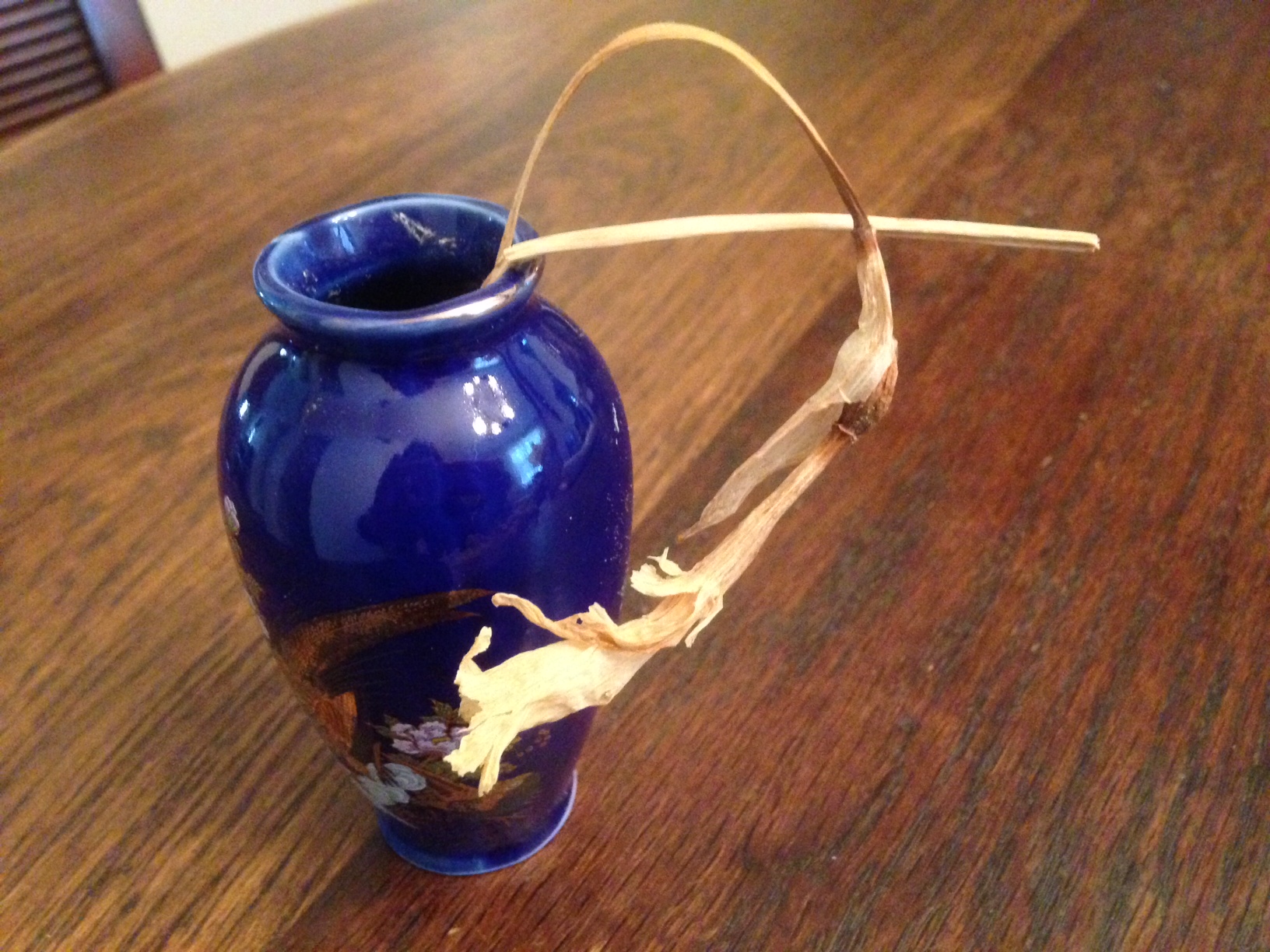
I have saved the dried-up daffodils, one headless, in a blue vase for 21 years.

And I can’t find it in me – at least not yet – to destroy these bedraggled tendrils – evidence of a Bad Friday turned Good!


Have you ever been robbed? Have you lost something so valuable you searched and searched? Here’s where to tell your story!

*  *  *

Links to Cliff Beaman, artist – http://americanartassemblies.com

YouTube video

*  *  *

Bonus: Tradition has it that the daffodil, the Lent Lily, will open on Ash Wednesday and die on Easter Day. In a poem entitled The Lent Lily, A. E. Housman writes of the daffodil as a yellow trumpet heralding the glories of spring.

Coming next: Our Easter in Ukraine